VS

VW Touran vs VW Tayron comparison

Compare performance (150 HP vs 272 HP), boot space and price (36,000 £ vs 39,600 £ ) at a glance. Find out which car is the better choice for you – VW Touran or VW Tayron?

VW Touran vs VW Tayron: Key differences

VW Touran

4.9 (2 Reviews)
rate
  • somewhat cheaper
  • a bit lighter

VW Tayron

5 (1 Reviews)
rate
  • significantly more power
  • clearly more efficient
  • significantly quicker 0–100 km/h
  • very slightly more trunk space
Touran

Urban Tactician vs Road Commander

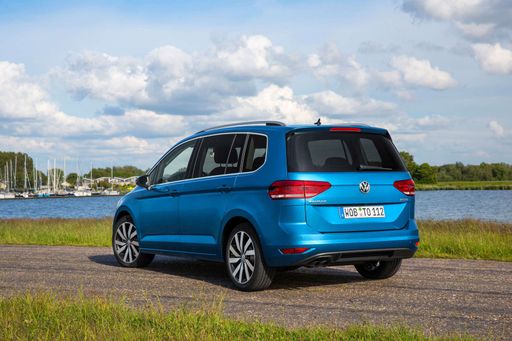
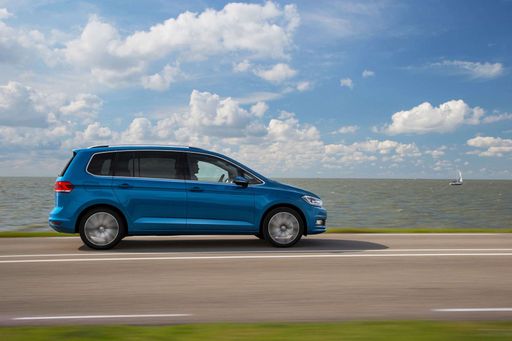
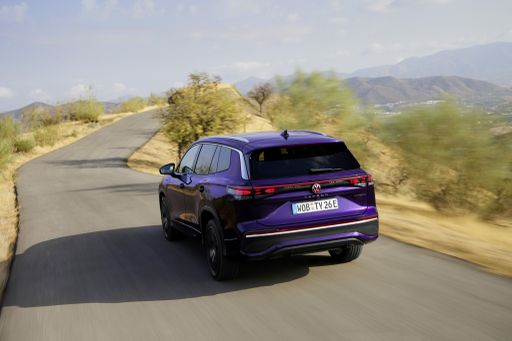
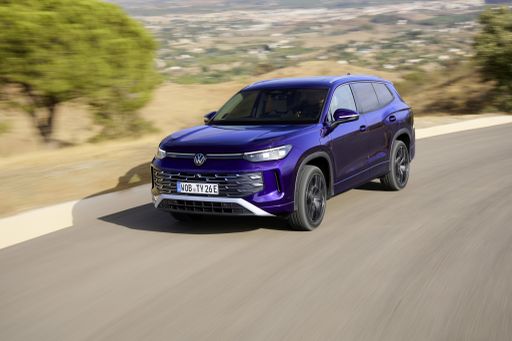
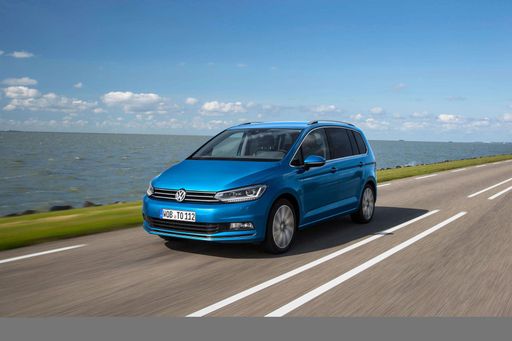
If your daily loop is a jungle of tight lanes and school runs, the Touran feels like a sensible tactician that keeps life uncomplicated and parking painless. It rewards calm, pragmatic driving and makes city chores feel almost pleasant. The Tayron, by contrast, carries itself with SUV poise — heavier but more planted and confident when you stretch its legs on faster roads. That extra sense of momentum makes it more at home on open highways than in tight urban choreography.
Tayron

Backseat Peacekeepers

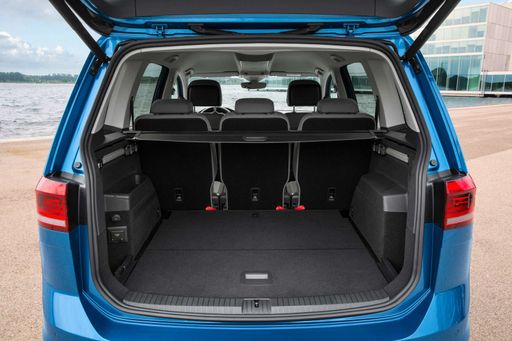
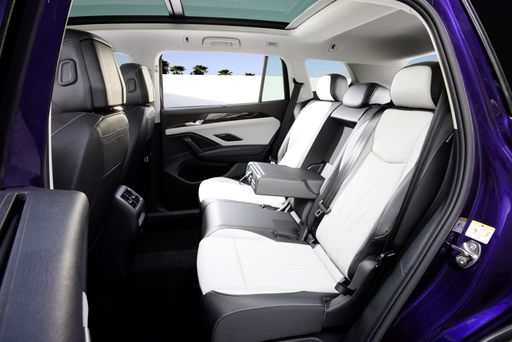
Step inside and the contrast becomes practical rather than philosophical: the Touran lives for family life with easy access, straightforward seat layouts and a no-nonsense approach to hauling kids and kit. The Tayron leans toward versatility with a roomier presence and a more generous cargo mindset that swallows weekend luggage without complaint. Rear-seat comfort in both cars is thoughtful, though their personalities show — one prioritises day-to-day convenience, the other prioritises a more grown-up flex. Choose depending on whether you value hatchback-like pragmatism or SUV-style space with a bit more swagger.

Touran

Behind the Wheel

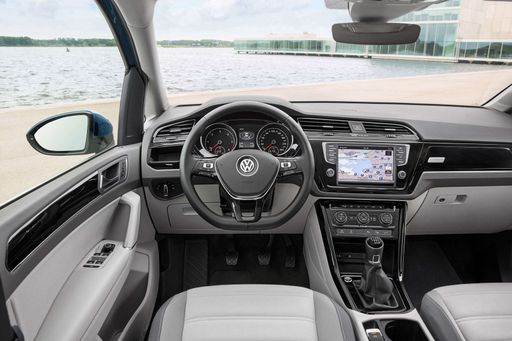
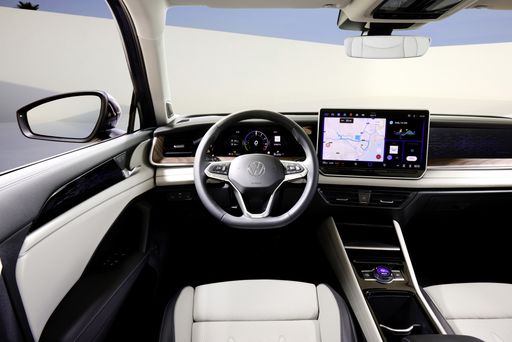
Driving the Touran is an exercise in calm efficiency: controls are intuitive, visibility is good and the overall setup invites a relaxed, undemanding commute. The Tayron's cockpit is injected with a sportier focus, firmer responses and a sense that the car expects you to enjoy the drive rather than merely endure it. Both cabins keep modern tech within reach, but the emotional tone changes — one soothes, the other stirs. Your choice will come down to whether you prefer a composed daily companion or something with a bit more driving theatre.

Tayron

Looks and First Impressions

On the road the Tayron makes a clearer statement, its SUV posture and sharper lines giving it a more assertive street presence that turns heads without shouting. The Touran takes a quieter route, with practical, understated styling that ages without drama and flies under the fashion radar. The difference is personality rather than taste: one is confident and contemporary, the other is discreet and reliably competent. If you want to be noticed, the Tayron will do the job; if you prefer modesty and fuss-free aesthetics, the Touran keeps things sensible.

Touran

Everyday Running and Value

Think beyond showroom lists and you get a different kind of value from each car: the Touran sells peace of mind through simplicity and a wallet-friendly demeanour that suits no-nonsense households. The Tayron feels like an investment in comfort and capability, offering a more premium ambience and extra equipment that many will find worth the trade-off. Ownership will feel different — one is a thrifty ally for practical households, the other a more ambitious companion for buyers who prioritise refinement and on-road presence. It’s less about which is cheaper and more about which aligns with how you live and what you tolerate from day to day.

Tayron

Pick Your Player

City commuters and families prioritising predictability will appreciate the Touran’s sensible packaging, easy ergonomics and unflashy dependability. Drivers who crave road composure, a stronger image and a more engaging character will be drawn to the Tayron’s SUV stance and more assertive driving manners. Neither choice is wrong; it’s simply a matter of whether you place pragmatism or personality at the top of your shopping list. Think about routes, passengers and pride of ownership, and the answer will usually become obvious.

Touran

Stay Tuned

Want to know which model takes home the DriveDuel title? Stay with us — we'll break down the decisive moments, where each car shines and where compromises lie, so you can match the verdict to your needs. Read on to see which strengths swing the verdict in our full DriveDuel wrap-up; the champion reveal is just ahead.

Here’s where it gets real: The technical differences in detail

Touran

Costs and Efficiency:

When it comes to price and running costs, the biggest differences usually appear. This is often where you see which car fits your budget better in the long run.

VW Touran is somewhat cheaper – starting at 36,000 £ , while the VW Tayron costs 39,600 £ . That’s a price difference of around 3,617 £.

Fuel consumption also shows a difference: the VW Tayron uses 1.5 L/100km and is clearly more efficient than the VW Touran with 5.2 L/100km. The difference is about 3.7 L/100km.

Tayron

Engine and Performance:

Power, torque and acceleration are the classic benchmarks for car enthusiasts – and here, some clear differences start to show.

When it comes to engine power, the VW Tayron offers significantly more power – delivering 272 HP compared to 150 HP. That’s roughly 122 HP more horsepower.

When accelerating from 0 to 100 km/h, the VW Tayron is significantly quicker – completing the sprint in 6.1 s, while the VW Touran takes 8.9 s. That’s about 2.8 s quicker.

There’s also a difference in torque: the VW Tayron delivers barely more torque with 400 Nm compared to 360 Nm. That’s about 40 Nm more.

Touran

Space and Everyday Use:

Beyond pure performance, interior space and usability matter most in daily life. This is where you see which car is more practical and versatile.

Both vehicles offer seating for 5 people.

In terms of curb weight, VW Touran is a bit lighter – 1,520 kg compared to 1,682 kg. The difference is around 162 kg.

Looking at boot space, the VW Tayron offers very slightly more boot space – 885 L compared to 834 L. That’s a difference of about 51 L.

When it comes to payload, the VW Touran carries very slightly more – 601 kg compared to 566 kg. That’s a difference of about 35 kg.

Who wins the race in the data check?

The VW Tayron stands well ahead of its rival in the objective data comparison.
This result only shows which model scores more points on paper – not which of the two cars feels right for you.

from £39,600
Tayron

VW Tayron

  • Engine Type : Petrol MHEV, Diesel, Petrol, Plugin Hybrid
  • Transmission : Automatic
  • Drive Type : Front-Wheel Drive, All-Wheel Drive
  • Power HP : 150 - 272 HP
  • Consumption L/100km : 1.5 - 8.5 L/100km
  • Electric Range : 116 - 123 km
VW Touran
VW Tayron

Costs and Consumption

View detailed analysis

Engine and Performance

View detailed analysis

Dimensions and Body

View detailed analysis

VW Touran

The VW Touran is a sensible family people‑carrier that mixes practical packaging with tidy, German-built refinement, making everyday life with kids and shopping feel a lot less chaotic. If you want a reliable, no-nonsense companion that drives with surprising poise and values usefulness over flash, the Touran is a very persuasive choice.

details

VW Tayron

The VW Tayron is Volkswagen's roomy, no-nonsense SUV that pairs clean, familiar styling with a practical cabin built for families and everyday use. It rides comfortably, packs sensible tech and creature comforts, and feels like the sensible sweater of SUVs for buyers who prefer steady value over headline-grabbing drama.

details
VW Touran
VW Tayron

Costs and Consumption

Price
36,000 - 45,300 £
Price
39,600 - 56,000 £
Consumption L/100km
5.2 - 6.5 L/100km
Consumption L/100km
1.5 - 8.5 L/100km
Consumption kWh/100km
-
Consumption kWh/100km
-
Electric Range
-
Electric Range
116 - 123 km
Battery Capacity
-
Battery Capacity
19.7 kWh
co2
136 - 149 g/km
co2
33 - 192 g/km
Fuel tank capacity
-
Fuel tank capacity
45 - 58 L

Dimensions and Body

Body Type
MPV
Body Type
SUV
Seats
5
Seats
5
Doors
-
Doors
5
Curb weight
1,520 - 1,631 kg
Curb weight
1,682 - 1,948 kg
Trunk capacity
834 L
Trunk capacity
705 - 885 L
Length
-
Length
4,792 mm
Width
1,829 mm
Width
1,853 - 1,866 mm
Height
-
Height
1,666 - 1,668 mm
Max trunk capacity
-
Max trunk capacity
1,915 - 2,090 L
Payload
590 - 601 kg
Payload
489 - 566 kg

Engine and Performance

Engine Type
Petrol, Diesel
Engine Type
Petrol MHEV, Diesel, Petrol, Plugin Hybrid
Transmission
Manuel, Automatic
Transmission
Automatic
Transmission Detail
Manual Gearbox, Dual-Clutch Automatic
Transmission Detail
Dual-Clutch Automatic
Drive Type
Front-Wheel Drive
Drive Type
Front-Wheel Drive, All-Wheel Drive
Power HP
122 - 150 HP
Power HP
150 - 272 HP
Acceleration 0-100km/h
8.9 - 10.8 s
Acceleration 0-100km/h
6.1 - 9.7 s
Max Speed
-
Max Speed
204 - 221 km/h
Torque
250 - 360 Nm
Torque
250 - 400 Nm
Number of Cylinders
4
Number of Cylinders
4
Power kW
90 - 110 kW
Power kW
110 - 200 kW
Engine capacity
1,498 - 1,968 cm3
Engine capacity
1,498 - 1,984 cm3

General

Model Year
2,024 - 2,025
Model Year
2,025 - 2,026
CO2 Efficiency Class
E
CO2 Efficiency Class
E, F, G, B
Brand
VW
Brand
VW
DriveDuel uses data analysis and artificial intelligence to evaluate vehicle data and create content. Content is regularly reviewed and improved. The displayed prices are estimates based on German list prices, adjusted to the respective country’s VAT. Country-specific registration taxes are not included. This information is not legally binding.