VS

Skoda Kodiaq vs VW Touran - Differences and prices compared

Compare performance (265 HP vs 150 HP), boot space and price (36800 £ vs 36000 £ ) at a glance. Find out which car is the better choice for you – Skoda Kodiaq or VW Touran?

Kodiaq

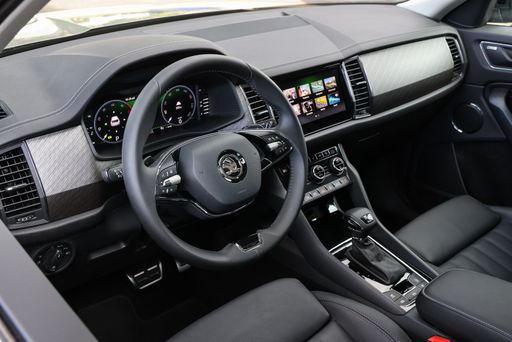
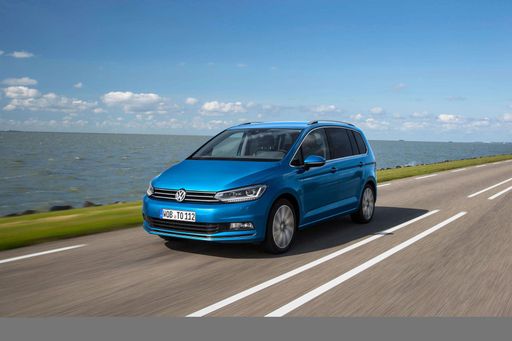
When comparing the Skoda Kodiaq and the VW Touran, buyers are presented with two distinctive vehicles tailored to different needs and lifestyle choices. While both vehicles come from esteemed automotive brands, their designs and functionalities position them uniquely in the market. This article aims to delve into the technical specifications and innovations that set these models apart.

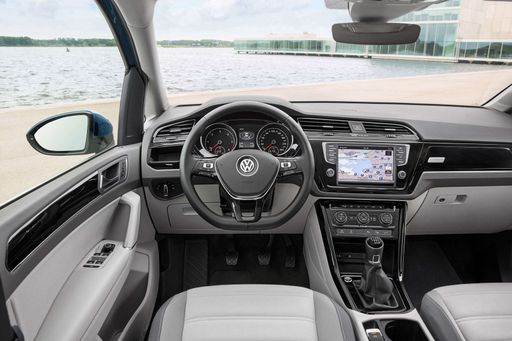
Touran

Body Type & Design

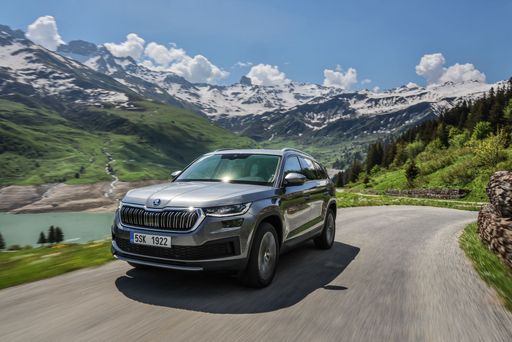
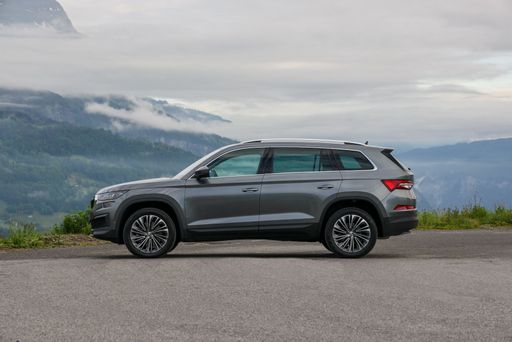
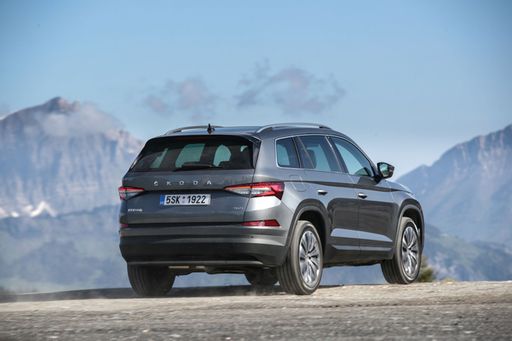
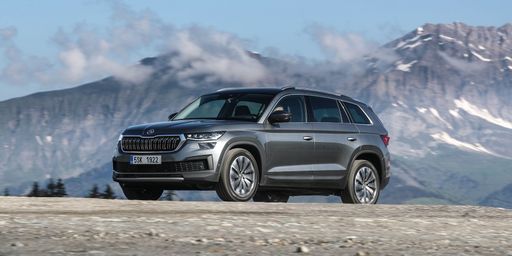
The Skoda Kodiaq is a spacious mid-size SUV, presenting a robust and commanding presence on the road. With an elongated length of 4758 mm and a width of 1864 mm, its exterior dimensions translate into an ample cabin space, perfect for families and adventures.

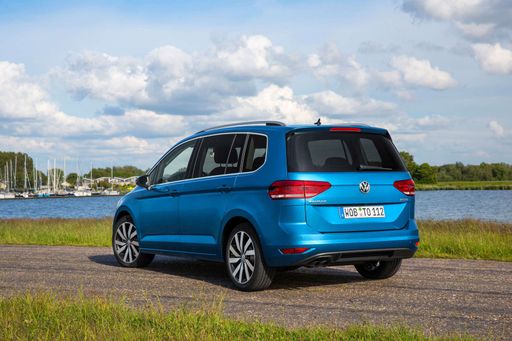
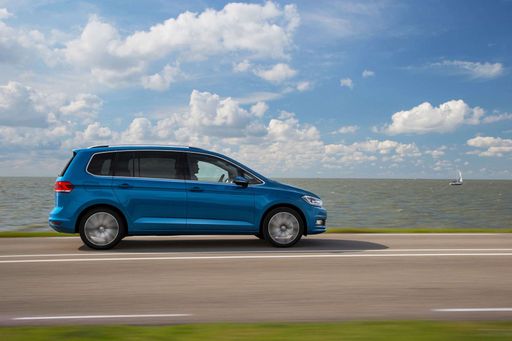
On the other hand, the VW Touran is classified as a multi-purpose vehicle (MPV) that prioritizes versatility and comfort. With a compact length of 4527 mm and a width of 1829 mm, it is more manageable in urban environments while still providing ample space for passengers and cargo.

Kodiaq

Engine Options and Performance

The Kodiaq offers a variety of engine types, including a plug-in hybrid, petrol MHEV, diesel, and traditional petrol options. It provides impressive power ranging from 150 HP up to 265 HP. This SUV boasts an acceleration of 0-100 km/h in as little as 6.3 seconds with its highest-performing variants, underscoring a sportier edge for an SUV.

Conversely, the VW Touran keeps its lineup focused on petrol and diesel engines, reaching a maximum output of 150 HP. The performance varies, with acceleration from 0 to 100 km/h taking around 9.3 seconds for the more powerful versions. While it may not match the Kodiaq’s performance figures, it is designed for efficiency and practicality.

Touran

Fuel Efficiency and Consumption

In terms of consumption, the Kodiaq’s diverse engine lineup means various fuel economy figures that range from a mere 0.4 L/100km for the plug-in hybrid to about 8.2 L/100km for the more performance-oriented models. The range for electric driving hits up to 123 km, appealing to eco-conscious buyers.

In comparison, the Touran exhibits fuel efficiency figures ranging from 5.1 to 6.4 L/100km, making it a practical choice for daily commuting. This MPV emphasizes a balanced approach to consumption, catering to family needs without excessive fuel expenditures.

Kodiaq

Cargo and Interior Space

One of the primary considerations for family vehicles is cargo space. The Kodiaq excels with trunk capacities ranging from 745 to 910 liters, depending on configuration. Its tall design not only optimizes passenger space but also accommodates larger items, making it convenient for outdoor trips.

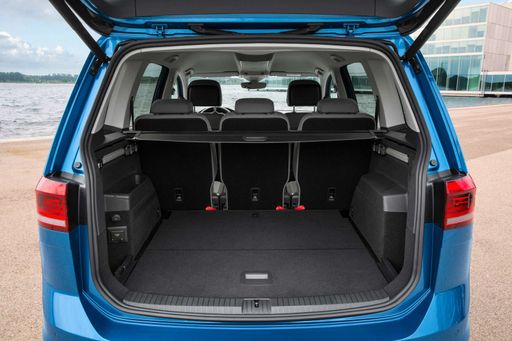
The Touran, while slightly smaller, offers a respectable trunk capacity of 834 liters, ensuring ample room for groceries or luggage. Its intelligent design allows for various seating configurations, further enhancing flexibility.

Touran

Innovative Features

Both vehicles integrate advanced technologies and driver assistance features aimed at enhancing safety and convenience. The Kodiaq, in particular, offers a dual-clutch automatic transmission, which grants smooth gear transitions, contributing to a dynamic driving experience. Additionally, its SUVs often include advanced infotainment and connectivity options, arming the user with the latest tech tools on the road.

The Touran has not been left behind in the innovation race—equipped with VW’s signature infotainment systems and numerous safety technologies, it stands out with features like adaptive cruise control and various driver aids that provide peace of mind for family trips.

Kodiaq

Conclusion

Choosing between the Skoda Kodiaq and the VW Touran ultimately depends on your priorities. The Kodiaq is ideal for those seeking a powerful SUV that can handle both city and off-road adventures, coupled with innovative technology and spaciousness. The Touran, however, caters to families looking for comfort, practicality, and efficiency on a day-to-day basis.

Both vehicles represent the best of their respective classes, promising reliability and solid performance. It is this blend of features and functionalities that makes either choice compelling, leaving buyers with a satisfying problem to solve upon their decision-making journey.

Skoda Kodiaq

5 (4 Reviews)
rate

VW Touran

4.9 (2 Reviews)
rate

You can find all user reviews further down on this page.

Here’s where it gets real: The technical differences in detail

Touran

Costs and Efficiency:

When it comes to price and running costs, the biggest differences usually appear. This is often where you see which car fits your budget better in the long run.

VW Touran has a slight advantage in terms of price – it starts at 36000 £ , while the Skoda Kodiaq costs 36800 £ . That’s a price difference of around 853 £.

Fuel consumption also shows a difference: Skoda Kodiaq manages with 1.50 L and is therefore decisively more efficient than the VW Touran with 5.20 L. The difference is about 3.70 L per 100 km.

Kodiaq

Engine and Performance:

Power, torque and acceleration are the classic benchmarks for car enthusiasts – and here, some clear differences start to show.

When it comes to engine power, the Skoda Kodiaq has a significantly edge – offering 265 HP compared to 150 HP. That’s roughly 115 HP more horsepower.

In acceleration from 0 to 100 km/h, the Skoda Kodiaq is decisively quicker – completing the sprint in 6.30 s, while the VW Touran takes 8.90 s. That’s about 2.60 s faster.

There’s also a difference in torque: Skoda Kodiaq pulls barely noticeable stronger with 400 Nm compared to 360 Nm. That’s about 40 Nm difference.

Touran

Space and Everyday Use:

Whether family car or daily driver – which one offers more room, flexibility and comfort?

Both vehicles offer seating for 5 people.

In curb weight, VW Touran is to a small extent lighter – 1520 kg compared to 1684 kg. The difference is around 164 kg.

In terms of boot space, the Skoda Kodiaq offers barely noticeable more room – 910 L compared to 834 L. That’s a difference of about 76 L.

When it comes to payload, VW Touran slight takes the win – 601 kg compared to 563 kg. That’s a difference of about 38 kg.

Who wins the race in the data check?

The Skoda Kodiaq sits well ahead of its rival in the objective data comparison.
This result only shows which model scores more points on paper – not which of the two cars feels right for you.

Skoda Kodiaq
VW Touran

Costs and Consumption

View detailed analysis

Engine and Performance

View detailed analysis

Dimensions and Body

View detailed analysis
from about £36,800
Kodiaq

Skoda Kodiaq

  • Engine Type : Petrol, Petrol MHEV, Diesel, Plugin Hybrid
  • Transmission : Automatic
  • Drive Type : All-Wheel Drive, Front-Wheel Drive
  • Power HP : 150 - 265 HP
  • Consumption L/100km : 1.5 - 8.2 L
  • Electric Range : 119 - 122 km

Skoda Kodiaq

5 (4 Reviews)
rate

The Skoda Kodiaq blends sensible practicality with surprising style, so families and weekend adventurers get roomy comfort without looking like a moving van. It feels calm and composed on the road, packs clever storage and user-friendly tech, and manages to deliver a near-premium vibe without the pretension.

details

VW Touran

4.9 (2 Reviews)
rate

The VW Touran is a sensible family people‑carrier that mixes practical packaging with tidy, German-built refinement, making everyday life with kids and shopping feel a lot less chaotic. If you want a reliable, no-nonsense companion that drives with surprising poise and values usefulness over flash, the Touran is a very persuasive choice.

details
Skoda Kodiaq
VW Touran

Costs and Consumption

Price
36800 - 50600 £
Price
36000 - 45300 £
Consumption L/100km
1.5 - 8.2 L
Consumption L/100km
5.2 - 6.5 L
Consumption kWh/100km
-
Consumption kWh/100km
-
Electric Range
119 - 122 km
Electric Range
-
Battery Capacity
-
Battery Capacity
-
co2
35 - 186 g/km
co2
136 - 149 g/km
Fuel tank capacity
55 - 58 L
Fuel tank capacity
-

Dimensions and Body

Body Type
SUV
Body Type
MPV
Seats
5
Seats
5
Doors
5
Doors
-
Curb weight
1684 - 1970 kg
Curb weight
1520 - 1631 kg
Trunk capacity
745 - 910 L
Trunk capacity
834 L
Length
4758 mm
Length
-
Width
1864 mm
Width
1829 mm
Height
1679 - 1683 mm
Height
-
Max trunk capacity
2105 L
Max trunk capacity
-
Payload
460 - 563 kg
Payload
590 - 601 kg

Engine and Performance

Engine Type
Petrol, Petrol MHEV, Diesel, Plugin Hybrid
Engine Type
Petrol, Diesel
Transmission
Automatic
Transmission
Manuel, Automatic
Transmission Detail
Dual-Clutch Automatic
Transmission Detail
Manual Gearbox, Dual-Clutch Automatic
Drive Type
All-Wheel Drive, Front-Wheel Drive
Drive Type
Front-Wheel Drive
Power HP
150 - 265 HP
Power HP
122 - 150 HP
Acceleration 0-100km/h
6.3 - 9.7 s
Acceleration 0-100km/h
8.9 - 10.8 s
Max Speed
205 - 226 km/h
Max Speed
-
Torque
250 - 400 Nm
Torque
250 - 360 Nm
Number of Cylinders
4
Number of Cylinders
4
Power kW
110 - 195 kW
Power kW
90 - 110 kW
Engine capacity
1498 - 1984 cm3
Engine capacity
1498 - 1968 cm3

General

Model Year
2024 - 2025
Model Year
2024 - 2025
CO2 Efficiency Class
F, G, E, B
CO2 Efficiency Class
E
Brand
Skoda
Brand
VW
What drive types are available for the Skoda Kodiaq?

The Skoda Kodiaq is available as All-Wheel Drive or Front-Wheel Drive.

The prices shown are estimates based on German list prices, adjusted for local VAT. Local registration taxes (e.g. NoVA, BPM or CO2 malus) are not included. This information is not legally binding.