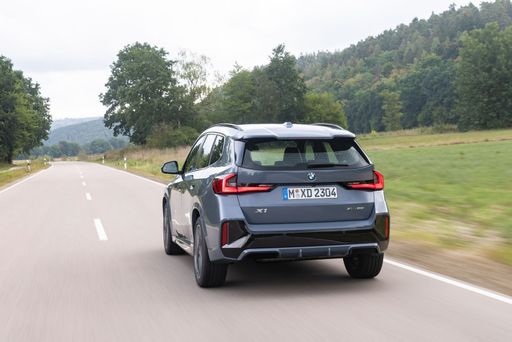
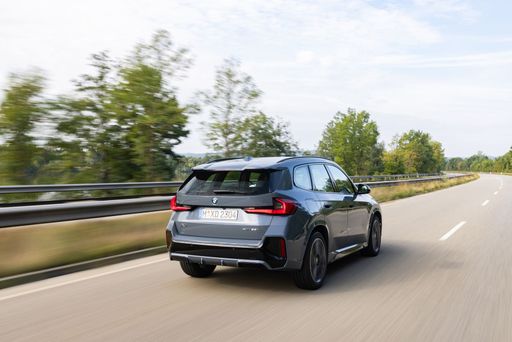
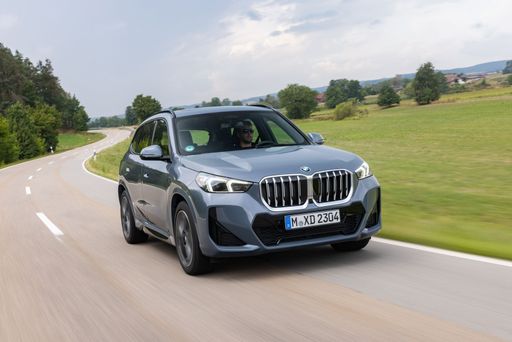
@ BMW Group Press
@ Mercedes-Benz Group Media
VS

BMW X1 vs Mercedes GLC – Which car suits you better?

Two cars, one duel: BMW X1 meets Mercedes GLC.
Which one wins in performance, efficiency and value for money? Find out now!

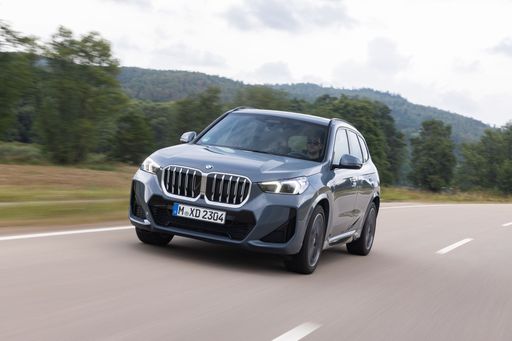
X1 @ BMW Group Press

BMW X1 vs Mercedes GLC: The Battle of Luxury Compact SUVs

In the contemporary world of luxury compact SUVs, two titans stand out: the BMW X1 and the Mercedes GLC. Both vehicles are crafted by renowned German automakers, promising a blend of performance, innovative technology, and premium comfort. Let's dive deep into a comparison of these two luxury SUVs, looking at their technical specifications and state-of-the-art innovations.
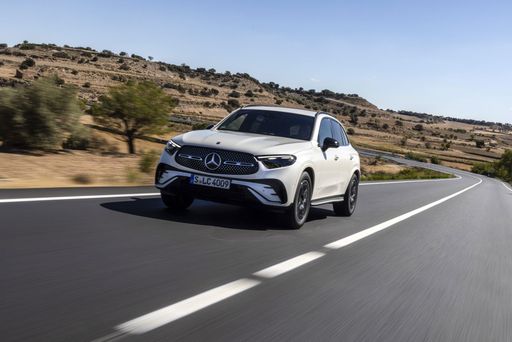
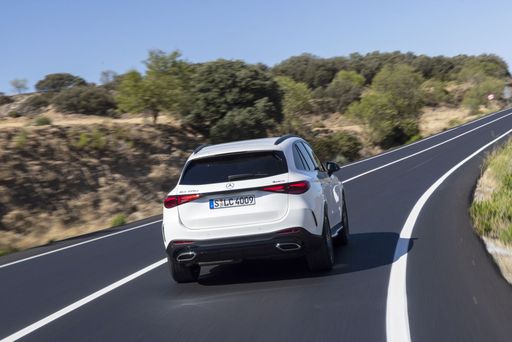
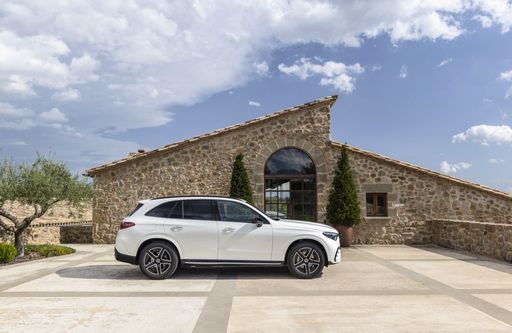
GLC @ Mercedes-Benz Group Media

Engine and Performance

The BMW X1 offers a range of engine types, including Diesel, Petrol, Mild Hybrid Electric Vehicle (MHEV) options, and a Plugin Hybrid model. It features a power output ranging from 136 HP to an impressive 326 HP for the top-end models, with a maximum torque of up to 477 Nm. The X1's performance is robust with an acceleration capability from 0 to 100 km/h as quick as 5.4 seconds in certain trim levels, and it maxes out at a speed of 250 km/h.

On the other hand, the Mercedes GLC presents a slightly more diverse engine lineup with Petrol MHEV, Diesel MHEV, and Plugin Hybrid options available. The GLC's performance peaks with horsepower ranging from 186 HP to a remarkable 680 HP, paired with a superb torque of up to 1020 Nm in the higher-end 4.0-liter configurations. Its acceleration is notably impressive, achieving a 0 to 100 km/h time as rapidly as 3.5 seconds, maxing out at a top speed of 275 km/h for the performance-oriented AMGs.

X1 @ BMW Group Press

Fuel Efficiency and Range

Fuel economy represents a crucial aspect for many buyers of luxury SUVs. The BMW X1 offers a consumption range from an economical 4.6 L/100km in its Diesel MHEV configuration to 7.7 L/100km for its more powerful variants. The X1 Plugin Hybrid impresses with a low consumption rate of 0.8 L/100km, offering an electric range of 83 km per charge, thanks to its 14.2 kWh battery.

Meanwhile, the Mercedes GLC presents a competitive consumption profile, with figures as low as 5 L/100km for Diesel MHEVs and achieving 0.4 L/100km in the Plugin Hybrid, which is capable of covering an electric distance of up to 130 km on a single charge.

GLC @ Mercedes-Benz Group Media

Dimensions and Practicality

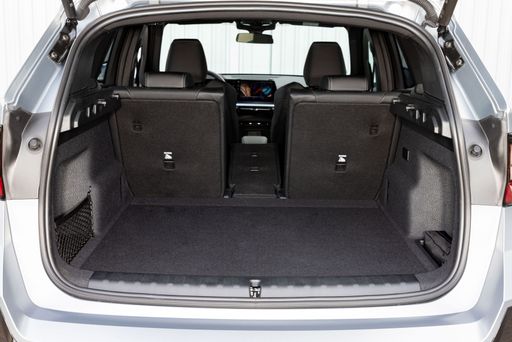
The BMW X1, measured at 4500 mm in length, offers the advantage of compact dimensions, which can be a boon for city driving and parking. Its trunk capacity ranges between 490 L and 540 L, promising decent cargo capacity despite its compact stature.

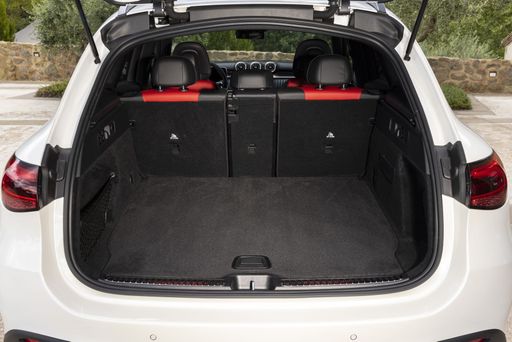
Conversely, the Mercedes GLC typically spans between 4716 mm and 4792 mm in length, providing more cabin space and a slightly more generous boot capacity, ranging from 390 L for hybrid models to a substantial 620 L for conventional powertrains, making it ideal for longer journeys with additional luggage requirements.

X1 @ BMW Group Press

Technological Advancements

Both the BMW X1 and Mercedes GLC are equipped with the latest advancements in automotive technology. The BMW X1 offers innovations such as advanced dual-clutch automatics, all-wheel drive options, and a plethora of digital interfaces within its infotainment system aimed at creating a seamless driving experience.

The Mercedes GLC boasts the luxury automaker’s latest MBUX system, with enhancements like augmented reality navigation, voice control, and a high-definition display. The availability of sophisticated driver assistance systems further enhances both the safety and comfort elements of the GLC.

GLC @ Mercedes-Benz Group Media

Conclusion

When comparing the BMW X1 vs Mercedes GLC, it's clear that both vehicles offer their own unique sets of strengths designed to cater to varying buyer preferences. The X1 brings a balance of power and compact practicality, while the GLC excels in offering more horsepower and luxury space. Choosing between the two ultimately boils down to personal preference, intended usage, and desired features in a luxury compact SUV. Both SUVs have firmly secured their spots as frontrunners in their segment, continuing to push the boundaries of what luxury automotive engineering can achieve.

Here’s where it gets real: The technical differences in detail

X1 @ BMW Group Press

Costs and Efficiency:

Price and efficiency are often the first things buyers look at. Here it becomes clear which model has the long-term edge – whether at the pump, the plug, or in purchase price.

BMW X1 has a clearly perceptible advantage in terms of price – it starts at 38200 £, while the Mercedes GLC costs 50300 £. That’s a price difference of around 12099 £.

Fuel consumption also shows a difference: Mercedes GLC manages with 1.60 L and is therefore decisively more efficient than the BMW X1 with 2.50 L. The difference is about 0.90 L per 100 km.

As for range, the Mercedes GLC performs decisively better – achieving up to 714 km, about 633 km more than the BMW X1.

GLC @ Mercedes-Benz Group Media

Engine and Performance:

Power, torque and acceleration say a lot about how a car feels on the road. This is where you see which model delivers more driving dynamics.

When it comes to engine power, the Mercedes GLC has a decisively edge – offering 680 HP compared to 326 HP. That’s roughly 354 HP more horsepower.

In acceleration from 0 to 100 km/h, the Mercedes GLC is significantly quicker – completing the sprint in 3.50 s, while the BMW X1 takes 5.40 s. That’s about 1.90 s faster.

In terms of top speed, the Mercedes GLC performs hardly perceptible better – reaching 275 km/h, while the BMW X1 tops out at 250 km/h. The difference is around 25 km/h.

There’s also a difference in torque: Mercedes GLC pulls clearly stronger with 1020 Nm compared to 477 Nm. That’s about 543 Nm difference.

X1 @ BMW Group Press

Space and Everyday Use:

Beyond pure performance, interior space and usability matter most in daily life. This is where you see which car is more practical and versatile.

Both vehicles offer seating for 5 people.

In curb weight, BMW X1 is clearly perceptible lighter – 1575 kg compared to 1910 kg. The difference is around 335 kg.

In terms of boot space, the Mercedes GLC offers a bit more room – 620 L compared to 540 L. That’s a difference of about 80 L.

In maximum load capacity, the Mercedes GLC performs barely noticeable better – up to 1740 L, which is about 140 L more than the BMW X1.

When it comes to payload, Mercedes GLC to a small extent takes the win – 600 kg compared to 500 kg. That’s a difference of about 100 kg.

Who wins the race?

The Mercedes GLC proves to be is largely superior and therefore becomes our DriveDuel Champion!
Mercedes GLC is the better all-rounder in this comparison.

from about £50,300
GLC @ Mercedes-Benz Group Media

Mercedes GLC

  • Engine Type : Petrol MHEV, Plugin Hybrid, Diesel MHEV, Electric
  • Transmission : Automatic
  • Drive Type : All-Wheel Drive
  • Power HP : 186 - 680 HP
  • Consumption L/100km : 1.6 - 9.9 L
  • Consumption kWh/100km : 14.9 - 16.6 kWh
  • Electric Range : 12 - 714 km

BMW X1

3.7 (3)
rate

The BMW X1 brings a premium feel to compact crossover life, wrapping practical space and agile handling into a tidy, upscale package. It’s ideal for buyers who want BMW driving dynamics without the bulk, offering everyday comfort and a few clever tricks to keep the commute interesting.

details

Mercedes GLC

4 (2)
rate

The Mercedes GLC blends plush cabin comfort and composed road manners into an SUV that feels more grown-up than it looks. It won’t shout for attention, but will quietly please buyers who want refinement, usable space and a touch of luxury without the drama.

details
BMW X1
Mercedes GLC
X1 @ BMW Group Press
GLC @ Mercedes-Benz Group Media

Costs and Consumption

Price
38200 - 55500 £
Price
50300 - 126600 £
Consumption L/100km
2.5 - 7.7 L
Consumption L/100km
1.6 - 9.9 L
Consumption kWh/100km
-
Consumption kWh/100km
14.9 - 16.6 kWh
Electric Range
81 km
Electric Range
12 - 714 km
Battery Capacity
14.20 kWh
Battery Capacity
94 kWh
co2
57 - 175 g/km
co2
0 - 225 g/km
Fuel tank capacity
47 - 54 L
Fuel tank capacity
49 - 65 L

Dimensions and Body

Body Type
SUV
Body Type
SUV
Seats
5
Seats
5
Doors
5
Doors
5
Curb weight
1575 - 1935 kg
Curb weight
1910 - 2535 kg
Trunk capacity
490 - 540 L
Trunk capacity
390 - 620 L
Length
4500 - 4505 mm
Length
4716 - 4845 mm
Width
1845 mm
Width
1890 - 1913 mm
Height
1622 - 1642 mm
Height
1603 - 1647 mm
Max trunk capacity
1495 - 1600 L
Max trunk capacity
1335 - 1740 L
Payload
490 - 500 kg
Payload
475 - 600 kg

Engine and Performance

Engine Type
Diesel MHEV, Petrol MHEV, Petrol, Diesel, Plugin Hybrid
Engine Type
Petrol MHEV, Plugin Hybrid, Diesel MHEV, Electric
Transmission
Automatic
Transmission
Automatic
Transmission Detail
Dual-Clutch Automatic
Transmission Detail
Automatic Gearbox, Reduction Gearbox
Drive Type
Front-Wheel Drive, All-Wheel Drive
Drive Type
All-Wheel Drive
Power HP
136 - 326 HP
Power HP
186 - 680 HP
Acceleration 0-100km/h
5.4 - 9.2 s
Acceleration 0-100km/h
3.5 - 9 s
Max Speed
190 - 250 km/h
Max Speed
208 - 275 km/h
Torque
230 - 477 Nm
Torque
320 - 1020 Nm
Number of Cylinders
3 - 4
Number of Cylinders
4 - 6
Power kW
100 - 240 kW
Power kW
137 - 500 kW
Engine capacity
1499 - 1998 cm3
Engine capacity
1991 - 2989 cm3

General

Model Year
2024 - 2025
Model Year
2025 - 2026
CO2 Efficiency Class
D, E, F, B
CO2 Efficiency Class
F, G, B, A
Brand
BMW
Brand
Mercedes-Benz
Is the BMW X1 offered with different drivetrains?

The BMW X1 is offered with Front-Wheel Drive or All-Wheel Drive.

The prices and data displayed are estimates based on German list prices and may vary by country. This information is not legally binding.