
VS

Aston Martin Vanquish vs Aston Martin Vantage comparison

Compare performance (835 HP vs 680 HP), boot space and price (330,900 £ vs 168,000 £ ) at a glance. Find out which car is the better choice for you – Aston Martin Vanquish or Aston Martin Vantage?

Aston Martin Vanquish vs Aston Martin Vantage: Key differences

Aston Martin Vanquish

  • moderately more power
  • only slightly quicker 0–100 km/h
  • only slightly more trunk space
details

Aston Martin Vantage

  • considerably cheaper
  • somewhat more efficient
  • marginally lighter
details

By Achim Sedelmaier

Vanquish

Overview: Aston Martin Vanquish VS Aston Martin Vantage

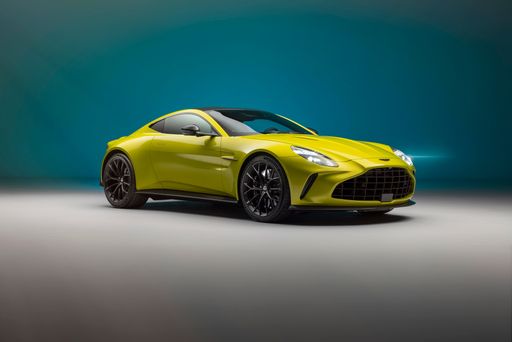
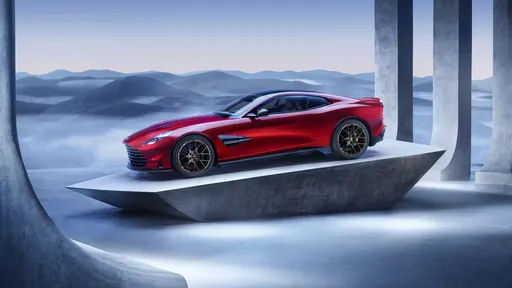
The Aston Martin Vanquish and Aston Martin Vantage look similar at a glance but deliver very different experiences for buyers who care about sound, long‑distance composure and driver engagement. The Vanquish is the theatrical, V12‑led grand tourer that prioritises effortless high‑speed cruising and presence, while the Vantage is a more compact, V8‑voiced driver’s car that feels quicker to hustle and bangs a little louder. Both are two‑seat propositions with limited day‑to‑day flexibility, yet they appeal to different kinds of passion: Vanquish sells ceremony and serenity at speed, Vantage sells immediacy and intimacy behind the wheel. Read on for where each model actually earns its keep for real buyers before we dive into the technical details.
Vantage

Driving character and on‑road behaviour

The Vanquish arrives with big‑engine gravitas that makes motorway passes feel effortless and confident, its character built around torque, weight and a resonant soundtrack that rewards throttle use. By contrast, the Vantage feels punchier and more direct on a winding road — smaller, sharper and quicker to change direction, so it creates more driver involvement at lower speeds. The two differ in transmission and temperament: the Vanquish’s power delivery is grand and muscular, sometimes a touch ponderous when you demand razor‑sharp shifts, whereas the Vantage trades some refinement for brisk, engaging responses. If you favour relaxed long runs with dramatic bursts, the Vanquish leans right; if you want a car that makes ordinary back roads feel alive, the Vantage points you back into the corners.

Comfort and long‑distance suitability

On long hauls the Vanquish shows its GT pedigree: lower engine speeds, a composed ride on smooth surfaces and a cabin that lets the miles roll by with less fatigue. The Vantage, while supportive and well bolstered for long stints, keeps its engine and tyres more audible, so long motorway days feel more intense and require a bit more concentration. Both cars are firmer than luxury saloons when the surface deteriorates, but the Vanquish masks high speed vibration better, whereas the Vantage exposes more road texture in exchange for sharper feedback. For cross‑country couples who value serene progress, the Vanquish will feel more grown‑up; for those who prize engagement over hushed cruising, the Vantage remains compelling.

Cabin feel, ergonomics and perceived quality

The Vantage now boasts the cleaner, more refined cabin that many reviewers praise — tighter finishes, thoughtful ergonomics and an overall sense of measured luxury that reads as modern and bespoke. The Vanquish still delivers lovely materials and an emotional layout, but small shared parts and a slightly more utilitarian switchgear package can temper the impression of absolute opulence. Both cars keep physical controls for core functions, which most drivers appreciate, yet the Vantage’s interior tends to feel fresher and more cohesive in day‑to‑day use. If tactile, contemporary luxury is a priority the Vantage generally wins that turf; if you want theatrical presence and acoustic drama, the Vanquish’s cockpit still has undeniable charm.

Practicality, city usability and everyday annoyances

Neither Aston is a city car — both are wide, low and strictly two‑seat coupes — but they cope differently in urban life: the Vanquish surprises with calm steering and useful parking aids that make it manageable despite its size, while the Vantage feels tighter to place but more persistent in transmitting road noise and width. Luggage space is modest in both, enough for a weekend away with two people; the Vanquish’s layout leans toward classical GT packing, the Vantage’s bay is slightly more usable for everyday kit. In stop‑start traffic the Vanquish’s calm cruiser manners feel less fussy, whereas the Vantage reminds you constantly that it prefers motion and engagement. For buyers needing occasional city use the Vanquish is marginally more forgiving, but neither is ideal as a daily commuter in cramped urban settings.

Buyer fit: who should choose which Aston?

Choose the Vanquish if you’re a V12 enthusiast, long‑distance couple or collector who values raucous presence, effortless high‑speed calm and the statement of owning a flagship GT. Opt for the Vantage if you want a more concentrated sporting experience, superior perceived cabin refinement and a car that rewards active driving on B‑roads and track days. Both demand respect for running costs and living with two seats, but the trade‑off is clear: Vanquish trades some precision and economy for theatre and motorway serenity, Vantage trades a degree of refinement for immediacy and cabin polish. If you want the numbers that explain those differences, the technical comparison following this editorial will map the specs to the real‑world contrasts above.

Here’s where it gets real: The technical differences in detail

Vanquish

Costs and Efficiency:

Looking at overall running costs, both models reveal some interesting differences in everyday economy.

Aston Martin Vantage is considerably cheaper – starting at 168,000 £ , while the Aston Martin Vanquish costs 330,900 £ . That’s a price difference of around 162,857 £.

Fuel consumption also shows a difference: the Aston Martin Vantage uses 12.1 L/100km and is somewhat more efficient than the Aston Martin Vanquish with 13.7 L/100km. The difference is about 1.6 L/100km.

Vantage

Engine and Performance:

Under the bonnet, it becomes clear which model is tuned for sportiness and which one takes the lead when you hit the accelerator.

When it comes to engine power, the Aston Martin Vanquish offers moderately more power – delivering 835 HP compared to 680 HP. That’s roughly 155 HP more horsepower.

When accelerating from 0 to 100 km/h, the Aston Martin Vanquish is only slightly quicker – completing the sprint in 3.3 s, while the Aston Martin Vantage takes 3.5 s. That’s about 0.2 s quicker.

There’s also a difference in torque: the Aston Martin Vanquish delivers somewhat more torque with 1,000 Nm compared to 800 Nm. That’s about 200 Nm more.

Space and Everyday Use:

Cabin size, boot volume and payload all play a role in everyday practicality. Here, comfort and flexibility make the difference.

Both vehicles offer seating for 2 people.

In terms of curb weight, Aston Martin Vantage is marginally lighter – 1,745 kg compared to 1,910 kg. The difference is around 165 kg.

Looking at boot space, the Aston Martin Vanquish offers only slightly more boot space – 248 L compared to 235 L. That’s a difference of about 13 L.

Who wins the race in the data check?

The Aston Martin Vantage is barely ahead in the objective data comparison.
This result only shows which model scores more points on paper – not which of the two cars feels right for you.

from £168,000
Vantage

Aston Martin Vantage

  • Engine Type : Petrol
  • Transmission : Automatic
  • Drive Type : Rear-Wheel Drive
  • Power HP : 665 - 680 HP
  • Consumption L/100km : 12.1 - 12.3 L/100km
Aston Martin Vanquish
Aston Martin Vantage

Costs and Consumption

View detailed analysis

Engine and Performance

View detailed analysis

Dimensions and Body

View detailed analysis

Aston Martin Vanquish

The Aston Martin Vanquish wraps brutal power in impossibly elegant coachwork, turning every commute into a cinematic entrance. It’s a driver’s car that pampers with sumptuous finishes while subtly reminding you that discretion was never part of its vocabulary.

details

Aston Martin Vantage

The Aston Martin Vantage marries sculptural, jaw-dropping design with a ferociously engaging character that turns everyday drives into a headline act. Buyers get a luxuriously intimate cabin and a raw, communicative chassis — perfect if you crave theatre every time you pull away.

details
Aston Martin Vanquish
Aston Martin Vantage

Costs and Consumption

Price
330,900 - 357,400 £
Price
168,000 - 228,000 £
Consumption L/100km
13.7 L/100km
Consumption L/100km
12.1 - 12.3 L/100km
Consumption kWh/100km
-
Consumption kWh/100km
-
Electric Range
-
Electric Range
-
Battery Capacity
-
Battery Capacity
-
co2
312 g/km
co2
274 - 279 g/km
Fuel tank capacity
-
Fuel tank capacity
-

Dimensions and Body

Body Type
Coupe, Convertible
Body Type
Coupe, Roadster
Seats
2
Seats
2
Doors
-
Doors
-
Curb weight
1,910 - 2,005 kg
Curb weight
1,745 - 1,805 kg
Trunk capacity
219 - 248 L
Trunk capacity
235 L
Length
-
Length
-
Width
2,044 mm
Width
1,980 mm
Height
-
Height
-
Max trunk capacity
-
Max trunk capacity
-
Payload
-
Payload
-

Engine and Performance

Engine Type
Petrol
Engine Type
Petrol
Transmission
Automatic
Transmission
Automatic
Transmission Detail
Automatic Gearbox
Transmission Detail
Automatic Gearbox
Drive Type
Rear-Wheel Drive
Drive Type
Rear-Wheel Drive
Power HP
835 HP
Power HP
665 - 680 HP
Acceleration 0-100km/h
3.3 - 3.4 s
Acceleration 0-100km/h
3.5 - 3.6 s
Max Speed
-
Max Speed
-
Torque
1,000 Nm
Torque
800 Nm
Number of Cylinders
12
Number of Cylinders
8
Power kW
614 kW
Power kW
489 - 500 kW
Engine capacity
5,204 cm3
Engine capacity
3,982 cm3

General

Model Year
2,024 - 2,025
Model Year
2,024 - 2,025
CO2 Efficiency Class
G
CO2 Efficiency Class
G
Brand
Aston Martin
Brand
Aston Martin
DriveDuel uses data analysis and artificial intelligence to evaluate vehicle data and create content. Content is regularly reviewed and improved. The displayed prices are estimates based on German list prices, adjusted to the respective country’s VAT. Country-specific registration taxes are not included. This information is not legally binding.








