VS

Audi A5 Avant vs Mercedes GLC comparison

Compare performance (639 HP vs 680 HP), boot space and price (41,600 £ vs 50,300 £ ) at a glance. Find out which car is the better choice for you – Audi A5 Avant or Mercedes GLC?

Audi A5 Avant vs Mercedes GLC: Key differences

Audi A5 Avant

  • clearly cheaper
  • slightly lighter
details

Mercedes GLC

4.4 (11 Reviews)
rate
  • barely more power
  • noticeably more efficient
  • substantially more electric range
  • only slightly quicker 0–100 km/h
  • substantially more trunk space
details

All details on performance, efficiency, range and trunk space can be found in the technical comparison below – including user reviews for both models.

By Achim Sedelmaier

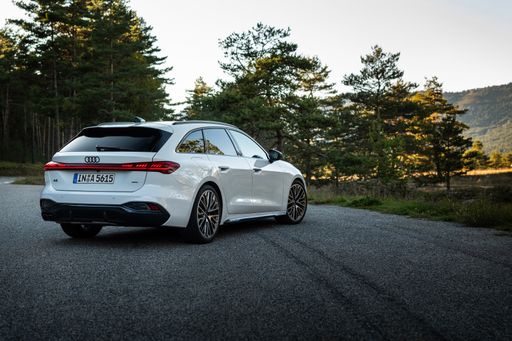
A5 Avant

Stylish Showdown: Audi A5 Avant vs. Mercedes GLC

The 2024 automotive landscape continues to evolve with innovative designs and efficient technologies. Among the standout contenders redefining their segments are the refined Audi A5 Avant and the capable Mercedes GLC. While the A5 brings a sporty flair to the wagon sector, the GLC showcases the prowess of the SUV class. In this article, we compare these two vehicles across various technical aspects and innovations.
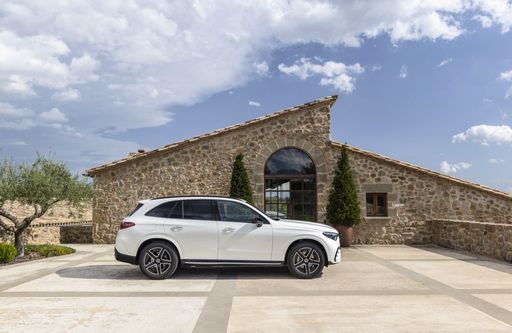
GLC

Performance and Powertrain

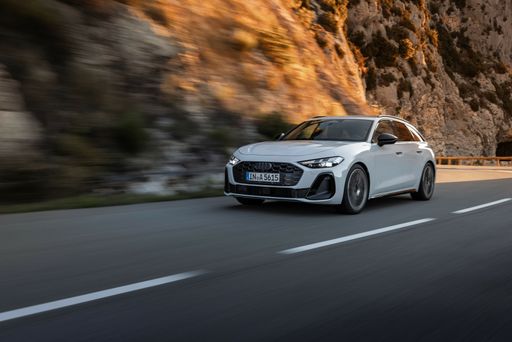
The Audi A5 Avant offers a range of powertrains including Diesel MHEV and Petrol options with power outputs spanning from 150 to 367 HP. With a choice between all-wheel drive and front-wheel drive, the A5 Avant boasts a dual-clutch automatic transmission for seamless gear transitions. The model accelerates 0-100 km/h between 4.5 to 9.8 seconds, reflecting its versatile performance capabilities.

On the other hand, the Mercedes GLC is available with Petrol MHEV, Diesel MHEV, and Plugin Hybrid options. The broad power range from 186 to 680 HP and all-wheel drive setup ensures robust performance. The GLC's automatic gearbox delivers a smooth driving experience, with acceleration ranging from 3.5 to 9 seconds for 0-100 km/h sprints, showcasing its capability across its variants.

A5 Avant

Efficiency and Environmental Concerns

The A5 Avant, with its efficient engine choices, offers consumption figures between 4.8 to 7.5 L/100km, and its CO2 emissions range from 127 to 169 g/km. However, its CO2 efficiency is rated between D to F, indicating room for improvement in eco-friendliness.

Conversely, the Mercedes GLC stands out with a Plugin Hybrid option, boasting an impressive combined consumption as low as 0.4 L/100km with an electric range up to 130 km. The CO2 emissions vary from a minimal 10 g/km to 235 g/km. With efficiency class ratings spanning B to G, the GLC offers greener alternatives in its lineup.

GLC

Comfort and Interior Space

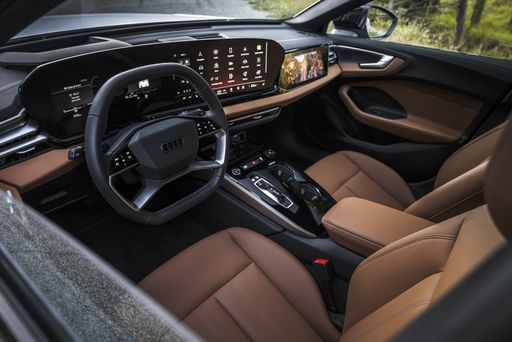
Both models prioritize comfort with state-of-the-art interior designs. The Audi A5 Avant offers seating for four passengers within its sleek wagon body type, with trunk capacity ranging from 448 to 476 L, balancing cargo space with passenger comfort. It features a high-quality interior typical of Audi's attention to luxury.

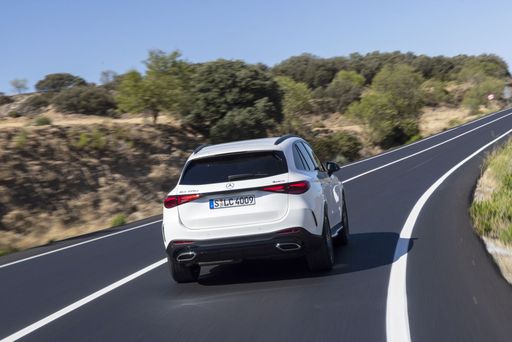
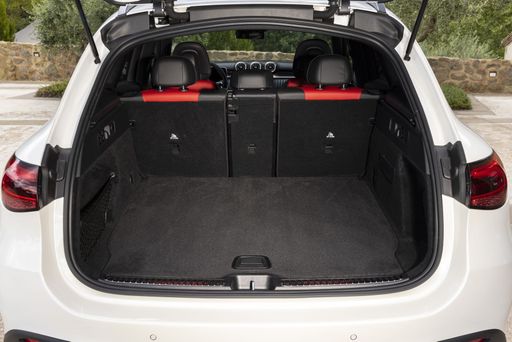
The Mercedes GLC, as an SUV, seats five passengers and provides superior cargo versatility with a trunk capacity of up to 620 L. Mercedes emphasizes luxury and modern tech fittings inside the GLC, providing a spacious and user-friendly environment for both driver and passengers.

A5 Avant

Dimensions and Exterior Design

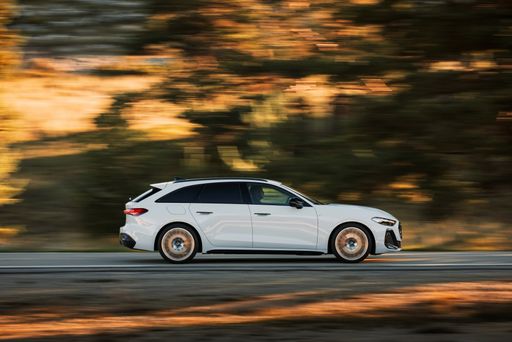
The sleek Audi A5 Avant measures between 4829 to 4835 mm in length, with a width of 1860 mm and a height between 1444 to 1460 mm, offering a combination of elegance and sporty appeal. Its wagon design caters well to the performance and family utility balance.

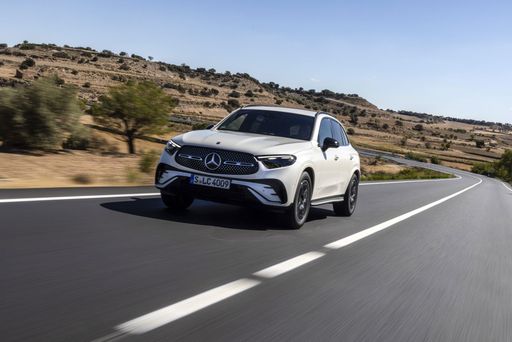
Measuring between 4716 to 4792 mm in length and 1890 mm in width, with a height range of 1603 to 1647 mm, the Mercedes GLC provides a commanding presence. Its SUV stance ensures road versatility and a robust profile that appeals to those seeking both style and functionality.

GLC

Conclusion: Choosing Your Companion

The choice between the Audi A5 Avant and Mercedes GLC ultimately hinges on personal preference and lifestyle needs. The A5 Avant is the go-to for those desiring a sporty wagon with sophisticated design and varied powertrain options. In contrast, the GLC appeals to those prioritizing a luxurious SUV experience, coupled with impressive environmental credentials, especially in its hybrid versions.

Thus, whether your preference is for a dynamic wagon or a commanding SUV, both Audi A5 Avant and Mercedes GLC stand as premium options in their respective classes, each laden with innovative technology, superior comfort, and performance capabilities.

Here’s where it gets real: The technical differences in detail

A5 Avant

Costs and Efficiency:

Price and efficiency are often the first things buyers look at. Here it becomes clear which model has the long-term edge – whether at the pump, the plug, or in purchase price.

Audi A5 Avant is clearly cheaper – starting at 41,600 £ , while the Mercedes GLC costs 50,300 £ . That’s a price difference of around 8,713 £.

Fuel consumption also shows a difference: the Mercedes GLC uses 1.6 L/100km and is noticeably more efficient than the Audi A5 Avant with 2.1 L/100km. The difference is about 0.5 L/100km.

As for electric range, the Mercedes GLC offers substantially more range – reaching up to 714 km, about 606 km more than the Audi A5 Avant.

GLC

Engine and Performance:

Under the bonnet, it becomes clear which model is tuned for sportiness and which one takes the lead when you hit the accelerator.

When it comes to engine power, the Mercedes GLC offers barely more power – delivering 680 HP compared to 639 HP. That’s roughly 41 HP more horsepower.

When accelerating from 0 to 100 km/h, the Mercedes GLC is only slightly quicker – completing the sprint in 3.5 s, while the Audi A5 Avant takes 3.7 s. That’s about 0.2 s quicker.

There’s also a difference in torque: the Mercedes GLC delivers a bit more torque with 1,020 Nm compared to 825 Nm. That’s about 195 Nm more.

A5 Avant

Space and Everyday Use:

Beyond pure performance, interior space and usability matter most in daily life. This is where you see which car is more practical and versatile.

Both vehicles offer seating for 5 people.

In terms of curb weight, Audi A5 Avant is slightly lighter – 1,785 kg compared to 1,985 kg. The difference is around 200 kg.

Looking at boot space, the Mercedes GLC offers substantially more boot space – 620 L compared to 361 L. That’s a difference of about 259 L.

When it comes to payload, the Mercedes GLC carries very slightly more – 575 kg compared to 535 kg. That’s a difference of about 40 kg.

Who wins the race in the data check?

The Mercedes GLC is decisively ahead in the objective data comparison.
This result only shows which model scores more points on paper – not which of the two cars feels right for you.

from £50,300
GLC

Mercedes GLC

  • Engine Type : Diesel MHEV, Plugin Hybrid, Electric
  • Transmission : Automatic
  • Drive Type : All-Wheel Drive
  • Power HP : 186 - 680 HP
  • Consumption L/100km : 1.6 - 9.7 L/100km
  • Consumption kWh/100km : 14.9 - 16.6 kWh/100km
  • Electric Range : 12 - 714 km
Audi A5 Avant
Mercedes GLC

Costs and Consumption

View detailed analysis

Engine and Performance

View detailed analysis

Dimensions and Body

View detailed analysis

Audi A5 Avant

The Audi A5 Avant dresses like a sleek coupe but carries like a sensible estate, offering buyers a rare blend of glamour and everyday practicality. Inside, the cabin feels beautifully sorted and the drive is composed and engaging, making routine errands feel a touch more enjoyable than they have any right to be.

details

Mercedes GLC

The Mercedes GLC blends plush cabin comfort and composed road manners into an SUV that feels more grown-up than it looks. It won’t shout for attention, but will quietly please buyers who want refinement, usable space and a touch of luxury without the drama.

details
Audi A5 Avant
Mercedes GLC

Costs and Consumption

Price
41,600 - 92,400 £
Price
50,300 - 111,000 £
Consumption L/100km
2.1 - 7.7 L/100km
Consumption L/100km
1.6 - 9.7 L/100km
Consumption kWh/100km
-
Consumption kWh/100km
14.9 - 16.6 kWh/100km
Electric Range
83 - 108 km
Electric Range
12 - 714 km
Battery Capacity
-
Battery Capacity
94 kWh
co2
47 - 175 g/km
co2
0 - 221 g/km
Fuel tank capacity
-
Fuel tank capacity
-

Dimensions and Body

Body Type
Estate
Body Type
SUV
Seats
5
Seats
5
Doors
-
Doors
5
Curb weight
1,785 - 2,445 kg
Curb weight
1,985 - 2,535 kg
Trunk capacity
361 L
Trunk capacity
390 - 620 L
Length
-
Length
4,845 mm
Width
1,860 - 1,952 mm
Width
1,890 - 1,913 mm
Height
-
Height
1,644 mm
Max trunk capacity
-
Max trunk capacity
1,740 L
Payload
480 - 535 kg
Payload
475 - 575 kg

Engine and Performance

Engine Type
Plugin Hybrid, Petrol, Diesel MHEV, Petrol MHEV
Engine Type
Diesel MHEV, Plugin Hybrid, Electric
Transmission
Automatic
Transmission
Automatic
Transmission Detail
Dual-Clutch Automatic, Automatic Gearbox
Transmission Detail
Automatic Gearbox, Reduction Gearbox
Drive Type
All-Wheel Drive, Front-Wheel Drive
Drive Type
All-Wheel Drive
Power HP
150 - 639 HP
Power HP
186 - 680 HP
Acceleration 0-100km/h
3.7 - 9.8 s
Acceleration 0-100km/h
3.5 - 9 s
Max Speed
-
Max Speed
210 km/h
Torque
280 - 825 Nm
Torque
380 - 1,020 Nm
Number of Cylinders
4 - 6
Number of Cylinders
4 - 6
Power kW
110 - 470 kW
Power kW
137 - 500 kW
Engine capacity
1,968 - 2,995 cm3
Engine capacity
1,991 - 2,989 cm3

General

Model Year
2,025 - 2,026
Model Year
2,025 - 2,026
CO2 Efficiency Class
B, E, F, D
CO2 Efficiency Class
D, B, E, F, G, A
Brand
Audi
Brand
Mercedes-Benz
DriveDuel uses data analysis and artificial intelligence to evaluate vehicle data and create content. Content is regularly reviewed and improved. The displayed prices are estimates based on German list prices, adjusted to the respective country’s VAT. Country-specific registration taxes are not included. This information is not legally binding.