VS

Audi A6 e-tron Avant vs Mercedes EQE comparison

Compare performance (551 HP vs 625 HP), boot space and price (55,200 £ vs 57,600 £ ) at a glance. Find out which car is the better choice for you – Audi A6 e-tron Avant or Mercedes EQE?

Audi A6 e-tron Avant vs Mercedes EQE: Key differences

Audi A6 e-tron Avant

3.4 (3 Reviews)
rate
  • barely cheaper
  • marginally more efficient
  • very slightly more electric range
  • only slightly lighter
  • a bit more trunk space
details

Mercedes EQE

4.4 (3 Reviews)
rate
  • moderately more power
  • moderately quicker 0–100 km/h
details

All details on performance, efficiency, range and trunk space can be found in the technical comparison below – including user reviews for both models.

By Achim Sedelmaier

A6 e-tron Avant

A Clash of Icons: Audi A6 e-tron Avant vs. Mercedes EQE

The automotive world is buzzing with excitement as electric vehicles continue to dominate the market. Two illustrious contenders have made their mark recently: the Audi A6 e-tron Avant and the Mercedes EQE. Both vehicles embody advanced engineering, stunning design, and innovative technology, making them formidable players in the electric segment. Let’s dive into the technical specifications, innovations, and overall driving experience offered by these two electric powerhouses.
EQE

Body and Design

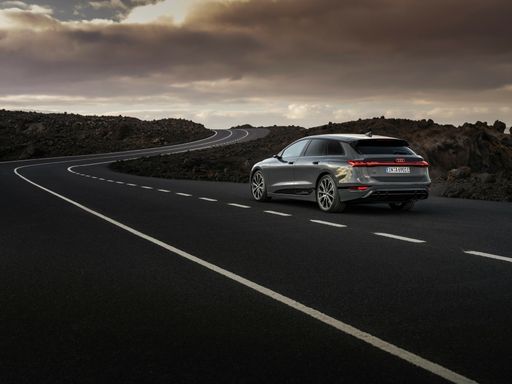
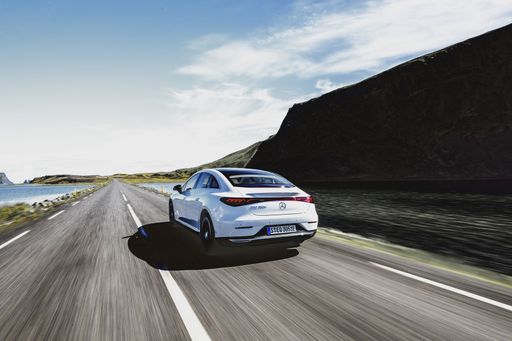
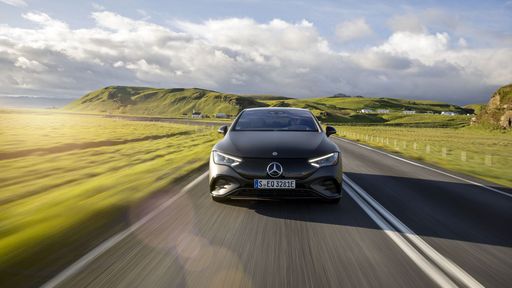
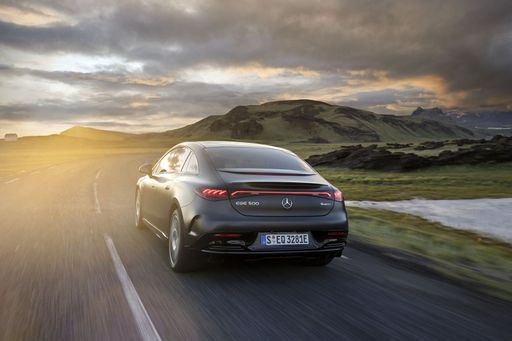
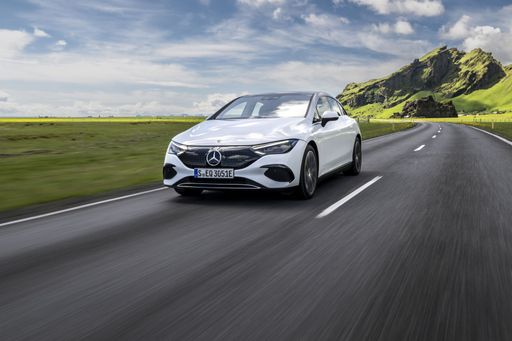
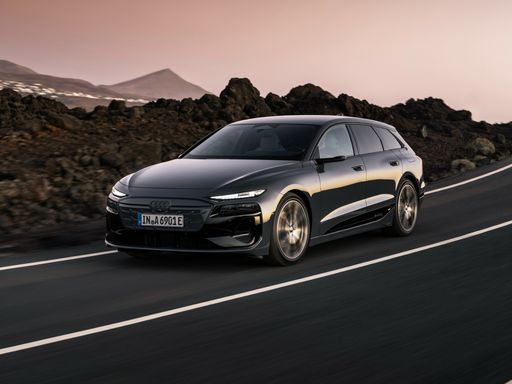
The Audi A6 e-tron Avant is a beautifully crafted wagon that balances sportiness with practicality. Its sleek silhouette and aggressive stance give it a commanding presence on the road. The car's dimensions span 4928 mm long, 1923 mm wide, and a height of 1527 mm, providing ample cabin space and a spacious trunk capacity of 502 liters. In contrast, the Mercedes EQE, a sedan, stretches slightly longer at either 4946 mm or 4964 mm, and is wider at 1961 mm with a height ranging from 1492 mm to 1510 mm. While it offers a slightly smaller trunk capacity of 430 liters, the EQE retains its elegant form and impressive aerodynamics.

A6 e-tron Avant

Performance and Powertrain

Both the A6 e-tron Avant and EQE boast remarkable performance levels, appealing to enthusiasts and everyday drivers alike. The Audi offers a power range from 240 HP in the base model to a striking 551 HP in the top-tier variant, while the Mercedes EQE presents a spectrum from 180 HP to an exhilarating 625 HP with the EQE 4-DM version. Both models are equipped with electric drivetrains that feature rear-wheel and all-wheel drive options, ensuring impressive handling and grip on various surfaces.

EQE

Acceleration and Speed

When it comes to acceleration, the Audi A6 e-tron Avant showcases its prowess by reaching 0-100 km/h in just 3.9 seconds in its most potent form, with other options still delivering commendable times around 5.4 to 6 seconds. On the other hand, the Mercedes EQE, especially the EQE 500 variant, claims a thrilling 0-100 km/h sprint in just 4.2 seconds. Both vehicles boast a top speed of around 210 km/h, though the EQE's performance-oriented variants can reach up to 220 km/h.

A6 e-tron Avant

Batteries and Efficiency

Efficiency is a vital consideration for electric vehicles, and both the A6 e-tron Avant and EQE excel in this domain. The Audi offers battery capacities of 75.8 kWh to 94.9 kWh, with varying consumption rates from 14.8 kWh/100 km to 17 kWh/100 km, translating to an impressive electric range of up to 716 km. The Mercedes EQE, with battery sizes ranging from 89 to 96 kWh, achieves slightly higher consumption rates between 15.9 kWh/100 km to 20.8 kWh/100 km but still manages an impressive electric range, peaking at 690 km.

EQE

Interior and Technology

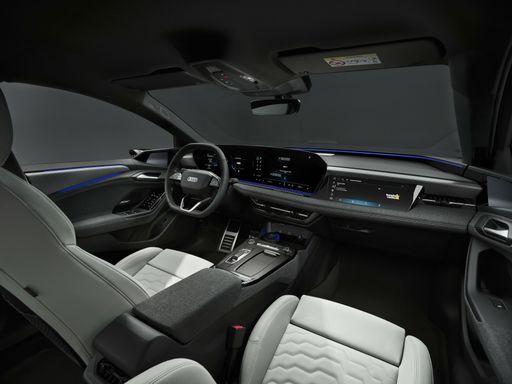
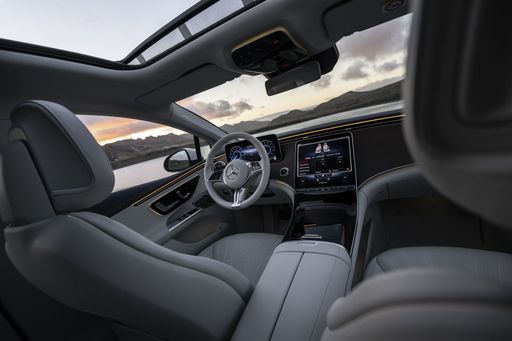
Inside, both vehicles prioritize comfort and sophistication. The Audi A6 e-tron Avant accommodates five passengers in a spacious cabin adorned with high-quality materials and state-of-the-art infotainment systems. The cabin features a sleek dashboard design with intuitive controls and a large digital display that houses various driving and entertainment functions.

The Mercedes EQE also accommodates five and exudes luxury with its minimalist interior style. The MBUX (Mercedes-Benz User Experience) infotainment system is advanced, featuring voice control, gesture recognition, and personalized settings, making it user-friendly and cutting-edge. Both vehicles come with extensive safety features and driving assists that showcase their commitment to occupant safety and convenience.

Sustainability and Beyond

With both brands being pioneers in electric mobility, they emphasize sustainability. The Audi A6 e-tron Avant is designed with recyclable materials and aims for a reduced carbon footprint throughout its lifecycle. The Mercedes EQE, on the other hand, highlights its efforts toward sustainability through ethical sourcing of materials and energy-efficient manufacturing processes.

Conclusion: Which is Right for You?

Choosing between the Audi A6 e-tron Avant and the Mercedes EQE ultimately comes down to personal preference and lifestyle needs. The Audi impresses with its versatility as a wagon, delivering spaciousness alongside sportiness. Conversely, the EQE embodies modern luxury and cutting-edge technology in a sleek sedan format. Both vehicles are commendable options in the electric market, each offering unique advantages in terms of performance, efficiency, and innovation, setting high standards for what electric vehicles can achieve.

Here’s where it gets real: The technical differences in detail

A6 e-tron Avant

Costs and Efficiency:

Looking at overall running costs, both models reveal some interesting differences in everyday economy.

Audi A6 e-tron Avant is barely cheaper – starting at 55,200 £ , while the Mercedes EQE costs 57,600 £ . That’s a price difference of around 2,346 £.

In terms of energy consumption, the Audi A6 e-tron Avant is marginally more efficient: consuming 14.8 kWh/100km compared to 15.8 kWh/100km for the Mercedes EQE. That’s a difference of about 1 kWh/100km.

As for electric range, the Audi A6 e-tron Avant offers very slightly more range – reaching up to 716 km, about 25 km more than the Mercedes EQE.

EQE

Engine and Performance:

Power, torque and acceleration are the classic benchmarks for car enthusiasts – and here, some clear differences start to show.

When it comes to engine power, the Mercedes EQE offers moderately more power – delivering 625 HP compared to 551 HP. That’s roughly 74 HP more horsepower.

When accelerating from 0 to 100 km/h, the Mercedes EQE is moderately quicker – completing the sprint in 3.5 s, while the Audi A6 e-tron Avant takes 3.9 s. That’s about 0.4 s quicker.

Looking at top speed, the Audi A6 e-tron Avant is very slightly faster – reaching 240 km/h, while the Mercedes EQE tops out at 220 km/h. The difference is around 20 km/h.

There’s also a difference in torque: the Mercedes EQE delivers very slightly more torque with 950 Nm compared to 855 Nm. That’s about 95 Nm more.

A6 e-tron Avant

Space and Everyday Use:

Beyond pure performance, interior space and usability matter most in daily life. This is where you see which car is more practical and versatile.

Both vehicles offer seating for 5 people.

In terms of curb weight, Audi A6 e-tron Avant is only slightly lighter – 2,185 kg compared to 2,375 kg. The difference is around 190 kg.

Looking at boot space, the Audi A6 e-tron Avant offers a bit more boot space – 502 L compared to 430 L. That’s a difference of about 72 L.

When it comes to payload, the Mercedes EQE carries somewhat more – 600 kg compared to 500 kg. That’s a difference of about 100 kg.

Who wins the race in the data check?

The Mercedes EQE has only a minor advantage in the objective data comparison.
This result only shows which model scores more points on paper – not which of the two cars feels right for you.

from £57,600
EQE

Mercedes EQE

  • Engine Type : Electric
  • Transmission : Automatic
  • Drive Type : All-Wheel Drive, Rear-Wheel Drive
  • Power HP : 265 - 625 HP
  • Consumption kWh/100km : 15.8 - 20.7 kWh/100km
  • Electric Range : 502 - 691 km
Audi A6 e-tron Avant
Mercedes EQE

Costs and Consumption

View detailed analysis

Engine and Performance

View detailed analysis

Dimensions and Body

View detailed analysis

Audi A6 e-tron Avant

The Audi A6 e-tron Avant wraps Audi's trademark refinement into a sleek electric estate that looks at home in the city or on the open road. Inside it's grown-up and tech-forward with practical packaging for family life, delivering a composed, confident drive that makes everyday hauling feel a bit more special and slightly futuristic.

details

Mercedes EQE

The Mercedes EQE glides like a silk-wrapped saloon from the future, pairing whisper-quiet refinement with a high-tech cabin that feels both modern and indulgent. For buyers who want electric luxury without shouting about it, the EQE is composed, comfortably confident, and just smug enough to feel special.

details
Audi A6 e-tron Avant
Mercedes EQE

Costs and Consumption

Price
55,200 - 100,100 £
Price
57,600 - 94,900 £
Consumption L/100km
-
Consumption L/100km
-
Consumption kWh/100km
14.8 - 17 kWh/100km
Consumption kWh/100km
15.8 - 20.7 kWh/100km
Electric Range
539 - 716 km
Electric Range
502 - 691 km
Battery Capacity
75.8 - 94.9 kWh
Battery Capacity
90.5 - 96 kWh
co2
0 g/km
co2
0 g/km
Fuel tank capacity
-
Fuel tank capacity
-

Dimensions and Body

Body Type
Estate
Body Type
Sedan
Seats
5
Seats
5
Doors
5
Doors
4
Curb weight
2,185 - 2,410 kg
Curb weight
2,375 - 2,540 kg
Trunk capacity
502 L
Trunk capacity
430 L
Length
4,928 mm
Length
4,946 - 4,964 mm
Width
1,923 mm
Width
1,961 mm
Height
1,504 - 1,527 mm
Height
1,492 - 1,510 mm
Max trunk capacity
1,422 L
Max trunk capacity
-
Payload
470 - 500 kg
Payload
545 - 600 kg

Engine and Performance

Engine Type
Electric
Engine Type
Electric
Transmission
Automatic
Transmission
Automatic
Transmission Detail
Reduction Gearbox
Transmission Detail
Reduction Gearbox
Drive Type
Rear-Wheel Drive, All-Wheel Drive
Drive Type
All-Wheel Drive, Rear-Wheel Drive
Power HP
326 - 551 HP
Power HP
265 - 625 HP
Acceleration 0-100km/h
3.9 - 6 s
Acceleration 0-100km/h
3.5 - 6.9 s
Max Speed
210 - 240 km/h
Max Speed
210 - 220 km/h
Torque
435 - 855 Nm
Torque
550 - 950 Nm
Number of Cylinders
-
Number of Cylinders
-
Power kW
240 - 405 kW
Power kW
195 - 460 kW
Engine capacity
-
Engine capacity
-

General

Model Year
2024
Model Year
2,024 - 2,025
CO2 Efficiency Class
A
CO2 Efficiency Class
A
Brand
Audi
Brand
Mercedes-Benz
DriveDuel uses data analysis and artificial intelligence to evaluate vehicle data and create content. Content is regularly reviewed and improved. The displayed prices are estimates based on German list prices, adjusted to the respective country’s VAT. Country-specific registration taxes are not included. This information is not legally binding.