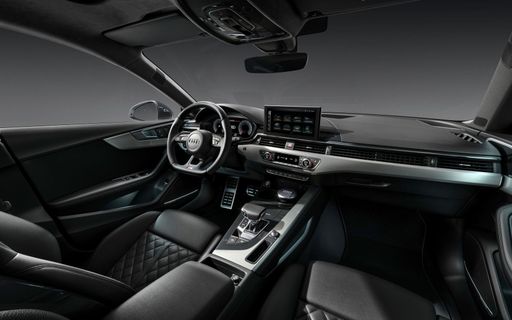
VS

Audi A7 vs Audi A5 Sportback comparison

Compare performance (630 HP vs 639 HP), boot space and price (55,000 £ vs 40,200 £ ) at a glance. Find out which car is the better choice for you – Audi A7 or Audi A5 Sportback?

Audi A7 vs Audi A5 Sportback: Key differences

Audi A7

  • clearly more efficient
  • barely quicker 0–100 km/h
  • visibly more trunk space

Audi A5 Sportback

  • noticeably cheaper
  • only slightly more power
  • clearly more electric range
A7

Introduction: A Clash of Audi Titans

In the ever-evolving world of automotive excellence, the Audi A5 Sportback and the Audi A7 stand as two remarkable offerings from the German automaker, promising to deliver unparalleled performance, design innovation, and advanced technology. Both models cater to those who demand driving pleasure and luxury. However, making a choice between the two requires a detailed examination of their technical prowess and innovative features. Let's delve into the specifications and offerings of these impressive vehicles.
A5 Sportback

Exterior and Design

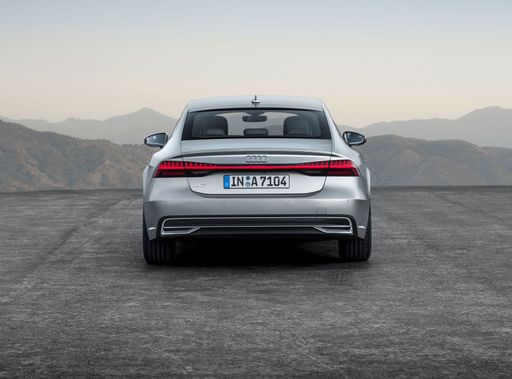
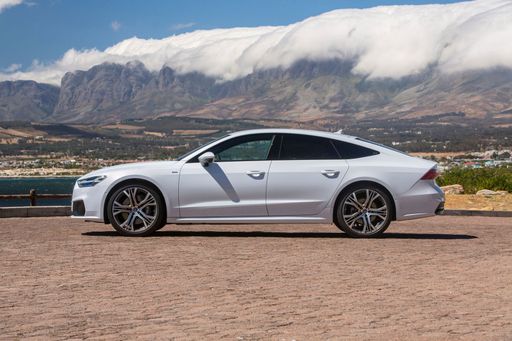
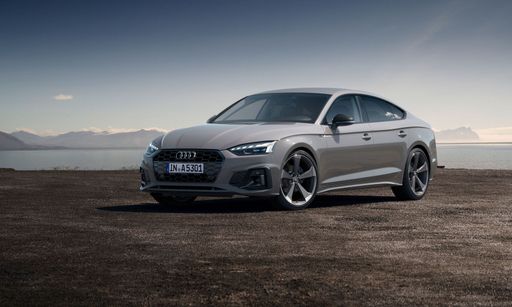
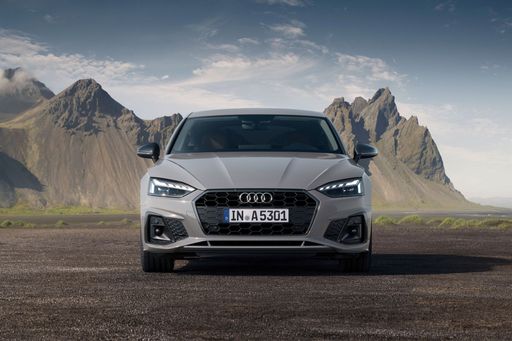
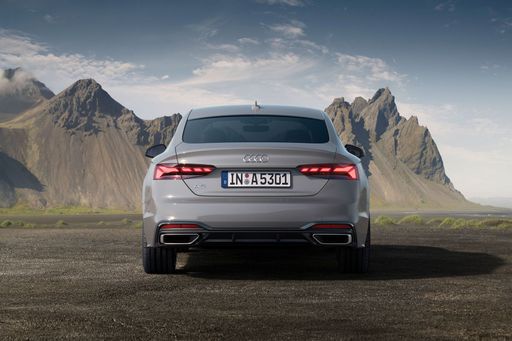
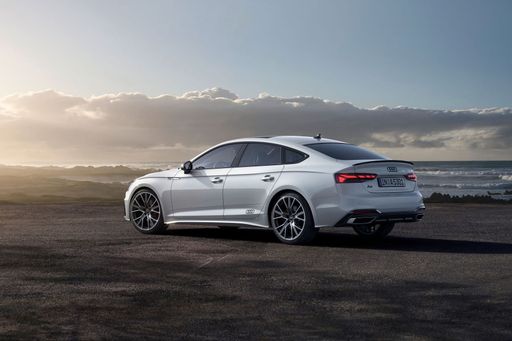
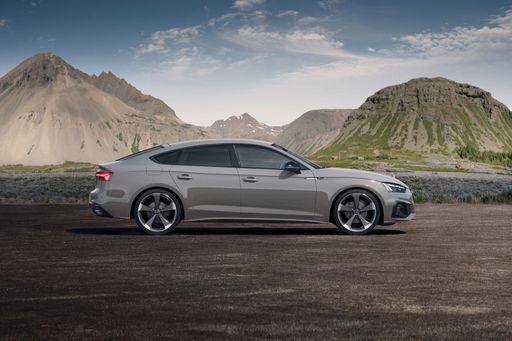
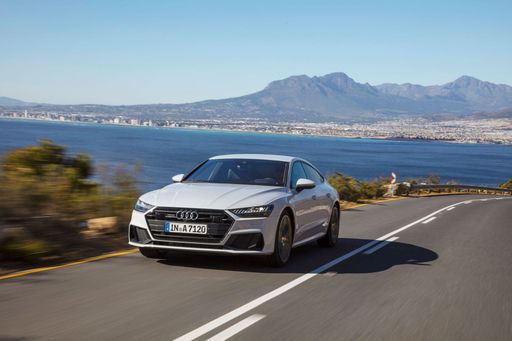
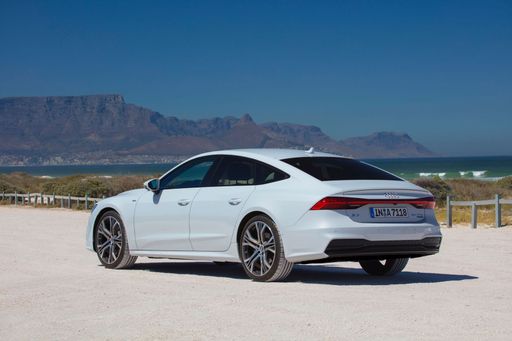
The Audi A5 Sportback, a hatchback, measures between 4757 mm to 4835 mm in length, featuring a more compact silhouette compared to the Audi A7, with its dimensions stretching from 4969 mm to 5009 mm. The A5 exudes sportiness and dynamism, characterized by its sculpted lines and aggressive stance. Meanwhile, the A7 adopts a more luxurious and elongated design, featuring an elegantly sloping roofline that hints at its grand touring capabilities.

A7

Interior Comfort and Space

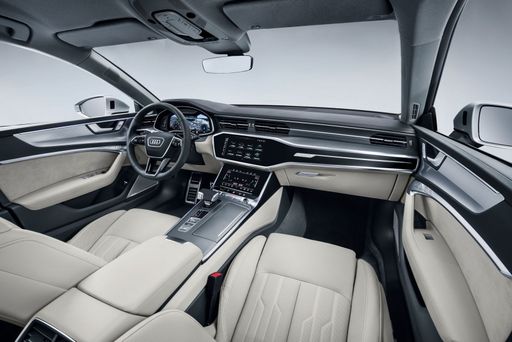
Both the A5 Sportback and the A7 come equipped with a four-seat configuration, providing ample room for passengers. The A5 offers a trunk capacity of around 465 liters, whereas the A7 impresses with superior cargo space of up to 535 liters, enhancing its practicality on long journeys.

A5 Sportback

Powertrain and Performance

The A5 Sportback is powered by a variety of engines, including diesel MHEV, petrol, and petrol MHEV options, generating power outputs ranging from 150 HP to an exhilarating 470 HP. The engines link to either a dual-clutch automatic or an automatic gearbox, offering smooth and responsive performance across both all-wheel and front-wheel drive systems. The A5 accelerates from 0 to 100 km/h in times ranging from 3.7 seconds to 9.8 seconds.

The A7, comparable with an array of engine choices including diesel MHEV, petrol MHEV, and plugin hybrid, produces power from 204 HP to an incredible 630 HP. The combination of advanced technology and power in the A7 facilitates diverse fuel consumption rates, with its plugin hybrid option boasting an electric range of up to 68 km. Moreover, the A7 achieves the century sprint from 3.4 seconds to 8.1 seconds, underscoring its high-performance execution.

A7

Efficiency and Environmental Impact

Environmental considerations are imperative, and both models provide distinct CO2 efficiency classes. The A5 Sportback equates CO2 emissions from 124 g/km to 217 g/km, while the A7 ranges from an impressive 28 g/km, thanks to its plugin hybrid variant, up to a higher 276 g/km for more powerful variants. The A7’s hybrid options considerably enhance its green credentials.

A5 Sportback

Technological Innovations

Audi distinguishes itself with technological advancements, and both models are outfitted with cutting-edge features. The A5 Sportback offers a combination of connectivity options and drive assistance systems, aligning with modern connectivity demands. Meanwhile, the A7 stands out with its extensive driver-assist technology and optional equipment that pushes the boundaries of vehicle interaction and safety.

A7

Conclusion: A Decision of Preference and Purpose

The Audi A5 Sportback and Audi A7 stand as testaments to Audi's relentless commitment to engineering excellence and design sophistication. While the A5 Sportback is optimal for those seeking a blend of performance and bustling city practicality, the A7 caters to those who prioritize luxury, advanced technology, and extended road adventures. The choice between these two iconic models boils down to individual preferences and driving needs, each providing a unique fusion of Audi's heritage and innovation.

Choosing between these two Audi offerings is not merely about selection, but about embracing the journey that suits your lifestyle. With either model, drivers are assured of unrivaled engineering and a captivating automotive experience that only Audi can deliver.

Here’s where it gets real: The technical differences in detail

A7

Costs and Efficiency:

Price and efficiency are key factors when choosing a car – and this is often where the real differences emerge.

Audi A5 Sportback is noticeably cheaper – starting at 40,200 £ , while the Audi A7 costs 55,000 £ . That’s a price difference of around 14,828 £.

Fuel consumption also shows a difference: the Audi A7 uses 1.2 L/100km and is clearly more efficient than the Audi A5 Sportback with 2 L/100km. The difference is about 0.8 L/100km.

As for electric range, the Audi A5 Sportback offers clearly more range – reaching up to 110 km, about 42 km more than the Audi A7.

A5 Sportback

Engine and Performance:

Power, torque and acceleration are the classic benchmarks for car enthusiasts – and here, some clear differences start to show.

When it comes to engine power, the Audi A5 Sportback offers only slightly more power – delivering 639 HP compared to 630 HP. That’s roughly 9 HP more horsepower.

When accelerating from 0 to 100 km/h, the Audi A7 is barely quicker – completing the sprint in 3.4 s, while the Audi A5 Sportback takes 3.7 s. That’s about 0.3 s quicker.

Looking at top speed, the Audi A7 is slightly faster – reaching 280 km/h, while the Audi A5 Sportback tops out at 250 km/h. The difference is around 30 km/h.

There’s also a difference in torque: the Audi A7 delivers marginally more torque with 850 Nm compared to 825 Nm. That’s about 25 Nm more.

A7

Space and Everyday Use:

Whether family car or daily driver – which one offers more room, flexibility and comfort?

Seats: Audi A5 Sportback offers more seats – 5 vs 4.

Both models weigh roughly the same – around 1,770 kg.

Looking at boot space, the Audi A7 offers visibly more boot space – 535 L compared to 331 L. That’s a difference of about 204 L.

For maximum load capacity, the Audi A7 offers moderately more capacity – up to 1,390 L, about 215 L more than the Audi A5 Sportback.

When it comes to payload, the Audi A7 carries somewhat more – 600 kg compared to 530 kg. That’s a difference of about 70 kg.

Who wins the race in the data check?

The Audi A7 is far ahead overall in the objective data comparison.
This result only shows which model scores more points on paper – not which of the two cars feels right for you.

from £55,000
A7

Audi A7

  • Engine Type : Diesel MHEV, Petrol MHEV, Plugin Hybrid
  • Transmission : Automatic
  • Drive Type : All-Wheel Drive, Front-Wheel Drive
  • Power HP : 204 - 630 HP
  • Consumption L/100km : 1.2 - 12.2 L/100km
  • Electric Range : 67 - 68 km
Audi A7
Audi A5 Sportback

Costs and Consumption

View detailed analysis

Engine and Performance

View detailed analysis

Dimensions and Body

View detailed analysis

Audi A7

The Audi A7 wraps elegant fastback lines around a sumptuous, tech-packed cabin that turns everyday drives into something a bit more special. It strikes a polished balance between relaxed comfort and engaging poise, so you’ll enjoy long cruises and spirited backroad runs while arriving in unmistakable style.

details

Audi A5 Sportback

The Audi A5 Sportback dresses up sleek coupe proportions with the everyday sense of a practical hatchback, so you get striking looks without the compromises. Behind the wheel it balances poise and comfort with premium trimmings that make daily driving feel a little bit special — ideal for buyers who want style and substance in equal measure.

details
Audi A7
Audi A5 Sportback

Costs and Consumption

Price
55,000 - 117,900 £
Price
40,200 - 91,000 £
Consumption L/100km
1.2 - 12.2 L/100km
Consumption L/100km
2 - 7.6 L/100km
Consumption kWh/100km
-
Consumption kWh/100km
-
Electric Range
67 - 68 km
Electric Range
84 - 110 km
Battery Capacity
14.4 kWh
Battery Capacity
20.7 kWh
co2
28 - 276 g/km
co2
45 - 172 g/km
Fuel tank capacity
52 - 73 L
Fuel tank capacity
46 L

Dimensions and Body

Body Type
Hatchback
Body Type
Hatchback
Seats
4
Seats
4 - 5
Doors
5
Doors
5
Curb weight
1,770 - 2,150 kg
Curb weight
1,770 - 2,430 kg
Trunk capacity
380 - 535 L
Trunk capacity
331 L
Length
4,969 - 5,009 mm
Length
4,829 mm
Width
1,908 - 1,950 mm
Width
1,860 - 1,952 mm
Height
1,422 - 1,424 mm
Height
1,444 mm
Max trunk capacity
1,235 - 1,390 L
Max trunk capacity
1,175 L
Payload
510 - 600 kg
Payload
475 - 530 kg

Engine and Performance

Engine Type
Diesel MHEV, Petrol MHEV, Plugin Hybrid
Engine Type
Plugin Hybrid, Petrol, Diesel MHEV, Petrol MHEV
Transmission
Automatic
Transmission
Automatic
Transmission Detail
Dual-Clutch Automatic, Automatic Gearbox
Transmission Detail
Dual-Clutch Automatic, Automatic Gearbox
Drive Type
All-Wheel Drive, Front-Wheel Drive
Drive Type
All-Wheel Drive, Front-Wheel Drive
Power HP
204 - 630 HP
Power HP
150 - 639 HP
Acceleration 0-100km/h
3.4 - 8.1 s
Acceleration 0-100km/h
3.7 - 9.8 s
Max Speed
245 - 280 km/h
Max Speed
250 km/h
Torque
370 - 850 Nm
Torque
280 - 825 Nm
Number of Cylinders
4 - 8
Number of Cylinders
4 - 6
Power kW
150 - 463 kW
Power kW
110 - 470 kW
Engine capacity
1,968 - 3,996 cm3
Engine capacity
1,968 - 2,995 cm3

General

Model Year
2,023 - 2,024
Model Year
2,025 - 2,026
CO2 Efficiency Class
E, F, B, G
CO2 Efficiency Class
B, E, F, D
Brand
Audi
Brand
Audi
DriveDuel uses data analysis and artificial intelligence to evaluate vehicle data and create content. Content is regularly reviewed and improved. The displayed prices are estimates based on German list prices, adjusted to the respective country’s VAT. Country-specific registration taxes are not included. This information is not legally binding.