
 Deutschland
 France
 Nederland
 Great Britain
 Sverige
 Norge
Norge Danmark
 Suomi
Suomi Italia
 Polska
 España
VS
Audi A7 vs BYD Seal 6 - Differences and prices compared
A7
@ Audi AG
Costs and Efficiency:
When it comes to price and running costs, the biggest differences usually appear. This is often where you see which car fits your budget better in the long run.
BYD Seal 6 has a significantly advantage in terms of price – it starts at 36800 £, while the Audi A7 costs 55000 £. That’s a price difference of around 18180 £.
Fuel consumption also shows a difference: Audi A7 manages with 1.20 L and is therefore decisively more efficient than the BYD Seal 6 with 1.70 L. The difference is about 0.50 L per 100 km.
As for range, the BYD Seal 6 performs noticeable better – achieving up to 100 km, about 32 km more than the Audi A7.
A7
@ Audi AG
Engine and Performance:
Power, torque and acceleration are the classic benchmarks for car enthusiasts – and here, some clear differences start to show.
When it comes to engine power, the Audi A7 has a convincingly edge – offering 630 HP compared to 212 HP. That’s roughly 418 HP more horsepower.
In acceleration from 0 to 100 km/h, the Audi A7 is convincingly quicker – completing the sprint in 3.40 s, while the BYD Seal 6 takes 8.50 s. That’s about 5.10 s faster.
In terms of top speed, the Audi A7 performs evident better – reaching 280 km/h, while the BYD Seal 6 tops out at 180 km/h. The difference is around 100 km/h.
A7
@ Audi AG
Space and Everyday Use:
Whether family car or daily driver – which one offers more room, flexibility and comfort?
Seats: BYD Seal 6 offers to a small extent more seating capacity – 5 vs 4.
In curb weight, BYD Seal 6 is barely noticeable lighter – 1710 kg compared to 1770 kg. The difference is around 60 kg.
In terms of boot space, the Audi A7 offers barely noticeable more room – 535 L compared to 500 L. That’s a difference of about 35 L.
In maximum load capacity, the BYD Seal 6 performs minimal better – up to 1535 L, which is about 145 L more than the Audi A7.
When it comes to payload, Audi A7 clearly perceptible takes the win – 600 kg compared to 435 kg. That’s a difference of about 165 kg.
Who comes out on top?
Overall, the Audi A7 shows itself to be is largely superior and secures the title of DriveDuel Champion.
It convinces with the more balanced overall package and proves to be the more versatile choice for everyday use.
from about £55,000
 @ Audi AG
Audi A7
Audi A7
BYD Seal 6
Costs and Consumption
View detailed analysis
View detailed analysis
Engine and Performance
View detailed analysis
View detailed analysis
Dimensions and Body
View detailed analysis
View detailed analysis
Audi A7
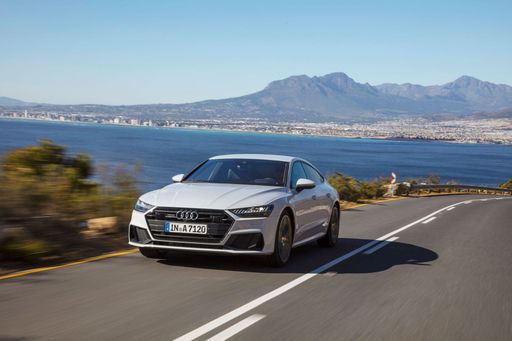
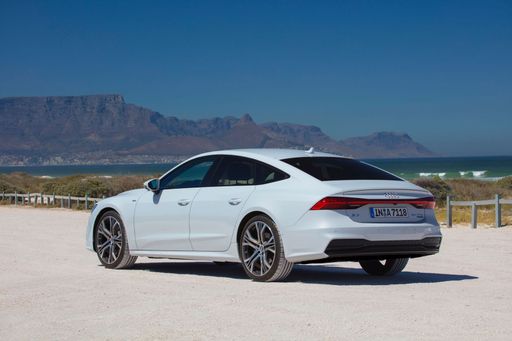
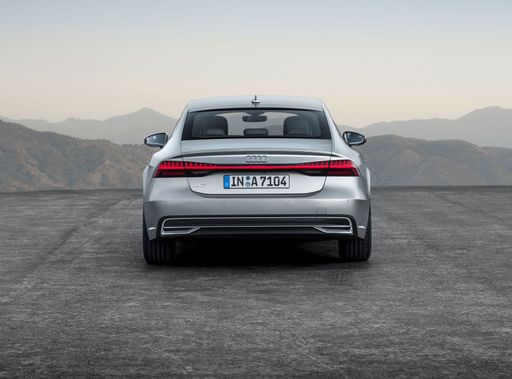
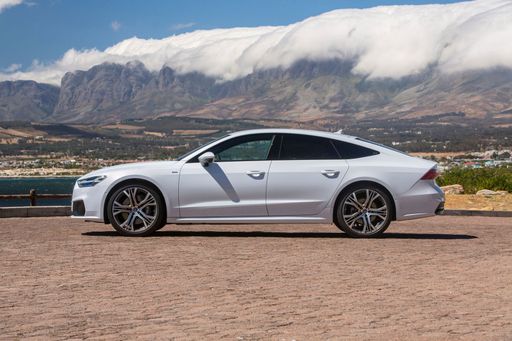
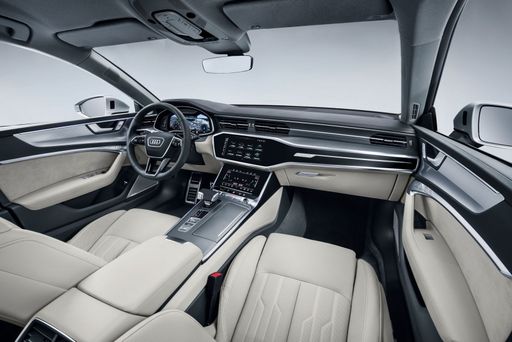
The Audi A7 wraps elegant fastback lines around a sumptuous, tech-packed cabin that turns everyday drives into something a bit more special. It strikes a polished balance between relaxed comfort and engaging poise, so you’ll enjoy long cruises and spirited backroad runs while arriving in unmistakable style.
details
@ Audi AG
 @ Audi AG
 @ Audi AG
 @ Audi AG
 @ Audi AG
BYD Seal 6
The BYD Seal 6 is a captivating electric sedan that captures attention with its sleek design and modern aerodynamics. With a strong focus on sustainability, it offers an impressive electric driving experience, combining efficiency with cutting-edge technology. The Seal 6 stands out in the EV market for its luxurious interior and innovative features, making it a strong contender for drivers looking to embrace the future of transportation.
details
Audi A7
BYD Seal 6
|
@ Audi AG
|
|
|
|
|
Costs and Consumption |
|
|---|---|
|
Price
55000 - 117900 £
|
Price
36800 - 42800 £
|
|
Consumption L/100km
1.2 - 12.2 L
|
Consumption L/100km
1.7 - 2.6 L
|
|
Consumption kWh/100km
-
|
Consumption kWh/100km
-
|
|
Electric Range
67 - 68 km
|
Electric Range
50 - 100 km
|
|
Battery Capacity
14.40 kWh
|
Battery Capacity
-
|
|
co2
28 - 276 g/km
|
co2
38 - 60 g/km
|
|
Fuel tank capacity
52 - 73 L
|
Fuel tank capacity
65 L
|
Dimensions and Body |
|
|---|---|
|
Body Type
Hatchback
|
Body Type
Estate
|
|
Seats
4
|
Seats
5
|
|
Doors
5
|
Doors
5
|
|
Curb weight
1770 - 2150 kg
|
Curb weight
1710 - 1805 kg
|
|
Trunk capacity
380 - 535 L
|
Trunk capacity
500 L
|
|
Length
4969 - 5009 mm
|
Length
4840 mm
|
|
Width
1908 - 1950 mm
|
Width
1875 mm
|
|
Height
1422 - 1424 mm
|
Height
1505 mm
|
|
Max trunk capacity
1235 - 1390 L
|
Max trunk capacity
1535 L
|
|
Payload
510 - 600 kg
|
Payload
435 kg
|
Engine and Performance |
|
|---|---|
|
Engine Type
Diesel MHEV, Petrol MHEV, Plugin Hybrid
|
Engine Type
Plugin Hybrid
|
|
Transmission
Automatic
|
Transmission
Automatic
|
|
Transmission Detail
Dual-Clutch Automatic, Automatic Gearbox
|
Transmission Detail
CVT
|
|
Drive Type
All-Wheel Drive, Front-Wheel Drive
|
Drive Type
Front-Wheel Drive
|
|
Power HP
204 - 630 HP
|
Power HP
184 - 212 HP
|
|
Acceleration 0-100km/h
3.4 - 8.1 s
|
Acceleration 0-100km/h
8.5 - 8.9 s
|
|
Max Speed
245 - 280 km/h
|
Max Speed
180 km/h
|
|
Torque
370 - 850 Nm
|
Torque
-
|
|
Number of Cylinders
4 - 8
|
Number of Cylinders
4
|
|
Power kW
150 - 463 kW
|
Power kW
135 - 156 kW
|
|
Engine capacity
1968 - 3996 cm3
|
Engine capacity
1498 cm3
|
General |
|
|---|---|
|
Model Year
2023 - 2024
|
Model Year
2025
|
|
CO2 Efficiency Class
E, F, B, G
|
CO2 Efficiency Class
B
|
|
Brand
Audi
|
Brand
BYD
|
What drivetrain options does the Audi A7 have?
Available configurations include All-Wheel Drive or Front-Wheel Drive.
The prices and data displayed are estimates based on German list prices and may vary by country. This information is not legally binding.