VS

BMW 1 Series vs BMW 2 Series comparison

Compare performance (300 HP vs 530 HP), boot space and price (28,800 £ vs 39,200 £ ) at a glance. Find out which car is the better choice for you – BMW 1 Series or BMW 2 Series?

BMW 1 Series vs BMW 2 Series: Key differences

BMW 1 Series

5 (1 Reviews)
rate
  • markedly cheaper
  • a bit more efficient
  • barely lighter

BMW 2 Series

  • significantly more power
  • clearly quicker 0–100 km/h
  • only slightly more trunk space
1 Series

BMW 1 Series vs. BMW 2 Series: The Ultimate Showdown

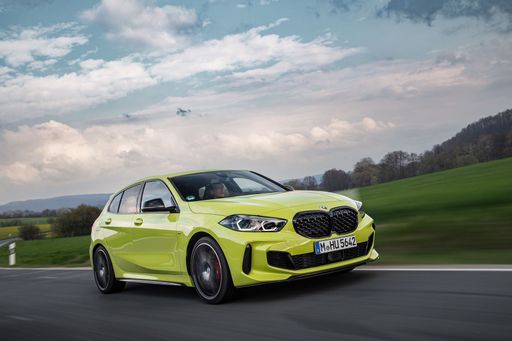
When it comes to compact luxury vehicles, BMW stands out with its diverse range. From the urban flair of the 1 Series hatchback to the sporty elegance of the 2 Series coupe, both cars offer distinct experiences. In this article, we'll delve into their technical aspects, innovations, and overall appeal to see which stands out for potential buyers.
2 Series

Technical Features: Under the Hood

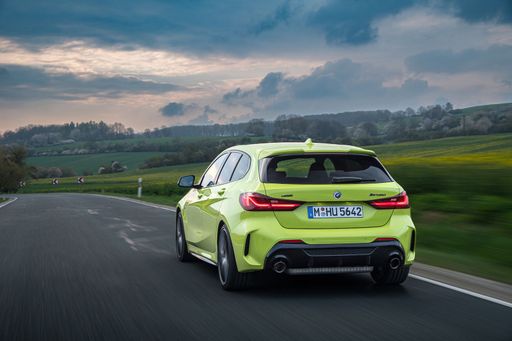
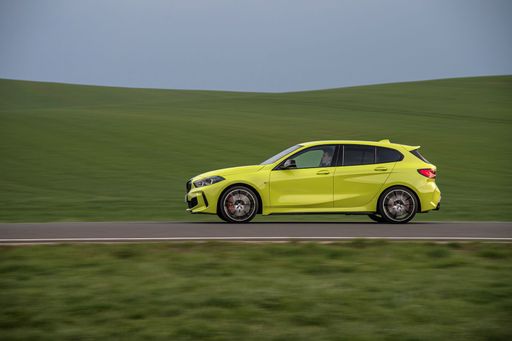
The 2024 BMW 1 Series is an enticing hatchback offering. Powering the 1 Series is a mix of petrol and diesel engines, including mild hybrid variants. The power ranges from 122 to 300 HP, and with options for front-wheel and all-wheel drive, it caters to varied driving preferences. Equipped with a dual-clutch automatic transmission, the 1 Series blends performance with efficiency, boasting a top speed of 250 km/h and acceleration from 0 to 100 km/h in just 4.9 seconds for its sportier versions.

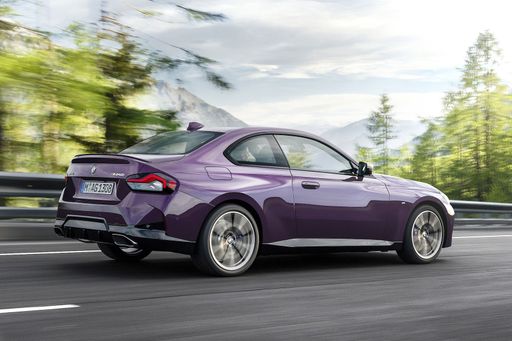
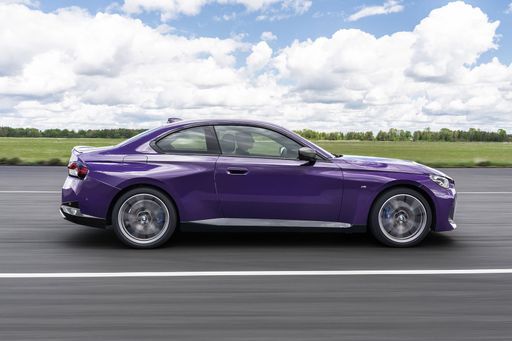
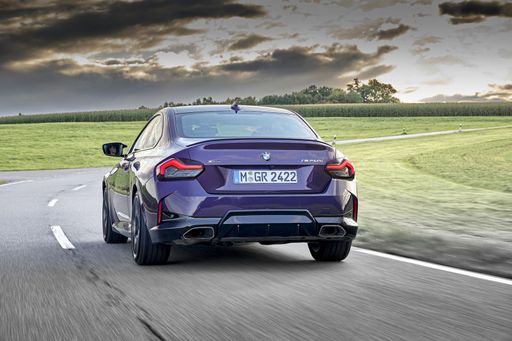
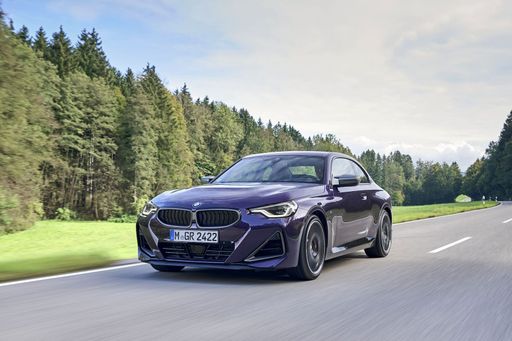
In contrast, the 2024 BMW 2 Series is exclusively a coupe, attracting those who crave a pure driving experience. Available in petrol variants and diesel mild hybrids, the power output goes up to a thrilling 480 HP. The 2 Series features either a traditional automatic or a manual gearbox, with rear-wheel or all-wheel drive systems. It reaches a maximum speed of 250 km/h, with peak acceleration at just 4 seconds, ideal for speed enthusiasts.

1 Series

Innovative Engineering and Design

Both models exhibit BMW's commitment to innovation. The 1 Series incorporates cutting-edge technologies such as mild hybrid systems, significantly enhancing fuel efficiency with a consumption rate as low as 4.3 L/100 km. The hatchback is also compact, with dimensions ensuring agile maneuvering through urban landscapes, while still offering a spacious trunk capacity of up to 380 liters.

The 2 Series, with its elegant coupe design, provides a more intimate experience. Despite its sporty demeanor, it maintains practicality with a trunk capacity of 390 liters. A notable highlight is its adaptive suspension system, delivering impeccable road handling without sacrificing comfort.

2 Series

Comfort and Interior Features

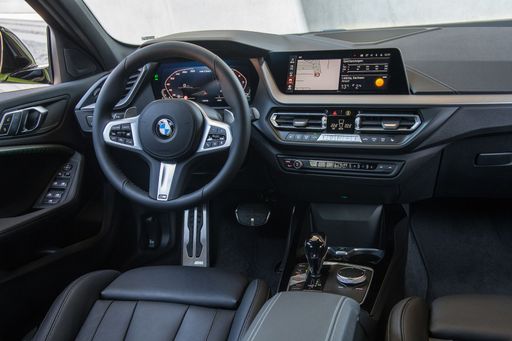
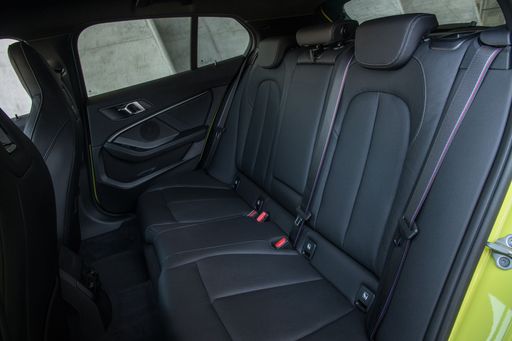
When comparing interiors, the BMW 1 Series caters to families and small groups with its five-seat configuration. It’s designed with convenience in mind, offering a futuristic digital dashboard and state-of-the-art infotainment system tailored for a connected experience.

The 2 Series, on the other hand, positions itself as a more luxurious and intimate setting with seating for four. With premium materials and an emphasis on driver-focused interfaces, it creates an environment where performance meets luxury.

1 Series

Efficiency and Eco-Conscious Engineering

Both models align with environmentally conscious engineering. The 1 Series leads slightly in terms of emissions, achieving a CO2 output as low as 112 g/km, thanks to its range of engines tailored for efficiency. On the other hand, the 2 Series offers a greener ride with its mild hybrid diesel options, further appealing to the eco-aware consumer.

2 Series

The Verdict: Which One to Choose?

Deciding between the BMW 1 Series and the BMW 2 Series largely boils down to personal preference and lifestyle needs. The 1 Series is perfect for those in need of practicality combined with a preference for a stylish hatchback that offers efficient commuting. Conversely, the 2 Series is the choice for those who value a more dynamic driving experience, with its coupe design and powerful engine options catering to heart-pounding excitement.

Ultimately, both the 1 Series and 2 Series are excellent, highlighting BMW’s prowess in engineering compact luxury cars. Whether you prioritize practicality or sheer performance, BMW ensures an option that doesn’t compromise on its legendary driving pleasure.

Here’s where it gets real: The technical differences in detail

1 Series

Costs and Efficiency:

Price and efficiency are key factors when choosing a car – and this is often where the real differences emerge.

BMW 1 Series is markedly cheaper – starting at 28,800 £ , while the BMW 2 Series costs 39,200 £ . That’s a price difference of around 10,371 £.

Fuel consumption also shows a difference: the BMW 1 Series uses 4.3 L/100km and is a bit more efficient than the BMW 2 Series with 4.9 L/100km. The difference is about 0.6 L/100km.

2 Series

Engine and Performance:

Under the bonnet, it becomes clear which model is tuned for sportiness and which one takes the lead when you hit the accelerator.

When it comes to engine power, the BMW 2 Series offers significantly more power – delivering 530 HP compared to 300 HP. That’s roughly 230 HP more horsepower.

When accelerating from 0 to 100 km/h, the BMW 2 Series is clearly quicker – completing the sprint in 3.8 s, while the BMW 1 Series takes 4.9 s. That’s about 1.1 s quicker.

Looking at top speed, the BMW 1 Series is marginally faster – reaching 250 km/h, while the BMW 2 Series tops out at 237 km/h. The difference is around 13 km/h.

There’s also a difference in torque: the BMW 2 Series delivers clearly more torque with 650 Nm compared to 400 Nm. That’s about 250 Nm more.

1 Series

Space and Everyday Use:

Beyond pure performance, interior space and usability matter most in daily life. This is where you see which car is more practical and versatile.

Seats: BMW 1 Series offers more seats – 5 vs 4.

In terms of curb weight, BMW 1 Series is barely lighter – 1,465 kg compared to 1,560 kg. The difference is around 95 kg.

Looking at boot space, the BMW 2 Series offers only slightly more boot space – 390 L compared to 380 L. That’s a difference of about 10 L.

When it comes to payload, the BMW 1 Series carries noticeably more – 510 kg compared to 400 kg. That’s a difference of about 110 kg.

Who wins the race in the data check?

The BMW 2 Series is clearly superior overall in the objective data comparison.
This result only shows which model scores more points on paper – not which of the two cars feels right for you.

from £39,200
2 Series

BMW 2 Series

  • Engine Type : Diesel MHEV, Petrol, Petrol MHEV
  • Transmission : Automatic, Manuel
  • Drive Type : Rear-Wheel Drive, All-Wheel Drive
  • Power HP : 156 - 530 HP
  • Consumption L/100km : 4.9 - 10 L/100km
BMW 1 Series
BMW 2 Series

Costs and Consumption

View detailed analysis

Engine and Performance

View detailed analysis

Dimensions and Body

View detailed analysis

BMW 1 Series

The BMW 1 Series is a compact premium hatchback that injects a proper sense of driving fun into everyday life, with sharp handling and a cabin that punches above its class. It’s a great pick for buyers who want sporty manners without losing practicality, and yes, you’ll still get that unmistakable BMW grin behind the wheel.

details

BMW 2 Series

The BMW 2 Series feels like a pocket rocket in smart clothes, delivering sharp handling and a premium cabin that turns everyday errands into something worth looking forward to. For buyers who crave a compact car with real driving character and a dash of German confidence, it’s a spirited choice that never takes itself too seriously.

details
BMW 1 Series
BMW 2 Series

Costs and Consumption

Price
28,800 - 51,100 £
Price
39,200 - 98,600 £
Consumption L/100km
4.3 - 7.6 L/100km
Consumption L/100km
4.9 - 10 L/100km
Consumption kWh/100km
-
Consumption kWh/100km
-
Electric Range
-
Electric Range
-
Battery Capacity
-
Battery Capacity
-
co2
112 - 173 g/km
co2
129 - 226 g/km
Fuel tank capacity
49 L
Fuel tank capacity
51 L

Dimensions and Body

Body Type
Hatchback
Body Type
Coupe
Seats
5
Seats
4
Doors
5
Doors
2
Curb weight
1,465 - 1,625 kg
Curb weight
1,560 - 1,830 kg
Trunk capacity
300 - 380 L
Trunk capacity
390 L
Length
4,361 mm
Length
4,537 mm
Width
1,800 mm
Width
1,838 - 1,887 mm
Height
1,459 mm
Height
1,390 mm
Max trunk capacity
1,135 - 1,200 L
Max trunk capacity
-
Payload
475 - 510 kg
Payload
350 - 400 kg

Engine and Performance

Engine Type
Diesel, Petrol MHEV, Diesel MHEV, Petrol
Engine Type
Diesel MHEV, Petrol, Petrol MHEV
Transmission
Automatic
Transmission
Automatic, Manuel
Transmission Detail
Dual-Clutch Automatic
Transmission Detail
Automatic Gearbox, Manual Gearbox
Drive Type
Front-Wheel Drive, All-Wheel Drive
Drive Type
Rear-Wheel Drive, All-Wheel Drive
Power HP
122 - 300 HP
Power HP
156 - 530 HP
Acceleration 0-100km/h
4.9 - 9.8 s
Acceleration 0-100km/h
3.8 - 8.7 s
Max Speed
210 - 250 km/h
Max Speed
237 km/h
Torque
230 - 400 Nm
Torque
250 - 650 Nm
Number of Cylinders
3 - 4
Number of Cylinders
4 - 6
Power kW
90 - 221 kW
Power kW
115 - 390 kW
Engine capacity
1,499 - 1,998 cm3
Engine capacity
1,995 - 2,998 cm3

General

Model Year
2,024
Model Year
2,024 - 2,025
CO2 Efficiency Class
D, C, F
CO2 Efficiency Class
D, E, G
Brand
BMW
Brand
BMW
DriveDuel uses data analysis and artificial intelligence to evaluate vehicle data and create content. Content is regularly reviewed and improved. The displayed prices are estimates based on German list prices, adjusted to the respective country’s VAT. Country-specific registration taxes are not included. This information is not legally binding.