VS

BMW 1 Series vs BMW 2 Series Active Tourer comparison

Compare performance (300 HP vs 326 HP), boot space and price (29,400 £ vs 31,500 £ ) at a glance. Find out which car is the better choice for you – BMW 1 Series or BMW 2 Series Active Tourer?

BMW 1 Series vs BMW 2 Series Active Tourer: Key differences

BMW 1 Series

5 (1 Reviews)
rate
  • barely cheaper
  • a bit quicker 0–100 km/h
  • marginally lighter
details

BMW 2 Series Active Tourer

4.1 (2 Reviews)
rate
  • only slightly more power
  • considerably more efficient
  • slightly more trunk space
details

All details on performance, efficiency, range and trunk space can be found in the technical comparison below – including user reviews for both models.

By Achim Sedelmaier

1 Series

BMW 1 Series and BMW 2 Series Active Tourer — quick comparison

The BMW 1 Series and the BMW 2 Series Active Tourer sit on the same premium ladder but aim at different needs: the 1 Series dresses compact sportiness into a high‑quality cabin, while the 2 Series Active Tourer prioritises space, ease of use and low cabin noise. In everyday terms that means the 1 Series feels like a smaller, more focused BMW you pilot, whereas the 2 Series feels like a calm, roomy family car you live with. Both models share modern infotainment and a touch‑heavy control layout that some drivers find distracting, so neither is for lovers of physical knobs. Price and equipment play into the choice too — the 1 Series often undercuts the Active Tourer but gives up a little practicality in return.
2 Series Active Tourer

Character and driving dynamics

The BMW 1 Series leans into driving engagement with sharper turn‑in and a more planted, responsive feel, especially if you opt for firmer suspension setups; it rewards drivers who value steering feedback and a taut chassis. By contrast, the BMW 2 Series Active Tourer trades that edge for composure: steering is lighter and the setup favours relaxed confidence rather than excitement, so long country lanes are steady but less involving. On motorways both cars feel secure, yet the Active Tourer’s quieter cabin makes sustained high‑speed runs less tiring. If you favour cornering fun and a taut setup pick the 1 Series; if you prefer forgiving composure and an unruffled long‑distance demeanour, the 2 Series Active Tourer is the more natural fit.

1 Series

Comfort and long‑distance behaviour

For long trips the BMW 2 Series Active Tourer stands out for its isolation — reduced wind and road noise keeps fatigue down over hours on the motorway, and its suspension soaks bumps in a composed way. The BMW 1 Series can be equally comfortable with the right optioned seats, but its firmer character (and certain M‑sport settings) transmits more vertical movement over poor surfaces. Both cabins feel premium in materials, yet the 1 Series’ tighter footprint means rear passengers get less room to stretch. If multi‑hour cruising in near‑silence matters, the Active Tourer will please more often; if you want a more connected, sporty ride with comfortable front seating, the 1 Series still delivers.

2 Series Active Tourer

Practicality, cabin layout and perceived quality

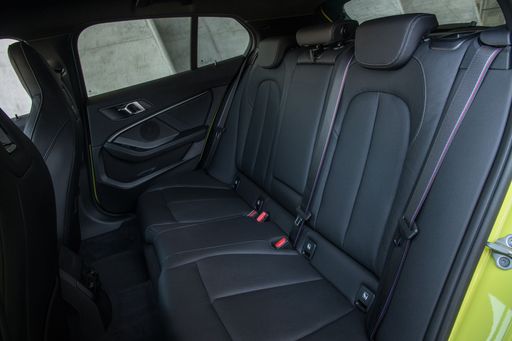
The BMW 2 Series Active Tourer clearly wins on everyday usability: a more flexible rear bench, easier loading and features like a lower tailgate lip make family logistics simpler and less fiddly than the BMW 1 Series. The BMW 1 Series compensates with a slightly more taut, premium interior feel — surfaces and finishes feel very BMW‑like and give a stronger sense of traditional compact‑premium quality. Rear legroom and luggage space favour the Active Tourer, where sliding seats and a more upright stance translate into real‑world convenience for child seats and grocery runs. In short, choose the Active Tourer for practicality first and the 1 Series if perceived cabin quality and sportier character are higher priorities.

1 Series

City friendliness and everyday usability

Around town the BMW 1 Series’ smaller silhouette helps with tighter parking and lane‑squeezing, but quirks like a dual‑clutch launch behaviour and a middling turning circle can make fast urban manoeuvres feel fiddly. The BMW 2 Series Active Tourer feels easier to live with in daily traffic thanks to a higher seating position, simpler boarding and helpful visibility forward, though both cars suffer from reduced rearward sightlines that make cameras and park assist useful additions. Both models’ touch‑centric control stacks require more attention than physical dials, so in stop‑start city use that distraction is noticeable. If your daily routine is tight streets and frequent parking, the 1 Series is more nimble; if ease of access, visibility and family chores dominate, the Active Tourer is more practical.

2 Series Active Tourer

Buyer fit — who should pick which car?

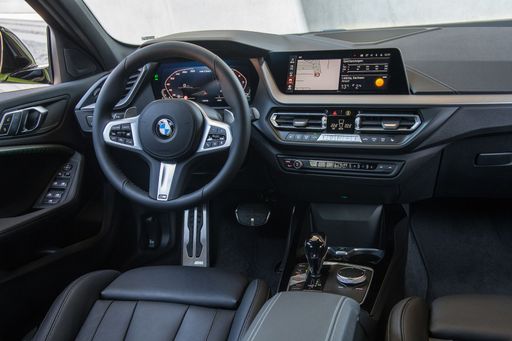
Choose the BMW 1 Series if you’re a driver who values sharper handling, a slightly more premium tactile cabin and a compact footprint that keeps running costs and list prices a touch lower; it suits single professionals and couples who prioritize driving feel. Opt for the BMW 2 Series Active Tourer if your priority is family‑friendly usability: sliding rear seats, easier loading, lower noise on long trips and a broader safety remit make it a stronger daily partner for parents and motorway commuters. The Active Tourer also offers powertrain choices that better support mixed commuting and lower running emissions, while the 1 Series keeps the driving connection alive. Below you’ll find the technical comparison that breaks down how these real‑world differences map to engines, space and equipment so you can decide which trade‑offs matter most to you.

Here’s where it gets real: The technical differences in detail

1 Series

Costs and Efficiency:

Looking at overall running costs, both models reveal some interesting differences in everyday economy.

BMW 1 Series is barely cheaper – starting at 29,400 £ , while the BMW 2 Series Active Tourer costs 31,500 £ . That’s a price difference of around 2,143 £.

Fuel consumption also shows a difference: the BMW 2 Series Active Tourer uses 2.9 L/100km and is considerably more efficient than the BMW 1 Series with 4.3 L/100km. The difference is about 1.4 L/100km.

2 Series Active Tourer

Engine and Performance:

Power, torque and acceleration are the classic benchmarks for car enthusiasts – and here, some clear differences start to show.

When it comes to engine power, the BMW 2 Series Active Tourer offers only slightly more power – delivering 326 HP compared to 300 HP. That’s roughly 26 HP more horsepower.

When accelerating from 0 to 100 km/h, the BMW 1 Series is a bit quicker – completing the sprint in 4.9 s, while the BMW 2 Series Active Tourer takes 5.5 s. That’s about 0.6 s quicker.

There’s also a difference in torque: the BMW 2 Series Active Tourer delivers a bit more torque with 477 Nm compared to 400 Nm. That’s about 77 Nm more.

1 Series

Space and Everyday Use:

Cabin size, boot volume and payload all play a role in everyday practicality. Here, comfort and flexibility make the difference.

Both vehicles offer seating for 5 people.

In terms of curb weight, BMW 1 Series is marginally lighter – 1,465 kg compared to 1,545 kg. The difference is around 80 kg.

Looking at boot space, the BMW 2 Series Active Tourer offers slightly more boot space – 470 L compared to 380 L. That’s a difference of about 90 L.

When it comes to payload, the BMW 1 Series carries barely more – 510 kg compared to 505 kg. That’s a difference of about 5 kg.

Who wins the race in the data check?

The BMW 2 Series Active Tourer is far ahead overall in the objective data comparison.
This result only shows which model scores more points on paper – not which of the two cars feels right for you.

from £31,500
2 Series Active Tourer

BMW 2 Series Active Tourer

  • Engine Type Petrol, Petrol MHEV, Diesel, Diesel MHEV, Plugin Hybrid
  • Transmission Automatic
  • Drive Type Front-Wheel Drive, All-Wheel Drive
  • Power HP 122 - 326 HP
  • Consumption L/100km 2.9 - 6.2 L/100km
  • Electric Range 82 km
BMW 1 Series
BMW 2 Series Active Tourer

Costs and Consumption

View detailed analysis

Engine and Performance

View detailed analysis

Dimensions and Body

View detailed analysis

BMW 1 Series

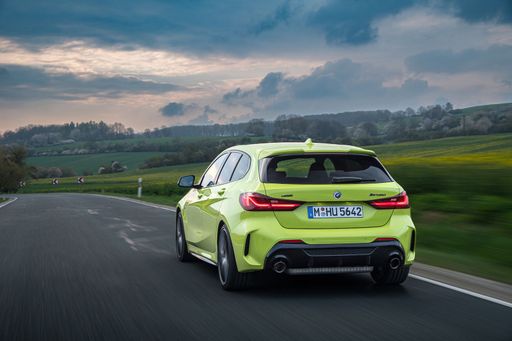
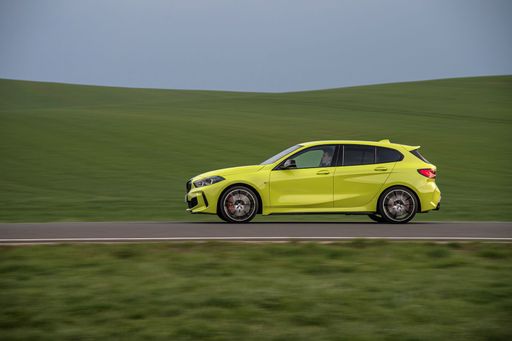
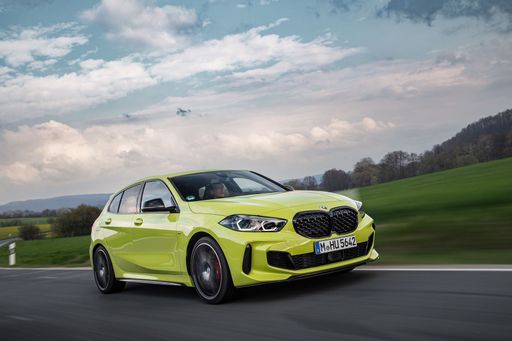
The BMW 1 Series is a compact premium hatchback that injects a proper sense of driving fun into everyday life, with sharp handling and a cabin that punches above its class. It’s a great pick for buyers who want sporty manners without losing practicality, and yes, you’ll still get that unmistakable BMW grin behind the wheel.

details

BMW 2 Series Active Tourer

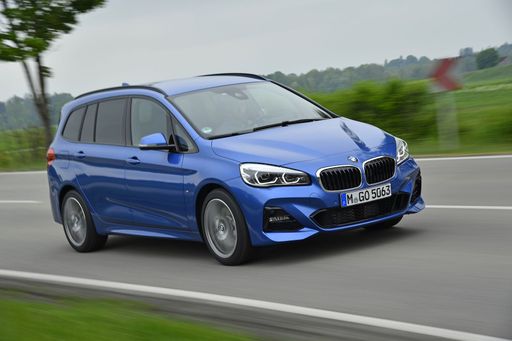
The BMW 2 Series Active Tourer turns the family MPV into something you’d actually want to park outside a café, pairing compact practicality with surprisingly premium cabin flair. It won’t thrill like a sports car, but it drives with the composed poise you expect from the badge and keeps daily life easy and un-fussy.

details
BMW 1 Series
BMW 2 Series Active Tourer

Costs and Consumption

Price
29,400 - 51,900 £
Price
31,500 - 48,500 £
Consumption L/100km
4.3 - 7.6 L/100km
Consumption L/100km
2.9 - 6.2 L/100km
Consumption kWh/100km
-
Consumption kWh/100km
-
Electric Range
-
Electric Range
82 km
Battery Capacity
-
Battery Capacity
-
co2
112 - 173 g/km
co2
65 - 140 g/km
Fuel tank capacity
-
Fuel tank capacity
-

Dimensions and Body

Body Type
Hatchback
Body Type
MPV
Seats
5
Seats
5
Doors
-
Doors
-
Curb weight
1,465 - 1,625 kg
Curb weight
1,545 - 1,920 kg
Trunk capacity
300 - 380 L
Trunk capacity
406 - 470 L
Length
-
Length
-
Width
1,800 mm
Width
1,824 mm
Height
-
Height
-
Max trunk capacity
-
Max trunk capacity
-
Payload
475 - 510 kg
Payload
465 - 505 kg

Engine and Performance

Engine Type
Diesel, Petrol MHEV, Diesel MHEV, Petrol
Engine Type
Petrol, Petrol MHEV, Diesel, Diesel MHEV, Plugin Hybrid
Transmission
Automatic
Transmission
Automatic
Transmission Detail
Dual-Clutch Automatic
Transmission Detail
Dual-Clutch Automatic
Drive Type
Front-Wheel Drive, All-Wheel Drive
Drive Type
Front-Wheel Drive, All-Wheel Drive
Power HP
122 - 300 HP
Power HP
122 - 326 HP
Acceleration 0-100km/h
4.9 - 9.8 s
Acceleration 0-100km/h
5.5 - 10.3 s
Max Speed
-
Max Speed
-
Torque
230 - 400 Nm
Torque
230 - 477 Nm
Number of Cylinders
3 - 4
Number of Cylinders
3 - 4
Power kW
90 - 221 kW
Power kW
90 - 240 kW
Engine capacity
1,499 - 1,998 cm3
Engine capacity
1,499 - 1,998 cm3

General

Model Year
2024
Model Year
2,024 - 2,025
CO2 Efficiency Class
D, C, F
CO2 Efficiency Class
E, D, B
Brand
BMW
Brand
BMW
DriveDuel uses data analysis and artificial intelligence to evaluate vehicle data and create content. Content is regularly reviewed and improved. The displayed prices are estimates based on German list prices, adjusted to the respective country’s VAT. Country-specific registration taxes are not included. This information is not legally binding.