VS

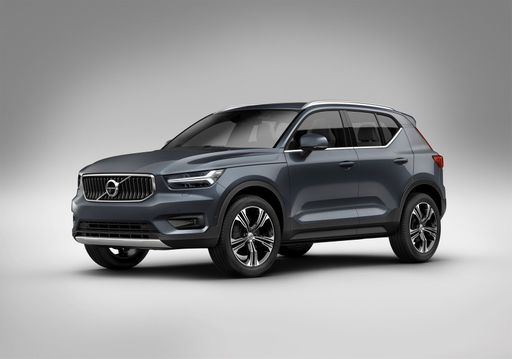
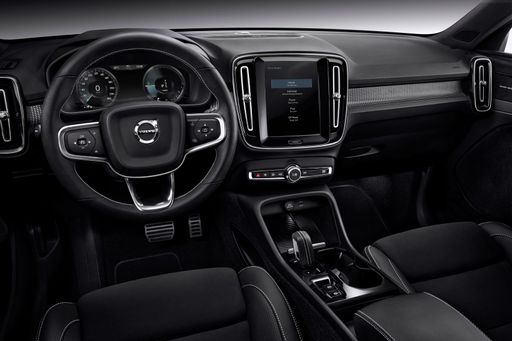
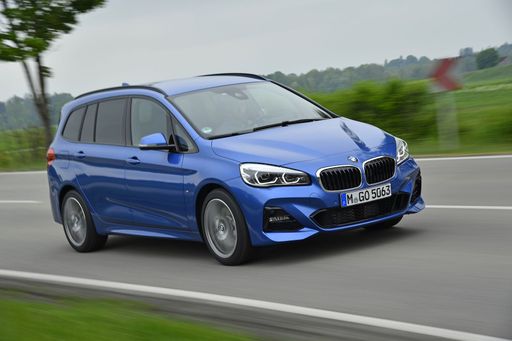
BMW 2 Series Active Tourer vs Volvo XC40 - Differences and prices compared

Compare performance (326 HP vs 197 HP), boot space and price (31000 £ vs 36800 £ ) at a glance. Find out which car is the better choice for you – BMW 2 Series Active Tourer or Volvo XC40?

2 Series Active Tourer

Battle of the Family-Focused Innovators: BMW 2er Active Tourer vs. Volvo XC40

As the demands of modern life evolve, the automotive world adapts, providing vehicles that resonate with the dynamic lifestyle of today's diverse customer base. In this comparison, we dive into two versatile yet markedly different vehicles: the BMW 2er Active Tourer and the Volvo XC40. Both cars, featuring an array of technical innovations and modern functionalities, compete for attention in the ever-growing market of family-oriented vehicles. Let's see how they stack up against each other.
XC40

Practicality Meets Power: Engine Options and Performance

The BMW 2er Active Tourer, coming out strong as a multi-purpose vehicle (MPV), offers an extensive range of engine types, including Petrol, Diesel, Mild Hybrid Electric Vehicle (MHEV) in both fuel variants, and Plugin Hybrid options. Power outputs range widely from 122 HP to an impressive 326 HP, accommodating various driving preferences. With a dual-clutch automatic transmission, drivers can expect smooth gear changes that enhance both fuel efficiency and performance.

On the other side, the Volvo XC40, a compact SUV, boasts a simpler engine lineup with a Petrol MHEV setup that offers a choice between 163 HP and 197 HP. Also featuring a dual-clutch automatic transmission, this vehicle ensures effortless driving and robust performance expected from an SUV.

2 Series Active Tourer

Efficiency and Environmental Concerns

The BMW 2er Active Tourer's diverse engine lineup offers impressive consumption rates, especially the Plugin Hybrid models, which can achieve as low as 0.8 L/100km, presenting an attractive option for eco-conscious drivers. Additionally, with a CO2 efficiency class extending up to B, it signifies a substantial reduction in environmental impact among its competitors. Those prioritizing electric capabilities will appreciate its electric range of up to 88 km, supported by a 14.2 kWh battery capacity.

In contrast, the Volvo XC40 records a consistent consumption rate of 6.5 L/100km. While the vehicle's carbon efficiency class is rated at E, its broader commitment to sustainability, represented by Volvo's brand ethos, does make up for its emissions standing to some degree.

XC40

Space, Comfort, and Utility

Inside the cabin, both vehicles offer five seats designed for comfort. The BMW 2er Active Tourer includes a variable trunk capacity, which can extend up to 470 liters based on the model, providing a versatile cargo solution. Its dimensions—4386 mm in length, 1824 mm in width, and 1576 mm in height—translate into a compact yet spacious interior.

The Volvo XC40, slightly longer and wider at 4425 mm and 1863 mm respectively, provides a trunk capacity of 452 liters. Such dimensions make it ideally suited to accommodate family needs while reinforcing its practical SUV nature. The payload capabilities also favor the XC40, which offers up to 532 kg, exceeding that of the BMW's higher variant limit of 505 kg, making it excellent for heavier loads.

2 Series Active Tourer

Comfort on the Road: Driving Experience and Capability

Whether it’s city driving or long-distance travel, the BMW 2er Active Tourer delivers with its robust acceleration times (0-100 km/h in 5.5 to 10.3 seconds) and maximum speeds reaching up to 241 km/h, promising an exhilarating driving experience across various engine types.

Meanwhile, Volvo's XC40 excels in providing a smooth and refined ride, achieving 0-100 km/h acceleration in up to 7.6 seconds and a maximum speed of 180 km/h. Its focus on safety, a hallmark of Volvo’s design philosophy, accompanies the generous performance numbers, making every journey both pleasant and secure.

XC40

Concluding Thoughts: Choosing the Right Family Vehicle

Ultimately, choosing between the BMW 2er Active Tourer and Volvo XC40 depends on the buyer's priorities: versatility and innovative hybrid tech on the BMW side or the classic SUV appeal and safety focus characterized by the Volvo XC40. Each offers something unique, waiting to be matched with its ideal owner.

The BMW 2er Active Tourer caters to families looking for flexibility, performance variety, and cutting-edge hybrid technology, while the Volvo XC40 serves those drawn to enduring safety, practical SUV comforts, and a brand known for innovation and reliability.

BMW 2 Series Active Tourer

4.1 (1 Reviews)
rate

Volvo XC40

5 (4 Reviews)
rate

Here’s where it gets real: The technical differences in detail

2 Series Active Tourer

Costs and Efficiency:

Price and efficiency are often the first things buyers look at. Here it becomes clear which model has the long-term edge – whether at the pump, the plug, or in purchase price.

BMW 2 Series Active Tourer has a to a small extent advantage in terms of price – it starts at 31000 £ , while the Volvo XC40 costs 36800 £ . That’s a price difference of around 5734 £.

Fuel consumption also shows a difference: BMW 2 Series Active Tourer manages with 2.90 L and is therefore clearly more efficient than the Volvo XC40 with 6.50 L. The difference is about 3.60 L per 100 km.

XC40

Engine and Performance:

Power, torque and acceleration say a lot about how a car feels on the road. This is where you see which model delivers more driving dynamics.

When it comes to engine power, the BMW 2 Series Active Tourer has a distinct edge – offering 326 HP compared to 197 HP. That’s roughly 129 HP more horsepower.

In acceleration from 0 to 100 km/h, the BMW 2 Series Active Tourer is distinct quicker – completing the sprint in 5.50 s, while the Volvo XC40 takes 7.60 s. That’s about 2.10 s faster.

In terms of top speed, the BMW 2 Series Active Tourer performs evident better – reaching 238 km/h, while the Volvo XC40 tops out at 180 km/h. The difference is around 58 km/h.

There’s also a difference in torque: BMW 2 Series Active Tourer pulls clearly perceptible stronger with 477 Nm compared to 300 Nm. That’s about 177 Nm difference.

Space and Everyday Use:

Whether family car or daily driver – which one offers more room, flexibility and comfort?

Both vehicles offer seating for 5 people.

In curb weight, BMW 2 Series Active Tourer is minimal lighter – 1545 kg compared to 1688 kg. The difference is around 143 kg.

In terms of boot space, the BMW 2 Series Active Tourer offers hardly perceptible more room – 470 L compared to 452 L. That’s a difference of about 18 L.

In maximum load capacity, the BMW 2 Series Active Tourer performs slight better – up to 1455 L, which is about 127 L more than the Volvo XC40.

When it comes to payload, Volvo XC40 slight takes the win – 532 kg compared to 505 kg. That’s a difference of about 27 kg.

Who wins the race in the data check?

The BMW 2 Series Active Tourer holds a decisive overall lead in the objective data comparison.
This result only shows which model scores more points on paper – not which of the two cars feels right for you.

BMW 2 Series Active Tourer
Volvo XC40

Costs and Consumption

View detailed analysis

Engine and Performance

View detailed analysis

Dimensions and Body

View detailed analysis
from about £31,000
2 Series Active Tourer

BMW 2 Series Active Tourer

  • Engine Type : Petrol, Petrol MHEV, Diesel, Diesel MHEV, Plugin Hybrid
  • Transmission : Automatic
  • Drive Type : Front-Wheel Drive, All-Wheel Drive
  • Power HP : 122 - 326 HP
  • Consumption L/100km : 2.9 - 6.2 L
  • Electric Range : 82 km

BMW 2 Series Active Tourer

4.1 (1 Reviews)
rate

The BMW 2 Series Active Tourer turns the family MPV into something you’d actually want to park outside a café, pairing compact practicality with surprisingly premium cabin flair. It won’t thrill like a sports car, but it drives with the composed poise you expect from the badge and keeps daily life easy and un-fussy.

details

Volvo XC40

5 (4 Reviews)
rate

The Volvo XC40 wraps Scandinavian minimalism into a compact, city-ready SUV with a premium cabin that feels both practical and grown-up. It will suit buyers who prize safety, clever storage and a composed ride, proving that small dimensions don't mean small personality.

details
BMW 2 Series Active Tourer
Volvo XC40

Costs and Consumption

Price
31000 - 48000 £
Price
36800 - 47200 £
Consumption L/100km
2.9 - 6.2 L
Consumption L/100km
6.50 L
Consumption kWh/100km
-
Consumption kWh/100km
-
Electric Range
82 km
Electric Range
-
Battery Capacity
14.20 kWh
Battery Capacity
-
co2
65 - 140 g/km
co2
147 - 148 g/km
Fuel tank capacity
45 - 54 L
Fuel tank capacity
54 L

Dimensions and Body

Body Type
MPV
Body Type
SUV
Seats
5
Seats
5
Doors
5
Doors
5
Curb weight
1545 - 1920 kg
Curb weight
1688 kg
Trunk capacity
406 - 470 L
Trunk capacity
452 L
Length
4386 mm
Length
4425 mm
Width
1824 mm
Width
1863 mm
Height
1576 mm
Height
1652 mm
Max trunk capacity
1370 - 1455 L
Max trunk capacity
1328 L
Payload
465 - 505 kg
Payload
532 kg

Engine and Performance

Engine Type
Petrol, Petrol MHEV, Diesel, Diesel MHEV, Plugin Hybrid
Engine Type
Petrol MHEV
Transmission
Automatic
Transmission
Automatic
Transmission Detail
Dual-Clutch Automatic
Transmission Detail
Dual-Clutch Automatic
Drive Type
Front-Wheel Drive, All-Wheel Drive
Drive Type
Front-Wheel Drive
Power HP
122 - 326 HP
Power HP
163 - 197 HP
Acceleration 0-100km/h
5.5 - 10.3 s
Acceleration 0-100km/h
7.6 - 8.6 s
Max Speed
195 - 238 km/h
Max Speed
180 km/h
Torque
230 - 477 Nm
Torque
265 - 300 Nm
Number of Cylinders
3 - 4
Number of Cylinders
4
Power kW
90 - 240 kW
Power kW
120 - 145 kW
Engine capacity
1499 - 1998 cm3
Engine capacity
1969 cm3

General

Model Year
2024 - 2025
Model Year
2024
CO2 Efficiency Class
E, D, B
CO2 Efficiency Class
E
Brand
BMW
Brand
Volvo
What drive types are available for the BMW 2 Series Active Tourer?

Available configurations include Front-Wheel Drive or All-Wheel Drive.

The prices shown are estimates based on German list prices, adjusted for local VAT. Local registration taxes (e.g. NoVA, BPM or CO2 malus) are not included. This information is not legally binding.