VS

BMW 1 Series vs CUPRA Leon comparison

Compare performance (300 HP vs 325 HP), boot space and price (29,400 £ vs 35,700 £ ) at a glance. Find out which car is the better choice for you – BMW 1 Series or CUPRA Leon?

BMW 1 Series vs CUPRA Leon: Key differences

BMW 1 Series

5 (1 Reviews)
rate
  • markedly cheaper
  • slightly quicker 0–100 km/h
details

CUPRA Leon

  • very slightly more power
  • considerably more efficient
  • barely lighter
details

By Achim Sedelmaier

1 Series

BMW 1 Series VS CUPRA Leon — quick take for buyers

BMW 1 Series VS CUPRA Leon represent two different answers to the compact premium question: the BMW pitches refined, precise driving and a tactile, upscale cabin while the CUPRA sells emotion, adaptability and a broader model mix that includes a PHEV and a roomy Sportstourer. The BMW 1 Series comes across as the slightly more premium-feeling choice with tight, confidence-inspiring handling, whereas the CUPRA Leon trades a touch of tactile refinement for louder styling, a wider comfort spread and practical variants. Budget-conscious buyers will notice the 1 Series often starts lower but option packs add up, while Leon buyers get optional tech like adaptive DCC and a PHEV that change running costs if you can charge. Safety and family credentials also tilt the scales differently: the Leon sits higher under current test criteria, the 1 Series leans on driving feel and perceived quality. Read on for how those contrasts play out day-to-day rather than on a spec sheet.
Leon

Driving character and on-road dynamics

The BMW 1 Series feels focused — steering is sharp, body control is tight and it rewards drivers who like precise cornering at speed, especially in the sportier setups. The CUPRA Leon is more of a chameleon: with DCC it can be relaxed on motorways and then dial in firmness for quicker runs, and its hotter variants deliver stronger peak shove for open-road bursts. In town the BMW’s compact chassis and taut setup make parking and lane changes feel confident, but the twin-clutch transmission can be hesitant off the line; the Leon’s gearbox and PHEV weight make some variants feel steadier but less instantly snappy. Put simply, choose the BMW 1 Series if you want a compact car that feels like a small premium saloon, choose the CUPRA Leon if you want adaptable dynamics and the option of an electric‑assist experience. Both are fun in their way, but the pathway to that fun differs: precision first with BMW, flexibility first with CUPRA.

1 Series

Comfort and long‑distance behaviour

On long runs the BMW 1 Series leans toward a composed, quiet highway ride that rewards well-paved roads and buyers who value insulation and seat comfort, although M‑Sport suspensions reduce compliance over poor surfaces. The CUPRA Leon generally offers a broader comfort spectrum — in its soft DCC setting it soaks bumps pleasantly and the PHEV version is notably silent in electric mode, which helps fatigue on commutes. Wheel choice matters harder on the Leon: large rims can compromise refinement and raise interior noise, whereas the BMW’s premium seating packages keep passengers supported mile after mile. For motorway miles where calm and composure matter most, the BMW often feels more settled and premium; for mixed routes that include rough town streets and occasional sporty drives, the CUPRA’s adaptable setup wins points. Both handle long distances competently, but the route you typically take will determine which feels more comfortable every day.

Leon

Cabin feel, infotainment and perceived quality

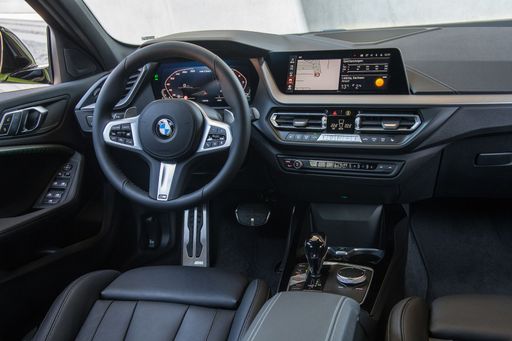
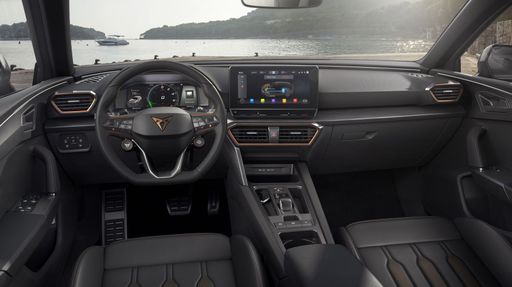
The BMW 1 Series trades on higher perceived material quality and a meticulous finish that reads as genuinely premium the moment you close the door, while the CUPRA Leon has improved fit and trim after its facelift but still shows some economy-class plastics in small areas. Both cars push touch‑centric interfaces and fewer physical controls, and that affects usability: the BMW’s clean digital layout looks premium but removes the old rotary controller, whereas the Leon’s larger screen is quicker after the update but its menu logic and touch sliders still frustrate some users. BMW nails the tactile experience in common touchpoints — steering wheel, shifter, seat surfaces — so day-to-day interactions feel satisfying; CUPRA wins on visual drama with sportier cues and a more striking design language. If you prioritise a tactile, grown-up cabin the BMW 1 Series will feel nicer at first glance; if you value a tech-forward screen and sporty ambience, the CUPRA Leon will appeal more despite small ergonomic compromises.

1 Series

Practicality, space and everyday usability

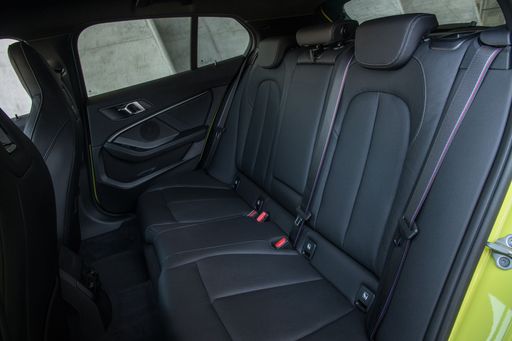
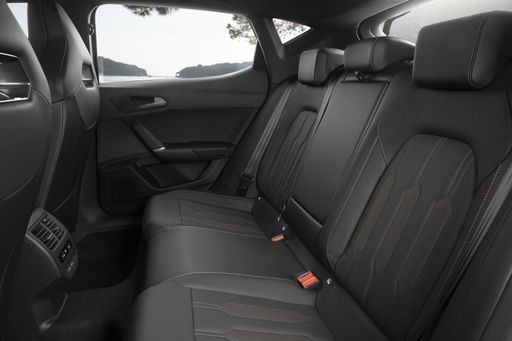
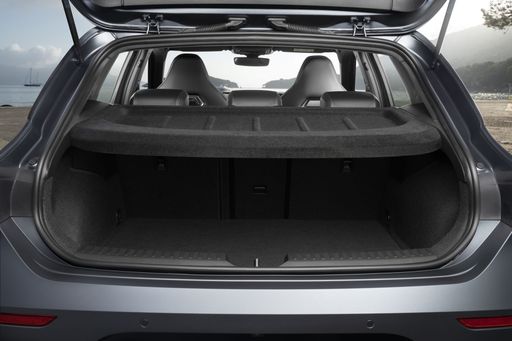
The CUPRA Leon wins in flexibility: as a Sportstourer it offers a genuinely larger, more useful load area and the hatchback versions are more forgiving when you need cargo versatility, while PHEV packaging can cut into boot space in the hatch variant. The BMW 1 Series is compact and easy to park, and it makes the most of its footprint up front, but rear space and trunk breadth are more restricted than some rivals — something families with regular bulky loads will notice. Visibility quirks affect both: the BMW’s thick C‑pillars and the Leon’s broad roof pillars each create blind spots that make cameras and sensors worthwhile options. For daily usability, choose the CUPRA Leon if you need the occasional larger load or a PHEV running cost advantage; choose the BMW 1 Series if you prioritise smaller exterior dimensions, a premium feel and the sort of tight urban manoeuvrability that makes city life simpler.

Leon

Who should consider the BMW 1 Series or the CUPRA Leon?

Pick the BMW 1 Series if you are a buyer who values a premium interior, precise handling and a compact footprint for urban life and long motorway stints where refinement counts more than outright cabin space. Opt for the CUPRA Leon if you want versatility — especially the Sportstourer or a PHEV — a wider comfort range via adaptive suspension and a bolder styling statement that stands out in traffic. Cost-conscious shoppers who neither charge nor need the extra boots should weigh BMW’s lower entry price against CUPRA’s equipment and efficiency options that pay off with regular charging or family use. The following technical comparison will unpack how those real-world differences map onto engines, consumption, safety ratings and cargo numbers so you can match the spec to your priorities without guessing.

Here’s where it gets real: The technical differences in detail

1 Series

Costs and Efficiency:

Looking at overall running costs, both models reveal some interesting differences in everyday economy.

BMW 1 Series is markedly cheaper – starting at 29,400 £ , while the CUPRA Leon costs 35,700 £ . That’s a price difference of around 6,321 £.

Fuel consumption also shows a difference: the CUPRA Leon uses 1.3 L/100km and is considerably more efficient than the BMW 1 Series with 4.3 L/100km. The difference is about 3 L/100km.

Leon

Engine and Performance:

Power, torque and acceleration say a lot about how a car feels on the road. This is where you see which model delivers more driving dynamics.

When it comes to engine power, the CUPRA Leon offers very slightly more power – delivering 325 HP compared to 300 HP. That’s roughly 25 HP more horsepower.

When accelerating from 0 to 100 km/h, the BMW 1 Series is slightly quicker – completing the sprint in 4.9 s, while the CUPRA Leon takes 5.4 s. That’s about 0.5 s quicker.

There’s also a difference in torque: the CUPRA Leon delivers very slightly more torque with 420 Nm compared to 400 Nm. That’s about 20 Nm more.

1 Series

Space and Everyday Use:

Beyond pure performance, interior space and usability matter most in daily life. This is where you see which car is more practical and versatile.

Both vehicles offer seating for 5 people.

In terms of curb weight, CUPRA Leon is barely lighter – 1,371 kg compared to 1,465 kg. The difference is around 94 kg.

Boot capacity is identical – both offer 380 L of storage.

When it comes to payload, the BMW 1 Series carries very slightly more – 510 kg compared to 493 kg. That’s a difference of about 17 kg.

Who wins the race in the data check?

The CUPRA Leon is clearly superior overall in the objective data comparison.
This result only shows which model scores more points on paper – not which of the two cars feels right for you.

from £35,700
Leon

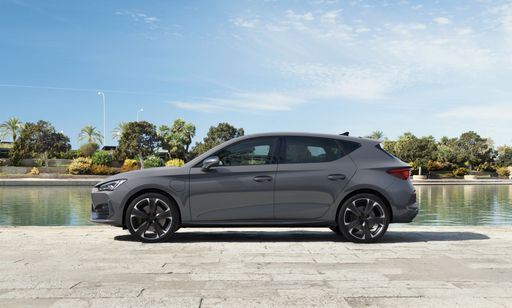
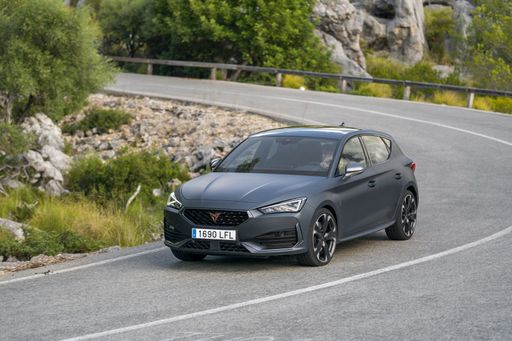
CUPRA Leon

  • Engine Type Diesel, Plugin Hybrid, Petrol, Petrol MHEV
  • Transmission Automatic, Manuel
  • Drive Type Front-Wheel Drive
  • Power HP 150 - 325 HP
  • Consumption L/100km 1.3 - 7.6 L/100km
  • Electric Range 124 - 131 km
BMW 1 Series
CUPRA Leon

Costs and Consumption

View detailed analysis

Engine and Performance

View detailed analysis

Dimensions and Body

View detailed analysis

BMW 1 Series

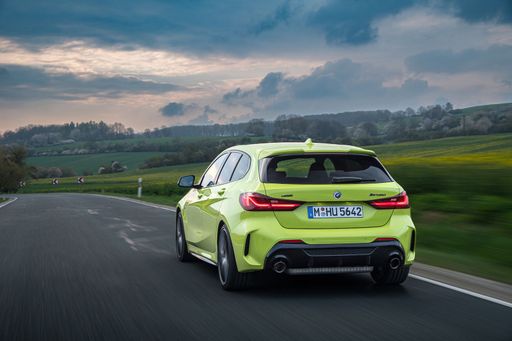
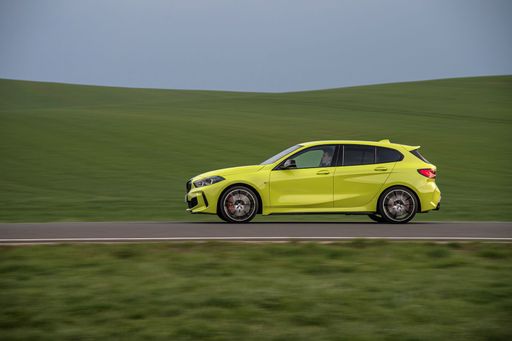
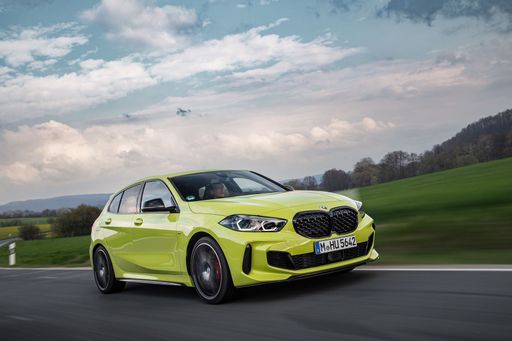
The BMW 1 Series is a compact premium hatchback that injects a proper sense of driving fun into everyday life, with sharp handling and a cabin that punches above its class. It’s a great pick for buyers who want sporty manners without losing practicality, and yes, you’ll still get that unmistakable BMW grin behind the wheel.

details

CUPRA Leon

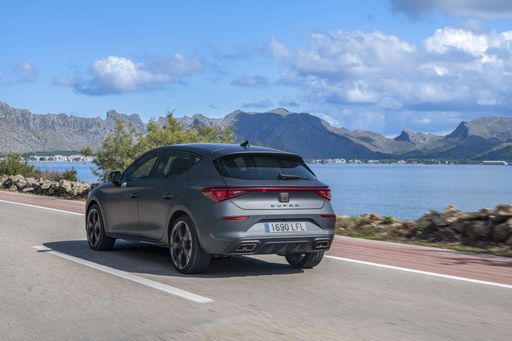
The Cupra Leon blends sporting intent with everyday practicality, serving up sharp handling and a cabin that feels more premium than its hatchback looks might suggest. It's a driver's car in commuter clothing — lively, distinctive, and clever enough to make daily driving feel a little less routine without screaming for attention.

details
BMW 1 Series
CUPRA Leon

Costs and Consumption

Price
29,400 - 51,900 £
Price
35,700 - 50,900 £
Consumption L/100km
4.3 - 7.6 L/100km
Consumption L/100km
1.3 - 7.6 L/100km
Consumption kWh/100km
-
Consumption kWh/100km
-
Electric Range
-
Electric Range
124 - 131 km
Battery Capacity
-
Battery Capacity
-
co2
112 - 173 g/km
co2
28 - 172 g/km
Fuel tank capacity
-
Fuel tank capacity
-

Dimensions and Body

Body Type
Hatchback
Body Type
Hatchback
Seats
5
Seats
5
Doors
-
Doors
-
Curb weight
1,465 - 1,625 kg
Curb weight
1,371 - 1,708 kg
Trunk capacity
300 - 380 L
Trunk capacity
270 - 380 L
Length
-
Length
-
Width
1,800 mm
Width
1,799 mm
Height
-
Height
-
Max trunk capacity
-
Max trunk capacity
-
Payload
475 - 510 kg
Payload
432 - 493 kg

Engine and Performance

Engine Type
Diesel, Petrol MHEV, Diesel MHEV, Petrol
Engine Type
Diesel, Plugin Hybrid, Petrol, Petrol MHEV
Transmission
Automatic
Transmission
Automatic, Manuel
Transmission Detail
Dual-Clutch Automatic
Transmission Detail
Dual-Clutch Automatic, Manual Gearbox
Drive Type
Front-Wheel Drive, All-Wheel Drive
Drive Type
Front-Wheel Drive
Power HP
122 - 300 HP
Power HP
150 - 325 HP
Acceleration 0-100km/h
4.9 - 9.8 s
Acceleration 0-100km/h
5.4 - 8.9 s
Max Speed
-
Max Speed
-
Torque
230 - 400 Nm
Torque
250 - 420 Nm
Number of Cylinders
3 - 4
Number of Cylinders
4
Power kW
90 - 221 kW
Power kW
110 - 239 kW
Engine capacity
1,499 - 1,998 cm3
Engine capacity
1,498 - 1,984 cm3

General

Model Year
2024
Model Year
2,025 - 2,026
CO2 Efficiency Class
D, C, F
CO2 Efficiency Class
D, B, F
Brand
BMW
Brand
CUPRA
DriveDuel uses data analysis and artificial intelligence to evaluate vehicle data and create content. Content is regularly reviewed and improved. The displayed prices are estimates based on German list prices, adjusted to the respective country’s VAT. Country-specific registration taxes are not included. This information is not legally binding.