VS

BMW 3 Series Saloon vs Mercedes E-Class Estate comparison

Compare performance (530 HP vs 585 HP), boot space and price (39,900 £ vs 52,600 £ ) at a glance. Find out which car is the better choice for you – BMW 3 Series Saloon or Mercedes E-Class Estate?

BMW 3 Series Saloon vs Mercedes E-Class Estate: Key differences

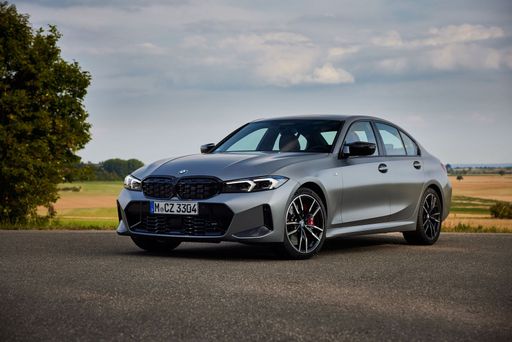
BMW 3 Series Saloon

  • markedly cheaper
  • somewhat quicker 0–100 km/h
  • visibly lighter
details

Mercedes E-Class Estate

  • only slightly more power
  • considerably more efficient
  • barely more electric range
  • noticeably more trunk space
details

By Achim Sedelmaier

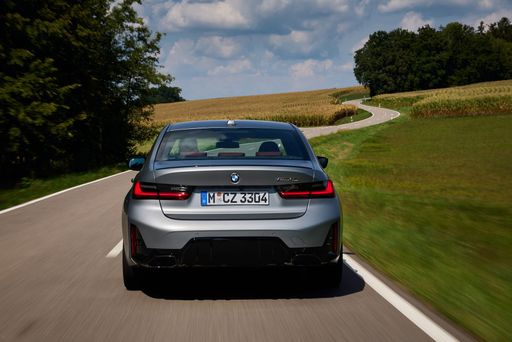
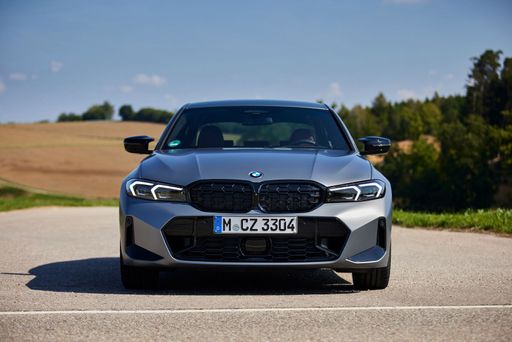
3 Series Saloon

The Battle of Premium Mid-Size: BMW 3er Limousine vs. Mercedes E-Klass T-Modell

In the world of luxury cars, few battles are as enduring as that between BMW and Mercedes-Benz. With the latest iterations of the BMW 3er Limousine and the Mercedes E-Klass T-Modell hitting the roads, car enthusiasts are spoilt for choice. These models are more than mere vehicles; they are a blend of tradition, luxury, and cutting-edge technology. Let's dive into the details to see how these two automotive titans stack up against each other.
E-Class Estate

Performance and Driving Dynamics

Performance is often a deciding factor for those choosing between BMW and Mercedes. The BMW 3er Limousine offers a diverse engine lineup, ranging from the efficient 150 HP Diesel MHEV to the exhilarating 530 HP Petrol variant. The most impressive is perhaps the plugin hybrid option with an electric range of up to 101 km, catering to those seeking both power and eco-friendliness.

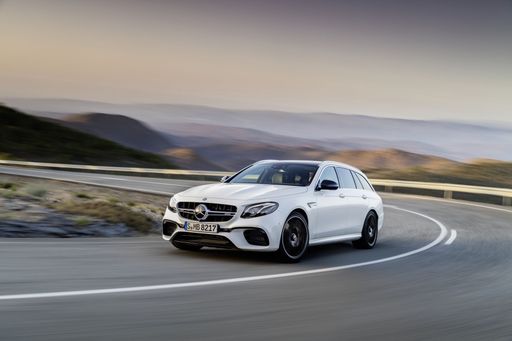
On the other hand, the Mercedes E-Klass T-Modell impresses with its robust engine options, leading with a 585 HP Petrol MHEV that promises thrilling drives. It also comes in an eco-friendly plugin hybrid variant capable of running 110 km purely on electric power. Mercedes ensures smooth transmission across its lineup with the automatic gearbox as a standard, enhancing drivability and comfort.

3 Series Saloon

Technological Innovations

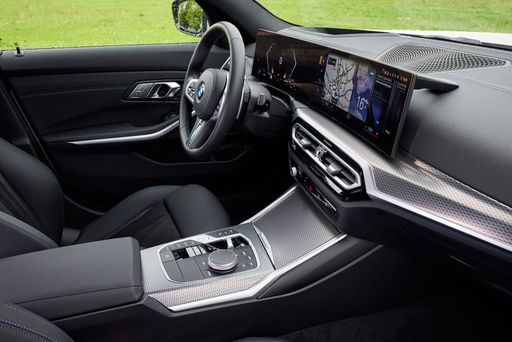
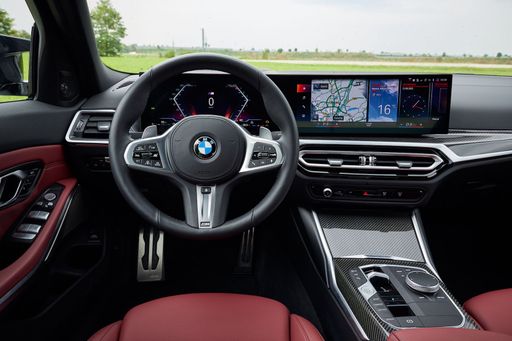
Both BMW and Mercedes leave no stone unturned in offering the latest technological advancements. The BMW 3er Limousine incorporates cutting-edge driver assistance systems, complemented by an intuitive infotainment system featuring gesture control. BMW emphasizes connectivity, ensuring your digital life is only a touch away.

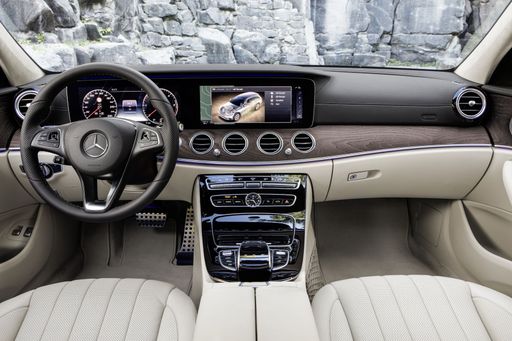
The Mercedes E-Klass T-Modell presents the innovative MBUX (Mercedes-Benz User Experience), a voice-controlled system that caters to comprehensive infotainment management. Its augmented reality navigation aids in seamless driving experiences, capturing the blend of luxury and technology Mercedes is renowned for.

E-Class Estate

Fuel Efficiency and Environmental Impact

Environmental conscientiousness is at the forefront of modern car design. The BMW 3er Limousine impresses with a CO2 efficiency class ranging from B to G, with the plugin hybrid emitting as low as 19 g/km of CO2. Fuel consumption stands commendably at 0.8 L/100 km for its hybrid variants.

The Mercedes E-Klass T-Modell responds with its own commitment to efficiency. Its plugin hybrid variants boast a consumption rate of 0.5 L/100 km and a minimal CO2 emission of 12 g/km, setting a high standard in its class.

3 Series Saloon

Interior Comfort and Cargo Space

When it comes to interior space, the BMW 3er Limousine features a sleek yet spacious cabin designed to enhance driver experience and comfort, accommodating five passengers and offering a trunk capacity of 480 liters.

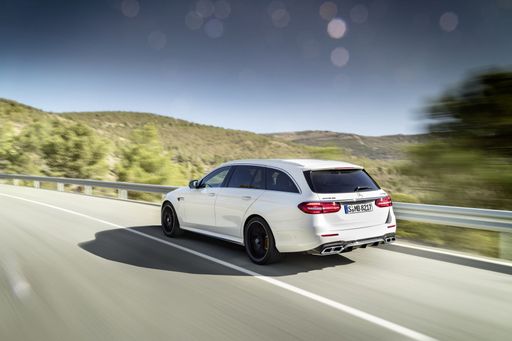
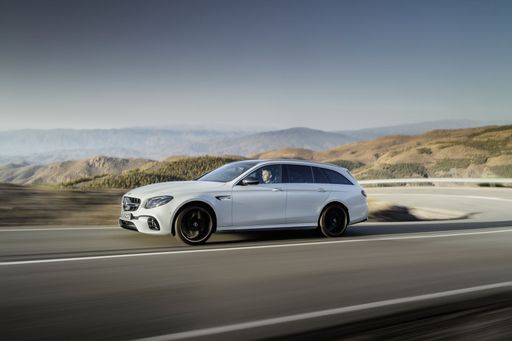
Mercedes’ E-Klass T-Modell outdoes with its expansive wagon body style, providing up to 615 liters of trunk capacity, ensuring ample space for all travel essentials. This makes it especially appealing for families or those who prioritize extra cargo room.

E-Class Estate

Final Verdict

In the end, the choice between the BMW 3er Limousine and the Mercedes E-Klass T-Modell largely depends on personal priorities. If exhilarating performance and cutting-edge tech sway you, the 3er Limousine aligns well with those aspirations. Alternatively, for those prioritizing luxury, innovative infotainment, and spacious interiors, the Mercedes E-Klass T-Modell presents as a compelling option. Each car, in their own right, exemplifies the pinnacle of German automotive craftsmanship.

Here’s where it gets real: The technical differences in detail

3 Series Saloon

Costs and Efficiency:

When it comes to price and running costs, the biggest differences usually appear. This is often where you see which car fits your budget better in the long run.

BMW 3 Series Saloon is markedly cheaper – starting at 39,900 £ , while the Mercedes E-Class Estate costs 52,600 £ . That’s a price difference of around 12,690 £.

Fuel consumption also shows a difference: the Mercedes E-Class Estate uses 1.7 L/100km and is considerably more efficient than the BMW 3 Series Saloon with 2.4 L/100km. The difference is about 0.7 L/100km.

As for electric range, the Mercedes E-Class Estate offers barely more range – reaching up to 109 km, about 8 km more than the BMW 3 Series Saloon.

E-Class Estate

Engine and Performance:

Under the bonnet, it becomes clear which model is tuned for sportiness and which one takes the lead when you hit the accelerator.

When it comes to engine power, the Mercedes E-Class Estate offers only slightly more power – delivering 585 HP compared to 530 HP. That’s roughly 55 HP more horsepower.

When accelerating from 0 to 100 km/h, the BMW 3 Series Saloon is somewhat quicker – completing the sprint in 3.5 s, while the Mercedes E-Class Estate takes 4.1 s. That’s about 0.6 s quicker.

There’s also a difference in torque: the Mercedes E-Class Estate delivers very slightly more torque with 750 Nm compared to 700 Nm. That’s about 50 Nm more.

3 Series Saloon

Space and Everyday Use:

Cabin size, boot volume and payload all play a role in everyday practicality. Here, comfort and flexibility make the difference.

Both vehicles offer seating for 5 people.

In terms of curb weight, BMW 3 Series Saloon is visibly lighter – 1,575 kg compared to 1,900 kg. The difference is around 325 kg.

Looking at boot space, the Mercedes E-Class Estate offers noticeably more boot space – 615 L compared to 480 L. That’s a difference of about 135 L.

When it comes to payload, the Mercedes E-Class Estate carries noticeably more – 645 kg compared to 495 kg. That’s a difference of about 150 kg.

Who wins the race in the data check?

The Mercedes E-Class Estate is clearly superior overall in the objective data comparison.
This result only shows which model scores more points on paper – not which of the two cars feels right for you.

from £52,600
E-Class Estate

Mercedes E-Class Estate

  • Engine Type Petrol MHEV, Plugin Hybrid, Diesel MHEV
  • Transmission Automatic
  • Drive Type All-Wheel Drive, Rear-Wheel Drive
  • Power HP 186 - 585 HP
  • Consumption L/100km 1.7 - 7.9 L/100km
  • Electric Range 97 - 109 km
BMW 3 Series Saloon
Mercedes E-Class Estate

Costs and Consumption

View detailed analysis

Engine and Performance

View detailed analysis

Dimensions and Body

View detailed analysis

BMW 3 Series Saloon

The BMW 3 Series saloon is a driver's car in a suit, blending poised handling with a cabin that feels more premium than its practicality suggests. It’s composed enough for daily duties yet playful enough to keep weekend drives interesting, making it a sensible choice for buyers who still want to have fun.

details

Mercedes E-Class Estate

The E‑Class Estate blends executive elegance with genuine everyday practicality, wrapping luxury materials and a serene ride in a wagon silhouette that never looks apologetic. It’s the perfect choice for buyers who need grown-up luggage space without sacrificing comfort, refinement or a touch of driving enjoyment.

details
BMW 3 Series Saloon
Mercedes E-Class Estate

Costs and Consumption

Price
39,900 - 92,200 £
Price
52,600 - 121,800 £
Consumption L/100km
2.4 - 10.1 L/100km
Consumption L/100km
1.7 - 7.9 L/100km
Consumption kWh/100km
-
Consumption kWh/100km
-
Electric Range
96 - 101 km
Electric Range
97 - 109 km
Battery Capacity
-
Battery Capacity
-
co2
54 - 227 g/km
co2
44 - 181 g/km
Fuel tank capacity
-
Fuel tank capacity
-

Dimensions and Body

Body Type
Sedan
Body Type
Estate
Seats
5
Seats
5
Doors
-
Doors
-
Curb weight
1,575 - 1,960 kg
Curb weight
1,900 - 2,435 kg
Trunk capacity
375 - 480 L
Trunk capacity
460 - 615 L
Length
-
Length
-
Width
1,827 - 1,903 mm
Width
1,880 mm
Height
-
Height
-
Max trunk capacity
-
Max trunk capacity
-
Payload
405 - 495 kg
Payload
540 - 645 kg

Engine and Performance

Engine Type
Diesel MHEV, Petrol, Petrol MHEV, Plugin Hybrid
Engine Type
Petrol MHEV, Plugin Hybrid, Diesel MHEV
Transmission
Automatic, Manuel
Transmission
Automatic
Transmission Detail
Automatic Gearbox, Manual Gearbox
Transmission Detail
Automatic Gearbox
Drive Type
Rear-Wheel Drive, All-Wheel Drive
Drive Type
All-Wheel Drive, Rear-Wheel Drive
Power HP
150 - 530 HP
Power HP
186 - 585 HP
Acceleration 0-100km/h
3.5 - 8.6 s
Acceleration 0-100km/h
4.1 - 8.8 s
Max Speed
-
Max Speed
-
Torque
250 - 700 Nm
Torque
320 - 750 Nm
Number of Cylinders
4 - 6
Number of Cylinders
4 - 6
Power kW
110 - 390 kW
Power kW
137 - 430 kW
Engine capacity
1,995 - 2,998 cm3
Engine capacity
1,993 - 2,999 cm3

General

Model Year
2,024 - 2,025
Model Year
2,024 - 2,025
CO2 Efficiency Class
D, E, F, G, B
CO2 Efficiency Class
G, E, F, B, D
Brand
BMW
Brand
Mercedes-Benz
DriveDuel uses data analysis and artificial intelligence to evaluate vehicle data and create content. Content is regularly reviewed and improved. The displayed prices are estimates based on German list prices, adjusted to the respective country’s VAT. Country-specific registration taxes are not included. This information is not legally binding.