
 Deutschland
 France
 Nederland
 Great Britain
 Sverige
 Norge
Norge Danmark
 Suomi
Suomi Italia
 Polska
 España
VS
BMW 4 Series Convertible vs Hyundai i30 Wagon – Which one offers the better deal?
Both models have their strengths – but which one suits you more?
Compare performance, efficiency, price and space directly: BMW 4 Series Convertible or Hyundai i30 Wagon?
4 Series Convertible
@ BMW Group Press
Costs and Efficiency:
Price and efficiency are often the first things buyers look at. Here it becomes clear which model has the long-term edge – whether at the pump, the plug, or in purchase price.
Hyundai i30 Wagon has a clearly advantage in terms of price – it starts at 24800 £, while the BMW 4 Series Convertible costs 52100 £. That’s a price difference of around 27266 £.
Fuel consumption also shows a difference: BMW 4 Series Convertible manages with 5.20 L and is therefore minimal more efficient than the Hyundai i30 Wagon with 5.70 L. The difference is about 0.50 L per 100 km.
i30 Wagon
@ Hyundai Motor Company
Engine and Performance:
Under the bonnet, it becomes clear which model is tuned for sportiness and which one takes the lead when you hit the accelerator.
When it comes to engine power, the BMW 4 Series Convertible has a significantly edge – offering 530 HP compared to 140 HP. That’s roughly 390 HP more horsepower.
In acceleration from 0 to 100 km/h, the BMW 4 Series Convertible is convincingly quicker – completing the sprint in 3.70 s, while the Hyundai i30 Wagon takes 9.80 s. That’s about 6.10 s faster.
In terms of top speed, the BMW 4 Series Convertible performs distinct better – reaching 250 km/h, while the Hyundai i30 Wagon tops out at 197 km/h. The difference is around 53 km/h.
There’s also a difference in torque: BMW 4 Series Convertible pulls decisively stronger with 700 Nm compared to 253 Nm. That’s about 447 Nm difference.
4 Series Convertible
@ BMW Group Press
Space and Everyday Use:
Beyond pure performance, interior space and usability matter most in daily life. This is where you see which car is more practical and versatile.
Seats: Hyundai i30 Wagon offers a bit more seating capacity – 5 vs 4.
In curb weight, Hyundai i30 Wagon is noticeable lighter – 1316 kg compared to 1765 kg. The difference is around 449 kg.
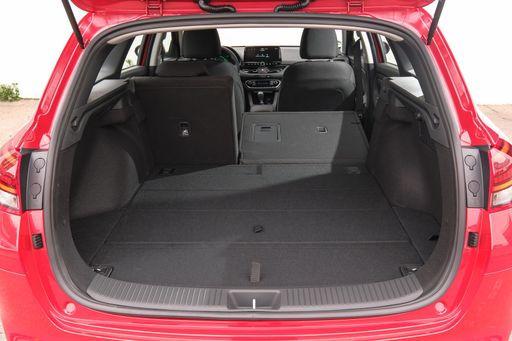
In terms of boot space, the Hyundai i30 Wagon offers evident more room – 602 L compared to 385 L. That’s a difference of about 217 L.
When it comes to payload, Hyundai i30 Wagon slightly takes the win – 524 kg compared to 420 kg. That’s a difference of about 104 kg.
Who wins the race?
The BMW 4 Series Convertible proves to be leaves the rival little chance and therefore becomes our DriveDuel Champion!
BMW 4 Series Convertible is the better all-rounder in this comparison.
from about £52,100
 @ BMW Group Press
BMW 4 Series Convertible
BMW 4 Series Convertible
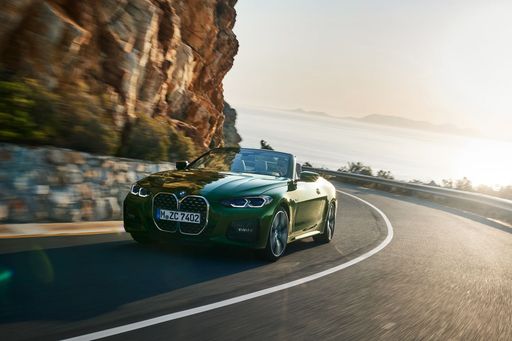
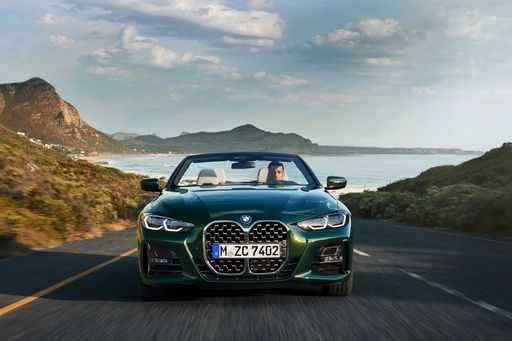
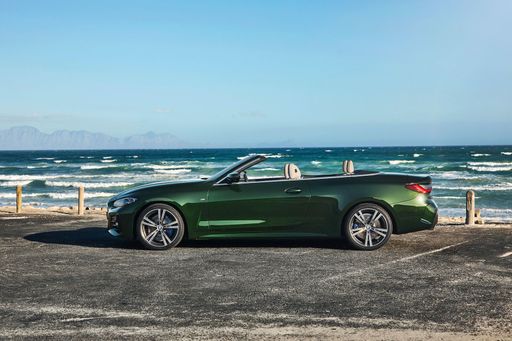
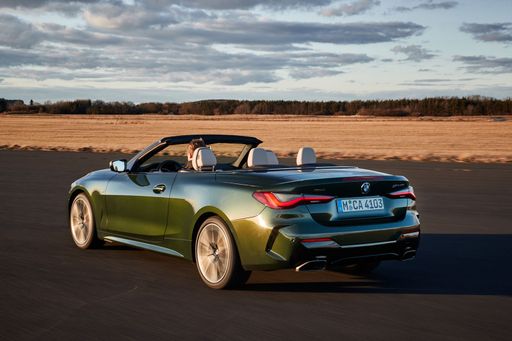
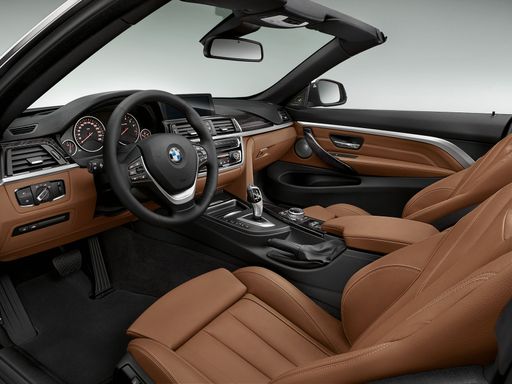
The BMW 4 Series Convertible exudes elegance with its sleek lines and dynamic design, epitomising open-top driving pleasure. Its interior combines luxury with cutting-edge technology, offering an immersive driving experience enhanced by premium materials and intuitive controls. On the road, the car delivers a refined and exhilarating performance, ensuring every journey is as thrilling as it is comfortable.
details
@ BMW Group Press
 @ BMW Group Press
 @ BMW Group Press
 @ BMW Group Press
 @ BMW Group Press
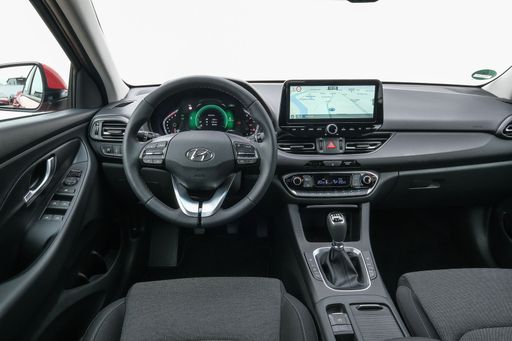
Hyundai i30 Wagon
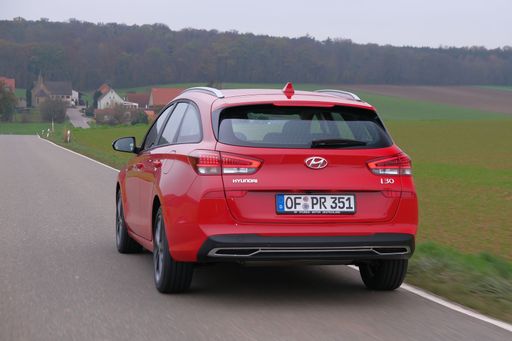
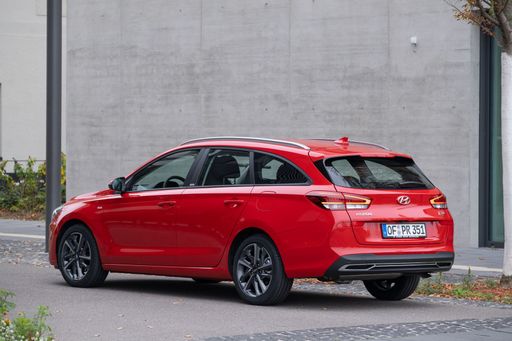
The Hyundai i30 Wagon offers a blend of practicality and style, making it a popular choice for families and those in need of extra space. Its sleek exterior and comfortable interior provide a pleasant driving experience, while advanced safety features ensure peace of mind on the road. The i30 Wagon stands out with its impressive fuel efficiency and reliability, catering to both urban and rural lifestyles.
details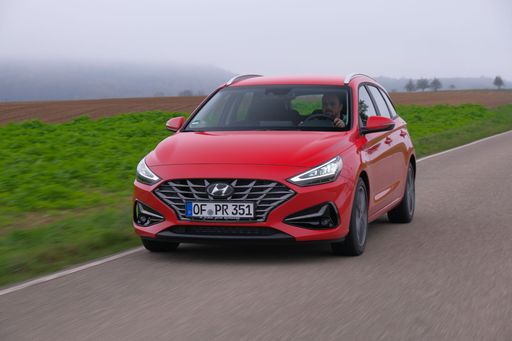 @ Hyundai Motor Company
 @ Hyundai Motor Company
 @ Hyundai Motor Company
 @ Hyundai Motor Company
 @ Hyundai Motor Company
BMW 4 Series Convertible
Hyundai i30 Wagon
|
@ BMW Group Press
|
@ Hyundai Motor Company
|
|
|
|
Costs and Consumption |
|
|---|---|
|
Price
52100 - 96600 £
|
Price
24800 - 30100 £
|
|
Consumption L/100km
5.2 - 10.2 L
|
Consumption L/100km
5.7 - 6 L
|
|
Consumption kWh/100km
-
|
Consumption kWh/100km
-
|
|
Electric Range
-
|
Electric Range
-
|
|
Battery Capacity
-
|
Battery Capacity
-
|
|
co2
136 - 231 g/km
|
co2
130 - 136 g/km
|
|
Fuel tank capacity
59 L
|
Fuel tank capacity
50 L
|
Dimensions and Body |
|
|---|---|
|
Body Type
Convertible
|
Body Type
Estate
|
|
Seats
4
|
Seats
5
|
|
Doors
2
|
Doors
5
|
|
Curb weight
1765 - 2055 kg
|
Curb weight
1316 - 1461 kg
|
|
Trunk capacity
385 L
|
Trunk capacity
602 L
|
|
Length
4768 - 4801 mm
|
Length
4585 mm
|
|
Width
1852 - 1887 mm
|
Width
1795 mm
|
|
Height
1384 - 1399 mm
|
Height
1475 mm
|
|
Max trunk capacity
-
|
Max trunk capacity
1650 L
|
|
Payload
345 - 420 kg
|
Payload
439 - 524 kg
|
Engine and Performance |
|
|---|---|
|
Engine Type
Diesel MHEV, Petrol, Petrol MHEV
|
Engine Type
Petrol, Petrol MHEV
|
|
Transmission
Automatic
|
Transmission
Manuel, Automatic
|
|
Transmission Detail
Automatic Gearbox
|
Transmission Detail
Manual Gearbox, Dual-Clutch Automatic
|
|
Drive Type
Rear-Wheel Drive, All-Wheel Drive
|
Drive Type
Front-Wheel Drive
|
|
Power HP
184 - 530 HP
|
Power HP
100 - 140 HP
|
|
Acceleration 0-100km/h
3.7 - 8.2 s
|
Acceleration 0-100km/h
9.8 - 13.3 s
|
|
Max Speed
236 - 250 km/h
|
Max Speed
178 - 197 km/h
|
|
Torque
300 - 700 Nm
|
Torque
172 - 253 Nm
|
|
Number of Cylinders
4 - 6
|
Number of Cylinders
3 - 4
|
|
Power kW
135 - 390 kW
|
Power kW
74 - 103 kW
|
|
Engine capacity
1995 - 2998 cm3
|
Engine capacity
998 - 1482 cm3
|
General |
|
|---|---|
|
Model Year
2024 - 2025
|
Model Year
2024
|
|
CO2 Efficiency Class
E, F, G
|
CO2 Efficiency Class
D, E
|
|
Brand
BMW
|
Brand
Hyundai
|
What drive types are available for the BMW 4 Series Convertible?
The BMW 4 Series Convertible is offered with Rear-Wheel Drive or All-Wheel Drive.
The prices and data displayed are estimates based on German list prices and may vary by country. This information is not legally binding.