VS

Hyundai i30 vs Hyundai i30 Wagon comparison

Compare performance (150 HP vs 150 HP), boot space and price (24,600 £ vs 25,400 £ ) at a glance. Find out which car is the better choice for you – Hyundai i30 or Hyundai i30 Wagon?

Hyundai i30 vs Hyundai i30 Wagon: Key differences

Hyundai i30

4.3 (2 Reviews)
rate
  • barely cheaper
  • only slightly quicker 0–100 km/h
  • very slightly lighter
details

Hyundai i30 Wagon

4.3 (2 Reviews)
rate
  • clearly more trunk space
details

All details on performance, efficiency, range and trunk space can be found in the technical comparison below – including user reviews for both models.

By Achim Sedelmaier

i30

Hyundai i30 VS Hyundai i30 Wagon — which one fits your real life?

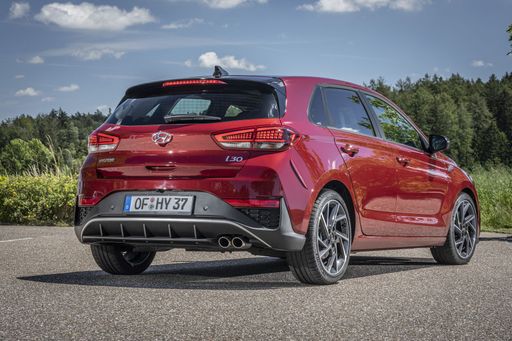
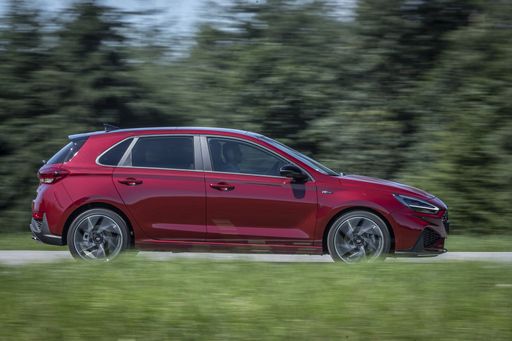
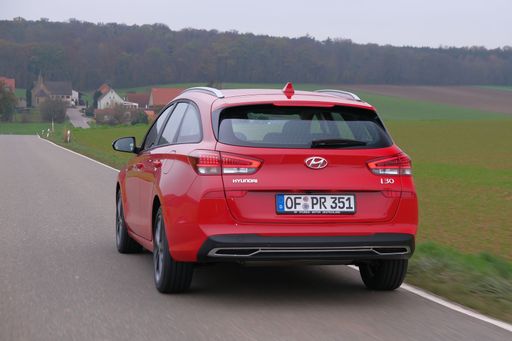
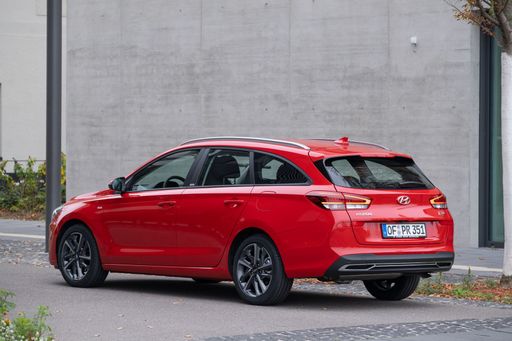
The Hyundai i30 and Hyundai i30 Wagon share the same pragmatic DNA but split early on where it matters: body style and everyday usefulness. The hatchback keeps the package compact and slightly friendlier to the wallet, while the Wagon leans hard into cargo space and loading convenience for people who actually use the boot. Mechanically they feel familiar to the same owner; differences are about how you live with the car rather than what’s under the bonnet. If you want a compact companion for mixed driving, the i30 fits; if you haul gear, strollers or firm luggage often, the i30 Wagon rewards you every day.
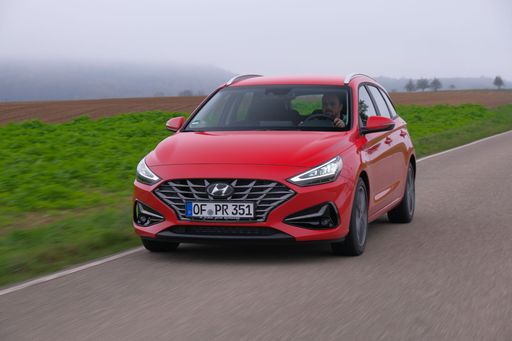
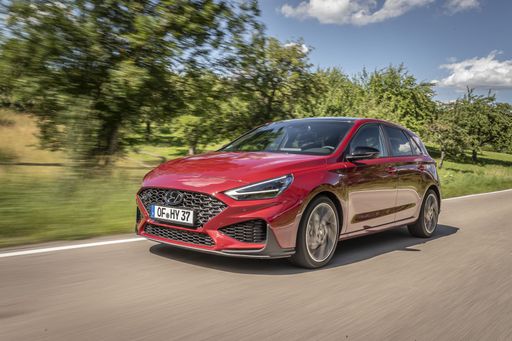
i30 Wagon

Character and driving feel

Driving the Hyundai i30 is a study in calm—predictable, safe and just a touch reserved—whereas the Hyundai i30 Wagon emphasises steady, unexcited progress with a greater focus on composure at speed. The hatchback feels fractionally more eager off the line and easier to hustle through tighter turns, the Wagon trades that nimbleness for steadier high‑speed manners and a more planted feel when loaded. Neither car is designed to thrill; both favour comfort over razor‑sharp feedback, but the i30 gives a slightly livelier city drive while the i30 Wagon feels like the better long‑distance companion. Steering and chassis responses are neither raw nor feathery—expect workmanlike, confidence‑first tuning in both cars.

i30

Cabin feel and long‑distance comfort

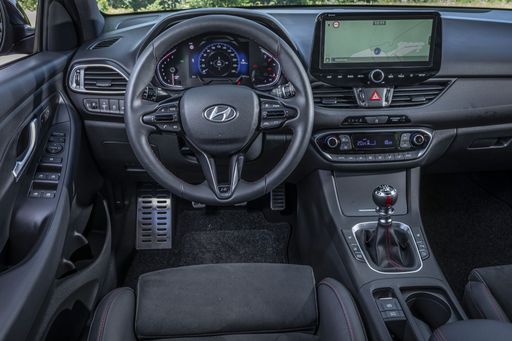
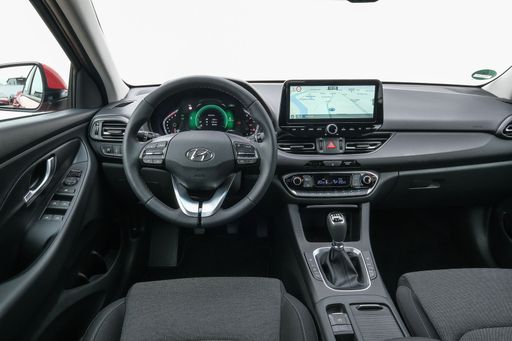
Inside, the Hyundai i30 and Hyundai i30 Wagon share practical cockpits with lots of physical controls that make daily life less fiddly, but the mood differs: the hatchback feels a bit cozier up front, the Wagon opens up a little more and makes luggage management less of a chore. On motorways both cars settle into a relaxed rhythm and reward long stints with decent seat comfort and predictable ride manners, though neither is class‑leading for wind or road‑noise isolation. Material choices are honest rather than opulent across both cabins—durable plastics and sensible layouts rather than premium touches—so perceived quality suits pragmatic buyers. If long trips plus luggage are routine, the Wagon’s usability reduces stress more than the hatchback’s slightly nicer seating vibe.

i30 Wagon

Practicality and everyday usability

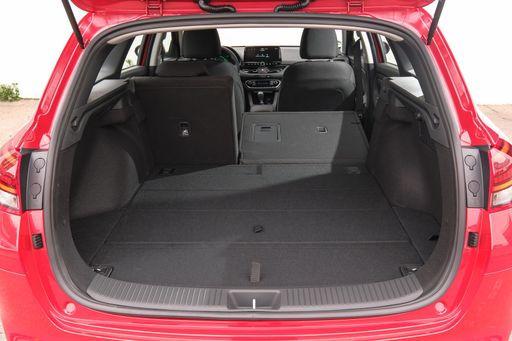
This is where the Hyundai i30 Wagon pulls decisively ahead: a lower loading lip, wider tailgate opening and far more usable luggage space make it the clear pick for parents, weekend DIY runs or anyone who carries bulky items regularly. The Hyundai i30 hatchback still works well for day‑to‑day errands and gives you a compact rear that’s easier to squeeze into tight spaces, but its higher boot sill and narrower opening are noticeable every time you lift heavy bags. Rear visibility and cargo access are more constrained in the hatch; the Wagon’s rear practicality simply reduces friction in everyday life. Practical trade‑offs are stark—choose the Hatch for easier urban handling, the Wagon for genuine cargo convenience.

i30

City friendliness and everyday usability

In town, the Hyundai i30 feels more natural: narrower overall footprint, slightly lighter steering at parking speeds and less to worry about with mirrors and blind spots. The Hyundai i30 Wagon brings the same helpful cameras and parking aids, but its longer silhouette and broader mirrors make it less nimble in confined kerbside situations and the suspension transmits short, sharp bumps more readily. Both cockpits are designed to be intuitive and low‑distraction, which is a real plus for city commuters juggling calls or children. If your life is mostly urban with occasional motorway runs, the hatchback saves annoyance; if daily cargo or dog‑crate transport is normal, the Wagon’s compromises are worth it.

i30 Wagon

Which buyer suits which model — and what to try at a test drive

Put simply: pick the Hyundai i30 if you prioritise compactness, a slightly lower entry price and a car that is easier to live with in tight urban settings; choose the Hyundai i30 Wagon if regular luggage, family logistics or long‑distance hauling dominate your schedule. Both will tick boxes for reliability, straightforward controls and low‑drama ownership, but the Wagon will pay back its extra practicality in everyday convenience while the hatchback keeps city life simpler. For your test drive, focus less on headline specs and more on loading a real suitcase, checking rear visibility and driving over the roads you use most—those small moments reveal which car will feel better in daily life. After that, the technical comparison will clarify the exact mechanical and dimensional trade‑offs behind these everyday impressions.

Here’s where it gets real: The technical differences in detail

i30

Costs and Efficiency:

Looking at overall running costs, both models reveal some interesting differences in everyday economy.

Hyundai i30 is barely cheaper – starting at 24,600 £ , while the Hyundai i30 Wagon costs 25,400 £ . That’s a price difference of around 857 £.

Both cars consume an average of 5.9 L/100km – no difference here.

i30 Wagon

Engine and Performance:

Power, torque and acceleration are the classic benchmarks for car enthusiasts – and here, some clear differences start to show.

Both models deliver identical power – 150 HP each.

When accelerating from 0 to 100 km/h, the Hyundai i30 is only slightly quicker – completing the sprint in 8.9 s, while the Hyundai i30 Wagon takes 9.1 s. That’s about 0.2 s quicker.

Both models offer the same torque – 250 Nm.

i30

Space and Everyday Use:

Whether family car or daily driver – which one offers more room, flexibility and comfort?

Both vehicles offer seating for 5 people.

In terms of curb weight, Hyundai i30 is very slightly lighter – 1,315 kg compared to 1,340 kg. The difference is around 25 kg.

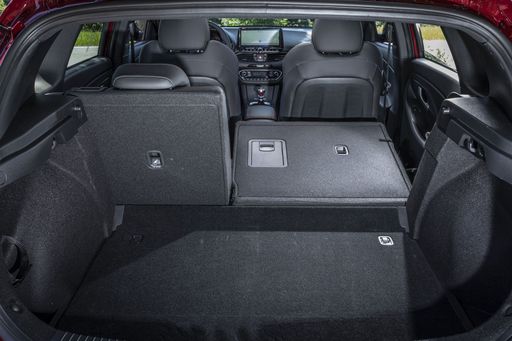
Looking at boot space, the Hyundai i30 Wagon offers clearly more boot space – 602 L compared to 395 L. That’s a difference of about 207 L.

When it comes to payload, the Hyundai i30 Wagon carries barely more – 490 kg compared to 485 kg. That’s a difference of about 5 kg.

Who wins the race in the data check?

The Hyundai i30 Wagon is slightly ahead in the objective data comparison.
This result only shows which model scores more points on paper – not which of the two cars feels right for you.

from £25,400
i30 Wagon

Hyundai i30 Wagon

  • Engine Type : Petrol
  • Transmission : Manuel, Automatic
  • Drive Type : Front-Wheel Drive
  • Power HP : 115 - 150 HP
  • Consumption L/100km : 5.9 - 6.3 L/100km
Hyundai i30
Hyundai i30 Wagon

Costs and Consumption

View detailed analysis

Engine and Performance

View detailed analysis

Dimensions and Body

View detailed analysis

Hyundai i30

The Hyundai i30 proves that sensible can also be stylish, offering a confident driving character wrapped in neat, modern design. It serves up a roomy, well-equipped cabin and composed ride that make everyday motoring feel like a clever purchase rather than a compromise.

details

Hyundai i30 Wagon

The Hyundai i30 Wagon is a practical family hauler that pairs roomy, sensible packaging with clean, modern lines and a surprisingly composed chassis. Comfortable, well-equipped and priced to make rivals sweat, it quietly ticks the boxes for daily life and weekend escapes while still managing a little grin on twisty roads.

details
Hyundai i30
Hyundai i30 Wagon

Costs and Consumption

Price
24,600 - 31,400 £
Price
25,400 - 32,300 £
Consumption L/100km
5.9 - 6.3 L/100km
Consumption L/100km
5.9 - 6.3 L/100km
Consumption kWh/100km
-
Consumption kWh/100km
-
Electric Range
-
Electric Range
-
Battery Capacity
-
Battery Capacity
-
co2
134 - 142 g/km
co2
134 - 142 g/km
Fuel tank capacity
-
Fuel tank capacity
-

Dimensions and Body

Body Type
Hatchback
Body Type
Estate
Seats
5
Seats
5
Doors
-
Doors
-
Curb weight
1,315 - 1,435 kg
Curb weight
1,340 - 1,460 kg
Trunk capacity
395 L
Trunk capacity
602 L
Length
-
Length
-
Width
1,795 mm
Width
1,795 mm
Height
-
Height
-
Max trunk capacity
-
Max trunk capacity
-
Payload
445 - 485 kg
Payload
450 - 490 kg

Engine and Performance

Engine Type
Petrol
Engine Type
Petrol
Transmission
Manuel, Automatic
Transmission
Manuel, Automatic
Transmission Detail
Manual Gearbox, Dual-Clutch Automatic
Transmission Detail
Manual Gearbox, Dual-Clutch Automatic
Drive Type
Front-Wheel Drive
Drive Type
Front-Wheel Drive
Power HP
115 - 150 HP
Power HP
115 - 150 HP
Acceleration 0-100km/h
8.9 - 11.7 s
Acceleration 0-100km/h
9.1 - 11.9 s
Max Speed
-
Max Speed
-
Torque
172 - 250 Nm
Torque
172 - 250 Nm
Number of Cylinders
3 - 4
Number of Cylinders
3 - 4
Power kW
85 - 110 kW
Power kW
85 - 110 kW
Engine capacity
998 - 1,598 cm3
Engine capacity
998 - 1,598 cm3

General

Model Year
2026
Model Year
2026
CO2 Efficiency Class
D, E
CO2 Efficiency Class
D, E
Brand
Hyundai
Brand
Hyundai
DriveDuel uses data analysis and artificial intelligence to evaluate vehicle data and create content. Content is regularly reviewed and improved. The displayed prices are estimates based on German list prices, adjusted to the respective country’s VAT. Country-specific registration taxes are not included. This information is not legally binding.