VS

Hyundai i30 vs Skoda Scala comparison

Compare performance (150 HP vs 150 HP), boot space and price (24,600 £ vs 21,400 £ ) at a glance. Find out which car is the better choice for you – Hyundai i30 or Skoda Scala?

Hyundai i30 vs Skoda Scala: Key differences

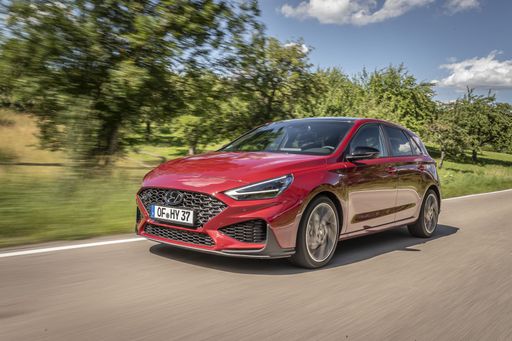
Hyundai i30

4.3 (2 Reviews)
rate
details

Skoda Scala

4.9 (7 Reviews)
rate
  • somewhat cheaper
  • moderately more efficient
  • barely quicker 0–100 km/h
  • marginally lighter
  • a bit more trunk space
details

All details on performance, efficiency, range and trunk space can be found in the technical comparison below – including user reviews for both models.

By Achim Sedelmaier

i30

Hyundai i30 VS Skoda Scala — compact hatchbacks compared for real buyers

Hyundai i30 and Skoda Scala sit on the same patch of the compact class but take different routes to solve everyday needs: the Hyundai pitches itself as a comfortable, well‑equipped value package, while the Skoda emphasises space and plain‑spoken practicality. If you prioritise relaxed long trips and a fuss‑free cabin, the i30 leans into that comfort-first character; if rear-seat room, a big, usable boot and low running costs matter more, the Scala pulls ahead. Both cars are more about sensible transport than sporting thrills, yet they appeal to different types of pragmatists. This page outlines how those differences play out in daily life and what each car tends to suit better. Read on for contrasts in driving character, comfort, practicality, cabin feel and which buyer each model suits best before the technical comparison details follow.
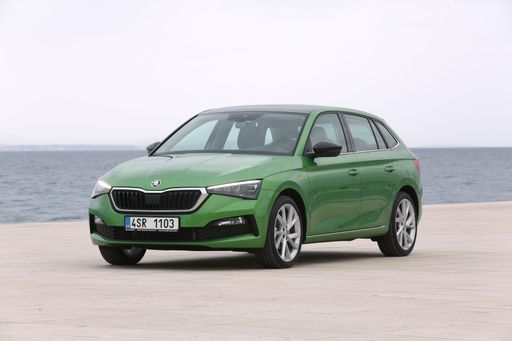
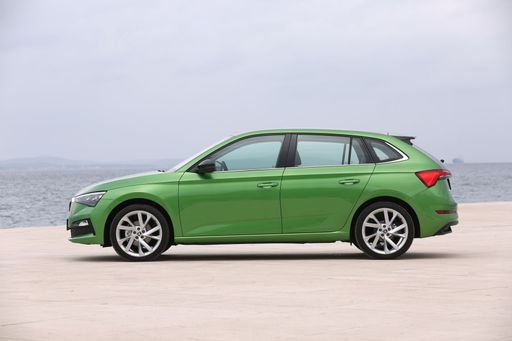
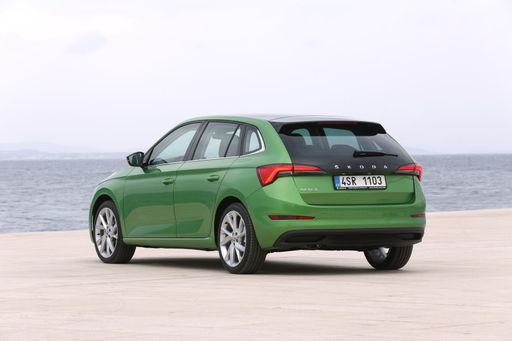
Scala

Driving character and city versus motorway behavior

The Hyundai i30 drives with a relaxed, composed temperament that rewards steady cruising rather than lively cornering, while the Skoda Scala feels a touch sharper in steering and a little more composed at higher speeds. In the city the i30’s easy controls and forgiving ride make short trips comfortable, whereas the Scala’s more direct steering gives a confident, point‑and‑park feeling but can read firmer over poor inner‑city surfaces. On the motorway both cars settle into long runs without drama, yet the Scala tends to impress with lower wind intrusion and a steadier straight‑line demeanour. If you prefer a soothing, butter‑smooth daily commuter the i30 is the safe choice; if you favour a slightly more planted and efficient tourer, the Scala leans toward that role.

i30

Comfort and long-distance usability

Both cars are competent long‑distance partners, but they get there in different ways: the Hyundai i30 offers broad, supportive front seats and a softening ride that soaks up extended miles comfortably, while the Skoda Scala combines long‑haul seat comfort with a quieter cabin at speed. The i30’s suspension bias gives a gentle, reassuring feel over motorway joints, whereas the Scala’s quieter aero package reduces fatigue on long drives. If you regularly carry adults in the rear on long trips, the Scala’s extra rear legroom will be immediately noticeable compared with the i30 hatch; conversely, an i30 Tourer will close much of that gap and add family-friendly practicality. Choose the i30 for pure-seat comfort and a relaxed highway pace, choose the Scala if low cabin noise and rear‑seat space are higher priorities.

Scala

Practicality, boot space and family usability

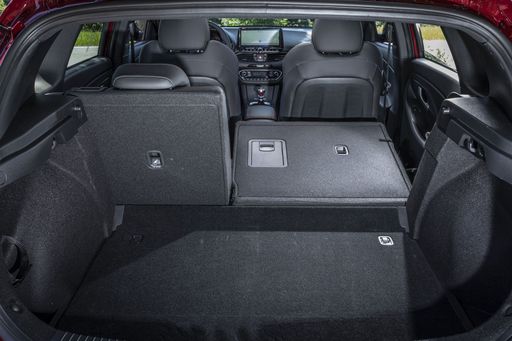
Practical differences are some of the clearest buyer cues: the Skoda Scala offers a larger, more usable boot and genuinely generous rear space that makes it the better daily hauler for taller passengers and frequent luggage. The Hyundai i30’s hatch is well packaged for everyday errands, but its standard hatch opening can feel higher to load compared with the Scala’s lower lip and more forgiving boot aperture; the i30’s Tourer (wagon) changes that dynamic if estate practicality is required. Both cars suffer from limited rear visibility due to broad pillars, so rear cameras and sensors are worthwhile options—Scala sometimes tucks those features into paid packages whereas the i30 tends to be better equipped at entry. For families who prioritise space and easy loading the Scala is the more natural fit; for those who want a value-packed compact with a usable hatch or the option of a roomy Tourer, the i30 remains compelling.

i30

Cabin feel, controls and perceived quality

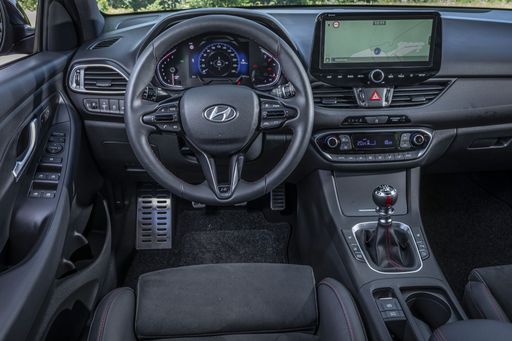
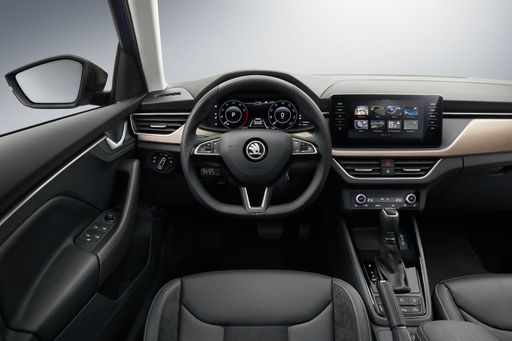
Inside, neither car masquerades as premium, but they take different routes to clarity: the Hyundai i30 keeps many physical buttons and a conservative, tactile layout aimed at simple, low‑distraction use, while the Skoda Scala emphasizes straightforward ergonomics and clever practicality with a slightly more modern appearance. The i30’s materials and design read serviceable and robust rather than trendy, which can be comforting for buyers who prefer proven controls; the Scala feels a touch more spacious and refined in materials choice but stays deliberately functional. Infotainment and menu logic are mixed in both: the i30’s system can seem dated in presentation, the Scala’s can be neat but occasionally over‑layered depending on the spec. If you value intuitive buttons and a familiar feel, the i30’s cabin will suit you; if you want a roomier, slightly more composed interior that feels contemporary without being flashy, the Scala will please.

Scala

Buyer fit: who should choose the Hyundai i30 and who should pick the Skoda Scala

Buyers who should lean toward the Hyundai i30 are pragmatists who want a comfortable, well‑equipped compact with a relaxed ride, straightforward controls and strong warranty peace of mind—especially appealing if you prefer an affordable spec without hunting options. Those who should favour the Skoda Scala are households that need rear‑seat space, a big, user‑friendly boot and low‑noise motorway manners for regular long trips; the Scala is the clearer everyday family hauler. The trade‑off is simple: the i30 often gives more kit for the money and a cosseting ride, while the Scala trades some of that gloss for tangible space and efficiency gains. Below you’ll find a technical comparison that explains the mechanical and packaging reasons behind these practical differences so you can match figures to the road‑level consequences described here.

Here’s where it gets real: The technical differences in detail

i30

Costs and Efficiency:

When it comes to price and running costs, the biggest differences usually appear. This is often where you see which car fits your budget better in the long run.

Skoda Scala is somewhat cheaper – starting at 21,400 £ , while the Hyundai i30 costs 24,600 £ . That’s a price difference of around 3,129 £.

Fuel consumption also shows a difference: the Skoda Scala uses 5 L/100km and is moderately more efficient than the Hyundai i30 with 5.9 L/100km. The difference is about 0.9 L/100km.

Scala

Engine and Performance:

Power, torque and acceleration say a lot about how a car feels on the road. This is where you see which model delivers more driving dynamics.

Both models deliver identical power – 150 HP each.

When accelerating from 0 to 100 km/h, the Skoda Scala is barely quicker – completing the sprint in 8.2 s, while the Hyundai i30 takes 8.9 s. That’s about 0.7 s quicker.

Both models offer the same torque – 250 Nm.

i30

Space and Everyday Use:

Beyond pure performance, interior space and usability matter most in daily life. This is where you see which car is more practical and versatile.

Both vehicles offer seating for 5 people.

In terms of curb weight, Skoda Scala is marginally lighter – 1,199 kg compared to 1,315 kg. The difference is around 116 kg.

Looking at boot space, the Skoda Scala offers a bit more boot space – 467 L compared to 395 L. That’s a difference of about 72 L.

When it comes to payload, the Hyundai i30 carries moderately more – 485 kg compared to 431 kg. That’s a difference of about 54 kg.

Who wins the race in the data check?

The Skoda Scala stands well ahead of its rival in the objective data comparison.
This result only shows which model scores more points on paper – not which of the two cars feels right for you.

from £21,400
Scala

Skoda Scala

  • Engine Type Petrol
  • Transmission Manuel, Automatic
  • Drive Type Front-Wheel Drive
  • Power HP 95 - 150 HP
  • Consumption L/100km 5 - 5.6 L/100km
Hyundai i30
Skoda Scala

Costs and Consumption

View detailed analysis

Engine and Performance

View detailed analysis

Dimensions and Body

View detailed analysis

Hyundai i30

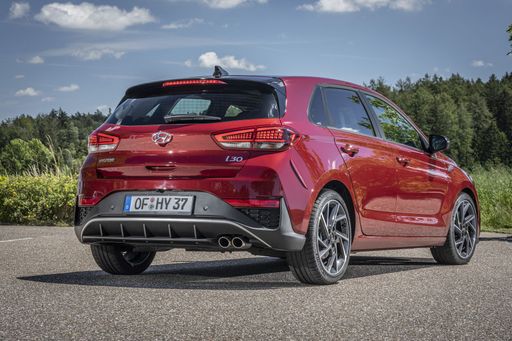
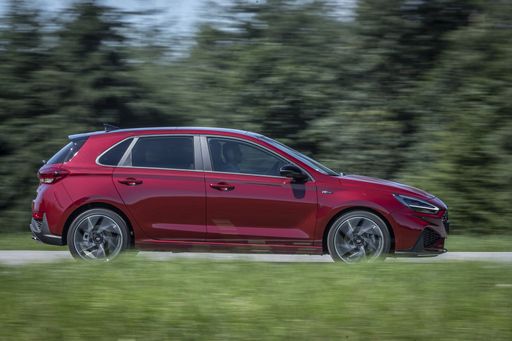
The Hyundai i30 proves that sensible can also be stylish, offering a confident driving character wrapped in neat, modern design. It serves up a roomy, well-equipped cabin and composed ride that make everyday motoring feel like a clever purchase rather than a compromise.

details

Skoda Scala

The Skoda Scala is a tidy, no-nonsense hatch that wraps clever packaging and composed manners into a compact, grown-up package. It’s the sensible choice for buyers who want everyday practicality with a dash of style and personality—no drama, just reliable charm.

details
Hyundai i30
Skoda Scala

Costs and Consumption

Price
24,600 - 31,400 £
Price
21,400 - 31,500 £
Consumption L/100km
5.9 - 6.3 L/100km
Consumption L/100km
5 - 5.6 L/100km
Consumption kWh/100km
-
Consumption kWh/100km
-
Electric Range
-
Electric Range
-
Battery Capacity
-
Battery Capacity
-
co2
134 - 142 g/km
co2
114 - 126 g/km
Fuel tank capacity
-
Fuel tank capacity
-

Dimensions and Body

Body Type
Hatchback
Body Type
Hatchback
Seats
5
Seats
5
Doors
-
Doors
-
Curb weight
1,315 - 1,435 kg
Curb weight
1,199 - 1,271 kg
Trunk capacity
395 L
Trunk capacity
467 L
Length
-
Length
-
Width
1,795 mm
Width
1,793 mm
Height
-
Height
-
Max trunk capacity
-
Max trunk capacity
-
Payload
445 - 485 kg
Payload
403 - 431 kg

Engine and Performance

Engine Type
Petrol
Engine Type
Petrol
Transmission
Manuel, Automatic
Transmission
Manuel, Automatic
Transmission Detail
Manual Gearbox, Dual-Clutch Automatic
Transmission Detail
Manual Gearbox, Dual-Clutch Automatic
Drive Type
Front-Wheel Drive
Drive Type
Front-Wheel Drive
Power HP
115 - 150 HP
Power HP
95 - 150 HP
Acceleration 0-100km/h
8.9 - 11.7 s
Acceleration 0-100km/h
8.2 - 10.8 s
Max Speed
-
Max Speed
-
Torque
172 - 250 Nm
Torque
175 - 250 Nm
Number of Cylinders
3 - 4
Number of Cylinders
3 - 4
Power kW
85 - 110 kW
Power kW
70 - 110 kW
Engine capacity
998 - 1,598 cm3
Engine capacity
999 - 1,498 cm3

General

Model Year
2026
Model Year
2025
CO2 Efficiency Class
D, E
CO2 Efficiency Class
C, D
Brand
Hyundai
Brand
Skoda
DriveDuel uses data analysis and artificial intelligence to evaluate vehicle data and create content. Content is regularly reviewed and improved. The displayed prices are estimates based on German list prices, adjusted to the respective country’s VAT. Country-specific registration taxes are not included. This information is not legally binding.