VS

Hyundai i20 vs Hyundai i30 comparison

Compare performance (90 HP vs 150 HP), boot space and price (18,600 £ vs 24,600 £ ) at a glance. Find out which car is the better choice for you – Hyundai i20 or Hyundai i30?

Hyundai i20 vs Hyundai i30: Key differences

Hyundai i20

4 (1 Reviews)
rate
  • noticeably cheaper
  • marginally more efficient
  • a bit lighter

Hyundai i30

4.4 (1 Reviews)
rate
  • noticeably more power
  • noticeably quicker 0–100 km/h
  • a bit more trunk space

All details on performance, efficiency, range and trunk space can be found in the technical comparison below – including user reviews for both models.

i20

Compact Contenders: Hyundai i20 vs. Hyundai i30

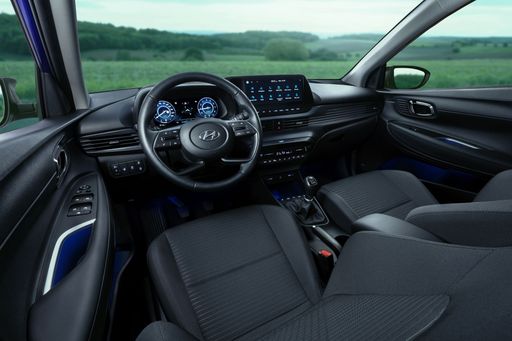
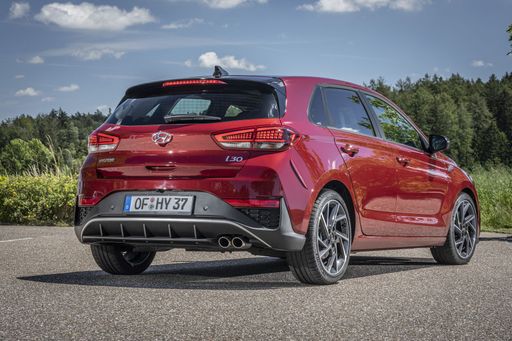
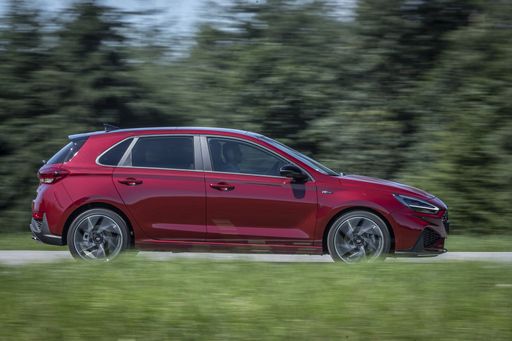
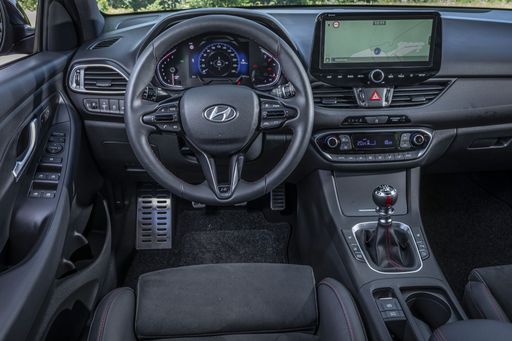
In the compact car market, Hyundai offers two prominent contenders: the Hyundai i20 and the Hyundai i30. Each model boasts its own unique strengths, appealing to a variety of drivers. While they share the same hatchback body style, their differences in size, power, and features make them suitable for different needs. Let's dive into a detailed comparison to find out how these two models stack up against each other in the 2024 lineup.

i30

Design and Dimensions

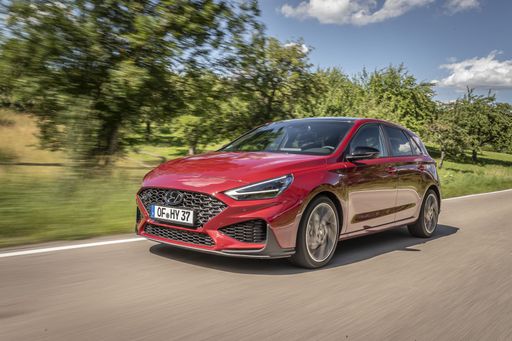
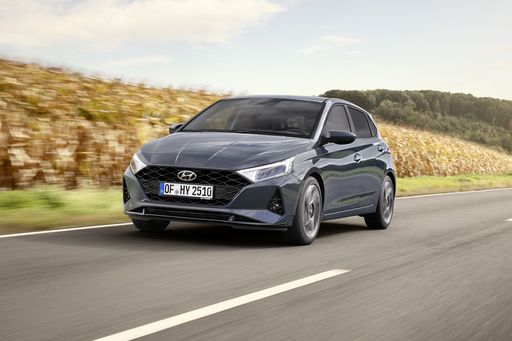
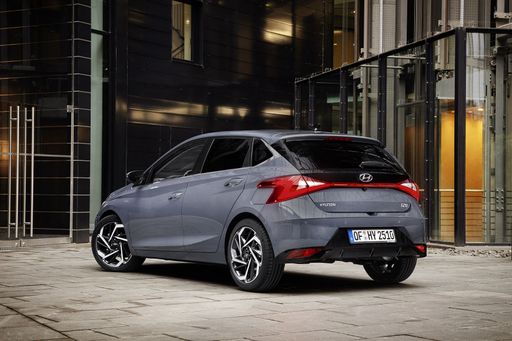
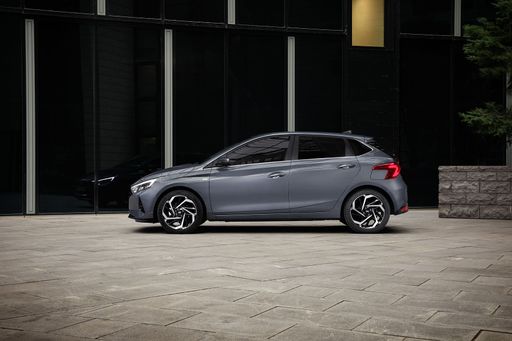
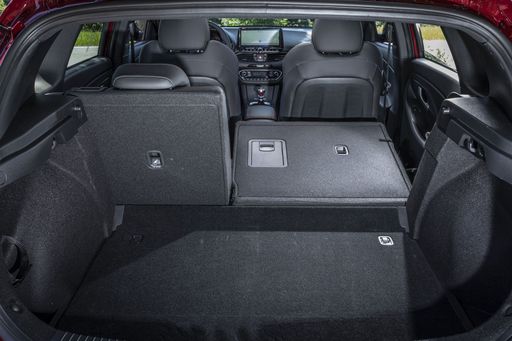
The Hyundai i20, with a length ranging from 4065 mm to 4075 mm, width of 1775 mm, and height standing at 1450 mm to 1455 mm, is slightly more compact than the i30. Meanwhile, the i30 extends to a length of 4340 mm, width of 1795 mm, and shares a height of 1455 mm. The extra space in the i30 translates into a more accommodating cabin, especially evident in its trunk capacity of 395 liters compared to the i20's 352 liters, making the i30 a more practical choice for those needing more storage for weekend trips.

i20

Engine and Performance

Under the hood, both models offer multiple engine configurations. The i20 is powered by either a 998 cm³ or a 1197 cm³ engine, delivering a power output between 79 and 100 HP. Drivers can expect a fuel consumption of 5.1 to 5.3 L/100 km. With an acceleration from 0-100 km/h ranging between 11.1 and 13.7 seconds, it is designed for those prioritizing efficiency and urban usability.

Conversely, the i30 brings a bit more punch with engine options that include a 998 cm³ engine and a more powerful 1482 cm³ alternative reaching up to 140 HP. It offers a slightly higher fuel consumption ranging from 5.6 to 5.9 L/100 km, but this is well-justified with improved acceleration times as quick as 9.6 seconds from 0-100 km/h in its more powerful trim.

i30

Transmission and Drive

Both models maintain a front-wheel drive layout. Transmission options include both manual and dual-clutch automatic options for a versatile driving experience. The dual-clutch automatic in both cars is particularly notable for smooth shifting and efficiency.

i20

Environmental Impact

In terms of environmental performance, both the i20 and i30 fall into the CO2 efficiency class D. The i20's emissions range from 117 to 120 g/km, whereas the i30 ranges from 126 to 133 g/km. While both are environmentally conscious options, the i20 slightly edges the i30 in lower gram/kilometer emissions.

i30

Final Considerations

Ultimately, choosing between the Hyundai i20 and i30 hinges on personal priorities. The i20 stands out for urban drivers seeking a nimble, fuel-efficient vehicle with a more compact footprint. Meanwhile, the i30 caters to those who value additional power and space, making it suitable for families or those who require a bit more room for cargo.

Both models are equipped with Hyundai's reputable engineering and innovation, ensuring reliability and modern features across the board. When it comes down to decision-making, understanding your driving needs and lifestyle will be integral in selecting the perfect hatchback companion from Hyundai's strong lineup.

Here’s where it gets real: The technical differences in detail

i20

Costs and Efficiency:

Price and efficiency are key factors when choosing a car – and this is often where the real differences emerge.

Hyundai i20 is noticeably cheaper – starting at 18,600 £ , while the Hyundai i30 costs 24,600 £ . That’s a price difference of around 5,957 £.

Fuel consumption also shows a difference: the Hyundai i20 uses 5.7 L/100km and is marginally more efficient than the Hyundai i30 with 5.9 L/100km. The difference is about 0.2 L/100km.

i30

Engine and Performance:

Power, torque and acceleration are the classic benchmarks for car enthusiasts – and here, some clear differences start to show.

When it comes to engine power, the Hyundai i30 offers noticeably more power – delivering 150 HP compared to 90 HP. That’s roughly 60 HP more horsepower.

When accelerating from 0 to 100 km/h, the Hyundai i30 is noticeably quicker – completing the sprint in 8.9 s, while the Hyundai i20 takes 11.5 s. That’s about 2.6 s quicker.

There’s also a difference in torque: the Hyundai i30 delivers clearly more torque with 250 Nm compared to 172 Nm. That’s about 78 Nm more.

i20

Space and Everyday Use:

Beyond pure performance, interior space and usability matter most in daily life. This is where you see which car is more practical and versatile.

Both vehicles offer seating for 5 people.

In terms of curb weight, Hyundai i20 is a bit lighter – 1,145 kg compared to 1,315 kg. The difference is around 170 kg.

Looking at boot space, the Hyundai i30 offers a bit more boot space – 395 L compared to 352 L. That’s a difference of about 43 L.

When it comes to payload, the Hyundai i30 carries barely more – 485 kg compared to 465 kg. That’s a difference of about 20 kg.

Who wins the race in the data check?

The Hyundai i30 holds a decisive overall lead in the objective data comparison.
This result only shows which model scores more points on paper – not which of the two cars feels right for you.

from £24,600
i30

Hyundai i30

  • Engine Type : Petrol
  • Transmission : Manuel, Automatic
  • Drive Type : Front-Wheel Drive
  • Power HP : 115 - 150 HP
  • Consumption L/100km : 5.9 - 6.3 L/100km
Hyundai i20
Hyundai i30

Costs and Consumption

View detailed analysis

Engine and Performance

View detailed analysis

Dimensions and Body

View detailed analysis

Hyundai i20

The Hyundai i20 is a cheeky small car that mixes smart styling with sensible practicality, feeling more polished and roomy than you might expect for the money. It’s an easy car to live with, offering engaging handling, a comfy cabin and useful equipment that make daily commutes and weekend errands notably less dull.

details

Hyundai i30

The Hyundai i30 proves that sensible can also be stylish, offering a confident driving character wrapped in neat, modern design. It serves up a roomy, well-equipped cabin and composed ride that make everyday motoring feel like a clever purchase rather than a compromise.

details
Hyundai i20
Hyundai i30

Costs and Consumption

Price
18,600 - 24,000 £
Price
24,600 - 31,400 £
Consumption L/100km
5.7 L/100km
Consumption L/100km
5.9 - 6.3 L/100km
Consumption kWh/100km
-
Consumption kWh/100km
-
Electric Range
-
Electric Range
-
Battery Capacity
-
Battery Capacity
-
co2
128 - 129 g/km
co2
134 - 142 g/km
Fuel tank capacity
-
Fuel tank capacity
-

Dimensions and Body

Body Type
Hatchback
Body Type
Hatchback
Seats
5
Seats
5
Doors
-
Doors
-
Curb weight
1,145 - 1,170 kg
Curb weight
1,315 - 1,435 kg
Trunk capacity
352 L
Trunk capacity
395 L
Length
-
Length
-
Width
1,775 mm
Width
1,795 mm
Height
-
Height
-
Max trunk capacity
-
Max trunk capacity
-
Payload
455 - 465 kg
Payload
445 - 485 kg

Engine and Performance

Engine Type
Petrol
Engine Type
Petrol
Transmission
Manuel, Automatic
Transmission
Manuel, Automatic
Transmission Detail
Manual Gearbox, Dual-Clutch Automatic
Transmission Detail
Manual Gearbox, Dual-Clutch Automatic
Drive Type
Front-Wheel Drive
Drive Type
Front-Wheel Drive
Power HP
90 HP
Power HP
115 - 150 HP
Acceleration 0-100km/h
11.5 - 12.8 s
Acceleration 0-100km/h
8.9 - 11.7 s
Max Speed
-
Max Speed
-
Torque
172 Nm
Torque
172 - 250 Nm
Number of Cylinders
3
Number of Cylinders
3 - 4
Power kW
66 kW
Power kW
85 - 110 kW
Engine capacity
998 cm3
Engine capacity
998 - 1,598 cm3

General

Model Year
2,025
Model Year
2,026
CO2 Efficiency Class
D
CO2 Efficiency Class
D, E
Brand
Hyundai
Brand
Hyundai
DriveDuel uses data analysis and artificial intelligence to evaluate vehicle data and create content. Content is regularly reviewed and improved. The displayed prices are estimates based on German list prices, adjusted to the respective country’s VAT. Country-specific registration taxes are not included. This information is not legally binding.