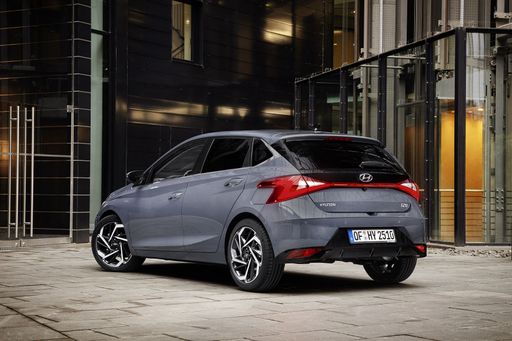
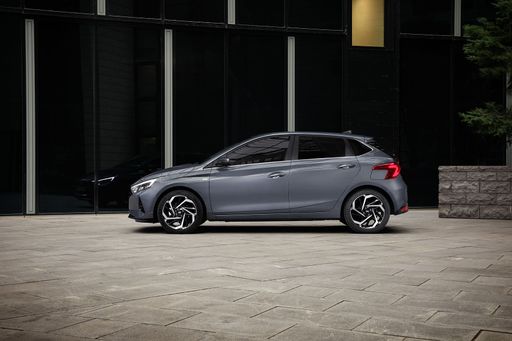
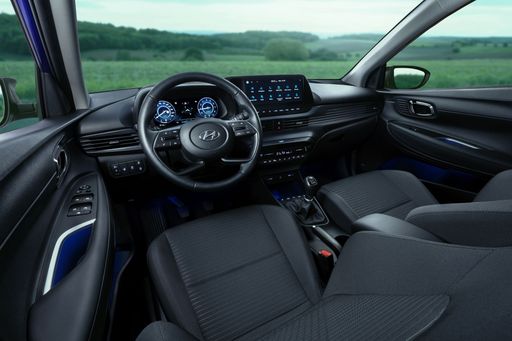
VS

Hyundai i10 vs Hyundai i20 comparison

Compare performance (90 HP vs 90 HP), boot space and price (14,600 £ vs 18,600 £ ) at a glance. Find out which car is the better choice for you – Hyundai i10 or Hyundai i20?

Hyundai i10 vs Hyundai i20: Key differences

Hyundai i10

5 (1 Reviews)
rate
  • clearly cheaper
  • somewhat more efficient
  • only slightly quicker 0–100 km/h
  • somewhat lighter

Hyundai i20

4 (1 Reviews)
rate
  • visibly more trunk space

All details on performance, efficiency, range and trunk space can be found in the technical comparison below – including user reviews for both models.

i10

City hatch showdown: Hyundai i10 VS Hyundai i20 — which small car fits your life?

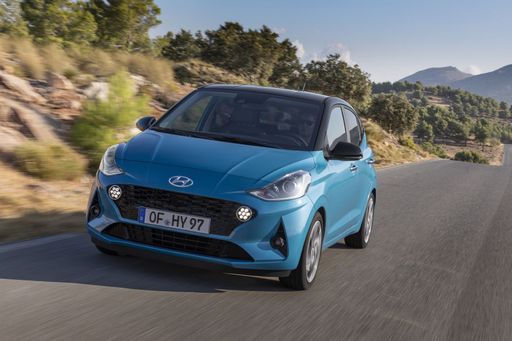
Hyundai i10 and Hyundai i20 go head-to-head in this compact hatchback comparison to help you decide which small car suits your routine and budget. Both wear the hatchback badge, but the Hyundai i10 trades grown-up frills for compact agility while the Hyundai i20 wants to be the more versatile, grown-up option. This piece focuses on how each model feels in traffic, groceries, school runs and occasional escapes rather than just pages of specs. If you’re hunting for a clear Hyundai i10 VS Hyundai i20 perspective, you’ll get character, everyday usability and buyer-fit guidance to cut through the noise.
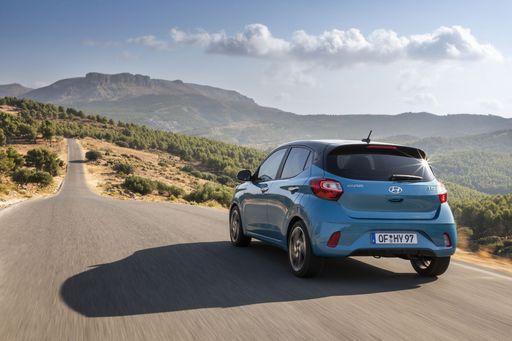
i20

A tale of two attitudes

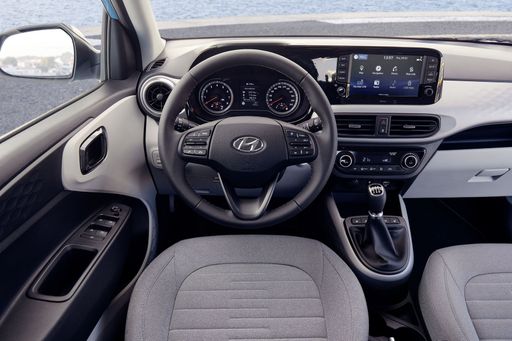
The Hyundai i10 arrives as the cheeky city specialist: light-footed, uncomplicated and unapologetically practical for tight streets. The Hyundai i20, by contrast, aims for a steadier, more composed persona — it’s the small hatch that wants to be taken seriously on longer trips and with passengers aboard. Inside, the i10 keeps things simple and functional whereas the i20 leans toward a cleaner finish and a slightly more premium feel. That difference in attitude is what ultimately shapes who will love each car.

i10

Daily life and where each car earns its keep

On a weekday grind the Hyundai i10 shines: easy parking, nimble steering and a small footprint that makes city life less annoying. The Hyundai i20 stretches usefulness with more cabin space and a calmer ride that takes the edge off longer journeys and family duties. If your life involves regular passengers, child seats or weekend luggage, the i20’s extra room is a meaningful advantage. Meanwhile, the i10 rewards short hops and tight urban manoeuvres — it’s the obedient little tool for daily errands.

i20

Buying with your ego in your pocket

Your justification will tell the truth: choose the Hyundai i10 and you’ll celebrate low fuss and low running cost, the kind of decision that feels sensible and grown-up in its own quiet way. Choose the Hyundai i20 and you’ll talk about a more finished interior, added room and the comfort of a car that handles both motorway miles and school runs without complaint. The i20 offers a touch more aspiration without going overboard, while the i10 is honest about being the pragmatic, sensible choice. Neither is flashy, but they target subtly different self-images.

i10

Who should seriously consider the Hyundai i10?

If you prize thrift, easy parking and a no-nonsense approach to daily driving, the Hyundai i10 is tailored for that life — think city commuters, students or small-household owners who want reliability without fuss. It’s a tidy second car for families and a brilliant urban shuttle for anyone who values economy over polish. The i10’s compactness and simplicity make everyday life easier where space and running costs matter most. If urban practicality ranks higher than cabin flair, the i10 will feel like the sensible win.

i20

Who will be happiest in the Hyundai i20 (and when to glance back at the i10)

The Hyundai i20 suits small families, long-distance commuters and buyers who want a roomier, more comfortable hatch with a slightly more premium presence, making it the sensible upgrade if you need versatility. Design-minded drivers who care about a neater interior and a stronger road presence will prefer the i20’s balance of style and usability. That said, anyone who spends most of their time in the city should still check the Hyundai i10 for its unbeatable urban ease and lower running sting. Read on into the technical delta below to see the concrete trade-offs and decide which little hatch fits your life best.

Here’s where it gets real: The technical differences in detail

i10

Costs and Efficiency:

When it comes to price and running costs, the biggest differences usually appear. This is often where you see which car fits your budget better in the long run.

Hyundai i10 is clearly cheaper – starting at 14,600 £ , while the Hyundai i20 costs 18,600 £ . That’s a price difference of around 4,038 £.

Fuel consumption also shows a difference: the Hyundai i10 uses 4.9 L/100km and is somewhat more efficient than the Hyundai i20 with 5.7 L/100km. The difference is about 0.8 L/100km.

i20

Engine and Performance:

Power, torque and acceleration say a lot about how a car feels on the road. This is where you see which model delivers more driving dynamics.

Both models deliver identical power – 90 HP each.

When accelerating from 0 to 100 km/h, the Hyundai i10 is only slightly quicker – completing the sprint in 11.4 s, while the Hyundai i20 takes 11.5 s. That’s about 0.1 s quicker.

Both models offer the same torque – 172 Nm.

i10

Space and Everyday Use:

Beyond pure performance, interior space and usability matter most in daily life. This is where you see which car is more practical and versatile.

Both vehicles offer seating for 5 people.

In terms of curb weight, Hyundai i10 is somewhat lighter – 996 kg compared to 1,145 kg. The difference is around 149 kg.

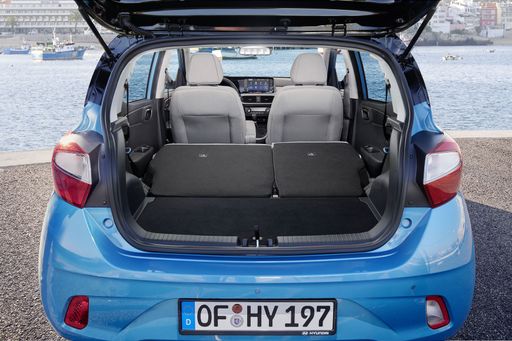
Looking at boot space, the Hyundai i20 offers visibly more boot space – 352 L compared to 252 L. That’s a difference of about 100 L.

When it comes to payload, the Hyundai i20 carries very slightly more – 465 kg compared to 423 kg. That’s a difference of about 42 kg.

Who wins the race in the data check?

The Hyundai i10 stands well ahead of its rival in the objective data comparison.
This result only shows which model scores more points on paper – not which of the two cars feels right for you.

from £14,600
i10

Hyundai i10

  • Engine Type : Petrol
  • Transmission : Manuel, Automatic
  • Drive Type : Front-Wheel Drive
  • Power HP : 63 - 90 HP
  • Consumption L/100km : 4.9 - 5.5 L/100km
Hyundai i10
Hyundai i20

Costs and Consumption

View detailed analysis

Engine and Performance

View detailed analysis

Dimensions and Body

View detailed analysis

Hyundai i10

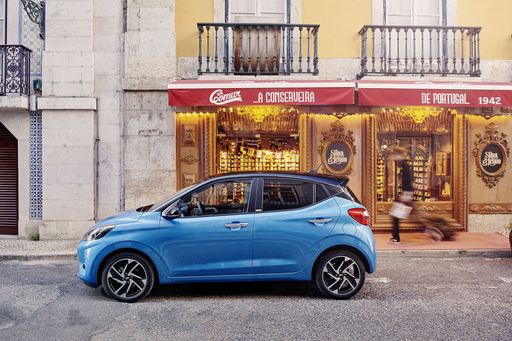
The Hyundai i10 is a cheeky city car that squeezes big-car confidence into a pocket-friendly package, carving through tight streets with surprising composure and sensible practicality. For buyers after low fuss, sensible equipment and wallet-friendly running costs, it's a smart, no-nonsense pick that makes sense whether you're a first-time driver or need a reliable second car.

details

Hyundai i20

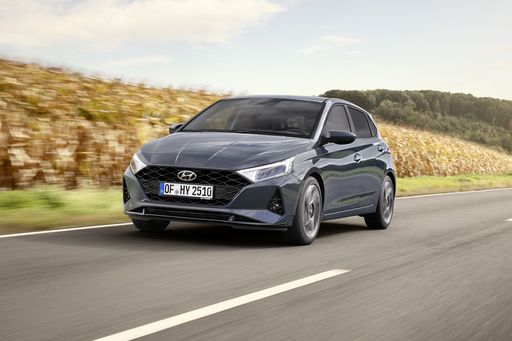
The Hyundai i20 is a cheeky small car that mixes smart styling with sensible practicality, feeling more polished and roomy than you might expect for the money. It’s an easy car to live with, offering engaging handling, a comfy cabin and useful equipment that make daily commutes and weekend errands notably less dull.

details
Hyundai i10
Hyundai i20

Costs and Consumption

Price
14,600 - 19,000 £
Price
18,600 - 24,000 £
Consumption L/100km
4.9 - 5.5 L/100km
Consumption L/100km
5.7 L/100km
Consumption kWh/100km
-
Consumption kWh/100km
-
Electric Range
-
Electric Range
-
Battery Capacity
-
Battery Capacity
-
co2
110 - 124 g/km
co2
128 - 129 g/km
Fuel tank capacity
36 L
Fuel tank capacity
-

Dimensions and Body

Body Type
Hatchback
Body Type
Hatchback
Seats
4 - 5
Seats
5
Doors
5
Doors
-
Curb weight
996 - 1,099 kg
Curb weight
1,145 - 1,170 kg
Trunk capacity
252 L
Trunk capacity
352 L
Length
3,670 - 3,675 mm
Length
-
Width
1,680 mm
Width
1,775 mm
Height
1,480 - 1,483 mm
Height
-
Max trunk capacity
1,050 L
Max trunk capacity
-
Payload
344 - 423 kg
Payload
455 - 465 kg

Engine and Performance

Engine Type
Petrol
Engine Type
Petrol
Transmission
Manuel, Automatic
Transmission
Manuel, Automatic
Transmission Detail
Manual Gearbox, Automated Manual
Transmission Detail
Manual Gearbox, Dual-Clutch Automatic
Drive Type
Front-Wheel Drive
Drive Type
Front-Wheel Drive
Power HP
63 - 90 HP
Power HP
90 HP
Acceleration 0-100km/h
11.4 - 18.4 s
Acceleration 0-100km/h
11.5 - 12.8 s
Max Speed
143 - 175 km/h
Max Speed
-
Torque
93 - 172 Nm
Torque
172 Nm
Number of Cylinders
3 - 4
Number of Cylinders
3
Power kW
46 - 66 kW
Power kW
66 kW
Engine capacity
998 - 1,197 cm3
Engine capacity
998 cm3

General

Model Year
2,024
Model Year
2,025
CO2 Efficiency Class
C, D
CO2 Efficiency Class
D
Brand
Hyundai
Brand
Hyundai
DriveDuel uses data analysis and artificial intelligence to evaluate vehicle data and create content. Content is regularly reviewed and improved. The displayed prices are estimates based on German list prices, adjusted to the respective country’s VAT. Country-specific registration taxes are not included. This information is not legally binding.