VS

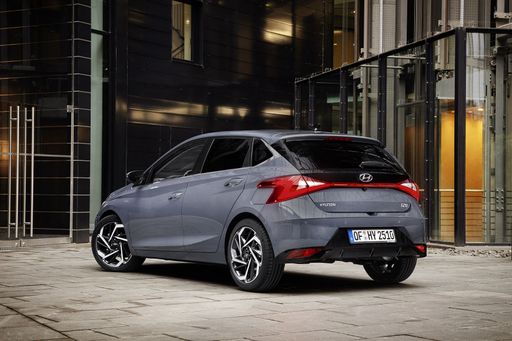
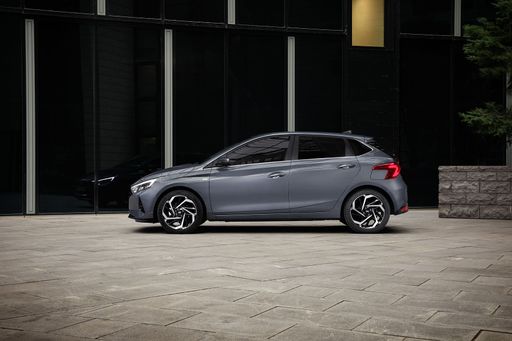
Hyundai Bayon vs Hyundai i20 comparison

Compare performance (90 HP vs 90 HP), boot space and price (20,100 £ vs 18,600 £ ) at a glance. Find out which car is the better choice for you – Hyundai Bayon or Hyundai i20?

Hyundai Bayon vs Hyundai i20: Key differences

Hyundai Bayon

4.4 (2 Reviews)
rate
  • somewhat more trunk space
details

Hyundai i20

4 (1 Reviews)
rate
  • only slightly cheaper
  • marginally more efficient
  • marginally quicker 0–100 km/h
  • very slightly lighter
details

All details on performance, efficiency, range and trunk space can be found in the technical comparison below – including user reviews for both models.

By Achim Sedelmaier

Bayon

Hyundai Bayon VS Hyundai i20: the real-world choice

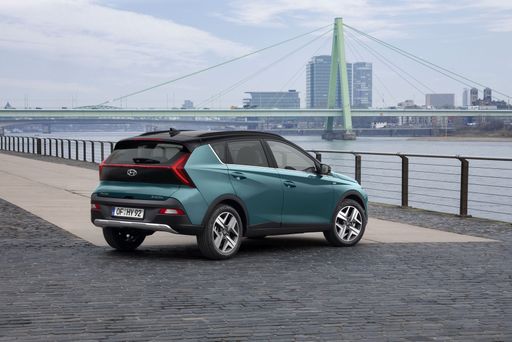
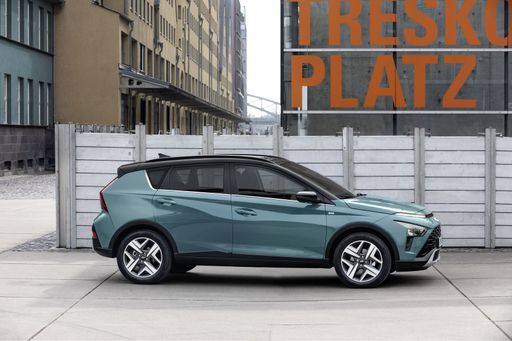
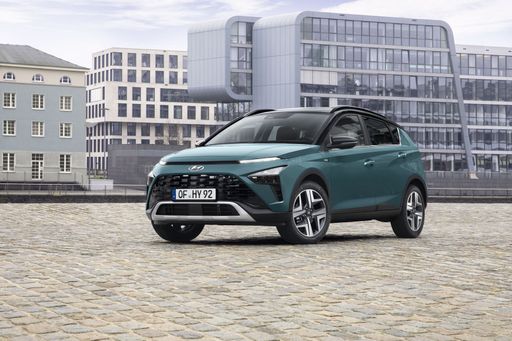
The Hyundai Bayon and Hyundai i20 are siblings with very different attitudes, and that’s exactly why this comparison matters. The Bayon plays the small-SUV card with an easygoing, elevated feel and a standout boot, while the i20 is the tidy hatch that majors on simplicity and everyday efficiency. On the road they feel closer than their shapes suggest, yet seat height, agility, luggage space and price nudge buyers in different directions. If you’re weighing Hyundai Bayon VS Hyundai i20, it comes down to whether you value upright practicality more than hatchback neatness. Both are sensible; how they deliver that sensibility is what separates them.
i20

Driving character: relaxed crossover or tidy hatch?

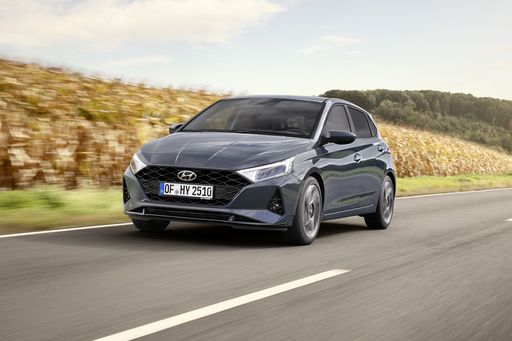
The Bayon is tuned for calm progress, with light controls and a laid-back vibe that makes city traffic feel easy but engages less when the road turns interesting. The i20 feels a touch more eager and settled, with a tighter body response that suits quick lane changes and country roads. Performance is similar in headline terms, yet the i20’s slightly keener response makes everyday gaps and roundabouts simpler to nail. The Bayon’s optional dual-clutch can hesitate off the line, whereas the i20’s manual and auto pairings tend to feel more natural in stop-and-go. Pick Bayon for effortlessness, i20 for a cleaner, more precise rhythm.

Bayon

Cabin feel, seating position and usability

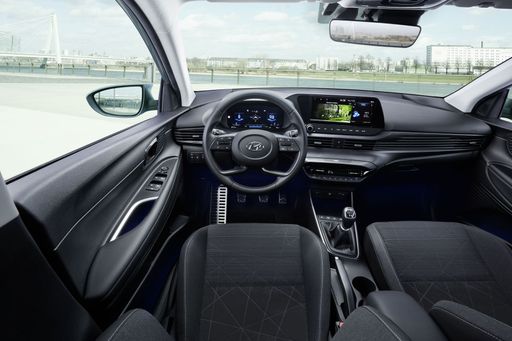
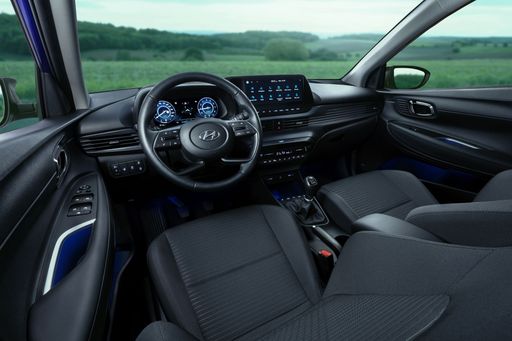
Both cabins favour straightforward controls with proper buttons for the basics, which is a relief in daily use. The Bayon sits you higher, making entry easy and the forward view generous, though thick rear pillars mean you’ll rely on the camera when backing up. The i20 places you lower and more “in” the car, which many drivers find more natural on longer stints. Material quality is functional in both, but the Bayon’s ambience feels more utilitarian, while the i20’s layout reads a shade neater even if neither chases premium vibes. Infotainment is broadly similar in features and can be a touch slow at times, so the physical shortcuts genuinely matter here.

i20

Space and practicality: boots, back seats and family hacks

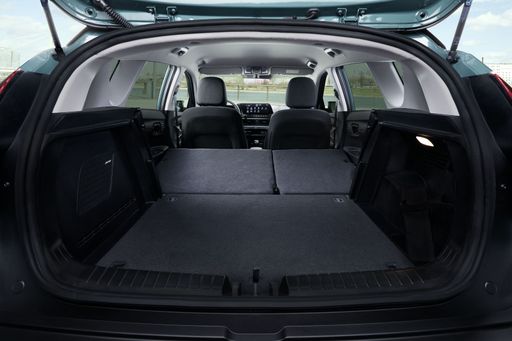
If you pack big, the Bayon’s luggage area is the clincher, swallowing pushchairs and weekly shops with less Tetris than most small cars. Rear headroom in the Bayon is adequate rather than airy, so taller teens may prefer the i20’s back bench on longer trips. The i20’s boot is still strong for a hatchback and the variable floor keeps life simple, but the Bayon gives you more cushion for spontaneous IKEA moments. Fitting two child seats is feasible in both; the i20’s ISOFIX points can be fiddly, while the Bayon’s higher load-in height helps your back when buckling toddlers. City households who live out of their boot will lean Bayon; occasional haulers won’t feel short-changed in the i20.

Bayon

Long-distance manners and running costs

On the motorway, the i20 tracks cleanly and sips a bit less, which commuters will appreciate over time. It’s not whisper-quiet, but its firmer edge calms with speed and makes long, straight runs feel neat and predictable. The Bayon is adequately hushed and stable at typical cruising speeds, yet can fidget more over joins and offers fewer reserves for fast overtakes. With identical power on paper, the i20’s marginally sprightlier feel and thriftier appetite tilt it toward frequent highway use, especially with a manual. If you value a gentler gait and don’t rush overtakes, the Bayon is fine; if you count pennies and minutes, the i20 suits better.

i20

City friendliness, value and who should buy which

The Bayon is the friendlier urban tool: great forward visibility, light steering and that big boot make errands and parallel parks feel low-stress. The i20 is smaller on the outside, a bit cheaper to buy, and its hatchback stance makes tight gaps and multistorey ramps feel effortless. Both bring generous equipment and long warranty coverage, but the Bayon trades some polish for extra practicality, while the i20 trades some cargo room for sharper road manners and lower ownership cost. Choose the Hyundai Bayon if you want a small SUV that prioritizes ease of use and everyday practicality; choose the Hyundai i20 if you value a keener drive, stronger efficiency and a keener price. With those roles clear, the detailed specs below will help you fine-tune which one matches your routine best.

Here’s where it gets real: The technical differences in detail

Bayon

Costs and Efficiency:

Price and efficiency are key factors when choosing a car – and this is often where the real differences emerge.

Hyundai i20 is only slightly cheaper – starting at 18,600 £ , while the Hyundai Bayon costs 20,100 £ . That’s a price difference of around 1,457 £.

Fuel consumption also shows a difference: the Hyundai i20 uses 5.7 L/100km and is marginally more efficient than the Hyundai Bayon with 5.8 L/100km. The difference is about 0.1 L/100km.

i20

Engine and Performance:

Under the bonnet, it becomes clear which model is tuned for sportiness and which one takes the lead when you hit the accelerator.

Both models deliver identical power – 90 HP each.

When accelerating from 0 to 100 km/h, the Hyundai i20 is marginally quicker – completing the sprint in 11.5 s, while the Hyundai Bayon takes 11.9 s. That’s about 0.4 s quicker.

Both models offer the same torque – 172 Nm.

Bayon

Space and Everyday Use:

Whether family car or daily driver – which one offers more room, flexibility and comfort?

Both vehicles offer seating for 5 people.

In terms of curb weight, Hyundai i20 is very slightly lighter – 1,145 kg compared to 1,175 kg. The difference is around 30 kg.

Looking at boot space, the Hyundai Bayon offers somewhat more boot space – 411 L compared to 352 L. That’s a difference of about 59 L.

When it comes to payload, the Hyundai i20 carries marginally more – 465 kg compared to 460 kg. That’s a difference of about 5 kg.

Who wins the race in the data check?

The Hyundai i20 is narrowly ahead in the objective data comparison.
This result only shows which model scores more points on paper – not which of the two cars feels right for you.

from £18,600
i20

Hyundai i20

  • Engine Type : Petrol
  • Transmission : Manuel, Automatic
  • Drive Type : Front-Wheel Drive
  • Power HP : 90 HP
  • Consumption L/100km : 5.7 L/100km
Hyundai Bayon
Hyundai i20

Costs and Consumption

View detailed analysis

Engine and Performance

View detailed analysis

Dimensions and Body

View detailed analysis

Hyundai Bayon

The Hyundai Bayon slips neatly between city runabout and small SUV, offering surprising practicality and a fresh, confident design that stands out in urban traffic. It's an easy buy for shoppers who want smart packaging, tidy handling and a dash of personality without fuss — a sensible little crossover that makes everyday driving a bit more enjoyable.

details

Hyundai i20

The Hyundai i20 is a cheeky small car that mixes smart styling with sensible practicality, feeling more polished and roomy than you might expect for the money. It’s an easy car to live with, offering engaging handling, a comfy cabin and useful equipment that make daily commutes and weekend errands notably less dull.

details
Hyundai Bayon
Hyundai i20

Costs and Consumption

Price
20,100 - 25,800 £
Price
18,600 - 24,000 £
Consumption L/100km
5.8 L/100km
Consumption L/100km
5.7 L/100km
Consumption kWh/100km
-
Consumption kWh/100km
-
Electric Range
-
Electric Range
-
Battery Capacity
-
Battery Capacity
-
co2
130 - 132 g/km
co2
128 - 129 g/km
Fuel tank capacity
-
Fuel tank capacity
-

Dimensions and Body

Body Type
SUV
Body Type
Hatchback
Seats
5
Seats
5
Doors
-
Doors
-
Curb weight
1,175 - 1,200 kg
Curb weight
1,145 - 1,170 kg
Trunk capacity
411 L
Trunk capacity
352 L
Length
-
Length
-
Width
1,775 mm
Width
1,775 mm
Height
-
Height
-
Max trunk capacity
-
Max trunk capacity
-
Payload
450 - 460 kg
Payload
455 - 465 kg

Engine and Performance

Engine Type
Petrol
Engine Type
Petrol
Transmission
Manuel, Automatic
Transmission
Manuel, Automatic
Transmission Detail
Manual Gearbox, Dual-Clutch Automatic
Transmission Detail
Manual Gearbox, Dual-Clutch Automatic
Drive Type
Front-Wheel Drive
Drive Type
Front-Wheel Drive
Power HP
90 HP
Power HP
90 HP
Acceleration 0-100km/h
11.9 - 13.3 s
Acceleration 0-100km/h
11.5 - 12.8 s
Max Speed
-
Max Speed
-
Torque
172 Nm
Torque
172 Nm
Number of Cylinders
3
Number of Cylinders
3
Power kW
66 kW
Power kW
66 kW
Engine capacity
998 cm3
Engine capacity
998 cm3

General

Model Year
2025
Model Year
2025
CO2 Efficiency Class
D
CO2 Efficiency Class
D
Brand
Hyundai
Brand
Hyundai
DriveDuel uses data analysis and artificial intelligence to evaluate vehicle data and create content. Content is regularly reviewed and improved. The displayed prices are estimates based on German list prices, adjusted to the respective country’s VAT. Country-specific registration taxes are not included. This information is not legally binding.