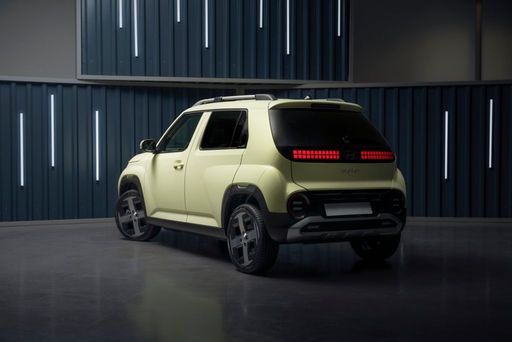
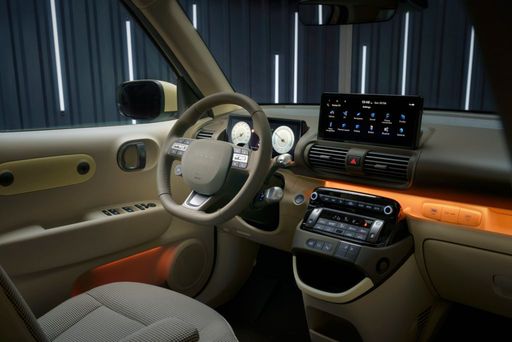
VS

Hyundai i10 vs Hyundai Inster comparison

Compare performance (90 HP vs 115 HP), boot space and price (14,600 £ vs 20,500 £ ) at a glance. Find out which car is the better choice for you – Hyundai i10 or Hyundai Inster?

Hyundai i10 vs Hyundai Inster: Key differences

Hyundai i10

5 (1 Reviews)
rate
  • clearly cheaper
  • visibly lighter

Hyundai Inster

5 (1 Reviews)
rate
  • markedly more power
  • only slightly quicker 0–100 km/h
  • only slightly more trunk space

All details on performance, efficiency, range and trunk space can be found in the technical comparison below – including user reviews for both models.

i10

Small-car showdown: two Hyundais with different attitudes

On one side you've got the Hyundai i10, the pocket rocket that feels at home between kerbs and coffee shops; on the other is the Hyundai Inster, a slightly more grown-up compact that aims to stretch the brief for the small-car class. This isn't a duel of egos as much as a debate about priorities — cheeky city agility versus composed everyday presence. Pick a side and your daily routine will give you the convincing argument you need.
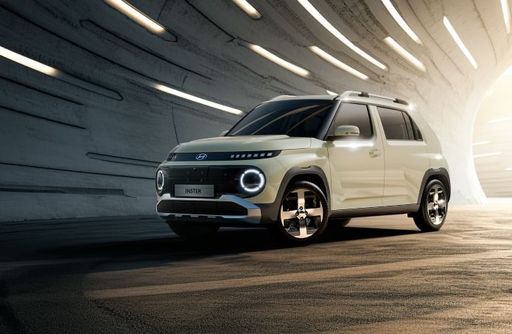
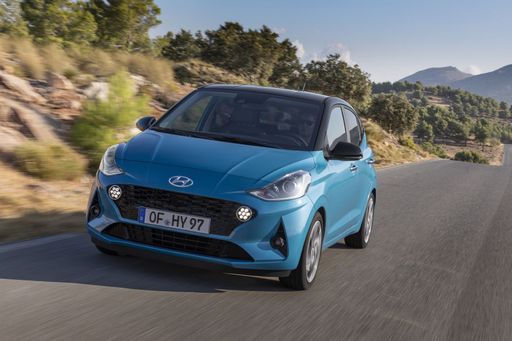
Inster

Character clash: playful thrift vs. measured confidence

The i10 wears its thrift and cheekiness on its sleeve, projecting a "get-on-with-life" energy that suits tight streets and quick errands, while the Inster prefers a quieter, more deliberate kind of polish that signals a step up in calm and composure. One brims with economy and urban intent, the other with a sense that you've moved into slightly more grown-up territory without overreaching. Think of it as the difference between a nimble streetwise companion and a compact that wants to be taken seriously.

i10

How they behave day-to-day

In town, the i10's liveliness and uncomplicated controls make parking, short hops and juggling errands feel effortless, while families or longer trips tend to suit the Inster's more relaxed temperament and roomier feel. Comfort on the motorway, ease of loading, and the kind of silence that makes conversation pleasant tilt toward the Inster, whereas the i10 keeps life simple and economical for city-centric daily drivers. Depending on whether your calendar is full of school runs or cross-country visits, one will fit more neatly into your life than the other.

Inster

The story you tell arriving at the curb

Choosing the i10 says you value clever use of space, sensible running costs and a car that never makes parking a drama; it's practical with a wink. Opting for the Inster suggests you appreciate a bit more presence, refinement and a quieter cabin that softens the edges of a long day. Neither choice needs to be defended: it’s more about whether you want to shout efficiency or humbly announce that you’ve upgraded your everyday comfort.

i10

If what matters to you is street-smart practicality

If what matters to you is low fuss, easy parking and a car that feels right-sized for the city, the Hyundai i10 is the obvious companion for daily life, not an indulgence but a useful tool. It suits buyers who want sensible running costs, straightforward functionality and a friendly character that forgives the odd scrape or tight squeeze. For commuters, first-time buyers or anyone who treats their car as a means to an efficient end, the i10 keeps the focus where it should be: on making life simpler.

Inster

If what matters to you is calm authority and a touch more refinement

If what matters to you is a quieter cabin, a sense that the car can handle longer drives without drama and a few extra comforts, the Hyundai Inster will answer that call while still staying compact and sensible. It appeals to drivers who want the reassurance of a more composed ride and a little extra presence at the school run or motorway service station, without leaping into luxury territory. Read on to see how their personalities stack up against the hard numbers and decide which story fits your driveway.

Here’s where it gets real: The technical differences in detail

i10

Costs and Efficiency:

Price and efficiency are key factors when choosing a car – and this is often where the real differences emerge.

Hyundai i10 is clearly cheaper – starting at 14,600 £ , while the Hyundai Inster costs 20,500 £ . That’s a price difference of around 5,923 £.

Inster

Engine and Performance:

Power, torque and acceleration say a lot about how a car feels on the road. This is where you see which model delivers more driving dynamics.

When it comes to engine power, the Hyundai Inster offers markedly more power – delivering 115 HP compared to 90 HP. That’s roughly 25 HP more horsepower.

When accelerating from 0 to 100 km/h, the Hyundai Inster is only slightly quicker – completing the sprint in 10.6 s, while the Hyundai i10 takes 11.4 s. That’s about 0.8 s quicker.

There’s also a difference in torque: the Hyundai i10 delivers moderately more torque with 172 Nm compared to 147 Nm. That’s about 25 Nm more.

i10

Space and Everyday Use:

Cabin size, boot volume and payload all play a role in everyday practicality. Here, comfort and flexibility make the difference.

Seats: Hyundai i10 offers more seats – 5 vs 4.

In terms of curb weight, Hyundai i10 is visibly lighter – 996 kg compared to 1,380 kg. The difference is around 384 kg.

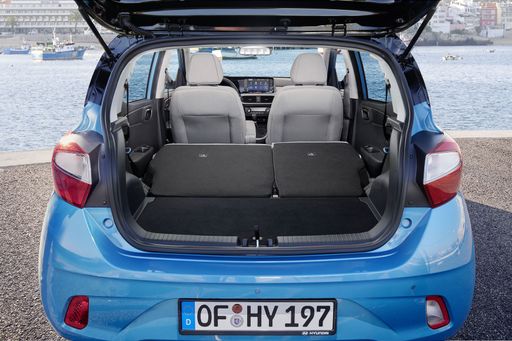
Looking at boot space, the Hyundai Inster offers only slightly more boot space – 280 L compared to 252 L. That’s a difference of about 28 L.

When it comes to payload, the Hyundai i10 carries slightly more – 423 kg compared to 357 kg. That’s a difference of about 66 kg.

Who wins the race in the data check?

The Hyundai Inster shows a few small advantages in the objective data comparison.
This result only shows which model scores more points on paper – not which of the two cars feels right for you.

from £20,500
Inster

Hyundai Inster

  • Engine Type : Electric
  • Transmission : Automatic
  • Drive Type : Front-Wheel Drive
  • Power HP : 97 - 115 HP
  • Consumption kWh/100km : 14.3 - 15.1 kWh/100km
  • Electric Range : 327 - 370 km
Hyundai i10
Hyundai Inster

Costs and Consumption

View detailed analysis

Engine and Performance

View detailed analysis

Dimensions and Body

View detailed analysis

Hyundai i10

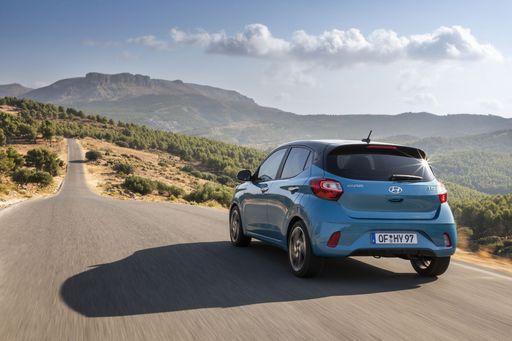
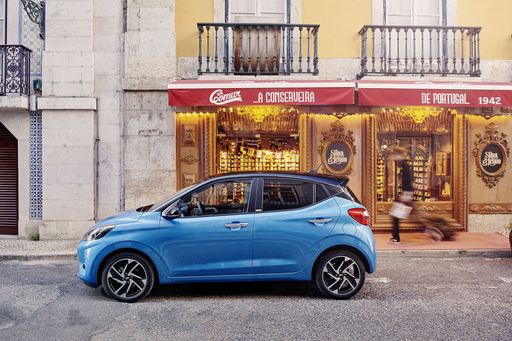
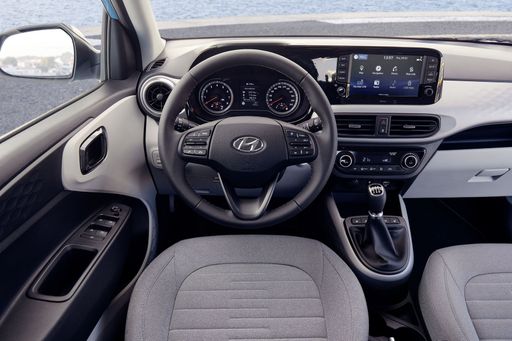
The Hyundai i10 is a cheeky city car that squeezes big-car confidence into a pocket-friendly package, carving through tight streets with surprising composure and sensible practicality. For buyers after low fuss, sensible equipment and wallet-friendly running costs, it's a smart, no-nonsense pick that makes sense whether you're a first-time driver or need a reliable second car.

details

Hyundai Inster

The Inster has quickly captured the attention of automotive enthusiasts with its striking design and dynamic performance. This model seamlessly blends advanced technology with comfort, making it an ideal choice for both daily commutes and adventurous road trips. With its spacious interior and innovative features, the Inster promises an exhilarating driving experience that doesn’t compromise on practicality.

details
Hyundai i10
Hyundai Inster

Costs and Consumption

Price
14,600 - 19,000 £
Price
20,500 - 25,800 £
Consumption L/100km
4.9 - 5.5 L/100km
Consumption L/100km
-
Consumption kWh/100km
-
Consumption kWh/100km
14.3 - 15.1 kWh/100km
Electric Range
-
Electric Range
327 - 370 km
Battery Capacity
-
Battery Capacity
-
co2
110 - 124 g/km
co2
0 g/km
Fuel tank capacity
36 L
Fuel tank capacity
-

Dimensions and Body

Body Type
Hatchback
Body Type
SUV
Seats
4 - 5
Seats
4
Doors
5
Doors
-
Curb weight
996 - 1,099 kg
Curb weight
1,380 - 1,433 kg
Trunk capacity
252 L
Trunk capacity
238 - 280 L
Length
3,670 - 3,675 mm
Length
-
Width
1,680 mm
Width
1,610 mm
Height
1,480 - 1,483 mm
Height
-
Max trunk capacity
1,050 L
Max trunk capacity
-
Payload
344 - 423 kg
Payload
317 - 357 kg

Engine and Performance

Engine Type
Petrol
Engine Type
Electric
Transmission
Manuel, Automatic
Transmission
Automatic
Transmission Detail
Manual Gearbox, Automated Manual
Transmission Detail
Reduction Gearbox
Drive Type
Front-Wheel Drive
Drive Type
Front-Wheel Drive
Power HP
63 - 90 HP
Power HP
97 - 115 HP
Acceleration 0-100km/h
11.4 - 18.4 s
Acceleration 0-100km/h
10.6 - 11.7 s
Max Speed
143 - 175 km/h
Max Speed
-
Torque
93 - 172 Nm
Torque
147 Nm
Number of Cylinders
3 - 4
Number of Cylinders
-
Power kW
46 - 66 kW
Power kW
71 - 85 kW
Engine capacity
998 - 1,197 cm3
Engine capacity
-

General

Model Year
2,024
Model Year
2,025
CO2 Efficiency Class
C, D
CO2 Efficiency Class
A
Brand
Hyundai
Brand
Hyundai
DriveDuel uses data analysis and artificial intelligence to evaluate vehicle data and create content. Content is regularly reviewed and improved. The displayed prices are estimates based on German list prices, adjusted to the respective country’s VAT. Country-specific registration taxes are not included. This information is not legally binding.