@ Dacia / Renault Group Media
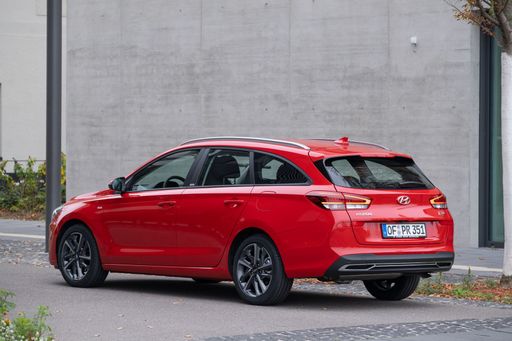
@ Hyundai Motor Company
VS

Dacia Jogger vs Hyundai i30 Wagon – Performance, range & efficiency compared

Everyday use, family trips or long-distance drives – here’s where the differences show.
Discover whether Dacia Jogger or Hyundai i30 Wagon fits your lifestyle better.

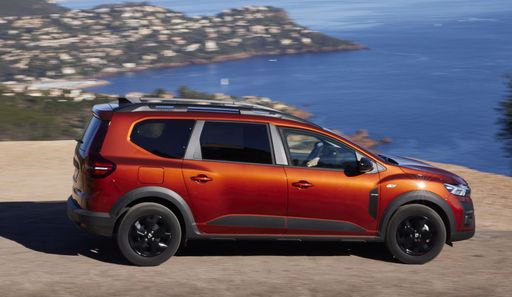
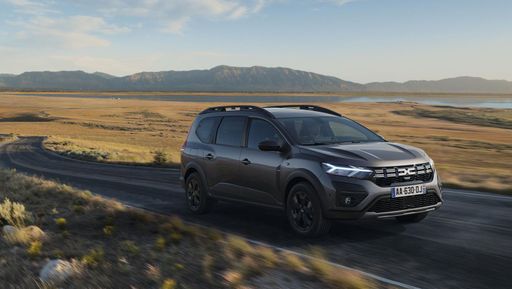
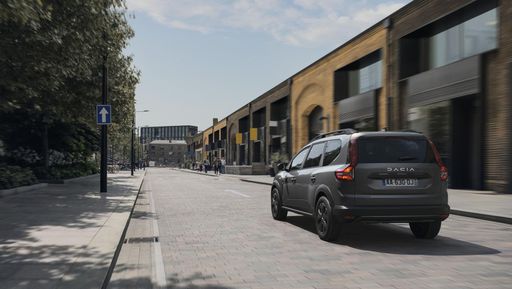
Jogger @ Dacia / Renault Group Media

A Tale of Two Cars: Dacia Jogger vs. Hyundai i30 Kombi

When it comes to family-friendly vehicles, the market presents a wide array of choices. Two contenders standing out in 2024 for their versatility and utility are the Dacia Jogger and the Hyundai i30 Kombi. Both catering to different needs yet operating within a similar price bracket, let's dive deep into the specifications and innovations that make these models shine.
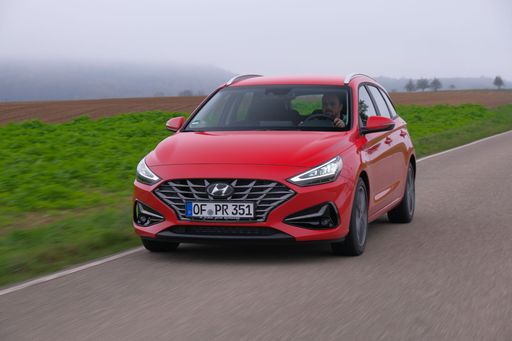
i30 Wagon @ Hyundai Motor Company

Body and Design: Size Meets Sophistication

The Dacia Jogger, an MPV, offers versatility with its 5 or 7 seating options, making it an excellent choice for larger families. With dimensions of 4547 mm in length, 1784 mm in width, and 1674 mm in height, it's designed to prioritize interior space without neglecting style.

On the other hand, the Hyundai i30 Kombi presents a sleeker look with its wagon body type. It might have a slightly larger footprint at 4585 mm in length, 1795 mm in width, but it is more compact in height at 1475 mm, giving it an aerodynamic advantage.

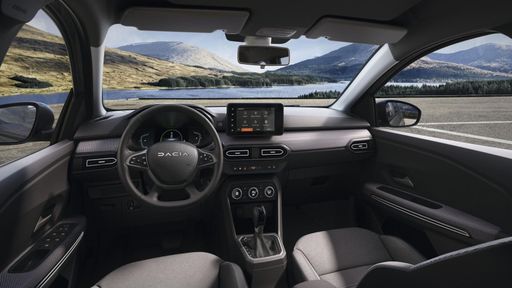
Jogger @ Dacia / Renault Group Media

Engine Performance: Power and Efficiency

The Dacia Jogger offers a range of engine types, including full hybrid, LPG, and petrol variants. The hybrid model provides an impressive fuel consumption of 4.7 L/100km, backed by a 140 HP engine, ensuring both power and efficiency.

Hyundai's i30 Kombi counters with petrol and petrol mild hybrid engines. The engine options here top out at 140 HP, delivering a smooth driving experience with a commendable consumption rate starting at 5.6 L/100km.

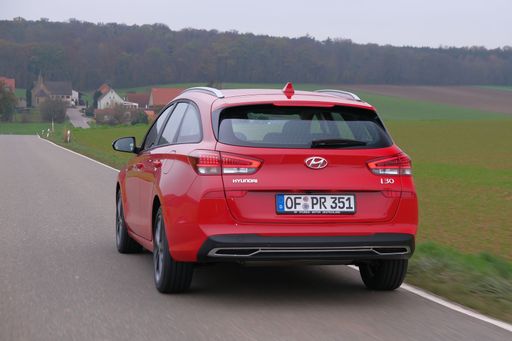
i30 Wagon @ Hyundai Motor Company

Acceleration and Handling: Agile vs. Dependable

The jogging powertrain of the Dacia Jogger offers a range of acceleration experiences, with the hybrid engine achieving 0-100 km/h in 9.8 seconds. Specifically engineered for front-wheel drive dynamics, it ensures a dependable handling balance.

Conversely, the Hyundai i30 Kombi brings agility to the forefront with its best acceleration reaching 0-100 km/h in 9.8 seconds with the hybrid configuration. It also features front-wheel drive, promising robust traction and steady handling.

Jogger @ Dacia / Renault Group Media

Innovation and Technology: Convenience on Wheels

Dacia introduces the Jogger with a clear focus on practicality, including a 50 L fuel tank capacity, essential for long trips, and a trunk capacity of 607 L accommodating extensive luggage. Its manual or automatic transmission options ensure flexibility in drivers' preferences.

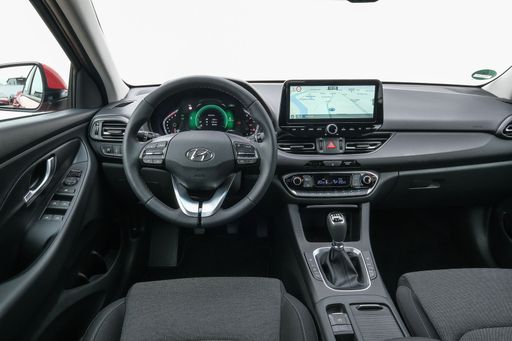
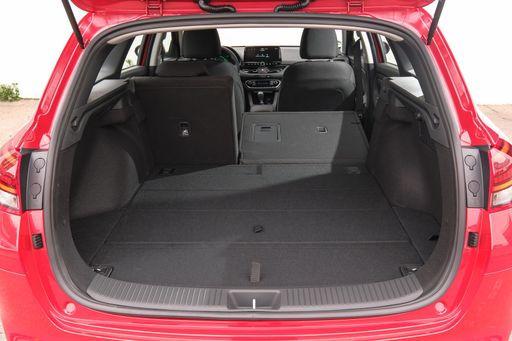
Hyundai's i30 Kombi presents modern innovations with a dual-clutch automatic transmission, offering seamless gear shifts for a more refined driving experience. It compensates slightly reduced trunk space of 602 L with superior technology integration for in-car comfort.

i30 Wagon @ Hyundai Motor Company

Economical Aspects and Environmental Impact

Both vehicles align closely in CO2 efficiency classes, with the Jogger ranging between classes C and D and i30 Kombi standing at class D. With fuel-efficient engines and lower emissions, both models aim to be greener choices in urban environments.

Jogger @ Dacia / Renault Group Media

Conclusion: Choosing the Right Fit

For families searching for practicality, space, and adaptability, the Dacia Jogger presents an attractive package. Meanwhile, those seeking a more compact design with innovative tech features might find the Hyundai i30 Kombi more appealing.

Both models offer a distinct blend of features catering to various preferences and priorities. Whether it's the spacious interior of the Jogger or the stylish agility of the i30 Kombi, the choice ultimately depends on the specific needs and lifestyle of potential buyers.

Here’s where it gets real: The technical differences in detail

i30 Wagon @ Hyundai Motor Company

Costs and Efficiency:

Price and efficiency are often the first things buyers look at. Here it becomes clear which model has the long-term edge – whether at the pump, the plug, or in purchase price.

Dacia Jogger has a clearly advantage in terms of price – it starts at 15400 £, while the Hyundai i30 Wagon costs 24800 £. That’s a price difference of around 9428 £.

Fuel consumption also shows a difference: Dacia Jogger manages with 4.70 L and is therefore clearly perceptible more efficient than the Hyundai i30 Wagon with 5.70 L. The difference is about 1 L per 100 km.

Engine and Performance:

Power, torque and acceleration say a lot about how a car feels on the road. This is where you see which model delivers more driving dynamics.

Both models deliver identical power – 140 HP each.

Both models accelerate almost equally fast – 9.80 s from 0 to 100 km/h.

In terms of top speed, the Hyundai i30 Wagon performs a bit better – reaching 197 km/h, while the Dacia Jogger tops out at 174 km/h. The difference is around 23 km/h.

There’s also a difference in torque: Hyundai i30 Wagon pulls evident stronger with 253 Nm compared to 200 Nm. That’s about 53 Nm difference.

Space and Everyday Use:

Beyond pure performance, interior space and usability matter most in daily life. This is where you see which car is more practical and versatile.

Seats: Dacia Jogger offers noticeable more seating capacity – 7 vs 5.

In curb weight, Dacia Jogger is hardly perceptible lighter – 1251 kg compared to 1316 kg. The difference is around 65 kg.

In terms of boot space, the Dacia Jogger offers minimal more room – 607 L compared to 602 L. That’s a difference of about 5 L.

In maximum load capacity, the Dacia Jogger performs hardly perceptible better – up to 1819 L, which is about 169 L more than the Hyundai i30 Wagon.

When it comes to payload, Dacia Jogger hardly perceptible takes the win – 582 kg compared to 524 kg. That’s a difference of about 58 kg.

Who comes out on top?

Overall, the Dacia Jogger shows itself to be wins the duel decisively and secures the title of DriveDuel Champion.
It convinces with the more balanced overall package and proves to be the more versatile choice for everyday use.

from about £15,400
Jogger @ Dacia / Renault Group Media

Dacia Jogger

  • Engine Type : Full Hybrid, LPG, Petrol
  • Transmission : Automatic, Manuel
  • Drive Type : Front-Wheel Drive
  • Power HP : 91 - 140 HP
  • Consumption L/100km : 4.7 - 7.8 L

Dacia Jogger

The Dacia Jogger is a no-nonsense family mover that stretches the idea of value with cavernous practicality and flexible space, perfect for buyers who need a sensible, everyday Swiss Army knife on wheels. It doesn’t try to be glamorous — instead it wins hearts with cheerful thrift, durable materials and honest engineering, giving you useful transport without the pretence.

details

Hyundai i30 Wagon

The Hyundai i30 Wagon offers a blend of practicality and style, making it a popular choice for families and those in need of extra space. Its sleek exterior and comfortable interior provide a pleasant driving experience, while advanced safety features ensure peace of mind on the road. The i30 Wagon stands out with its impressive fuel efficiency and reliability, catering to both urban and rural lifestyles.

details
Dacia Jogger
Hyundai i30 Wagon
Jogger @ Dacia / Renault Group Media
i30 Wagon @ Hyundai Motor Company

Costs and Consumption

Price
15400 - 23400 £
Price
24800 - 30100 £
Consumption L/100km
4.7 - 7.8 L
Consumption L/100km
5.7 - 6 L
Consumption kWh/100km
-
Consumption kWh/100km
-
Electric Range
-
Electric Range
-
Battery Capacity
0.60 kWh
Battery Capacity
-
co2
105 - 137 g/km
co2
130 - 136 g/km
Fuel tank capacity
40 - 50 L
Fuel tank capacity
50 L

Dimensions and Body

Body Type
MPV
Body Type
Estate
Seats
5 - 7
Seats
5
Doors
5
Doors
5
Curb weight
1251 - 1460 kg
Curb weight
1316 - 1461 kg
Trunk capacity
160 - 607 L
Trunk capacity
602 L
Length
4547 mm
Length
4585 mm
Width
1784 mm
Width
1795 mm
Height
1674 mm
Height
1475 mm
Max trunk capacity
1807 - 1819 L
Max trunk capacity
1650 L
Payload
393 - 582 kg
Payload
439 - 524 kg

Engine and Performance

Engine Type
Full Hybrid, LPG, Petrol
Engine Type
Petrol, Petrol MHEV
Transmission
Automatic, Manuel
Transmission
Manuel, Automatic
Transmission Detail
Automatic Gearbox, Manual Gearbox
Transmission Detail
Manual Gearbox, Dual-Clutch Automatic
Drive Type
Front-Wheel Drive
Drive Type
Front-Wheel Drive
Power HP
91 - 140 HP
Power HP
100 - 140 HP
Acceleration 0-100km/h
9.8 - 13.2 s
Acceleration 0-100km/h
9.8 - 13.3 s
Max Speed
167 - 174 km/h
Max Speed
178 - 197 km/h
Torque
160 - 200 Nm
Torque
172 - 253 Nm
Number of Cylinders
3 - 4
Number of Cylinders
3 - 4
Power kW
67 - 103 kW
Power kW
74 - 103 kW
Engine capacity
999 - 1598 cm3
Engine capacity
998 - 1482 cm3

General

Model Year
2024 - 2025
Model Year
2024
CO2 Efficiency Class
C, D
CO2 Efficiency Class
D, E
Brand
Dacia
Brand
Hyundai
What drivetrain options does the Dacia Jogger have?

The Dacia Jogger is offered with Front-Wheel Drive.

The prices and data displayed are estimates based on German list prices and may vary by country. This information is not legally binding.