
 Deutschland
 France
 Nederland
 Great Britain
 Sverige
 Norge
Norge Danmark
 Suomi
Suomi Italia
 Polska
 España
VS
BMW 7 Series vs Jeep Grand Cherokee – Performance, range & efficiency compared
7 Series
@ BMW Group Press
Costs and Efficiency:
Looking at overall running costs, both models reveal some interesting differences in everyday economy.
Jeep Grand Cherokee has a somewhat advantage in terms of price – it starts at 85600 £, while the BMW 7 Series costs 101500 £. That’s a price difference of around 15857 £.
Fuel consumption also shows a difference: Jeep Grand Cherokee manages with 2.90 L and is therefore a bit more efficient than the BMW 7 Series with 3.30 L. The difference is about 0.40 L per 100 km.
As for range, the BMW 7 Series performs clearly better – achieving up to 80 km, about 35 km more than the Jeep Grand Cherokee.
Grand Cherokee
@ Jeep / Stellantis Media
Engine and Performance:
Under the bonnet, it becomes clear which model is tuned for sportiness and which one takes the lead when you hit the accelerator.
When it comes to engine power, the BMW 7 Series has a evident edge – offering 571 HP compared to 380 HP. That’s roughly 191 HP more horsepower.
In acceleration from 0 to 100 km/h, the BMW 7 Series is significantly quicker – completing the sprint in 4.30 s, while the Jeep Grand Cherokee takes 6.30 s. That’s about 2 s faster.
In terms of top speed, the BMW 7 Series performs somewhat better – reaching 250 km/h, while the Jeep Grand Cherokee tops out at 210 km/h. The difference is around 40 km/h.
There’s also a difference in torque: BMW 7 Series pulls clearly perceptible stronger with 800 Nm compared to 637 Nm. That’s about 163 Nm difference.
7 Series
@ BMW Group Press
Space and Everyday Use:
Cabin size, boot volume and payload all play a role in everyday practicality. Here, comfort and flexibility make the difference.
Both vehicles offer seating for 5 people.
In curb weight, BMW 7 Series is hardly perceptible lighter – 2255 kg compared to 2434 kg. The difference is around 179 kg.
In terms of boot space, the BMW 7 Series offers barely noticeable more room – 540 L compared to 520 L. That’s a difference of about 20 L.
When it comes to payload, BMW 7 Series slight takes the win – 665 kg compared to 641 kg. That’s a difference of about 24 kg.
Who wins the race?
The BMW 7 Series proves to be dominates this comparison and therefore becomes our DriveDuel Champion!
BMW 7 Series is the better all-rounder in this comparison.
BMW 7 Series
Jeep Grand Cherokee
Costs and Consumption
View detailed analysis
View detailed analysis
Engine and Performance
View detailed analysis
View detailed analysis
Dimensions and Body
View detailed analysis
View detailed analysis
from about £101,500
 @ BMW Group Press
BMW 7 Series
BMW 7 Series
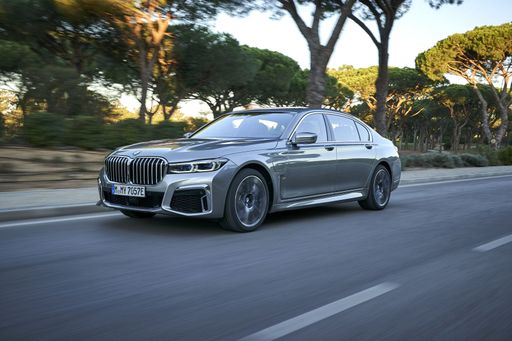
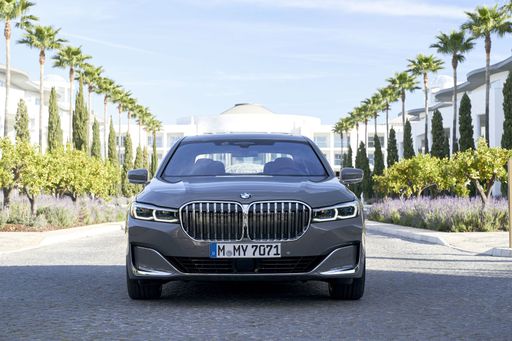
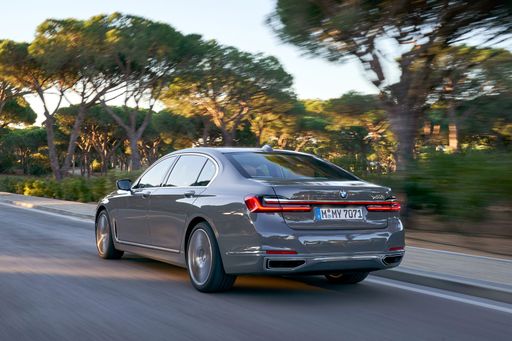
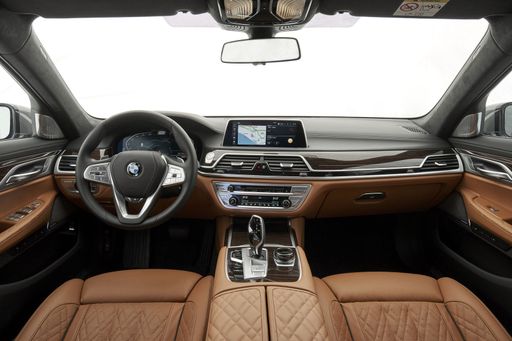
The BMW 7 Series is a flagship that balances whisper-quiet luxury with a driver's focus, wrapping advanced tech and plush comfort in a sleek, authoritative presence. It’s the kind of car that navigates city traffic and open roads with equal poise, offering a grown-up alternative for buyers who demand refinement without losing a little driving fun.
details
@ BMW Group Press
 @ BMW Group Press
 @ BMW Group Press
 @ BMW Group Press
 @ BMW Group Press
 @ BMW Group Press
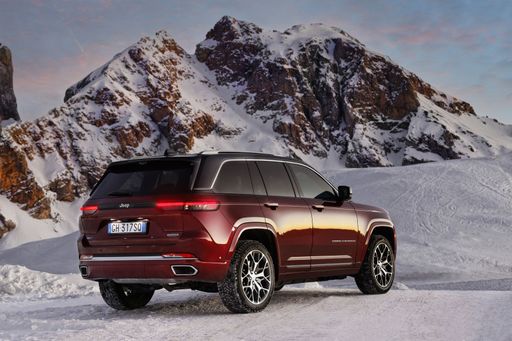
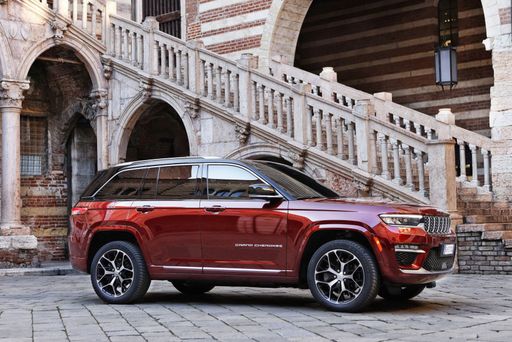
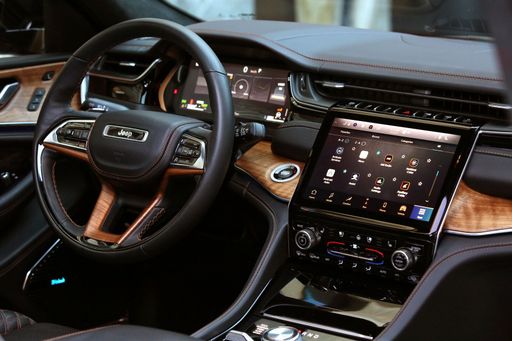
Jeep Grand Cherokee
The Jeep Grand Cherokee wears its trail-ready roots proudly while wrapping them in a surprisingly civilized and upscale package, so it can tackle rough tracks and the school run with the same swagger. Inside, plush materials and intuitive tech make it a comfortable place to spend time, giving buyers a practical yet characterful SUV that doesn’t take itself too seriously.
details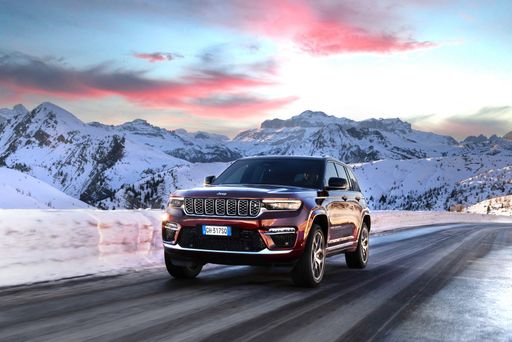 @ Jeep / Stellantis Media
 @ Jeep / Stellantis Media
 @ Jeep / Stellantis Media
 @ Jeep / Stellantis Media
BMW 7 Series
Jeep Grand Cherokee
|
@ BMW Group Press
|
@ Jeep / Stellantis Media
|
|
|
|
Costs and Consumption |
|
|---|---|
|
Price
101500 - 127500 £
|
Price
85600 £
|
|
Consumption L/100km
3.3 - 6.1 L
|
Consumption L/100km
2.90 L
|
|
Consumption kWh/100km
-
|
Consumption kWh/100km
-
|
|
Electric Range
80 km
|
Electric Range
45 km
|
|
Battery Capacity
17.60 kWh
|
Battery Capacity
-
|
|
co2
74 - 160 g/km
|
co2
65 g/km
|
|
Fuel tank capacity
65 - 74 L
|
Fuel tank capacity
72 L
|
Dimensions and Body |
|
|---|---|
|
Body Type
Sedan
|
Body Type
SUV
|
|
Seats
5
|
Seats
5
|
|
Doors
4
|
Doors
5
|
|
Curb weight
2255 - 2525 kg
|
Curb weight
2434 kg
|
|
Trunk capacity
525 - 540 L
|
Trunk capacity
520 L
|
|
Length
5391 mm
|
Length
4914 mm
|
|
Width
1950 mm
|
Width
1968 mm
|
|
Height
1544 mm
|
Height
1858 mm
|
|
Max trunk capacity
-
|
Max trunk capacity
2004 L
|
|
Payload
605 - 665 kg
|
Payload
641 kg
|
Engine and Performance |
|
|---|---|
|
Engine Type
Diesel MHEV, Plugin Hybrid
|
Engine Type
Plugin Hybrid
|
|
Transmission
Automatic
|
Transmission
Automatic
|
|
Transmission Detail
Automatic Gearbox
|
Transmission Detail
Automatic Gearbox
|
|
Drive Type
All-Wheel Drive
|
Drive Type
All-Wheel Drive
|
|
Power HP
300 - 571 HP
|
Power HP
380 HP
|
|
Acceleration 0-100km/h
4.3 - 5.8 s
|
Acceleration 0-100km/h
6.30 s
|
|
Max Speed
250 km/h
|
Max Speed
210 km/h
|
|
Torque
670 - 800 Nm
|
Torque
637 Nm
|
|
Number of Cylinders
6
|
Number of Cylinders
4
|
|
Power kW
220 - 420 kW
|
Power kW
280 kW
|
|
Engine capacity
2993 - 2998 cm3
|
Engine capacity
1995 cm3
|
General |
|
|---|---|
|
Model Year
2024 - 2025
|
Model Year
2024
|
|
CO2 Efficiency Class
F, B
|
CO2 Efficiency Class
B
|
|
Brand
BMW
|
Brand
Jeep
|
Is the BMW 7 Series offered with different drivetrains?
The BMW 7 Series is available as All-Wheel Drive.
The prices and data displayed are estimates based on German list prices and may vary by country. This information is not legally binding.