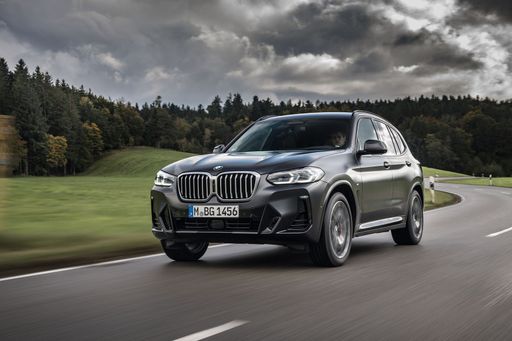
@ BMW Group Press
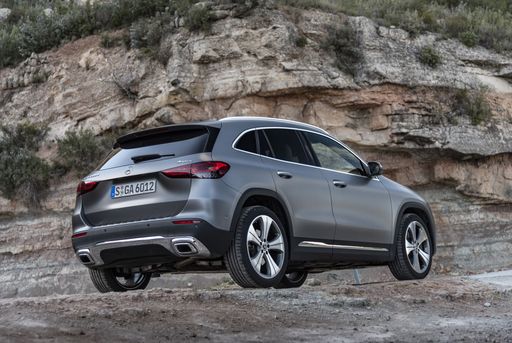
@ Mercedes-Benz Group Media
VS

BMW X3 vs Mercedes GLA – Differences & prices compared

Everyday use, family trips or long-distance drives – here’s where the differences show.
Discover whether BMW X3 or Mercedes GLA fits your lifestyle better.

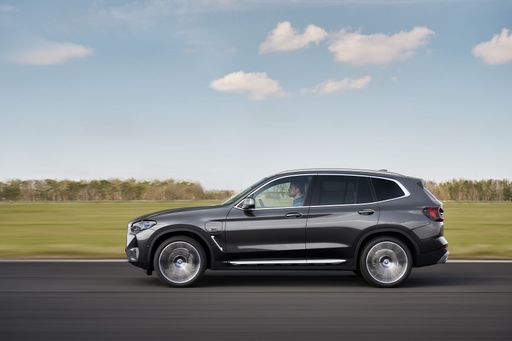
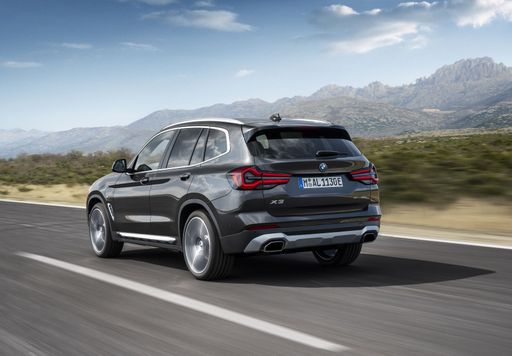
X3 @ BMW Group Press

Introduction: The Battle of Compact SUVs - BMW X3 vs. Mercedes GLA

In the world of luxury compact SUVs, the BMW X3 and the Mercedes GLA stand out for their unique blend of style, performance, and innovation. Both vehicles compete vigorously in a market that increasingly emphasizes technology, efficiency, and satisfyingly engaging driving experiences. This article takes an in-depth look at how the BMW X3 and Mercedes GLA measure up in various aspects including performance, efficiency, interior comfort, and cutting-edge technology.
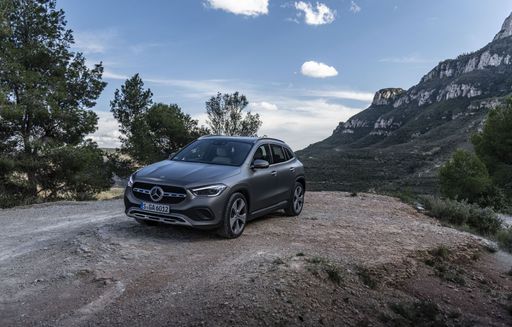
GLA @ Mercedes-Benz Group Media

Performance Prowess: Engines and Specs

When it comes to performance, the BMW X3 offers a range of engine options that emphasize both power and efficiency. With various configurations that include Diesel MHEV, Petrol MHEV, and Plugin Hybrid choices, the X3 boasts power outputs ranging from 184 HP to a staggering 510 HP in the high-performance M version. This SUV achieves 0-100 km/h acceleration times as low as 3.8 seconds and can reach a maximum speed of 250 km/h, providing thrilling performance for enthusiasts.

In comparison, the Mercedes GLA also delivers an impressive lineup of engines. From the 116 HP base model to the 421 HP AMG variant, the GLA has plenty of choices for performance-oriented drivers. Acceleration from 0-100 km/h can be as quick as 4.3 seconds for the AMG model, with a top speed that matches the X3 at 250 km/h. While the GLA may not offer as much high-end power in its base models, its agility and responsiveness keep it competitive.

X3 @ BMW Group Press

Efficiency Matters: Fuel Consumption and Emissions

Both vehicles demonstrate advances in fuel efficiency, with the BMW X3 offering consumption figures as low as 2.1 L/100 km in its Plug-in Hybrid options. In contrast, the GLA's most economical engine consumes only 1 L/100 km, making it a solid choice for environmentally conscious consumers. When it comes to CO2 emissions, the GLA maintains an edge in lower emissions across many of its configurations, appealing to buyers looking for sustainability without compromising on luxury.

GLA @ Mercedes-Benz Group Media

Interior Quality and Comfort: A Class Apart

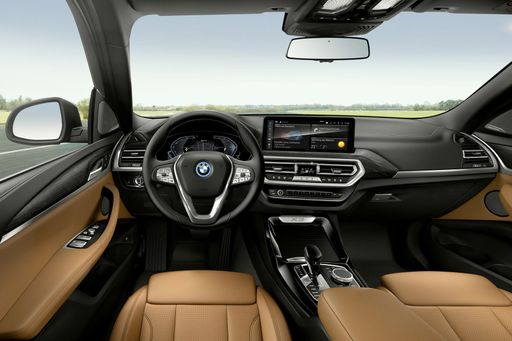
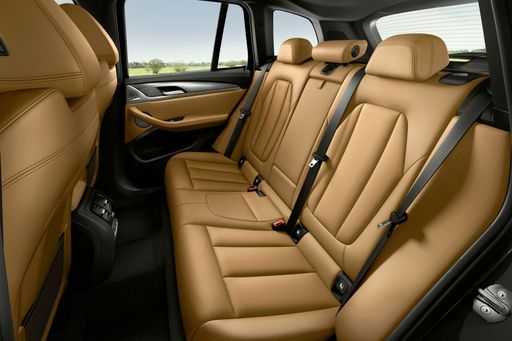
Inside the BMW X3, the focus is on luxury and spaciousness. With seating for up to five and trunk capacities ranging between 450 to 570 Liters, the X3 scores high on practicality. The interior boasts high-quality materials, an intuitive infotainment system, and ample passenger space, making it excellent for family use or road trips.

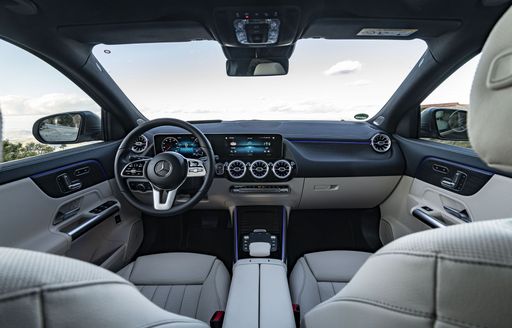
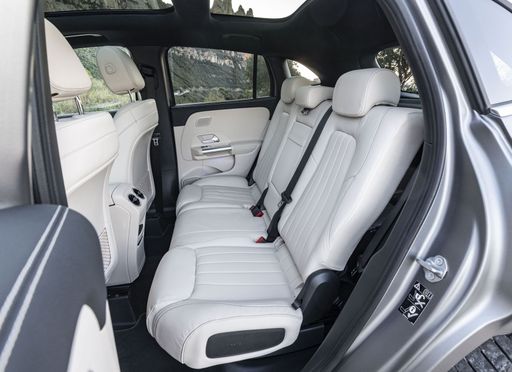
The Mercedes GLA offers a smaller trunk space, capping out at 435 liters, and while it still provides comfortable seating for five, the interior design reflects a sporty rather than a purely practical approach. The GLA is packed with luxurious features and offers a modern infotainment system that includes cutting-edge driver assistance technologies, maintaining a competitive edge in comfort and capability.

X3 @ BMW Group Press

Technological Innovations: Leading the Pack

Both the BMW X3 and Mercedes GLA stand at the forefront of automotive technology. The X3 features BMW's iDrive system, integrating comprehensive navigation, infotainment, and voice-activated controls seamlessly. Notably, its advanced driver-assistance systems enhance safety, providing features like adaptive cruise control, lane-keeping assist, and parking assistance.

The GLA, on the other hand, showcases the Mercedes-Benz User Experience (MBUX), which includes a stunning infotainment display with advanced AI capabilities for personalized interactions. MBUX allows for intuitive voice commands, creating a more engaging driving experience. Additionally, the GLA incorporates advanced safety features that draw admiration across the luxury market.

GLA @ Mercedes-Benz Group Media

Conclusion: Which SUV Reigns Supreme?

Ultimately, choosing between the BMW X3 and Mercedes GLA comes down to personal preferences and what aspects matter most in an SUV. If you prefer performance and power coupled with practicality, the BMW X3 emerges as a fantastic choice. Meanwhile, for those who prioritize cutting-edge technology and a sporty design feel, the Mercedes GLA proves to be an attractive option. Both vehicles excel in their domains, making them worthy competitors in the ever-growing luxury compact SUV segment.

Here’s where it gets real: The technical differences in detail

X3 @ BMW Group Press

Costs and Efficiency:

When it comes to price and running costs, the biggest differences usually appear. This is often where you see which car fits your budget better in the long run.

Mercedes GLA has a noticeable advantage in terms of price – it starts at 38800 £, while the BMW X3 costs 51300 £. That’s a price difference of around 12421 £.

Fuel consumption also shows a difference: BMW X3 manages with 2.80 L and is therefore minimal more efficient than the Mercedes GLA with 2.90 L. The difference is about 0.10 L per 100 km.

As for range, the BMW X3 performs to a small extent better – achieving up to 88 km, about 14 km more than the Mercedes GLA.

GLA @ Mercedes-Benz Group Media

Engine and Performance:

Power, torque and acceleration are the classic benchmarks for car enthusiasts – and here, some clear differences start to show.

When it comes to engine power, the Mercedes GLA has a minimal edge – offering 421 HP compared to 398 HP. That’s roughly 23 HP more horsepower.

In acceleration from 0 to 100 km/h, the Mercedes GLA is minimal quicker – completing the sprint in 4.30 s, while the BMW X3 takes 4.60 s. That’s about 0.30 s faster.

In terms of top speed, the Mercedes GLA performs hardly perceptible better – reaching 270 km/h, while the BMW X3 tops out at 250 km/h. The difference is around 20 km/h.

There’s also a difference in torque: BMW X3 pulls distinct stronger with 670 Nm compared to 500 Nm. That’s about 170 Nm difference.

X3 @ BMW Group Press

Space and Everyday Use:

Cabin size, boot volume and payload all play a role in everyday practicality. Here, comfort and flexibility make the difference.

Both vehicles offer seating for 5 people.

In curb weight, Mercedes GLA is noticeable lighter – 1570 kg compared to 1930 kg. The difference is around 360 kg.

In terms of boot space, the BMW X3 offers evident more room – 570 L compared to 435 L. That’s a difference of about 135 L.

In maximum load capacity, the BMW X3 performs slightly better – up to 1700 L, which is about 270 L more than the Mercedes GLA.

When it comes to payload, BMW X3 to a small extent takes the win – 570 kg compared to 500 kg. That’s a difference of about 70 kg.

Who comes out on top?

Overall, the BMW X3 shows itself to be wins the duel decisively and secures the title of DriveDuel Champion.
It convinces with the more balanced overall package and proves to be the more versatile choice for everyday use.

from about £51,300
X3 @ BMW Group Press

BMW X3

  • Engine Type : Petrol MHEV, Diesel MHEV, Plugin Hybrid
  • Transmission : Automatic
  • Drive Type : All-Wheel Drive
  • Power HP : 197 - 398 HP
  • Consumption L/100km : 2.8 - 7.7 L
  • Electric Range : 88 km

BMW X3

The BMW X3 mixes Bavarian poise with everyday practicality, delivering a composed ride and a cabin that feels both premium and lived-in. It’s the sort of SUV that lets you enjoy sporty handling without sacrificing family-friendly space, so you get fun and sense in one neat package.

details

Mercedes GLA

5 (1)
rate

The Mercedes GLA blends Mercedes style with compact crossover practicality, looking sharper than its size suggests while still feeling purposeful around town. Inside it serves up premium materials and tech-forward ergonomics, and the composed ride makes it an appealing pick for buyers who want luxury wrapped in a city-friendly package with a wink of adventurous spirit.

details
BMW X3
Mercedes GLA
X3 @ BMW Group Press
GLA @ Mercedes-Benz Group Media

Costs and Consumption

Price
51300 - 72400 £
Price
38800 - 75300 £
Consumption L/100km
2.8 - 7.7 L
Consumption L/100km
2.9 - 9.5 L
Consumption kWh/100km
-
Consumption kWh/100km
-
Electric Range
88 km
Electric Range
74 km
Battery Capacity
19.70 kWh
Battery Capacity
12.90 kWh
co2
64 - 175 g/km
co2
66 - 216 g/km
Fuel tank capacity
50 - 65 L
Fuel tank capacity
35 - 51 L

Dimensions and Body

Body Type
SUV
Body Type
SUV
Seats
5
Seats
5
Doors
5
Doors
5
Curb weight
1930 - 2140 kg
Curb weight
1570 - 1810 kg
Trunk capacity
460 - 570 L
Trunk capacity
385 - 435 L
Length
4755 mm
Length
4412 - 4443 mm
Width
1920 mm
Width
1834 - 1849 mm
Height
1660 mm
Height
1590 - 1616 mm
Max trunk capacity
1600 - 1700 L
Max trunk capacity
1385 - 1430 L
Payload
570 kg
Payload
480 - 500 kg

Engine and Performance

Engine Type
Petrol MHEV, Diesel MHEV, Plugin Hybrid
Engine Type
Plugin Hybrid, Petrol MHEV, Diesel, Petrol
Transmission
Automatic
Transmission
Automatic
Transmission Detail
Automatic Gearbox
Transmission Detail
Dual-Clutch Automatic
Drive Type
All-Wheel Drive
Drive Type
Front-Wheel Drive, All-Wheel Drive
Power HP
197 - 398 HP
Power HP
116 - 421 HP
Acceleration 0-100km/h
4.6 - 7.8 s
Acceleration 0-100km/h
4.3 - 11 s
Max Speed
215 - 250 km/h
Max Speed
190 - 270 km/h
Torque
330 - 670 Nm
Torque
230 - 500 Nm
Number of Cylinders
4 - 6
Number of Cylinders
4
Power kW
145 - 293 kW
Power kW
85 - 310 kW
Engine capacity
1995 - 2998 cm3
Engine capacity
1332 - 1991 cm3

General

Model Year
2024 - 2025
Model Year
2024 - 2025
CO2 Efficiency Class
F, E, B
CO2 Efficiency Class
B, E, F, G
Brand
BMW
Brand
Mercedes-Benz
What drive types are available for the BMW X3?

The BMW X3 is offered with All-Wheel Drive.

The prices and data displayed are estimates based on German list prices and may vary by country. This information is not legally binding.