VS

BMW X4 vs Jaguar E-Pace comparison

Compare performance (510 HP vs 269 HP), boot space and price (51,900 £ vs 32,400 £ ) at a glance. Find out which car is the better choice for you – BMW X4 or Jaguar E-Pace?

BMW X4 vs Jaguar E-Pace: Key differences

BMW X4

  • substantially more power
  • significantly quicker 0–100 km/h
  • marginally more trunk space

Jaguar E-Pace

  • clearly cheaper
  • substantially more efficient
  • marginally lighter
X4

Battle of the SUVs: BMW X4 vs. Jaguar E-Pace

In the ever-evolving world of compact luxury SUVs, two giants emerge with refined elegance and robust performance—the BMW X4 and the Jaguar E-Pace. Both vehicles embody innovative engineering, captivating design, and advanced features. But how do they stack up against each other in this competitive segment? Let's delve into the intricate details and discover which SUV reigns supreme.
E-Pace

Striking Design and Dimensions

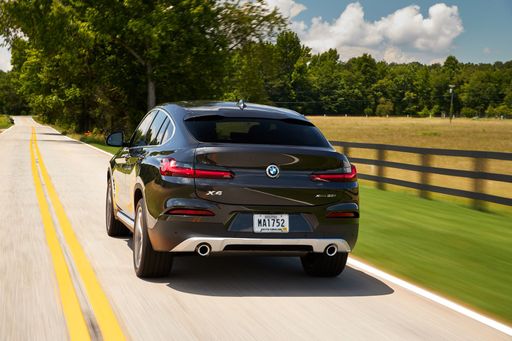
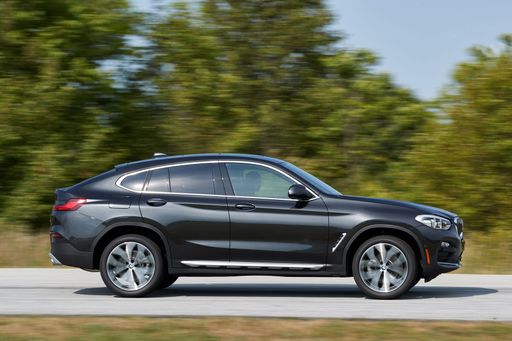
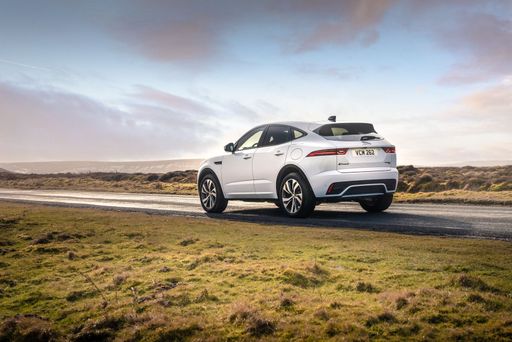
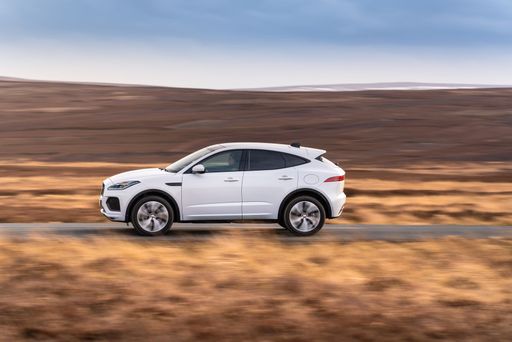
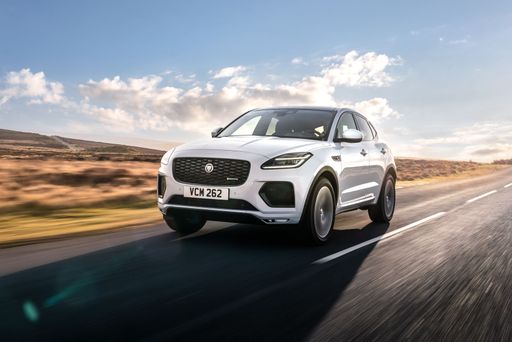
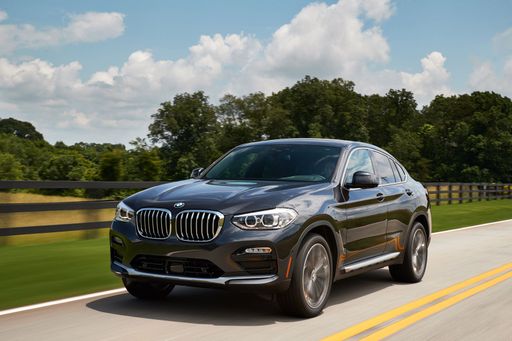
The BMW X4 presents a sleek, coupe-like silhouette, boasting dimensions that emphasize its athletic stance. With a length range of 4751-4754 mm, width up to 1938 mm, and a height of 1620-1621 mm, the X4 commands presence. In contrast, the Jaguar E-Pace, while more compact at 4395 mm in length, stands taller at 1648 mm, along with its bold, dynamic lines that reflect sporty charm despite a smaller footprint.

X4

Powertrain and Performance

Under the hood, the BMW X4 offers a choice of petrol, diesel, and mild hybrid electric vehicles (MHEV) that cater to various performance desires. This range includes power outputs from 184 HP to a robust 510 HP, paired with automatic transmission and all-wheel drive for an exhilarating drive. Its acceleration capabilities, such as reaching 0-100 km/h in just 3.8 seconds with its top powervariant, reflect its athletic DNA.

Jaguar’s E-Pace steps into the ring with diverse engine options, including plugin hybrid, diesel MHEV, and petrol MHEV units. It showcases a unique hybrid system producing 269 HP, allowing an electric range of 69 km thanks to its 11.5 kWh battery capacity. While its top acceleration time stands at 7.3 seconds, the hybrid's exceptional CO2 efficiency class of B highlights its eco-friendly design.

E-Pace

Efficiency and Environmental Impact

The competitive aspect of fuel efficiency reveals BMW X4's consumption ranging from 6 L/100km to 10.7 L/100km, maintaining an edge in high-performance scenarios. Its CO2 emissions, however, start from 156 g/km. Meanwhile, Jaguar E-Pace's plugin hybrid option champions efficiency with a remarkable 1.4 L/100km and a reduction in CO2 emissions to just 33 g/km, setting a benchmark for sustainable luxury driving.

X4

Interior Space and Comfort

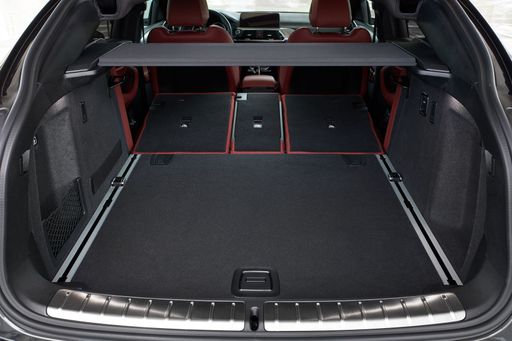
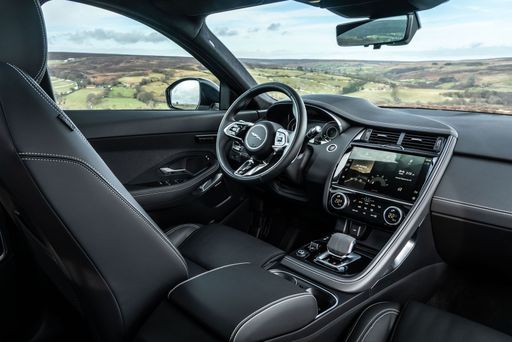
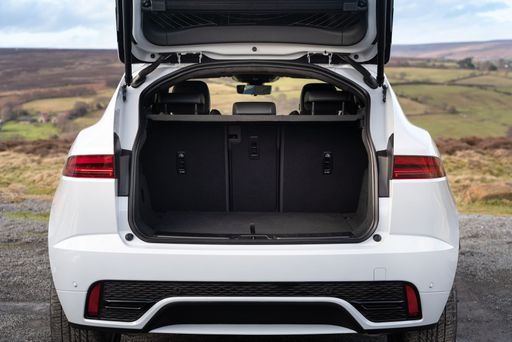
Both SUVs accommodate up to five passengers comfortably, focusing on luxury and functionality. The BMW X4 offers a trunk capacity of 525 liters, ensuring ample space for adventures. Jaguar E-Pace, while slightly compact, provides 494 liters of trunk space. The ergonomically designed cabins of both SUVs incorporate advanced technology with premium materials, ensuring a sophisticated driving experience.

E-Pace

Conclusion: Style vs. Sustainability

Choosing between the BMW X4 and Jaguar E-Pace ultimately depends on individual priorities. The BMW X4 lures enthusiasts with thrilling performance, diverse powertrain options, and a commanding presence on the road. Meanwhile, the Jaguar E-Pace stands out with its focus on sustainability, promising a cleaner footprint with its advanced plugin hybrid technology.

Both vehicles excel in luxury, innovation, and driving pleasure, offering something unique for discerning drivers. Whether it's the thrill of raw power or the appeal of eco-friendly tech, the choice between these formidable SUVs remains a matter of personal preference.

Here’s where it gets real: The technical differences in detail

X4

Costs and Efficiency:

Looking at overall running costs, both models reveal some interesting differences in everyday economy.

Jaguar E-Pace is clearly cheaper – starting at 32,400 £ , while the BMW X4 costs 51,900 £ . That’s a price difference of around 19,457 £.

Fuel consumption also shows a difference: the Jaguar E-Pace uses 1.4 L/100km and is substantially more efficient than the BMW X4 with 6 L/100km. The difference is about 4.6 L/100km.

E-Pace

Engine and Performance:

Under the bonnet, it becomes clear which model is tuned for sportiness and which one takes the lead when you hit the accelerator.

When it comes to engine power, the BMW X4 offers substantially more power – delivering 510 HP compared to 269 HP. That’s roughly 241 HP more horsepower.

When accelerating from 0 to 100 km/h, the BMW X4 is significantly quicker – completing the sprint in 3.8 s, while the Jaguar E-Pace takes 7.3 s. That’s about 3.5 s quicker.

Looking at top speed, the BMW X4 is a bit faster – reaching 250 km/h, while the Jaguar E-Pace tops out at 211 km/h. The difference is around 39 km/h.

There’s also a difference in torque: the BMW X4 delivers markedly more torque with 700 Nm compared to 540 Nm. That’s about 160 Nm more.

X4

Space and Everyday Use:

Beyond pure performance, interior space and usability matter most in daily life. This is where you see which car is more practical and versatile.

Both vehicles offer seating for 5 people.

In terms of curb weight, Jaguar E-Pace is marginally lighter – 1,783 kg compared to 1,875 kg. The difference is around 92 kg.

Looking at boot space, the BMW X4 offers marginally more boot space – 525 L compared to 494 L. That’s a difference of about 31 L.

For maximum load capacity, the BMW X4 offers slightly more capacity – up to 1,430 L, about 260 L more than the Jaguar E-Pace.

When it comes to payload, the Jaguar E-Pace carries very slightly more – 554 kg compared to 545 kg. That’s a difference of about 9 kg.

Who wins the race in the data check?

The Jaguar E-Pace holds a decisive overall lead in the objective data comparison.
This result only shows which model scores more points on paper – not which of the two cars feels right for you.

from £32,400
E-Pace

Jaguar E-Pace

  • Engine Type : Plugin Hybrid, Diesel MHEV, Petrol MHEV
  • Transmission : Automatic
  • Drive Type : All-Wheel Drive, Front-Wheel Drive
  • Power HP : 160 - 269 HP
  • Consumption L/100km : 1.4 - 8.2 L/100km
  • Electric Range : 69 km
BMW X4
Jaguar E-Pace

Costs and Consumption

View detailed analysis

Engine and Performance

View detailed analysis

Dimensions and Body

View detailed analysis

BMW X4

The BMW X4 blends coupe-like styling with SUV practicality, giving you a striking profile that never lets you disappear into traffic. It feels planted and keen behind the wheel, and for buyers who crave personality without sacrificing everyday usability, it’s a compelling and slightly mischievous choice.

details

Jaguar E-Pace

The Jaguar E-Pace brings compact SUV practicality together with taut, sporty design and unmistakable British charm, helping it stand out in a crowded class. Inside, the cabin feels premium and the driving manners are engaging enough to keep a grin on your face, making it a tempting choice for buyers who want Jaguar style without the bulk.

details
BMW X4
Jaguar E-Pace

Costs and Consumption

Price
51,900 - 93,000 £
Price
32,400 - 56,100 £
Consumption L/100km
6 - 10.7 L/100km
Consumption L/100km
1.4 - 8.2 L/100km
Consumption kWh/100km
-
Consumption kWh/100km
-
Electric Range
-
Electric Range
69 km
Battery Capacity
-
Battery Capacity
11.5 kWh
co2
156 - 244 g/km
co2
33 - 185 g/km
Fuel tank capacity
65 - 68 L
Fuel tank capacity
56 - 67 L

Dimensions and Body

Body Type
SUV
Body Type
SUV
Seats
5
Seats
5
Doors
5
Doors
5
Curb weight
1,875 - 2,095 kg
Curb weight
1,783 - 2,173 kg
Trunk capacity
525 L
Trunk capacity
494 L
Length
4,751 - 4,754 mm
Length
4,395 mm
Width
1,918 - 1,938 mm
Width
1,984 mm
Height
1,620 - 1,621 mm
Height
1,648 mm
Max trunk capacity
1,430 L
Max trunk capacity
1,170 L
Payload
415 - 545 kg
Payload
497 - 554 kg

Engine and Performance

Engine Type
Petrol MHEV, Diesel MHEV, Petrol
Engine Type
Plugin Hybrid, Diesel MHEV, Petrol MHEV
Transmission
Automatic
Transmission
Automatic
Transmission Detail
Automatic Gearbox
Transmission Detail
Automatic Gearbox
Drive Type
All-Wheel Drive
Drive Type
All-Wheel Drive, Front-Wheel Drive
Power HP
184 - 510 HP
Power HP
160 - 269 HP
Acceleration 0-100km/h
3.8 - 8.4 s
Acceleration 0-100km/h
7.3 - 10.5 s
Max Speed
213 - 250 km/h
Max Speed
190 - 211 km/h
Torque
300 - 700 Nm
Torque
260 - 540 Nm
Number of Cylinders
4 - 6
Number of Cylinders
3 - 4
Power kW
135 - 375 kW
Power kW
118 - 198 kW
Engine capacity
1,995 - 2,998 cm3
Engine capacity
1,498 - 1,998 cm3

General

Model Year
2,023 - 2,024
Model Year
2,024
CO2 Efficiency Class
F, G
CO2 Efficiency Class
B, G
Brand
BMW
Brand
Jaguar
DriveDuel uses data analysis and artificial intelligence to evaluate vehicle data and create content. Content is regularly reviewed and improved. The displayed prices are estimates based on German list prices, adjusted to the respective country’s VAT. Country-specific registration taxes are not included. This information is not legally binding.