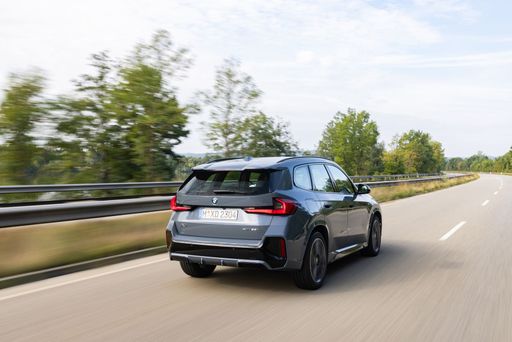
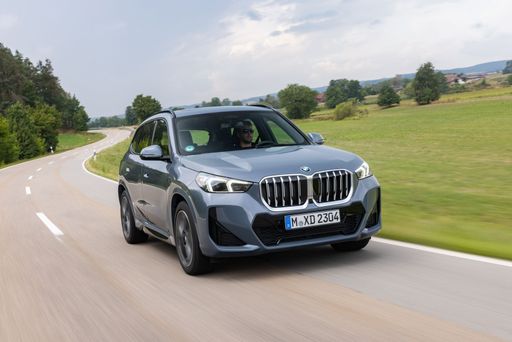
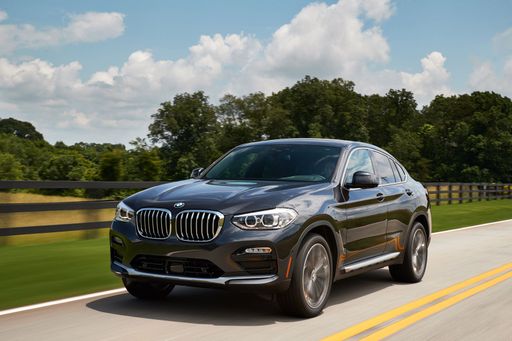
VS

BMW X1 vs BMW X4 comparison

Compare performance (326 HP vs 510 HP), boot space and price (38,200 £ vs 51,900 £ ) at a glance. Find out which car is the better choice for you – BMW X1 or BMW X4?

BMW X1 vs BMW X4: Key differences

BMW X1

4.2 (6 Reviews)
rate
  • visibly cheaper
  • significantly more efficient
  • slightly lighter
  • barely more trunk space

BMW X4

  • clearly more power
  • considerably quicker 0–100 km/h

All details on performance, efficiency, range and trunk space can be found in the technical comparison below – including user reviews for both models.

X1

Head-to-Head: BMW X1 vs BMW X4

The world of compact luxury SUVs has witnessed a surge of interest, particularly from reputable manufacturers like BMW. Two standout models from the German brand are the BMW X1 and the BMW X4. With unique designs, diverse powertrain options, and innovative features, both vehicles offer a compelling blend of performance and practicality. In this comparison, we’ll delve into the technical specifications, driving dynamics, and noteworthy innovations of each model.
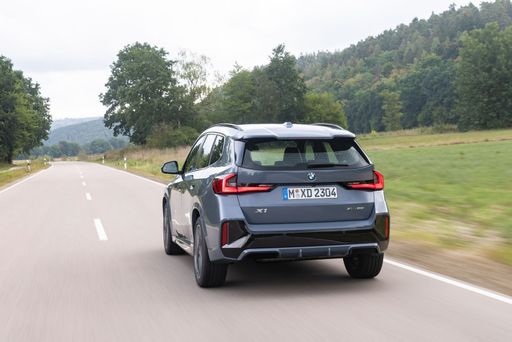
X4

Engine Options and Performance

The BMW X1 boasts a variety of engine configurations, catering to different driving preferences. Available engines range from efficient petrol and diesel to more advanced Mild Hybrid Electric Vehicles (MHEVs) and plug-in hybrids. Power output varies between 150 to 326 HP, allowing for a flexible driving experience. Notable acceleration times as low as 5.4 seconds from 0 to 100 km/h highlight the sporty demeanor of some variants.

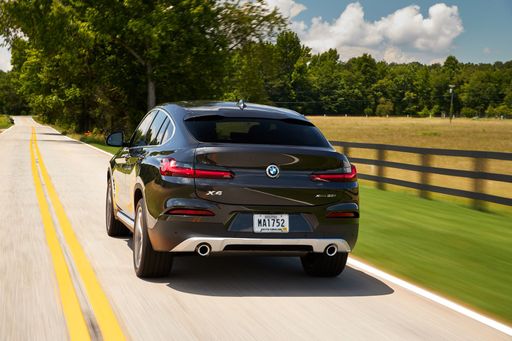
In contrast, the BMW X4 aligns itself with a more performance-oriented driving ethos. The engine lineup includes MHEVs and petrol engines that deliver power outputs from 184 HP to a staggering 510 HP in the high-performance M model. The fastest variant accelerates from 0 to 100 km/h in just 3.8 seconds, underscoring its emphasis on dynamic driving. Both SUVs come equipped with automatic transmissions, enhancing driving comfort and responsiveness.

X1

Dimensions and Practicality

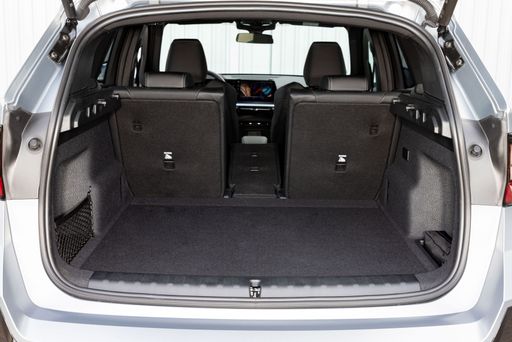
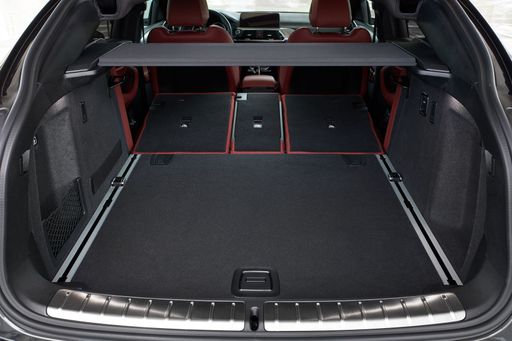
In terms of size, the BMW X1 measures 4500 mm in length, while the slightly larger BMW X4 stretches to 4754 mm. While the X1 provides a commendable trunk capacity of 540 liters, the X4's capacity of 525 liters adds an edge in terms of space efficiency. Both models can accommodate up to five passengers, making them suitable for small families or weekend getaways.

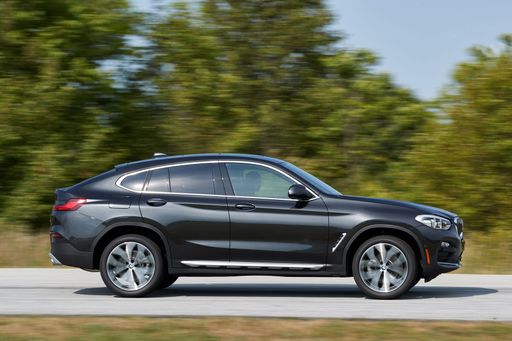
The overall dimensions give the X4 a sportier silhouette with a more tapered roofline, whereas the X1’s design emphasizes practicality and functionality with a more spacious cabin feel. Width, which is slightly greater on the X4 (ranging from 1918 mm to 1938 mm), lends to a more planted look on the road, while the X1 maintains a width of 1845 mm.

X4

Innovative Features and Technology

When it comes to technology, both models shine with cutting-edge innovations. The BMW X1 introduces advanced driver assistance systems, infotainment options, and connectivity features that cater to the modern driver. Highlights include the iDrive system, a digital cockpit offering intuitive navigation and vehicle management.

The BMW X4 builds on these features with more luxurious enhancements, including higher quality materials and superior sound systems. Its advanced infotainment system also integrates seamlessly with smart devices, providing a connected experience that enhances both comfort and convenience.

X1

Fuel Efficiency and Environmental Considerations

Fuel consumption varies significantly between the two models. The BMW X1 showcases impressive fuel economy, with diesel variants offering as low as 4.6 L/100 km under optimal conditions, aimed at efficiency-conscious drivers. The plug-in hybrid option further extends its eco-friendliness, achieving a CO2 emission rating as low as 17 g/km.

On the other hand, the BMW X4 leans slightly towards performance over efficiency, with fuel consumption ranging up to 10.7 L/100 km for some of its higher output variants. Nevertheless, it still offers acceptable efficiency across its range, appealing to those seeking a balance between power and consumption.

X4

Conclusion: Which One is Right for You?

Ultimately, choosing between the BMW X1 and the BMW X4 boils down to personal preferences and requirements. The X1 excels in practicality, efficiency, and versatility, making it an ideal option for families or those needing extra cargo space. In contrast, the X4 presents a sportier profile with a focus on performance and luxury, perfect for enthusiasts who crave a more dynamic driving experience.

Both models showcase BMW's commitment to luxury, technology, and performance. Regardless of your choice, you can be assured of a high-quality driving experience that is characteristically BMW.

Here’s where it gets real: The technical differences in detail

X1

Costs and Efficiency:

Price and efficiency are often the first things buyers look at. Here it becomes clear which model has the long-term edge – whether at the pump, the plug, or in purchase price.

BMW X1 is visibly cheaper – starting at 38,200 £ , while the BMW X4 costs 51,900 £ . That’s a price difference of around 13,629 £.

Fuel consumption also shows a difference: the BMW X1 uses 2.5 L/100km and is significantly more efficient than the BMW X4 with 6 L/100km. The difference is about 3.5 L/100km.

X4

Engine and Performance:

Power, torque and acceleration say a lot about how a car feels on the road. This is where you see which model delivers more driving dynamics.

When it comes to engine power, the BMW X4 offers clearly more power – delivering 510 HP compared to 326 HP. That’s roughly 184 HP more horsepower.

When accelerating from 0 to 100 km/h, the BMW X4 is considerably quicker – completing the sprint in 3.8 s, while the BMW X1 takes 5.4 s. That’s about 1.6 s quicker.

Looking at top speed, the BMW X4 is barely faster – reaching 250 km/h, while the BMW X1 tops out at 233 km/h. The difference is around 17 km/h.

There’s also a difference in torque: the BMW X4 delivers noticeably more torque with 700 Nm compared to 477 Nm. That’s about 223 Nm more.

X1

Space and Everyday Use:

Beyond pure performance, interior space and usability matter most in daily life. This is where you see which car is more practical and versatile.

Both vehicles offer seating for 5 people.

In terms of curb weight, BMW X1 is slightly lighter – 1,575 kg compared to 1,875 kg. The difference is around 300 kg.

Looking at boot space, the BMW X1 offers barely more boot space – 540 L compared to 525 L. That’s a difference of about 15 L.

For maximum load capacity, the BMW X1 offers barely more capacity – up to 1,545 L, about 115 L more than the BMW X4.

When it comes to payload, the BMW X4 carries marginally more – 545 kg compared to 500 kg. That’s a difference of about 45 kg.

Who wins the race in the data check?

The BMW X1 is far ahead overall in the objective data comparison.
This result only shows which model scores more points on paper – not which of the two cars feels right for you.

from £38,200
X1

BMW X1

  • Engine Type : Diesel MHEV, Petrol MHEV, Petrol, Diesel, Plugin Hybrid
  • Transmission : Automatic
  • Drive Type : Front-Wheel Drive, All-Wheel Drive
  • Power HP : 136 - 326 HP
  • Consumption L/100km : 2.5 - 7.7 L/100km
  • Electric Range : 81 km
BMW X1
BMW X4

Costs and Consumption

View detailed analysis

Engine and Performance

View detailed analysis

Dimensions and Body

View detailed analysis

BMW X1

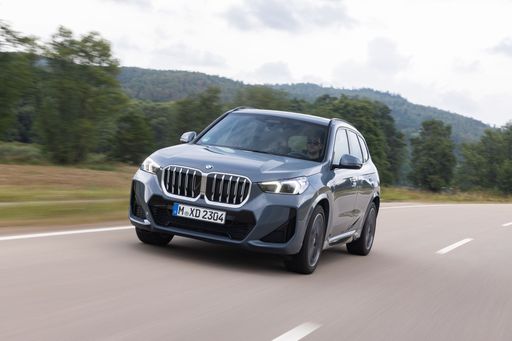
The BMW X1 brings a premium feel to compact crossover life, wrapping practical space and agile handling into a tidy, upscale package. It’s ideal for buyers who want BMW driving dynamics without the bulk, offering everyday comfort and a few clever tricks to keep the commute interesting.

details

BMW X4

The BMW X4 blends coupe-like styling with SUV practicality, giving you a striking profile that never lets you disappear into traffic. It feels planted and keen behind the wheel, and for buyers who crave personality without sacrificing everyday usability, it’s a compelling and slightly mischievous choice.

details
BMW X1
BMW X4

Costs and Consumption

Price
38,200 - 55,500 £
Price
51,900 - 93,000 £
Consumption L/100km
2.5 - 7.7 L/100km
Consumption L/100km
6 - 10.7 L/100km
Consumption kWh/100km
-
Consumption kWh/100km
-
Electric Range
81 km
Electric Range
-
Battery Capacity
14.2 kWh
Battery Capacity
-
co2
57 - 175 g/km
co2
156 - 244 g/km
Fuel tank capacity
47 - 54 L
Fuel tank capacity
65 - 68 L

Dimensions and Body

Body Type
SUV
Body Type
SUV
Seats
5
Seats
5
Doors
5
Doors
5
Curb weight
1,575 - 1,935 kg
Curb weight
1,875 - 2,095 kg
Trunk capacity
490 - 540 L
Trunk capacity
525 L
Length
4,500 mm
Length
4,751 - 4,754 mm
Width
1,845 mm
Width
1,918 - 1,938 mm
Height
1,630 - 1,642 mm
Height
1,620 - 1,621 mm
Max trunk capacity
1,495 - 1,545 L
Max trunk capacity
1,430 L
Payload
490 - 500 kg
Payload
415 - 545 kg

Engine and Performance

Engine Type
Diesel MHEV, Petrol MHEV, Petrol, Diesel, Plugin Hybrid
Engine Type
Petrol MHEV, Diesel MHEV, Petrol
Transmission
Automatic
Transmission
Automatic
Transmission Detail
Dual-Clutch Automatic
Transmission Detail
Automatic Gearbox
Drive Type
Front-Wheel Drive, All-Wheel Drive
Drive Type
All-Wheel Drive
Power HP
136 - 326 HP
Power HP
184 - 510 HP
Acceleration 0-100km/h
5.4 - 9.2 s
Acceleration 0-100km/h
3.8 - 8.4 s
Max Speed
190 - 233 km/h
Max Speed
213 - 250 km/h
Torque
230 - 477 Nm
Torque
300 - 700 Nm
Number of Cylinders
3 - 4
Number of Cylinders
4 - 6
Power kW
100 - 240 kW
Power kW
135 - 375 kW
Engine capacity
1,499 - 1,998 cm3
Engine capacity
1,995 - 2,998 cm3

General

Model Year
2,024 - 2,025
Model Year
2,023 - 2,024
CO2 Efficiency Class
D, E, F, B
CO2 Efficiency Class
F, G
Brand
BMW
Brand
BMW
DriveDuel uses data analysis and artificial intelligence to evaluate vehicle data and create content. Content is regularly reviewed and improved. The displayed prices are estimates based on German list prices, adjusted to the respective country’s VAT. Country-specific registration taxes are not included. This information is not legally binding.