VS

BMW X7 vs Mercedes GLS comparison

Compare performance (530 HP vs 404 HP), boot space and price (91,300 £ vs 92,700 £ ) at a glance. Find out which car is the better choice for you – BMW X7 or Mercedes GLS?

BMW X7 vs Mercedes GLS: Key differences

BMW X7

4.9 (2 Reviews)
rate
  • barely cheaper
  • visibly more power
  • somewhat quicker 0–100 km/h
  • barely lighter
  • clearly more trunk space
details

Mercedes GLS

  • only slightly more efficient
details

By Achim Sedelmaier

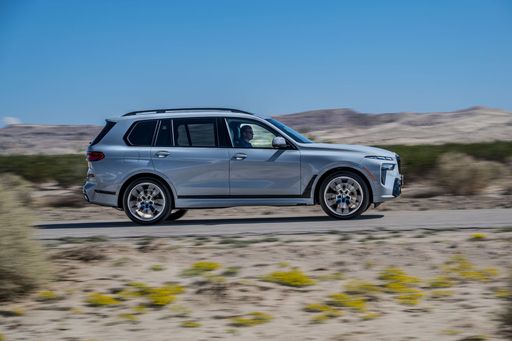
X7

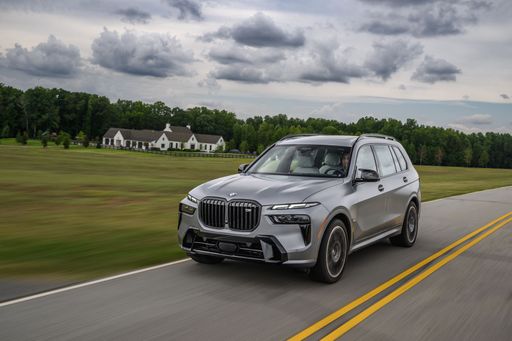
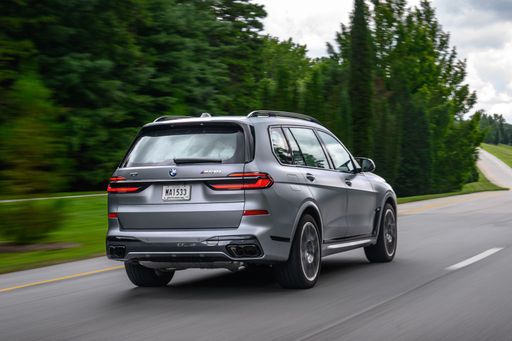
When it comes to luxury SUVs, two of the most prominent players in the market are the BMW X7 and the Mercedes GLS. Both vehicles embody premium craftsmanship, advanced technology, and impressive performance, yet they cater to slightly different tastes and preferences. In this automotive showdown, we will compare these two titans, focusing on key technical aspects and innovations that each brand has brought to the table for their 2023 models.
GLS

Engine Options and Performance

The BMW X7 offers a variety of engine choices, including a Diesel Mild Hybrid (MHEV) and two Petrol MHEVs, alongside a powerful petrol variant. The power output ranges from 352 HP for the base model to a roaring 530 HP for the top-spec variant. The vehicle boasts a maximum torque of up to 750 Nm, allowing for a thrilling acceleration from 0 to 100 km/h in as little as 4.7 seconds. In terms of fuel consumption, the X7 performs admirably with figures between 7.9 L/100 km to 12.1 L/100 km depending on the engine choice.

The Mercedes GLS, on the other hand, is equally formidable with a broader range of choices, including Diesel MHEV and several petrol variants. Its power output starts at 333 HP and scales up to an impressive 634 HP. The torque figures are equally impressive, peaking at 850 Nm, which translates to a swift 0-100 km/h time of just 4.2 seconds for the most powerful model. The GLS's fuel consumption also ranges from 7.9 L/100 km to 13.7 L/100 km, making it a competitive option for buyers seeking efficiency without sacrificing performance.

X7

Dimensions and Interior Space

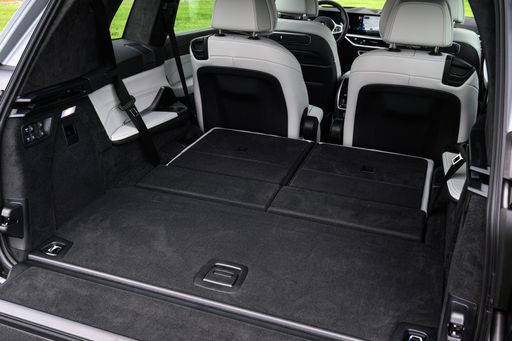
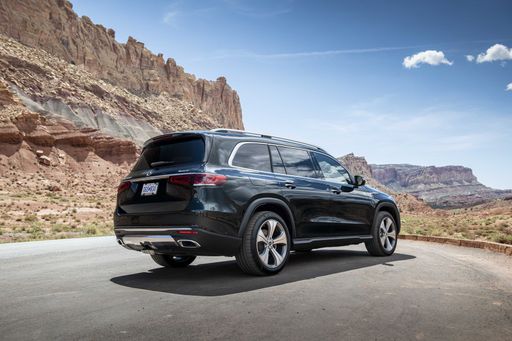
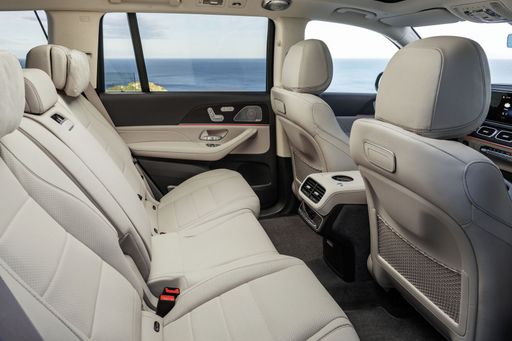
The BMW X7 measures 5181 mm in length, 2000 mm in width, and stands 1835 mm high, offering ample cabin space for up to seven passengers. With a generous trunk capacity of 750 liters, it excels in practicality for families and travelers alike.

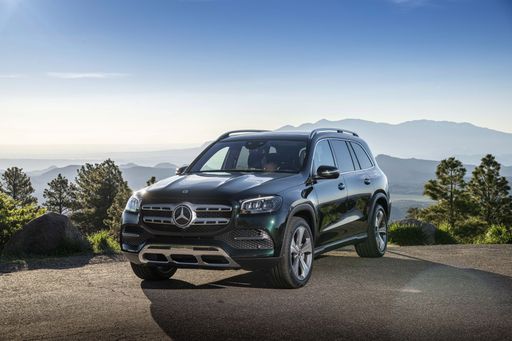
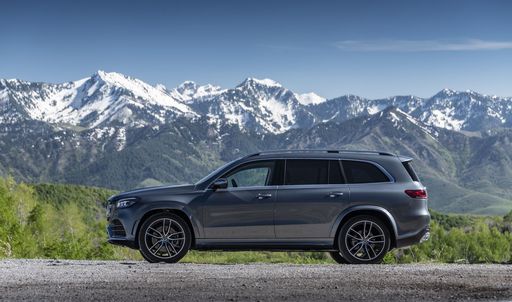
In comparison, the Mercedes GLS is slightly longer, with variants measuring between 5208 mm and 5233 mm. It has a width of 1956 mm and a height ranging from 1782 mm to 1838 mm. However, the GLS offers a significantly smaller trunk space of only 355 liters, which may be a deciding factor for those who prioritize cargo capacity.

GLS

Advanced Technology and Innovations

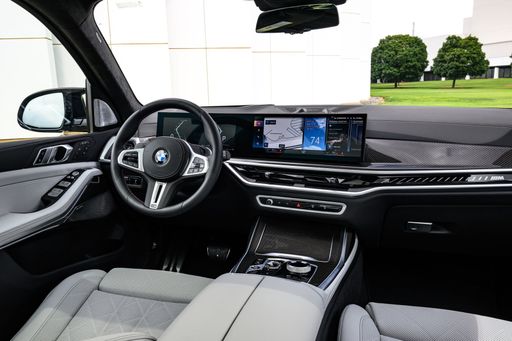
When it comes to infotainment and connectivity, both cars offer cutting-edge technology. The BMW X7 is equipped with the iDrive system that features a large touchscreen interface, advanced navigation, and voice-control capabilities, ensuring that drivers stay connected with ease. Additionally, the X7 includes driving assistance technologies such as adaptive cruise control, lane-keeping assistance, and a surround-view camera system.

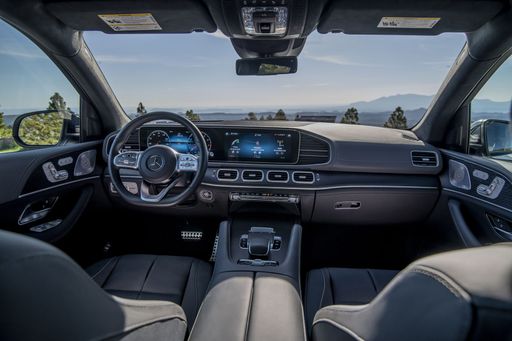
On the flip side, the Mercedes GLS features the MBUX (Mercedes-Benz User Experience) infotainment system, which also features a highly responsive touchscreen and voice activation, making it intuitive for users. The GLS excels in showcasing a premium sound system and a heads-up display, enhancing the driving experience. Furthermore, its advanced driver-assistance features include active brake assist and automatic parking capabilities.

X7

Conclusion: Which SUV Reigns Supreme?

Both the BMW X7 and Mercedes GLS showcase unparalleled performance, luxury, and innovation. The BMW X7 stands out with its powerful engine options and greater trunk capacity, making it an ideal choice for families looking for space. Meanwhile, the Mercedes GLS offers a slightly more advanced infotainment system and a plush interior feel, catering to those who crave modern technology and precision. Ultimately, the choice between the two may boil down to personal preference and specific needs, but either way, you’ll be entering a world of luxury and performance.

Here’s where it gets real: The technical differences in detail

X7

Costs and Efficiency:

Price and efficiency are key factors when choosing a car – and this is often where the real differences emerge.

BMW X7 is barely cheaper – starting at 91,300 £ , while the Mercedes GLS costs 92,700 £ . That’s a price difference of around 1,377 £.

Fuel consumption also shows a difference: the Mercedes GLS uses 7.9 L/100km and is only slightly more efficient than the BMW X7 with 8 L/100km. The difference is about 0.1 L/100km.

GLS

Engine and Performance:

Under the bonnet, it becomes clear which model is tuned for sportiness and which one takes the lead when you hit the accelerator.

When it comes to engine power, the BMW X7 offers visibly more power – delivering 530 HP compared to 404 HP. That’s roughly 126 HP more horsepower.

When accelerating from 0 to 100 km/h, the BMW X7 is somewhat quicker – completing the sprint in 4.7 s, while the Mercedes GLS takes 5.6 s. That’s about 0.9 s quicker.

Both models offer the same torque – 750 Nm.

X7

Space and Everyday Use:

Cabin size, boot volume and payload all play a role in everyday practicality. Here, comfort and flexibility make the difference.

Both vehicles offer seating for 7 people.

In terms of curb weight, BMW X7 is barely lighter – 2,490 kg compared to 2,580 kg. The difference is around 90 kg.

Looking at boot space, the BMW X7 offers clearly more boot space – 750 L compared to 355 L. That’s a difference of about 395 L.

When it comes to payload, the Mercedes GLS carries barely more – 820 kg compared to 760 kg. That’s a difference of about 60 kg.

Who wins the race in the data check?

The BMW X7 is far ahead overall in the objective data comparison.
This result only shows which model scores more points on paper – not which of the two cars feels right for you.

from £91,300
X7

BMW X7

  • Engine Type Petrol MHEV, Diesel MHEV
  • Transmission Automatic
  • Drive Type All-Wheel Drive
  • Power HP 352 - 530 HP
  • Consumption L/100km 8 - 12.1 L/100km
BMW X7
Mercedes GLS

Costs and Consumption

View detailed analysis

Engine and Performance

View detailed analysis

Dimensions and Body

View detailed analysis

BMW X7

The BMW X7 sits at the top of BMW’s SUV range, wrapping executive-level luxury and a cavernous cabin in a bold, road-commanding package. It’s ideal for buyers who want first-class comfort and presence on the road — think chauffeur-level refinement without hiring one, though you’ll need a confident approach to parking.

details

Mercedes GLS

The GLS — usually just called the GLS — is Mercedes' flagship SUV, wrapping limousine-like comfort and commanding road presence into a smart, family-ready package. It pampers occupants with a hushed cabin, premium materials and intuitive tech, while still managing to feel confident and a little indulgent on the daily commute.

details
BMW X7
Mercedes GLS

Costs and Consumption

Price
91,300 - 118,300 £
Price
92,700 - 104,600 £
Consumption L/100km
8 - 12.1 L/100km
Consumption L/100km
7.9 - 9.9 L/100km
Consumption kWh/100km
-
Consumption kWh/100km
-
Electric Range
-
Electric Range
-
Battery Capacity
-
Battery Capacity
-
co2
210 - 274 g/km
co2
206 - 226 g/km
Fuel tank capacity
-
Fuel tank capacity
-

Dimensions and Body

Body Type
SUV
Body Type
SUV
Seats
7
Seats
7
Doors
-
Doors
-
Curb weight
2,490 - 2,675 kg
Curb weight
2,580 - 2,670 kg
Trunk capacity
750 L
Trunk capacity
355 L
Length
-
Length
-
Width
2,000 mm
Width
1,956 mm
Height
-
Height
-
Max trunk capacity
-
Max trunk capacity
-
Payload
680 - 760 kg
Payload
810 - 820 kg

Engine and Performance

Engine Type
Petrol MHEV, Diesel MHEV
Engine Type
Petrol MHEV, Diesel MHEV
Transmission
Automatic
Transmission
Automatic
Transmission Detail
Automatic Gearbox
Transmission Detail
Automatic Gearbox
Drive Type
All-Wheel Drive
Drive Type
All-Wheel Drive
Power HP
352 - 530 HP
Power HP
336 - 404 HP
Acceleration 0-100km/h
4.7 - 5.9 s
Acceleration 0-100km/h
5.6 - 6.2 s
Max Speed
-
Max Speed
-
Torque
520 - 750 Nm
Torque
560 - 750 Nm
Number of Cylinders
6 - 8
Number of Cylinders
6
Power kW
259 - 390 kW
Power kW
247 - 297 kW
Engine capacity
2,993 - 4,395 cm3
Engine capacity
2,989 - 2,999 cm3

General

Model Year
2025
Model Year
2026
CO2 Efficiency Class
G
CO2 Efficiency Class
G
Brand
BMW
Brand
Mercedes-Benz
DriveDuel uses data analysis and artificial intelligence to evaluate vehicle data and create content. Content is regularly reviewed and improved. The displayed prices are estimates based on German list prices, adjusted to the respective country’s VAT. Country-specific registration taxes are not included. This information is not legally binding.