VS

Mercedes G Class vs Mercedes GLS comparison

Compare performance (605 HP vs 634 HP), boot space and price (106,600 £ vs 96,100 £ ) at a glance. Find out which car is the better choice for you – Mercedes G Class or Mercedes GLS?

Mercedes G Class vs Mercedes GLS: Key differences

Mercedes G Class

  • only slightly lighter
  • significantly more trunk space

Mercedes GLS

  • slightly cheaper
  • marginally more power
  • a bit more efficient
  • very slightly quicker 0–100 km/h
G Class

Head-to-Head: Mercedes G-Klasse vs. Mercedes GLS

When it comes to luxury automotive engineering, few brands hold the prestige of Mercedes-Benz. The Mercedes G-Klasse, known for its iconic design and off-road capabilities, and the Mercedes GLS, a leading luxury SUV, both offer distinct experiences of power, comfort, and innovation. Let's delve into the technical aspects that set these two exceptional vehicles apart.
GLS

The Powerhouses: Engines and Performance

The Mercedes G-Klasse is renowned for its rugged prowess, drawing power from options that include Petrol Mild Hybrid Electric Vehicle (MHEV), Diesel MHEV, and even fully electric engines. Horsepower ranges impressively from 387 to 605 HP, providing a 0-100 km/h acceleration between 4.4 to 5.8 seconds, depending on the model. With full all-wheel-drive transmissions and a reduction gearbox for advanced off-roading capabilities, the G-Klasse is designed to tackle the toughest terrains.

In contrast, the Mercedes GLS is built for those seeking luxury and performance in an urban environment. This SUV offers a diverse engine lineup, with horsepower extending from 333 to a potent 634 HP in its AMG version. It features a swift 0-100 km/h sprint capability ranging from 4.2 to 6.7 seconds. Despite its focus on comfort and elite road performance, the GLS doesn't shy away from power, emphasizing a smooth yet commanding driving experience.

G Class

Efficiency and Range

The introduction of advanced hybrid systems marks a step towards efficiency for both models. The G-Klasse's consumption varies, noting 14.7 L/100 km in traditional engines to an eco-friendly 28.7 kWh/100 km in electric variants, offering a substantial electric range of up to 468 km. Meanwhile, the GLS achieves fuel consumption between 7.9 to 13.7 L/100 km, proving that even a full-sized SUV can be tuned for more responsible fuel use.

GLS

Interior Space and Comfort

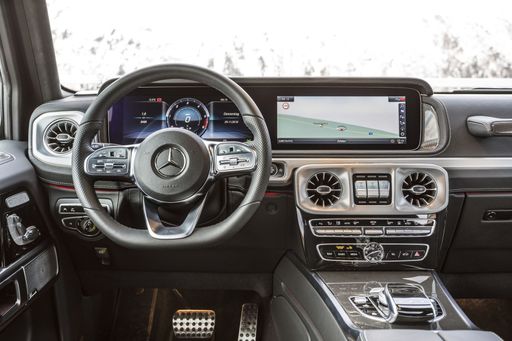
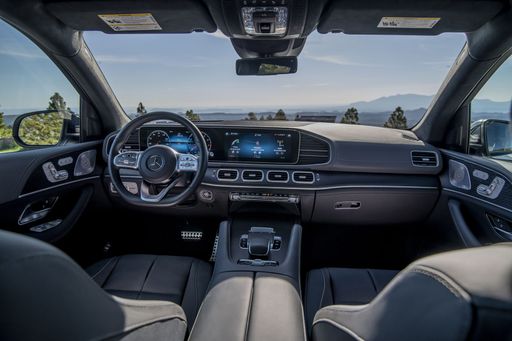
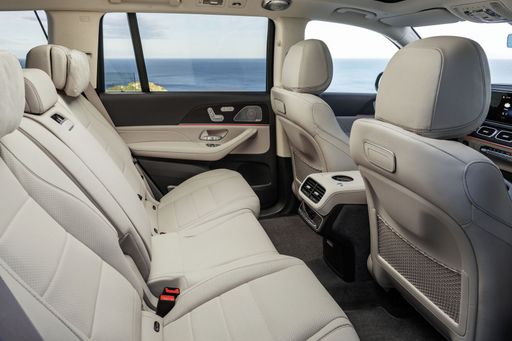
Boasting a more rugged silhouette, the G-Klasse features a spacious cabin for five, with a trunk capacity between 620 to 640 liters. It ensures comfort with a timeless aesthetic that pays homage to its off-road heritage while incorporating modern luxuries and technology.

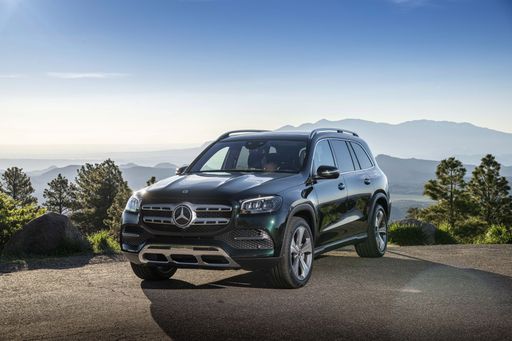
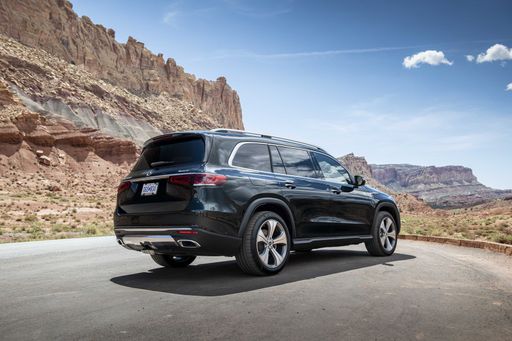
The GLS, favoring space over ruggedness, comfortably accommodates up to seven passengers. Its utilitarian design offers a trunk capacity of 355 liters, expandable with folded rear seats for larger cargo needs. The GLS stands out with an interior focused on lavish comfort and leading-edge infotainment systems, perfect for families and long-distance cruising.

G Class

Dimensions and Practical Design

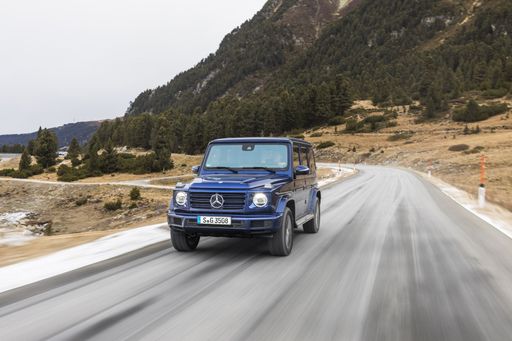
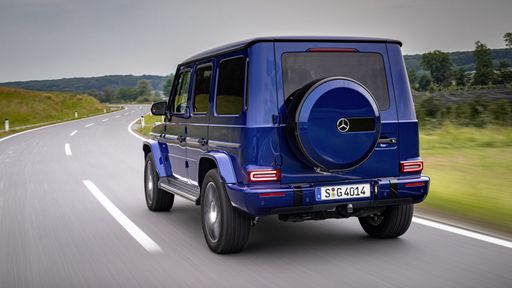
With dimensions spanning a length of 4873 mm and a height of up to 1983 mm, the G-Klasse embodies an upright and commanding presence, made to navigate both urban streets and off-road environments securely.

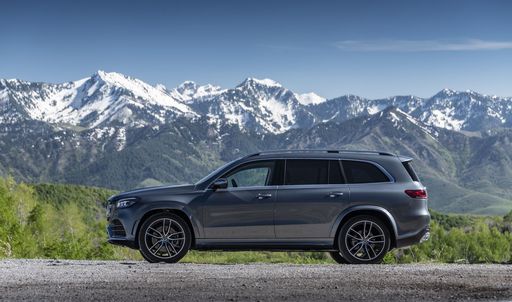
The GLS stretches longer, at up to 5233 mm in length, prioritizing interior space and road stability. Its design accentuates seamless driving dynamics paired with a sophisticated exterior that speaks luxury at every curve.

GLS

Conclusion: A Matter of Choice

Deciding between the Mercedes G-Klasse and GLS ultimately boils down to lifestyle preferences. If off-road presence, capability, and a love for adventurous drives appeal to you, the G-Klasse remains unmatched. Conversely, if luxury, space, and efficiency in city driving take precedence, the Mercedes GLS offers a comprehensive package of comfort and elegance. Each model reflects Mercedes-Benz's dedicated innovation, ensuring a choice that aligns with diverse driving aspirations.

Here’s where it gets real: The technical differences in detail

G Class

Costs and Efficiency:

Price and efficiency are often the first things buyers look at. Here it becomes clear which model has the long-term edge – whether at the pump, the plug, or in purchase price.

Mercedes GLS is slightly cheaper – starting at 96,100 £ , while the Mercedes G Class costs 106,600 £ . That’s a price difference of around 10,470 £.

Fuel consumption also shows a difference: the Mercedes GLS uses 7.8 L/100km and is a bit more efficient than the Mercedes G Class with 8.7 L/100km. The difference is about 0.9 L/100km.

GLS

Engine and Performance:

Power, torque and acceleration say a lot about how a car feels on the road. This is where you see which model delivers more driving dynamics.

When it comes to engine power, the Mercedes GLS offers marginally more power – delivering 634 HP compared to 605 HP. That’s roughly 29 HP more horsepower.

When accelerating from 0 to 100 km/h, the Mercedes GLS is very slightly quicker – completing the sprint in 4.2 s, while the Mercedes G Class takes 4.4 s. That’s about 0.2 s quicker.

Looking at top speed, the Mercedes GLS is visibly faster – reaching 280 km/h, while the Mercedes G Class tops out at 180 km/h. The difference is around 100 km/h.

There’s also a difference in torque: the Mercedes G Class delivers noticeably more torque with 1,164 Nm compared to 850 Nm. That’s about 314 Nm more.

G Class

Space and Everyday Use:

Beyond pure performance, interior space and usability matter most in daily life. This is where you see which car is more practical and versatile.

Seats: Mercedes GLS offers more seats – 7 vs 5.

In terms of curb weight, Mercedes G Class is only slightly lighter – 2,485 kg compared to 2,550 kg. The difference is around 65 kg.

Looking at boot space, the Mercedes G Class offers significantly more boot space – 640 L compared to 355 L. That’s a difference of about 285 L.

For maximum load capacity, the Mercedes GLS offers slightly more capacity – up to 2,400 L, about 410 L more than the Mercedes G Class.

When it comes to payload, the Mercedes G Class carries only slightly more – 715 kg compared to 695 kg. That’s a difference of about 20 kg.

Who wins the race in the data check?

The Mercedes G Class comes out clearly ahead in the objective data comparison.
This result only shows which model scores more points on paper – not which of the two cars feels right for you.

from £106,600
G Class

Mercedes G Class

  • Engine Type : Electric, Petrol MHEV, Diesel MHEV
  • Transmission : Automatic
  • Drive Type : All-Wheel Drive
  • Power HP : 387 - 605 HP
  • Consumption L/100km : 8.7 - 14.7 L/100km
  • Consumption kWh/100km : 28 kWh/100km
  • Electric Range : 468 km
Mercedes G Class
Mercedes GLS

Costs and Consumption

View detailed analysis

Engine and Performance

View detailed analysis

Dimensions and Body

View detailed analysis

Mercedes G Class

The G-Class, often called the G‑Wagen, is a blocky icon that blends unapologetic off-road prowess with a plush, modern cabin, announcing your arrival before you even step out. It’s equally at home crawling over rocks or cruising city streets, and owning one feels like adopting a very expensive, very capable personality.

details

Mercedes GLS

The GLS — usually just called the GLS — is Mercedes' flagship SUV, wrapping limousine-like comfort and commanding road presence into a smart, family-ready package. It pampers occupants with a hushed cabin, premium materials and intuitive tech, while still managing to feel confident and a little indulgent on the daily commute.

details
Mercedes G Class
Mercedes GLS

Costs and Consumption

Price
106,600 - 171,000 £
Price
96,100 - 208,500 £
Consumption L/100km
8.7 - 14.7 L/100km
Consumption L/100km
7.8 - 13.7 L/100km
Consumption kWh/100km
28 kWh/100km
Consumption kWh/100km
-
Electric Range
468 km
Electric Range
-
Battery Capacity
116 kWh
Battery Capacity
-
co2
0 - 336 g/km
co2
204 - 310 g/km
Fuel tank capacity
-
Fuel tank capacity
90 L

Dimensions and Body

Body Type
Off-Roader
Body Type
SUV
Seats
5
Seats
7
Doors
5
Doors
5
Curb weight
2,485 - 3,085 kg
Curb weight
2,550 - 2,825 kg
Trunk capacity
620 - 640 L
Trunk capacity
355 L
Length
4,624 mm
Length
5,208 - 5,233 mm
Width
1,931 - 1,984 mm
Width
1,956 mm
Height
1,983 mm
Height
1,782 - 1,838 mm
Max trunk capacity
1,990 L
Max trunk capacity
2,400 L
Payload
415 - 715 kg
Payload
445 - 695 kg

Engine and Performance

Engine Type
Electric, Petrol MHEV, Diesel MHEV
Engine Type
Petrol MHEV, Diesel MHEV
Transmission
Automatic
Transmission
Automatic
Transmission Detail
Reduction Gearbox, Automatic Gearbox
Transmission Detail
Automatic Gearbox
Drive Type
All-Wheel Drive
Drive Type
All-Wheel Drive
Power HP
387 - 605 HP
Power HP
333 - 634 HP
Acceleration 0-100km/h
4.4 - 5.8 s
Acceleration 0-100km/h
4.2 - 6.7 s
Max Speed
180 km/h
Max Speed
238 - 280 km/h
Torque
760 - 1,164 Nm
Torque
500 - 850 Nm
Number of Cylinders
6 - 8
Number of Cylinders
6 - 8
Power kW
285 - 445 kW
Power kW
245 - 466 kW
Engine capacity
2,989 - 3,982 cm3
Engine capacity
2,989 - 3,982 cm3

General

Model Year
2,024 - 2,025
Model Year
2,024 - 2,025
CO2 Efficiency Class
A, G
CO2 Efficiency Class
G
Brand
Mercedes-Benz
Brand
Mercedes-Benz
DriveDuel uses data analysis and artificial intelligence to evaluate vehicle data and create content. Content is regularly reviewed and improved. The displayed prices are estimates based on German list prices, adjusted to the respective country’s VAT. Country-specific registration taxes are not included. This information is not legally binding.