VS

BMW XM vs BMW X5 comparison

Compare performance (748 HP vs 625 HP), boot space and price (116,100 £ vs 77,100 £ ) at a glance. Find out which car is the better choice for you – BMW XM or BMW X5?

BMW XM vs BMW X5: Key differences

BMW XM

  • slightly more power
  • marginally quicker 0–100 km/h

BMW X5

  • considerably cheaper
  • considerably more efficient
  • noticeably more electric range
  • noticeably lighter
  • slightly more trunk space
XM

The Battle of BMW SUVs: X5 vs XM

As BMW continues to redefine the luxury SUV market, two models stand out as exceptional examples of automotive engineering: the BMW X5 and the new BMW XM. Both SUVs cater to a premium audience and showcase the brand's commitment to luxury, performance, and technological innovation.
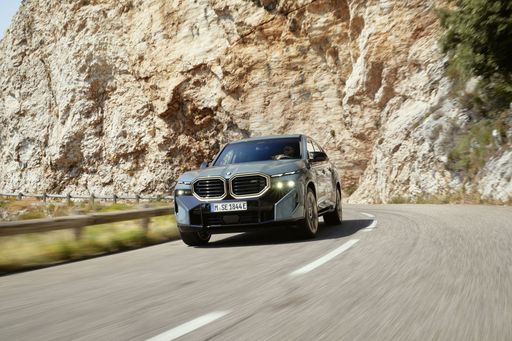
X5

Design and Dimensions

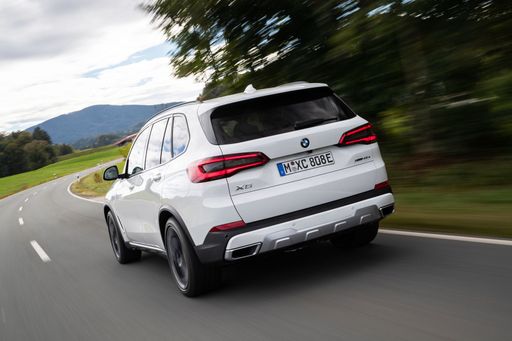
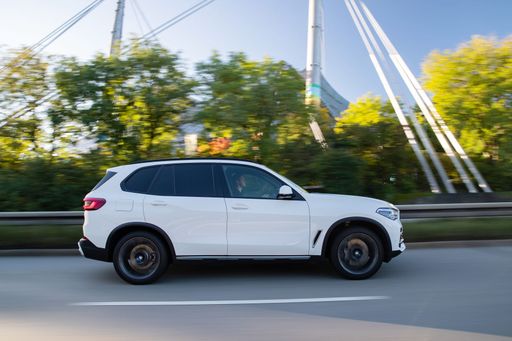
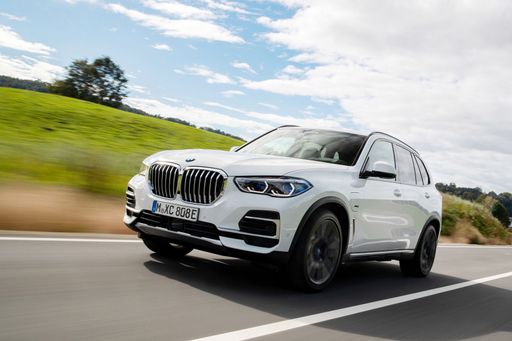
The BMW X5 is a well-established member of the SUV segment, featuring a sleek design that combines robustness with elegance. With dimensions stretching up to 4948 mm in length, 2015 mm in width, and a height of 1765 mm, the X5 provides a spacious interior and commanding road presence.

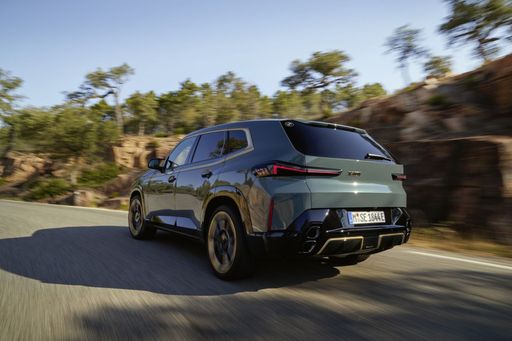
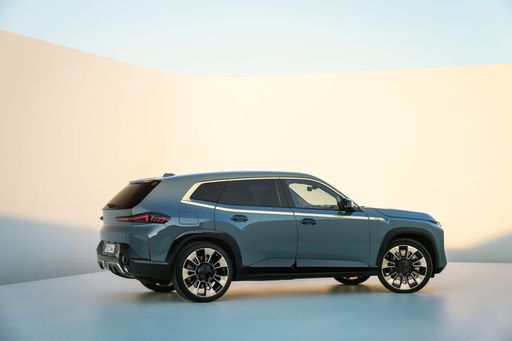
On the other side, the BMW XM, an upcoming star, pushes the envelope further with its design sophistication, measuring 5110 mm in length, 2005 mm in width, and a height identical to select X5 variants at 1755 mm. It's a larger SUV, promising extra space and comfort.

XM

Performance and Power

The BMW X5 is available with a diverse range of engines including diesel MHEV, petrol MHEV, and plug-in hybrid variants, delivering power outputs from 298 to an impressive 625 HP. It accelerates from 0 to 100 km/h in as little as 3.9 seconds in its most powerful configuration, offering a top speed of 250 km/h.

The BMW XM, exclusively a plug-in hybrid, offers either 476 HP, 653 HP, or an astonishing 748 HP in its most potent form. With the ability to accelerate from 0 to 100 km/h in just 3.8 seconds, it's not only about luxury but also high-performance agility, hitting a top speed of 290 km/h in the upper trims.

X5

Efficiency and Range

Despite its emphasis on performance, the BMW X5 manages efficiency with consumption figures ranging from 0.9 L/100 km for the plug-in hybrid down to 12.9 L/100 km for the traditional engines. Its electric driving range reaches up to 97 km on a full charge, emphasizing BMW's commitment to sustainability in its future-forward models.

The BMW XM also impresses with an economically friendly consumption ranging between 1.6 and 1.9 L/100 km. Its electric-only range caps at 79 km, which complements its high-performance nature while being environmentally considerate. Both models share a battery capacity of 25.7 kWh, demonstrating BMW's dedication to electromobility.

XM

Interior and Technology

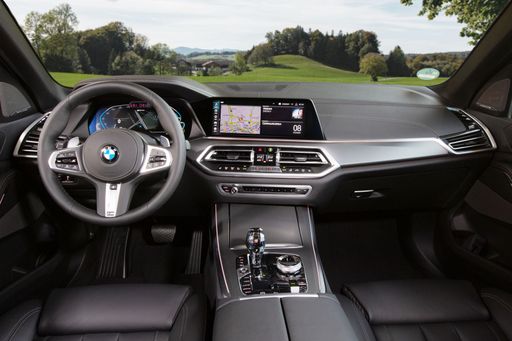
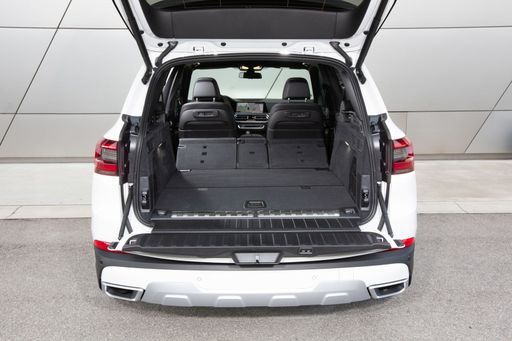
Both SUVs faithfully adhere to BMW’s hallmark luxury. The X5 provides a five-seat configuration, blending comfort with functionality within its 650 to 500 liters of trunk space.

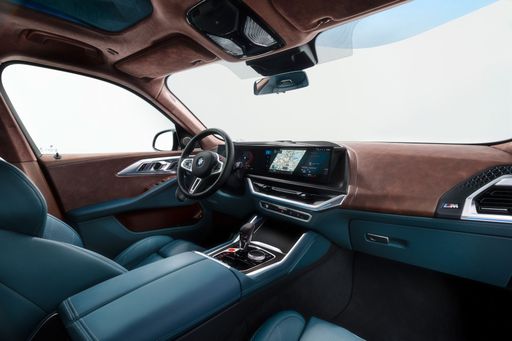
In contrast, the XM offers a seven-seat layout, ideal for larger families or those needing extra passenger space. Its trunk holds up to 527 liters, ensuring ample cargo capacity. These interiors are equipped with BMW’s latest iDrive systems, state-of-the-art infotainment, and advanced safety features, creating an interactive driving experience.

X5

Conclusion

Choosing between the BMW X5 and the BMW XM rests on personal preference and priorities. The X5 stands out for its versatility and range of powertrains, making it a jack-of-all-trades in the SUV world. The XM, however, showcases BMW's pioneering step towards ultra-luxury and high-performance in plug-in hybrids.

Both models promise the best of BMW engineering, offering high performance, superb comfort, and cutting-edge technology, setting standards in their segments and ensuring a drive that is both thrilling and luxurious.

Here’s where it gets real: The technical differences in detail

XM

Costs and Efficiency:

Price and efficiency are key factors when choosing a car – and this is often where the real differences emerge.

BMW X5 is considerably cheaper – starting at 77,100 £ , while the BMW XM costs 116,100 £ . That’s a price difference of around 39,085 £.

Fuel consumption also shows a difference: the BMW X5 uses 3 L/100km and is considerably more efficient than the BMW XM with 4.7 L/100km. The difference is about 1.7 L/100km.

As for electric range, the BMW X5 offers noticeably more range – reaching up to 105 km, about 25 km more than the BMW XM.

X5

Engine and Performance:

Under the bonnet, it becomes clear which model is tuned for sportiness and which one takes the lead when you hit the accelerator.

When it comes to engine power, the BMW XM offers slightly more power – delivering 748 HP compared to 625 HP. That’s roughly 123 HP more horsepower.

When accelerating from 0 to 100 km/h, the BMW XM is marginally quicker – completing the sprint in 3.8 s, while the BMW X5 takes 3.9 s. That’s about 0.1 s quicker.

There’s also a difference in torque: the BMW XM delivers noticeably more torque with 1,000 Nm compared to 750 Nm. That’s about 250 Nm more.

XM

Space and Everyday Use:

Cabin size, boot volume and payload all play a role in everyday practicality. Here, comfort and flexibility make the difference.

Seats: BMW XM offers more seats – 7 vs 5.

In terms of curb weight, BMW X5 is noticeably lighter – 2,240 kg compared to 2,695 kg. The difference is around 455 kg.

Looking at boot space, the BMW X5 offers slightly more boot space – 650 L compared to 527 L. That’s a difference of about 123 L.

When it comes to payload, the BMW X5 carries clearly more – 705 kg compared to 525 kg. That’s a difference of about 180 kg.

Who wins the race in the data check?

The BMW X5 stands well ahead of its rival in the objective data comparison.
This result only shows which model scores more points on paper – not which of the two cars feels right for you.

from £77,100
X5

BMW X5

  • Engine Type : Petrol MHEV, Diesel MHEV, Plugin Hybrid
  • Transmission : Automatic
  • Drive Type : All-Wheel Drive
  • Power HP : 298 - 625 HP
  • Consumption L/100km : 3 - 12.8 L/100km
  • Electric Range : 105 km
BMW XM
BMW X5

Costs and Consumption

View detailed analysis

Engine and Performance

View detailed analysis

Dimensions and Body

View detailed analysis

BMW XM

The BMW XM is an unapologetically bold flagship that fuses brash, hyper-styled presence with the kind of luxury that commands attention wherever it goes. Inside it's a leather-clad showpiece loaded with modern tech and a driving personality that blends theatrical muscle with refined grand-tourer composure—ideal for buyers who want drama and comfort in equal measure.

details

BMW X5

The BMW X5 blends athletic handling with a roomy, premium interior, feeling equally at home on twisty country roads and the school-run car park. Its executive-lounge cabin and confident road presence make it a tempting choice for buyers who want comfort, capability and just a little bit of bragging rights.

details
BMW XM
BMW X5

Costs and Consumption

Price
116,100 - 159,300 £
Price
77,100 - 143,500 £
Consumption L/100km
4.7 - 5.3 L/100km
Consumption L/100km
3 - 12.8 L/100km
Consumption kWh/100km
-
Consumption kWh/100km
-
Electric Range
78 - 80 km
Electric Range
105 km
Battery Capacity
-
Battery Capacity
25.7 kWh
co2
105 - 119 g/km
co2
68 - 289 g/km
Fuel tank capacity
-
Fuel tank capacity
69 - 83 L

Dimensions and Body

Body Type
SUV
Body Type
SUV
Seats
7
Seats
5
Doors
-
Doors
5
Curb weight
2,695 - 2,795 kg
Curb weight
2,240 - 2,495 kg
Trunk capacity
527 L
Trunk capacity
500 - 650 L
Length
-
Length
4,935 mm
Width
2,005 mm
Width
2,004 - 2,015 mm
Height
-
Height
1,755 - 1,765 mm
Max trunk capacity
-
Max trunk capacity
1,720 - 1,870 L
Payload
505 - 525 kg
Payload
565 - 705 kg

Engine and Performance

Engine Type
Plugin Hybrid
Engine Type
Petrol MHEV, Diesel MHEV, Plugin Hybrid
Transmission
Automatic
Transmission
Automatic
Transmission Detail
Automatic Gearbox
Transmission Detail
Automatic Gearbox
Drive Type
All-Wheel Drive
Drive Type
All-Wheel Drive
Power HP
476 - 748 HP
Power HP
298 - 625 HP
Acceleration 0-100km/h
3.8 - 5.1 s
Acceleration 0-100km/h
3.9 - 6.1 s
Max Speed
-
Max Speed
250 km/h
Torque
700 - 1,000 Nm
Torque
540 - 750 Nm
Number of Cylinders
6 - 8
Number of Cylinders
6 - 8
Power kW
350 - 550 kW
Power kW
219 - 460 kW
Engine capacity
2,998 - 4,395 cm3
Engine capacity
2,993 - 4,395 cm3

General

Model Year
2,026
Model Year
2,025
CO2 Efficiency Class
C, D
CO2 Efficiency Class
G, B
Brand
BMW
Brand
BMW
DriveDuel uses data analysis and artificial intelligence to evaluate vehicle data and create content. Content is regularly reviewed and improved. The displayed prices are estimates based on German list prices, adjusted to the respective country’s VAT. Country-specific registration taxes are not included. This information is not legally binding.