@ BYD Auto / BYD Global Media
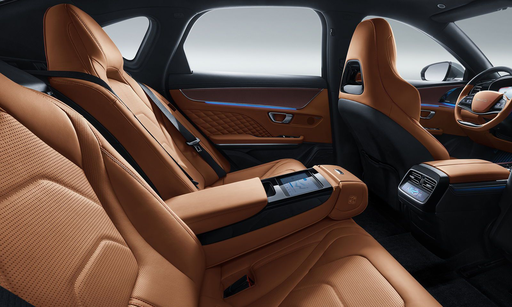
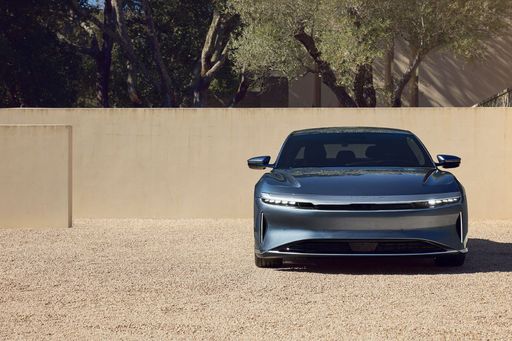
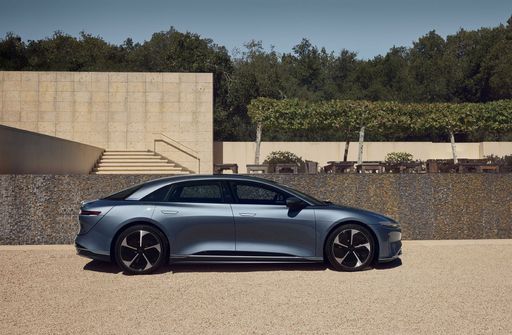
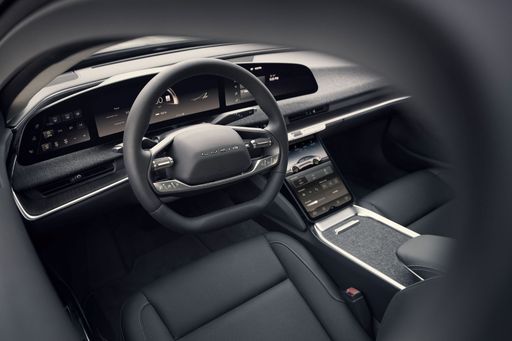
@ Lucid Motors
VS

BYD Han vs Lucid Air – Which one offers the better deal?

Both models have their strengths – but which one suits you more?
Compare performance, efficiency, price and space directly: BYD Han or Lucid Air?

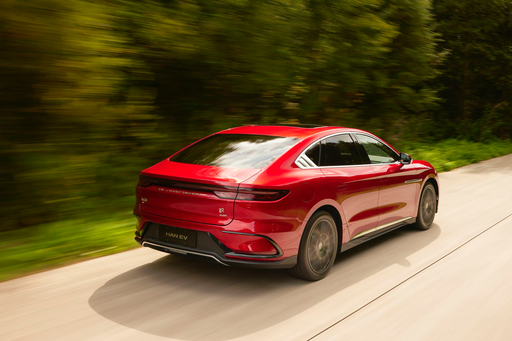
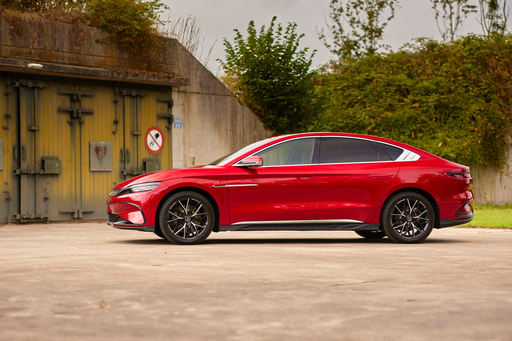
Han @ BYD Auto / BYD Global Media

The automotive industry is witnessing a revolutionary shift with the rise of electric vehicles (EVs), and two prominent contenders in this space are the BYD Han and the Lucid Air. Both electric sedans offer impressive specifications, innovative technology, and luxurious features. In this comparison, we will explore various aspects, including performance metrics, design elements, and technological innovations.
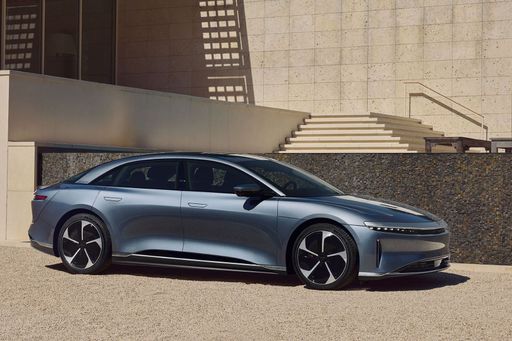
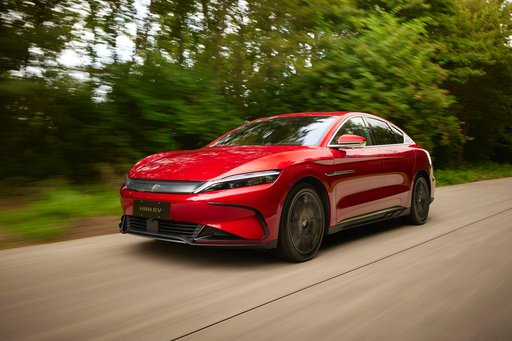
Air @ Lucid Motors

Power and Performance

The BYD Han packs a punch with a powerful dual-motor all-wheel drive system, generating 517 horsepower and 700 Nm of torque. It accelerates from 0 to 100 km/h in just 3.9 seconds and boasts a top speed of 180 km/h. The model year 2023 Han is notable for its efficiency, consuming only 18.5 kWh/100 km and providing an impressive electric range of 521 km.

On the other hand, the Lucid Air significantly ups the ante with multiple powertrain options, ranging from 580 HP to a staggering 1,111 HP on the top trims. The standout Air Dream Edition can sprint from 0 to 100 km/h in a mere 2.5 seconds, showcasing its 1,050 Nm torque and maximum speed of 270 km/h. Its consumption ranges from 13 kWh/100 km to 15.9 kWh/100 km, while the electric range varies by configuration, with an astonishing top figure of 792 km.

Han @ BYD Auto / BYD Global Media

Design and Dimensions

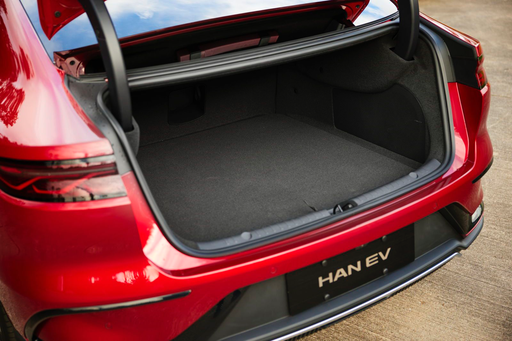
The BYD Han measures 4,995 mm in length, 1,910 mm in width, and 1,495 mm in height. It features a spacious interior designed to comfortably seat five passengers, together with a trunk capacity of 410 liters. Its sleek sedan profile and futuristic design are accompanied by advanced aerodynamics, contributing to its efficiency.

Conversely, the Lucid Air is slightly shorter at 4,975 mm but wider at 1,939 mm and lower at 1,410 mm, giving it a more dynamic stance. The trunk capacity is much larger at 627 liters, catering well to practicality. Lucid's design philosophy emphasizes elegance, with a luxurious interior that boasts high-quality materials and ambient lighting to create a premium feel.

Air @ Lucid Motors

Technological Innovations

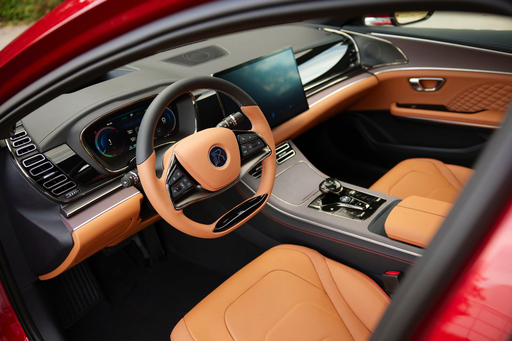
Both vehicles are equipped with cutting-edge technology but cater to different aspects of the user experience. In the BYD Han, the company has focused on an intuitive user interface featuring a large touchscreen display and comprehensive infotainment system, along with numerous safety features including advanced driver assistance systems (ADAS).

The Lucid Air, renowned for pushing the boundaries of tech, comes with a state-of-the-art Lucid DreamDrive, which integrates 32 sensors to provide an advanced driver assistance suite and semi-autonomous driving capabilities. The expansive 34-inch Glass Cockpit 5K display creates an immersive driving experience and provides an intuitive hub for navigation and vehicle control.

Han @ BYD Auto / BYD Global Media

Efficiency and Environmental Impact

Both models boast a CO2 efficiency class of A, making them eco-friendly options. The BYD Han emits zero grams of CO2 per kilometer, which is the same as the Lucid Air. The BYD Han, with its lower consumption of 18.5 kWh/100 km, is slightly less efficient than the Lucid Air's best-in-class figure of 13 kWh/100 km, contributing to lesser energy consumption.

Air @ Lucid Motors

Price and Value Proposition

While direct pricing for both models can vary based on configurations and incentives, the BYD Han is generally positioned as a more budget-friendly option compared to the luxury-oriented Lucid Air. The Lucid Air can command a higher price due to its performance capabilities, luxurious interiors, and technological innovations.
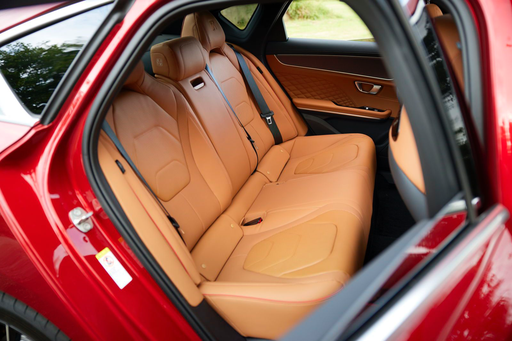
Han @ BYD Auto / BYD Global Media

Conclusion

The BYD Han and Lucid Air represent two different approaches to the electric sedan market. The Han boasts a well-rounded package with a balance between performance, efficiency, and value. In contrast, the Lucid Air focuses on high performance and luxurious features, setting new benchmarks in the EV segment. Choosing between the two ultimately depends on individual priorities, be it performance, range, or luxury.

Here’s where it gets real: The technical differences in detail

Air @ Lucid Motors

Costs and Efficiency:

Price and efficiency are often the first things buyers look at. Here it becomes clear which model has the long-term edge – whether at the pump, the plug, or in purchase price.

BYD Han has a clearly perceptible advantage in terms of price – it starts at 59200 £, while the Lucid Air costs 72900 £. That’s a price difference of around 13697 £.

In terms of energy consumption, the advantage goes to the Lucid Air: with 13 kWh per 100 km, it’s significantly more efficient than the BYD Han with 18.50 kWh. That’s a difference of about 5.50 kWh.

As for range, the Lucid Air performs decisively better – achieving up to 882 km, about 361 km more than the BYD Han.

Han @ BYD Auto / BYD Global Media

Engine and Performance:

Power, torque and acceleration say a lot about how a car feels on the road. This is where you see which model delivers more driving dynamics.

When it comes to engine power, the Lucid Air has a decisively edge – offering 1251 HP compared to 517 HP. That’s roughly 734 HP more horsepower.

In acceleration from 0 to 100 km/h, the Lucid Air is decisively quicker – completing the sprint in 2 s, while the BYD Han takes 3.90 s. That’s about 1.90 s faster.

In terms of top speed, the Lucid Air performs clearly better – reaching 330 km/h, while the BYD Han tops out at 180 km/h. The difference is around 150 km/h.

There’s also a difference in torque: Lucid Air pulls decisively stronger with 1940 Nm compared to 700 Nm. That’s about 1240 Nm difference.

Space and Everyday Use:

Cabin size, boot volume and payload all play a role in everyday practicality. Here, comfort and flexibility make the difference.

Both vehicles offer seating for 5 people.

In curb weight, Lucid Air is to a small extent lighter – 2070 kg compared to 2325 kg. The difference is around 255 kg.

In terms of boot space, the Lucid Air offers distinct more room – 627 L compared to 410 L. That’s a difference of about 217 L.

When it comes to payload, Lucid Air significantly takes the win – 588 kg compared to 335 kg. That’s a difference of about 253 kg.

Who wins the race?

The Lucid Air proves to be outperforms in nearly all aspects and therefore becomes our DriveDuel Champion!
Lucid Air is the better all-rounder in this comparison.

from about £72,900
Air @ Lucid Motors

Lucid Air

  • Engine Type : Electric
  • Transmission : Automatic
  • Drive Type : All-Wheel Drive, Rear-Wheel Drive
  • Power HP : 442 - 1251 HP
  • Consumption kWh/100km : 13 - 19.1 kWh
  • Electric Range : 694 - 882 km

BYD Han

The BYD Han is a sleek electric vehicle that elegantly combines innovation and style. Its design features smooth lines and a sophisticated interior that highlight modern luxury. With advanced technology and impressive performance, it represents a significant step forward in the world of electric cars.

details

Lucid Air

The Lucid Air is a luxury electric sedan known for its sleek, futuristic design and impressive range. It combines advanced technology with sustainable power, offering a remarkable driving experience that challenges traditional automotive norms. With its spacious and elegant interior, the Air sets a new standard for comfort and innovation in the electric vehicle market.

details
BYD Han
Lucid Air
Han @ BYD Auto / BYD Global Media
Air @ Lucid Motors

Costs and Consumption

Price
59200 - 62200 £
Price
72900 - 214300 £
Consumption L/100km
-
Consumption L/100km
-
Consumption kWh/100km
18.50 kWh
Consumption kWh/100km
13 - 19.1 kWh
Electric Range
521 km
Electric Range
694 - 882 km
Battery Capacity
-
Battery Capacity
-
co2
0 g/km
co2
0 g/km
Fuel tank capacity
-
Fuel tank capacity
-

Dimensions and Body

Body Type
Sedan
Body Type
Sedan
Seats
5
Seats
5
Doors
4
Doors
5
Curb weight
2325 kg
Curb weight
2070 - 2420 kg
Trunk capacity
410 L
Trunk capacity
627 L
Length
4995 mm
Length
4975 - 5005 mm
Width
1910 mm
Width
1936 - 1990 mm
Height
1495 mm
Height
1409 mm
Max trunk capacity
-
Max trunk capacity
-
Payload
335 kg
Payload
430 - 588 kg

Engine and Performance

Engine Type
Electric
Engine Type
Electric
Transmission
Automatic
Transmission
Automatic
Transmission Detail
-
Transmission Detail
Reduction Gearbox
Drive Type
All-Wheel Drive
Drive Type
All-Wheel Drive, Rear-Wheel Drive
Power HP
517 HP
Power HP
442 - 1251 HP
Acceleration 0-100km/h
3.90 s
Acceleration 0-100km/h
2 - 4.7 s
Max Speed
180 km/h
Max Speed
200 - 330 km/h
Torque
700 Nm
Torque
550 - 1940 Nm
Number of Cylinders
-
Number of Cylinders
-
Power kW
380 kW
Power kW
325 - 920 kW
Engine capacity
-
Engine capacity
-

General

Model Year
2023
Model Year
2022 - 2024
CO2 Efficiency Class
A
CO2 Efficiency Class
A
Brand
BYD
Brand
Lucid
What drivetrain options does the BYD Han have?

Available configurations include All-Wheel Drive.

The prices and data displayed are estimates based on German list prices and may vary by country. This information is not legally binding.