VS

Cadillac Lyriq vs Mercedes EQE SUV comparison

Compare performance (615 HP vs 625 HP), boot space and price (71,100 £ vs 71,600 £ ) at a glance. Find out which car is the better choice for you – Cadillac Lyriq or Mercedes EQE SUV?

Cadillac Lyriq vs Mercedes EQE SUV: Key differences

Cadillac Lyriq

  • very slightly cheaper
  • moderately quicker 0–100 km/h
  • a bit more trunk space

Mercedes EQE SUV

5 (1 Reviews)
rate
  • marginally more power
  • moderately more efficient
  • moderately more electric range
  • somewhat lighter
Lyriq

As the landscape of electric vehicles continues to evolve, two contenders have emerged with compelling offerings: the Mercedes EQE SUV and the Cadillac Lyriq. Both models embody innovation and advanced technology, catering to the growing demand for sustainable, luxurious driving experiences. Here, we will delve into a detailed comparison of these two electric SUVs across various technical aspects and features.
EQE SUV

Design and Dimensions

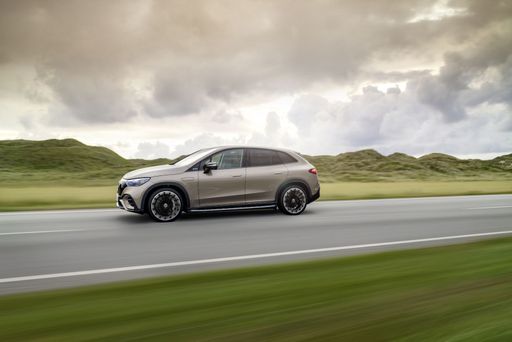
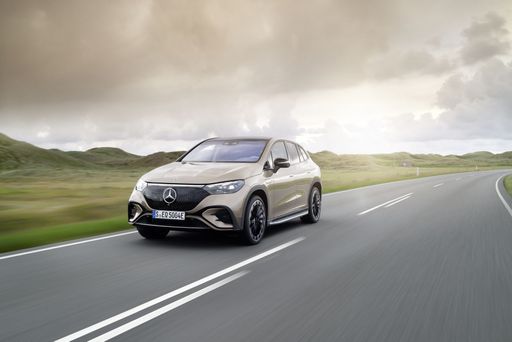
The Mercedes EQE SUV exudes a sleek and modern aesthetic, boasting a length of 4,863 mm and a width of 1,940 mm. Its height ranges from 1,685 mm to 1,672 mm, depending on the specific variant, and it provides a trunk capacity of up to 520 liters.

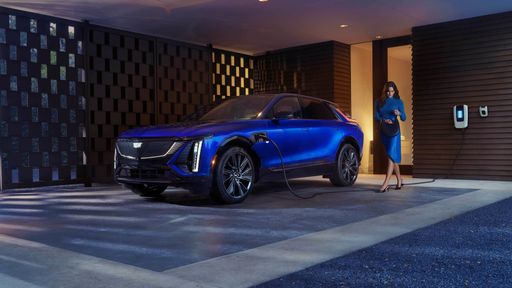
In contrast, the Cadillac Lyriq presents a more robust design, measuring 5,005 mm in length and 1,977 mm in width, with a height of 1,623 mm. The Lyriq’s generous trunk space is notable, offering 588 liters of cargo room.

Powertrain and Performance

Under the hood, the Mercedes EQE SUV offers a range of power outputs, from 245 HP to a staggering 625 HP, with torque figures up to 950 Nm. It features multiple drivetrain options, including rear-wheel drive and all-wheel drive, ensuring flexibility for different driving preferences. The acceleration times for the EQE range from 7.6 seconds for the base model to just 3.7 seconds for the high-performance variant.

Meanwhile, the Cadillac Lyriq houses a powerful electric motor with a maximum output of 528 HP and 610 Nm of torque. As an all-wheel-drive vehicle, it accelerates from 0 to 100 km/h in an impressive 5.3 seconds, reflecting its sporty performance character.

Battery and Range

The Mercedes EQE SUV is equipped with dual battery options, 90.6 kWh and 96 kWh, offering an electric range between 451 km to 614 km, making it a versatile choice for long trips.

On the other hand, the Cadillac Lyriq comes with a larger 102 kWh battery, providing a range of 530 km. While the EQE SUV slightly edges out in maximum range, the Lyriq compensates with a robust energy capacity that supports its powerful performance.

Efficiency and Consumption

In terms of energy consumption, the EQE SUV demonstrates notable efficiency, with figures ranging from 18.2 kWh to 23.2 kWh per 100 km. This efficiency aligns with its commitment to sustainability, achieving a CO2 efficiency class rating of A.

The Cadillac Lyriq, with a consumption of 22.5 kWh per 100 km, also maintains a CO2 efficiency class rating of A, emphasizing its environmentally conscious design.

Innovative Technologies

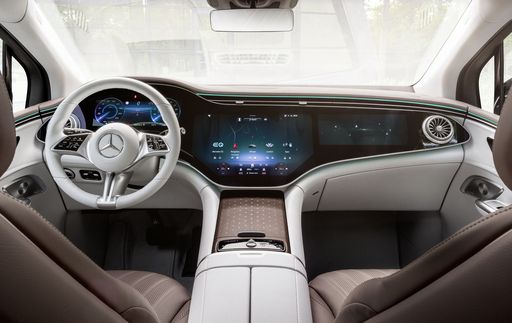
Both vehicles are packed with cutting-edge technologies. The EQE SUV offers an advanced MBUX infotainment system, which includes features such as voice recognition and augmented reality navigation. The interior is designed with premium materials and offers a seamless digital experience.

On the opposite end, the Cadillac Lyriq showcases a high-tech 33-inch diagonal display that spans across the dashboard, providing an immersive user interface. This innovative setup integrates the latest connectivity features, including wireless Apple CarPlay and Android Auto compatibility.

Conclusion

The Mercedes EQE SUV and Cadillac Lyriq each present unique advantages in the growing electric vehicle market. The EQE SUV stands out with its diverse powertrain options and impressive range, making it suitable for those who prioritize performance and flexibility. Meanwhile, the Cadillac Lyriq impresses with its bold design and advanced technology offerings, attracting consumers who seek a luxurious, tech-savvy driving experience.

Ultimately, the choice between these two electric SUVs will depend on individual preferences for performance, technology, and design aesthetics—demonstrating that the future of automobiles is bright, diverse, and electrifying.

Here’s where it gets real: The technical differences in detail

Lyriq

Costs and Efficiency:

When it comes to price and running costs, the biggest differences usually appear. This is often where you see which car fits your budget better in the long run.

Cadillac Lyriq is very slightly cheaper – starting at 71,100 £ , while the Mercedes EQE SUV costs 71,600 £ . That’s a price difference of around 411 £.

In terms of energy consumption, the Mercedes EQE SUV is moderately more efficient: consuming 18.3 kWh/100km compared to 21.8 kWh/100km for the Cadillac Lyriq. That’s a difference of about 3.5 kWh/100km.

As for electric range, the Mercedes EQE SUV offers moderately more range – reaching up to 611 km, about 81 km more than the Cadillac Lyriq.

EQE SUV

Engine and Performance:

Power, torque and acceleration are the classic benchmarks for car enthusiasts – and here, some clear differences start to show.

When it comes to engine power, the Mercedes EQE SUV offers marginally more power – delivering 625 HP compared to 615 HP. That’s roughly 10 HP more horsepower.

When accelerating from 0 to 100 km/h, the Cadillac Lyriq is moderately quicker – completing the sprint in 3.3 s, while the Mercedes EQE SUV takes 3.7 s. That’s about 0.4 s quicker.

There’s also a difference in torque: the Mercedes EQE SUV delivers only slightly more torque with 950 Nm compared to 880 Nm. That’s about 70 Nm more.

Space and Everyday Use:

Cabin size, boot volume and payload all play a role in everyday practicality. Here, comfort and flexibility make the difference.

Both vehicles offer seating for 5 people.

In terms of curb weight, Mercedes EQE SUV is somewhat lighter – 2,440 kg compared to 2,713 kg. The difference is around 273 kg.

Looking at boot space, the Cadillac Lyriq offers a bit more boot space – 588 L compared to 520 L. That’s a difference of about 68 L.

When it comes to payload, the Mercedes EQE SUV carries slightly more – 580 kg compared to 487 kg. That’s a difference of about 93 kg.

Who wins the race in the data check?

The Mercedes EQE SUV is clearly ahead overall in the objective data comparison.
This result only shows which model scores more points on paper – not which of the two cars feels right for you.

from £71,600
EQE SUV

Mercedes EQE SUV

  • Engine Type : Electric
  • Transmission : Automatic
  • Drive Type : All-Wheel Drive, Rear-Wheel Drive
  • Power HP : 265 - 625 HP
  • Consumption kWh/100km : 18.3 - 23.1 kWh/100km
  • Electric Range : 453 - 611 km
Cadillac Lyriq
Mercedes EQE SUV

Costs and Consumption

View detailed analysis

Engine and Performance

View detailed analysis

Dimensions and Body

View detailed analysis

Cadillac Lyriq

The Cadillac Lyriq arrives with bold, angular styling and a striking light signature that gives it real presence on the road without trying too hard. Inside, the Lyriq serves up a calm, tech-heavy cabin with premium touches and a relaxed driving experience that makes switching to electric feel less like a sacrifice and more like a quiet flex.

details

Mercedes EQE SUV

The Mercedes EQE SUV wraps silent electric power in a sumptuous, tech-filled shell, offering a cocoon-like cabin that makes long journeys feel indulgent. It’s not a driver's toy but a sophisticated cruiser for buyers who want luxury, space and futuristic gadgetry without shouting for attention.

details
Cadillac Lyriq
Mercedes EQE SUV

Costs and Consumption

Price
71,100 - 93,300 £
Price
71,600 - 125,100 £
Consumption L/100km
-
Consumption L/100km
-
Consumption kWh/100km
21.8 - 22.5 kWh/100km
Consumption kWh/100km
18.3 - 23.1 kWh/100km
Electric Range
460 - 530 km
Electric Range
453 - 611 km
Battery Capacity
-
Battery Capacity
90.5 - 96 kWh
co2
0 g/km
co2
0 g/km
Fuel tank capacity
-
Fuel tank capacity
-

Dimensions and Body

Body Type
SUV
Body Type
SUV
Seats
5
Seats
5
Doors
-
Doors
4
Curb weight
2,713 - 2,774 kg
Curb weight
2,440 - 2,615 kg
Trunk capacity
588 L
Trunk capacity
520 L
Length
-
Length
4,863 - 4,879 mm
Width
1,977 mm
Width
1,940 mm
Height
-
Height
1,672 - 1,685 mm
Max trunk capacity
-
Max trunk capacity
1,675 L
Payload
426 - 487 kg
Payload
505 - 580 kg

Engine and Performance

Engine Type
Electric
Engine Type
Electric
Transmission
Automatic
Transmission
Automatic
Transmission Detail
Reduction Gearbox
Transmission Detail
Reduction Gearbox
Drive Type
All-Wheel Drive
Drive Type
All-Wheel Drive, Rear-Wheel Drive
Power HP
528 - 615 HP
Power HP
265 - 625 HP
Acceleration 0-100km/h
3.3 - 5.3 s
Acceleration 0-100km/h
3.7 - 7.1 s
Max Speed
-
Max Speed
210 - 240 km/h
Torque
610 - 880 Nm
Torque
550 - 950 Nm
Number of Cylinders
-
Number of Cylinders
-
Power kW
388 - 452 kW
Power kW
195 - 460 kW
Engine capacity
-
Engine capacity
-

General

Model Year
2,024 - 2,025
Model Year
2,023 - 2,025
CO2 Efficiency Class
A
CO2 Efficiency Class
A
Brand
Cadillac
Brand
Mercedes-Benz
DriveDuel uses data analysis and artificial intelligence to evaluate vehicle data and create content. Content is regularly reviewed and improved. The displayed prices are estimates based on German list prices, adjusted to the respective country’s VAT. Country-specific registration taxes are not included. This information is not legally binding.