
@ Mercedes-Benz Group Media
VS

Citroen Jumper vs Mercedes Vito Transporter – Which model is better for everyday use?

Both models have their strengths – but which one suits you more?
Compare performance, efficiency, price and space directly: Citroen Jumper or Mercedes Vito Transporter?

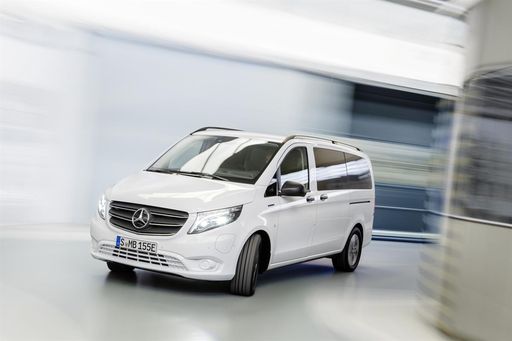
Vito Transporter @ Mercedes-Benz Group Media

Citroën Jumper vs. Mercedes Vito Transporter: A Comprehensive Comparison

The world of cargo vans has evolved with increasing demands for efficiency, power, and versatility. In this comparative analysis, we dive into the specifics of two leading contenders: the Citroën Jumper and the Mercedes Vito Transporter. These models have each carved their niche in the market, offering distinct features catering to various needs.
Engine Options and Performance

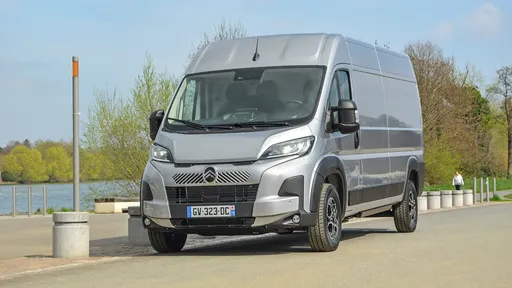
The Citroën Jumper embraces both electric and diesel powertrains, offering a range of options from 120 to 270 horsepower. It comes with front-wheel drive and has multiple transmission choices, including reduction, manual, and automatic gearboxes. Notably, the electric variant of the Jumper boasts a strong 97.8 kWh battery with an impressive range of up to 424 km.

On the other hand, the Mercedes Vito Transporter exhibits versatility with its diesel and electric engine options. It ranges from 102 to 237 horsepower and offers rear, front, and all-wheel drive configurations. Its electric models are equipped with a 60 kWh battery, supporting a range of about 310-313 km.

Fuel Efficiency and Consumption

The Citroën Jumper, particularly its diesel versions, presents a consumption range of 7.5 to 9 L/100km, and its electric variant uses approximately 26.2 kWh/100km. This makes it a solid choice for those emphasizing environmental considerations without sacrificing power.

The Mercedes Vito Transporter claims an efficient consumption of 6.8 to 7.9 L/100km for its diesel models, which aligns well with its class. The electric versions of the Vito offer a more frugal consumption than the Jumper, with figures of 20.7 to 21.1 kWh/100km, making it an economical option over long distances.

Design and Dimensions

The Citroën Jumper emphasizes functional design with lengths ranging from 5413 to 6363 mm and a maximum height of around 2779 mm. These dimensions highlight its capacity to carry substantial loads, enhanced by a notably high payload capacity of up to 2020 kg.

In contrast, the Mercedes Vito is somewhat more compact, with lengths varying from 4895 to 5370 mm and a maximum height of 1945 mm. It supports a payload maximum of around 1000 kg, making it ideal for urban environments where maneuverability is crucial.

Interior Comfort and Features

Inside, the Citroën Jumper prioritizes utility, offering 3 seats suitable for a work-friendly environment. The configurable cargo space is a boon for businesses that demand flexible loading solutions.

The Mercedes Vito, offering an option for 2 or 5 seats, provides an edge in versatility and comfort, catering well to diverse needs ranging from logistics to passenger transport, especially with enhanced cabin design and a focus on ride quality.

Environmental Impact

With the increasing importance of CO2 emissions, both the Citroën Jumper and Mercedes Vito provide efficient solutions. The Jumper offers emissions as low as 0 g/km for the electric version, while its diesel counterpart holds varying outputs up to 233 g/km.

Similarly, the Vito boasts a lower emissions range with the electric model hitting 0 g/km, and its diesel engines maintain a range of 178 to 206 g/km, indicating well-balanced environmental considerations.

Conclusion

The choice between the Citroën Jumper and the Mercedes Vito Transporter hinges on specific needs. The Jumper excels with its spacious design and higher payload capacity, ideal for businesses with heavy-duty transporting needs. Conversely, the Vito stands out for its efficiency and maneuverability, making it a fitting choice for urban logistics and versatility.

When selecting between these two, consideration of driving environment, load requirements, and emphasis on either consumption efficiency or payload capability will guide the optimal choice for your needs.

Here’s where it gets real: The technical differences in detail

Costs and Efficiency:

Price and efficiency are often the first things buyers look at. Here it becomes clear which model has the long-term edge – whether at the pump, the plug, or in purchase price.

Mercedes Vito Transporter has a clearly advantage in terms of price – it starts at 28800 £, while the Citroen Jumper costs 55100 £. That’s a price difference of around 26298 £.

In terms of energy consumption, the advantage goes to the Mercedes Vito Transporter: with 21.20 kWh per 100 km, it’s evident more efficient than the Citroen Jumper with 26.20 kWh. That’s a difference of about 5 kWh.

As for range, the Mercedes Vito Transporter performs slightly better – achieving up to 474 km, about 50 km more than the Citroen Jumper.

Engine and Performance:

Power, torque and acceleration say a lot about how a car feels on the road. This is where you see which model delivers more driving dynamics.

When it comes to engine power, the Citroen Jumper has a to a small extent edge – offering 279 HP compared to 237 HP. That’s roughly 42 HP more horsepower.

In terms of top speed, the Mercedes Vito Transporter performs barely noticeable better – reaching 140 km/h, while the Citroen Jumper tops out at 130 km/h. The difference is around 10 km/h.

There’s also a difference in torque: Mercedes Vito Transporter pulls to a small extent stronger with 500 Nm compared to 410 Nm. That’s about 90 Nm difference.

Space and Everyday Use:

Cabin size, boot volume and payload all play a role in everyday practicality. Here, comfort and flexibility make the difference.

Seats: Mercedes Vito Transporter offers noticeable more seating capacity – 5 vs 3.

In curb weight, Mercedes Vito Transporter is significantly lighter – 1916 kg compared to 2865 kg. The difference is around 949 kg.

In maximum load capacity, the Citroen Jumper performs decisively better – up to 17000 L, which is about 10400 L more than the Mercedes Vito Transporter.

When it comes to payload, Citroen Jumper noticeable takes the win – 1385 kg compared to 884 kg. That’s a difference of about 501 kg.

Who wins the race?

The Mercedes Vito Transporter proves to be is largely superior and therefore becomes our DriveDuel Champion!
Mercedes Vito Transporter is the better all-rounder in this comparison.

from about £28,800
Vito Transporter @ Mercedes-Benz Group Media

Mercedes Vito Transporter

  • Engine Type : Diesel, Electric, Petrol
  • Transmission : Manuel, Automatic
  • Drive Type : Rear-Wheel Drive, Front-Wheel Drive, All-Wheel Drive
  • Power HP : 102 - 237 HP
  • Consumption L/100km : 6.8 - 9.7 L
  • Consumption kWh/100km : 21.2 - 26.5 kWh
  • Electric Range : 304 - 474 km

Citroen Jumper

The Citroen Jumper impresses with its robust design and exceptional versatility, making it a popular choice for both business and leisure purposes. Its spacious interior is thoughtfully designed to maximise comfort and practicality, providing ample room for passengers and cargo alike. With a smooth driving experience and a range of advanced safety features, the Jumper is well-equipped to handle the demands of modern motoring.

details

Mercedes Vito Transporter

The Mercedes-Benz Vito Transporter combines practicality with the refined elegance characteristic of its brand. Known for its robust performance, this vehicle offers an impressively versatile interior space, making it ideal for both commercial use and everyday driving. The advanced safety features and modern technological enhancements ensure that the Vito remains a reliable and comfortable choice for drivers.

details
Citroen Jumper
Mercedes Vito Transporter
Vito Transporter @ Mercedes-Benz Group Media

Costs and Consumption

Price
55100 - 57800 £
Price
28800 - 51600 £
Consumption L/100km
-
Consumption L/100km
6.8 - 9.7 L
Consumption kWh/100km
26.20 kWh
Consumption kWh/100km
21.2 - 26.5 kWh
Electric Range
424 km
Electric Range
304 - 474 km
Battery Capacity
97.80 kWh
Battery Capacity
60 - 90 kWh
co2
0 g/km
co2
0 - 222 g/km
Fuel tank capacity
-
Fuel tank capacity
57 - 70 L

Dimensions and Body

Body Type
Cargo Van
Body Type
Cargo Van
Seats
3
Seats
2 - 5
Doors
4
Doors
4
Curb weight
2865 - 2940 kg
Curb weight
1916 - 2518 kg
Trunk capacity
-
Trunk capacity
-
Length
5998 - 6363 mm
Length
4895 - 5390 mm
Width
2050 mm
Width
1928 mm
Height
2612 - 2850 mm
Height
1910 - 1945 mm
Max trunk capacity
13000 - 17000 L
Max trunk capacity
3100 - 6600 L
Payload
560 - 1385 kg
Payload
547 - 884 kg

Engine and Performance

Engine Type
Electric
Engine Type
Diesel, Electric, Petrol
Transmission
Automatic
Transmission
Manuel, Automatic
Transmission Detail
Reduction Gearbox
Transmission Detail
Manual Gearbox, Reduction Gearbox, Automatic Gearbox
Drive Type
Front-Wheel Drive
Drive Type
Rear-Wheel Drive, Front-Wheel Drive, All-Wheel Drive
Power HP
279 HP
Power HP
102 - 237 HP
Acceleration 0-100km/h
-
Acceleration 0-100km/h
-
Max Speed
90 - 130 km/h
Max Speed
120 - 140 km/h
Torque
410 Nm
Torque
270 - 500 Nm
Number of Cylinders
-
Number of Cylinders
4
Power kW
205 kW
Power kW
75 - 174 kW
Engine capacity
-
Engine capacity
1950 - 1999 cm3

General

Model Year
2024
Model Year
2024 - 2025
CO2 Efficiency Class
A
CO2 Efficiency Class
G, A
Brand
Citroen
Brand
Mercedes-Benz
Is the Citroen Jumper offered with different drivetrains?

Available configurations include Front-Wheel Drive.

The prices and data displayed are estimates based on German list prices and may vary by country. This information is not legally binding.








