@ CUPRA / SEAT S.A.
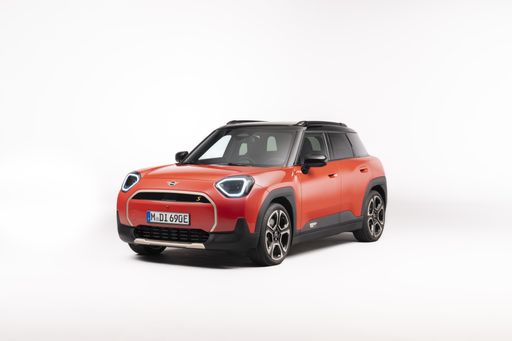
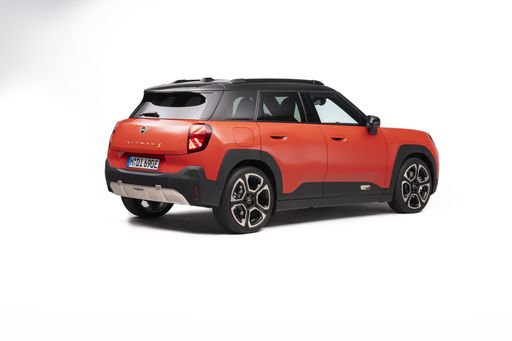
@ MINI / BMW Group Press
VS

CUPRA Born vs MINI Aceman – Which model is better for everyday use?

Two cars, one duel: CUPRA Born meets MINI Aceman.
Which one wins in performance, efficiency and value for money? Find out now!

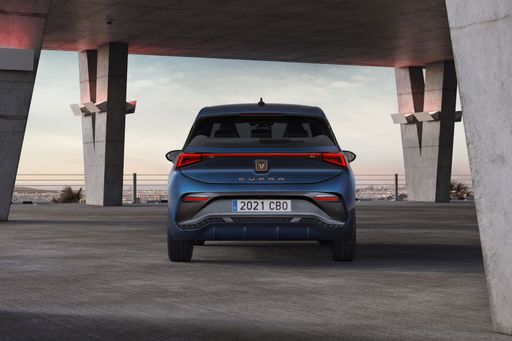
Born @ CUPRA / SEAT S.A.

The Showdown: CUPRA Born vs. MINI Aceman

The electric vehicle market continues to expand, and two exciting contenders capturing the spotlight are the CUPRA Born and the MINI Aceman. Both models promise a unique driving experience, cutting-edge technology, and sustainability. In this article, we’ll delve into the technical aspects, innovations, and features of each vehicle to see how they stack up against each other in this electrifying comparison.
Aceman @ MINI / BMW Group Press

Power and Performance

The CUPRA Born offers impressive power options with horsepower ratings ranging from 231 to 326 HP, accompanied by solid torque figures of 310 to 545 Nm, depending on the variant. With a rear-wheel drive configuration, it can accelerate from 0 to 100 km/h in a remarkable 5.6 seconds, highlighting its performance-oriented design. The Born boasts a top speed of either 160 km/h or 200 km/h, making it suitable for those who crave spirited driving on both urban roads and highways.

On the other hand, the MINI Aceman provides a slightly different performance spectrum. Available power ratings extend from 184 to 258 HP, with torque figures between 290 and 350 Nm. The Aceman's acceleration is respectable, ranging from 6.4 seconds to 7.9 seconds for reaching 100 km/h. With a maximum speed also topping out at 200 km/h, it ensures that the driving experience remains lively and fun.

Born @ CUPRA / SEAT S.A.

Efficiency and Range

When it comes to energy consumption, the CUPRA Born shows impressive efficiency with figures between 14.9 kWh and 15.9 kWh per 100 km. Its battery capacities of 60 kWh and 77 kWh offer a significant electric range of up to 555 km. This makes it an excellent choice for those who often embark on long-distance journeys.

Conversely, the MINI Aceman achieves even better efficiency, consuming between 14 kWh and 16 kWh per 100 km. Its battery options, including 38.5 kWh and 49.2 kWh, provide a maximum electric range of 405 km. While it may not match the Born in sheer distance, it is still an appealing choice for urban driving and shorter trips.

Aceman @ MINI / BMW Group Press

Design and Interior Space

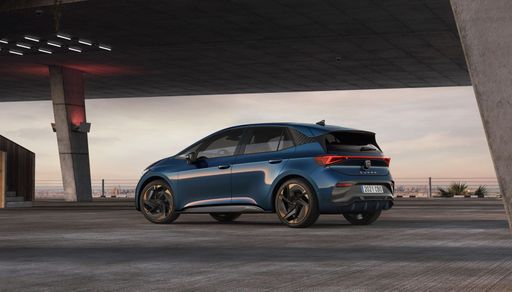
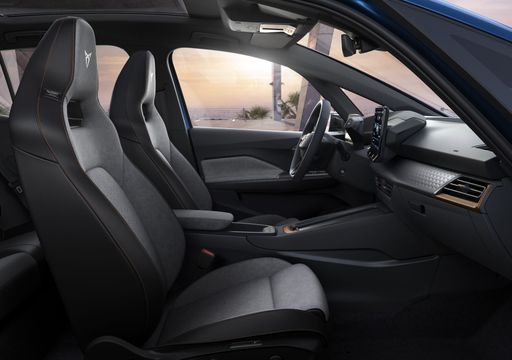
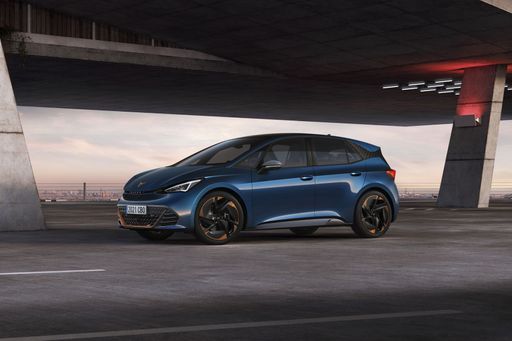
In the styling department, the CUPRA Born showcases a sleek hatchback design that combines sporty aesthetics with modern appeal. With a length of 4324 mm, width of 1809 mm, and height of 1540 mm, it offers ample space for five passengers and sets an aggressive stance on the road.

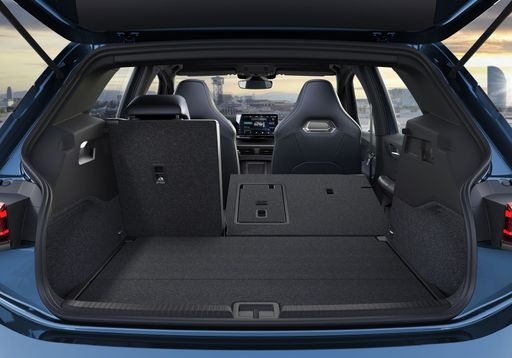
The MINI Aceman, classified as an SUV, measures 4079 mm in length, 1754 mm in width, and 1514 mm in height. Its three-door format may limit accessibility compared to the Born, but it maintains a spacious interior among its compact design. The trunk capacity of 300 liters in the Aceman falls short of the CUPRA Born's 385 liters, which can be a critical factor for shoppers prioritizing storage space.

Born @ CUPRA / SEAT S.A.

Innovations and Technology

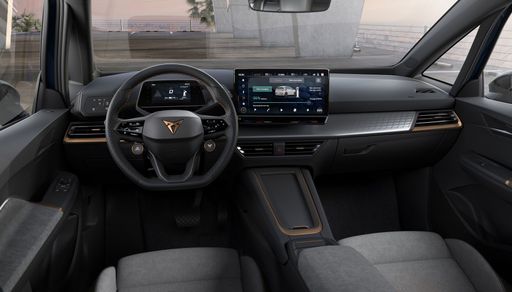
Modern innovations play a key role in differentiating these two electric vehicles. The CUPRA Born is equipped with a host of advanced tech features, including a digital cockpit, adaptive cruise control, and an array of connectivity options. Its emphasis on driver engagement and user-friendly interfaces set it apart in a crowded digital landscape.

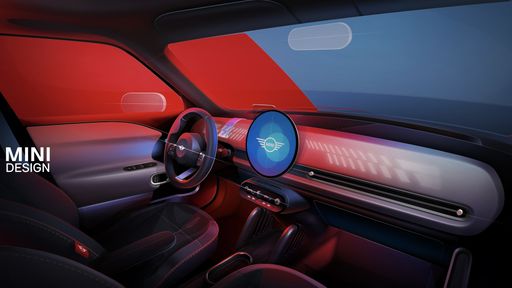
Meanwhile, the MINI Aceman is not to be outdone, offering its own set of impressive technologies. A premium sound system, infotainment display, and various driver assistance features enhance the driving experience, ensuring that the Aceman appeals to tech-savvy individuals who appreciate a premium feel in a compact SUV.

Aceman @ MINI / BMW Group Press

Conclusion: Which One Should You Choose?

Choosing between the CUPRA Born and the MINI Aceman ultimately comes down to personal preference and driving needs. The Born stands out with its powerful performance, extended electric range, and spacious interior, making it a solid option for those who are performance-oriented and engage in longer drives. In contrast, the Aceman offers a stylish SUV alternative with impressive efficiency, innovative technology, and a fun driving experience suited for urban endeavors.

Whichever you choose, both vehicles represent the thrilling future of electric mobility, blending practicality with excitement for the modern driver.

Here’s where it gets real: The technical differences in detail

Born @ CUPRA / SEAT S.A.

Costs and Efficiency:

Price and efficiency are often the first things buyers look at. Here it becomes clear which model has the long-term edge – whether at the pump, the plug, or in purchase price.

MINI Aceman has a clearly perceptible advantage in terms of price – it starts at 25500 £, while the CUPRA Born costs 34700 £. That’s a price difference of around 9214 £.

In terms of energy consumption, the advantage goes to the MINI Aceman: with 14 kWh per 100 km, it’s barely noticeable more efficient than the CUPRA Born with 14.90 kWh. That’s a difference of about 0.90 kWh.

As for range, the CUPRA Born performs noticeable better – achieving up to 594 km, about 189 km more than the MINI Aceman.

Engine and Performance:

Power, torque and acceleration are the classic benchmarks for car enthusiasts – and here, some clear differences start to show.

When it comes to engine power, the CUPRA Born has a noticeable edge – offering 326 HP compared to 258 HP. That’s roughly 68 HP more horsepower.

In acceleration from 0 to 100 km/h, the CUPRA Born is to a small extent quicker – completing the sprint in 5.60 s, while the MINI Aceman takes 6.40 s. That’s about 0.80 s faster.

There’s no difference in top speed – both reach 200 km/h.

There’s also a difference in torque: CUPRA Born pulls distinct stronger with 545 Nm compared to 350 Nm. That’s about 195 Nm difference.

Space and Everyday Use:

Beyond pure performance, interior space and usability matter most in daily life. This is where you see which car is more practical and versatile.

Both vehicles offer seating for 5 people.

In curb weight, MINI Aceman is slight lighter – 1720 kg compared to 1828 kg. The difference is around 108 kg.

In terms of boot space, the CUPRA Born offers noticeable more room – 385 L compared to 300 L. That’s a difference of about 85 L.

In maximum load capacity, the CUPRA Born performs noticeable better – up to 1267 L, which is about 262 L more than the MINI Aceman.

When it comes to payload, MINI Aceman to a small extent takes the win – 530 kg compared to 452 kg. That’s a difference of about 78 kg.

Who wins the race?

The CUPRA Born proves to be outperforms in nearly all aspects and therefore becomes our DriveDuel Champion!
CUPRA Born is the better all-rounder in this comparison.

from about £34,700
Born @ CUPRA / SEAT S.A.

CUPRA Born

  • Engine Type : Electric
  • Transmission : Automatic
  • Drive Type : Rear-Wheel Drive
  • Power HP : 204 - 326 HP
  • Consumption kWh/100km : 14.9 - 16 kWh
  • Electric Range : 427 - 594 km

CUPRA Born

The CUPRA Born blends sharp, athletic styling with a playful electric character, delivering hatchback agility and hot-hatch attitude whether you're darting through the city or cruising the open road. Inside, the cabin punches above its weight with smart materials and practical space, making it a compelling pick for buyers who want electric motoring without surrendering the grin.

details

MINI Aceman

The MINI Aceman offers a fresh take on urban mobility, blending iconic design elements with modern technology. Its compact form is paired with an interior that exudes both comfort and style, making it a popular choice for city drivers. With an emphasis on sustainability, the Aceman features eco-friendly materials and innovative features that enhance the driving experience.

details
CUPRA Born
MINI Aceman
Born @ CUPRA / SEAT S.A.
Aceman @ MINI / BMW Group Press

Costs and Consumption

Price
34700 - 45300 £
Price
25500 - 36200 £
Consumption L/100km
-
Consumption L/100km
-
Consumption kWh/100km
14.9 - 16 kWh
Consumption kWh/100km
14 - 16 kWh
Electric Range
427 - 594 km
Electric Range
303 - 405 km
Battery Capacity
60 - 79 kWh
Battery Capacity
38.5 - 49.2 kWh
co2
0 g/km
co2
0 g/km
Fuel tank capacity
-
Fuel tank capacity
-

Dimensions and Body

Body Type
Hatchback
Body Type
SUV
Seats
5
Seats
5
Doors
5
Doors
5
Curb weight
1828 - 1999 kg
Curb weight
1720 - 1825 kg
Trunk capacity
385 L
Trunk capacity
300 L
Length
4324 mm
Length
4079 mm
Width
1809 mm
Width
1754 mm
Height
1540 mm
Height
1514 mm
Max trunk capacity
1267 L
Max trunk capacity
1005 L
Payload
431 - 452 kg
Payload
450 - 530 kg

Engine and Performance

Engine Type
Electric
Engine Type
Electric
Transmission
Automatic
Transmission
Automatic
Transmission Detail
Reduction Gearbox
Transmission Detail
Reduction Gearbox
Drive Type
Rear-Wheel Drive
Drive Type
Front-Wheel Drive
Power HP
204 - 326 HP
Power HP
184 - 258 HP
Acceleration 0-100km/h
5.6 - 7.7 s
Acceleration 0-100km/h
6.4 - 7.9 s
Max Speed
160 - 200 km/h
Max Speed
160 - 200 km/h
Torque
265 - 545 Nm
Torque
290 - 350 Nm
Number of Cylinders
-
Number of Cylinders
-
Power kW
150 - 240 kW
Power kW
135 - 190 kW
Engine capacity
-
Engine capacity
-

General

Model Year
2024 - 2025
Model Year
2024 - 2025
CO2 Efficiency Class
A
CO2 Efficiency Class
A
Brand
CUPRA
Brand
MINI
What drivetrain options does the CUPRA Born have?

The CUPRA Born is available as Rear-Wheel Drive.

The prices and data displayed are estimates based on German list prices and may vary by country. This information is not legally binding.