VS

DS Automobiles DS 7 vs Lynk & Co 01 comparison

Compare performance (130 HP vs 280 HP), boot space and price (41,900 £ vs 36,900 £ ) at a glance. Find out which car is the better choice for you – DS Automobiles DS 7 or Lynk & Co 01?

DS Automobiles DS 7 vs Lynk & Co 01: Key differences

DS Automobiles DS 7

5 (1 Reviews)
rate
  • moderately lighter
  • somewhat more trunk space

Lynk & Co 01

4.8 (3 Reviews)
rate
  • slightly cheaper
  • clearly more power
  • considerably more efficient
  • considerably quicker 0–100 km/h

All details on performance, efficiency, range and trunk space can be found in the technical comparison below – including user reviews for both models.

By Achim Sedelmaier

DS 7

DS 7 Crossback vs Lynk & Co 01: A Battle of Innovation and Style

In the expanding universe of SUVs, two vehicles have caught the eye of automotive enthusiasts and professionals alike: the DS Automobiles DS 7 Crossback and the Lynk & Co 01. Both vehicles not only boast impressive technical prowess but also represent the forefront of their respective brands' innovations. Here, we delve into the distinguishing features that set them apart in a crowded segment.
01

Dynamic Powertrain and Efficiency

The DS 7 Crossback offers a range of engine options, including both diesel and plug-in hybrid variants, catering to diverse customer needs. With power outputs ranging from 130 to 360 HP and maximum speeds from 195 to 235 km/h, the DS 7 Crossback provides versatility whether you’re after efficiency or performance. Its plug-in hybrid versions are particularly noteworthy, delivering an impressive electric range of up to 65 km thanks to a 12.9 kWh battery, and a remarkably low consumption rate between 1.3 to 1.9 L/100km.

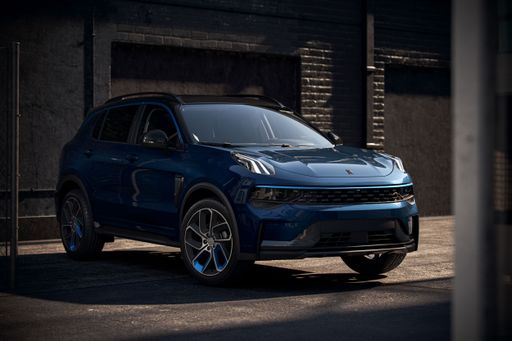
On the other side of the spectrum, the Lynk & Co 01 surfaces as a compelling plug-in hybrid option, offering a slightly higher electric range at 75 km with a 14.1 kWh battery. The 01. Golf variant of this model achieves up to 276 HP and a maximum speed of 210 km/h, affirming it as a formidable choice in terms of acceleration and output. Remarkably, it features a low fuel consumption rate of just 0.9 to 1 L/100km, spearheading efficiency in hybrid technology.

DS 7

Design and Spatial Practicality

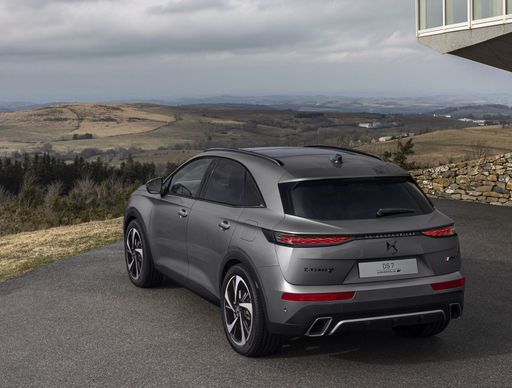
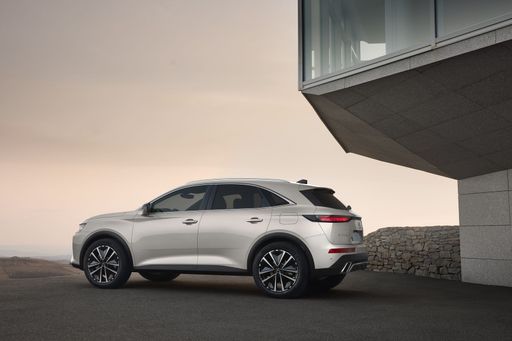
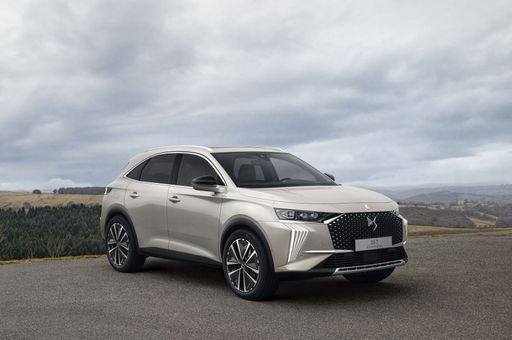
The DS 7 Crossback showcases a distinct blend of French elegance and robustness, standing at 4593 mm in length and boasting a trunk capacity of 555 L, which ensures ample space for all your traveling essentials. The vehicle supports a payload between 398 and 424 kg, demonstrating a balanced combination of practicality and style.

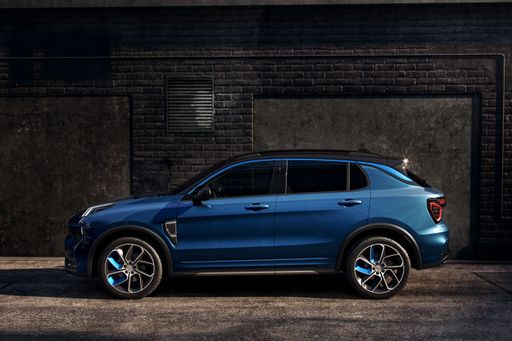
With Lynk & Co 01 measuring slightly shorter at up to 4545 mm in length and offering a trunk capacity of 466 L, it perfectly accommodates both urban and adventurous lifestyles. The sleek lines combined with inventive design elements embody a modern aesthetic, appealing to the tech-savvy consumer.

01

Performance, Drive, and Comfort

Performance-wise, the DS 7 Crossback provides a smooth and adaptable driving experience. Its choice of front-wheel and all-wheel drive configurations, coupled with an automatic gearbox, ensures superior handling and comfort across varied terrains. The car’s substantial torque, ranging up to 520 Nm, empowers its dynamic driving capabilities.

The Lynk & Co 01 shines with its dual-clutch automatic transmission, guaranteeing a responsive and energetic drive. With a torque limit reaching 535 Nm, it delivers powerful acceleration and driving dynamics. Front-wheel drive further augments its urban maneuverability and overall drive comfort.

DS 7

Environmental Considerations

Both models place significant emphasis on reducing emissions and enhancing fuel efficiency. The DS 7 Crossback's CO2 emissions range broadly from 30 to 145 g/km, aligning with various powertrain configurations. The Lynk & Co 01, consistently categorized under a CO2 Efficiency Class of B, boasts impressively lower emissions at 20 to 24 g/km, showcasing its commitment to environmentally conscious engineering.

01

Innovation and Future-Ready Features

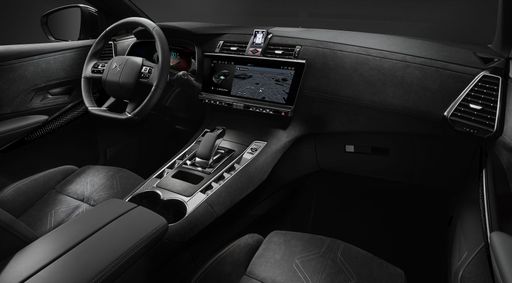
While both vehicles incorporate cutting-edge technology to enhance the driving experience, their unique attributes reflect their brand identities. The DS 7 Crossback combines luxury with state-of-the-art technological advancements, delivering a refined and engaging drive experience. Lynk & Co 01 leverages its innovative methodology by integrating connectivity and user-centric features, appealing to a progressive audience.

In conclusion, choosing between the DS 7 Crossback and the Lynk & Co 01 involves weighing various priorities such as power, eco-friendliness, and technological features. Both models offer compelling cases for their purchase, marked by unique innovations and comprehensive spec sheets. Therefore, whether favoring French chic or Swedish innovation, drivers are guaranteed a ride worthy of their preferences and lifestyles.

Here’s where it gets real: The technical differences in detail

DS 7

Costs and Efficiency:

Looking at overall running costs, both models reveal some interesting differences in everyday economy.

Lynk & Co 01 is slightly cheaper – starting at 36,900 £ , while the DS Automobiles DS 7 costs 41,900 £ . That’s a price difference of around 5,070 £.

Fuel consumption also shows a difference: the Lynk & Co 01 uses 0.9 L/100km and is considerably more efficient than the DS Automobiles DS 7 with 5.5 L/100km. The difference is about 4.6 L/100km.

01

Engine and Performance:

Under the bonnet, it becomes clear which model is tuned for sportiness and which one takes the lead when you hit the accelerator.

When it comes to engine power, the Lynk & Co 01 offers clearly more power – delivering 280 HP compared to 130 HP. That’s roughly 150 HP more horsepower.

When accelerating from 0 to 100 km/h, the Lynk & Co 01 is considerably quicker – completing the sprint in 7.7 s, while the DS Automobiles DS 7 takes 11.9 s. That’s about 4.2 s quicker.

There’s also a difference in torque: the Lynk & Co 01 delivers substantially more torque with 535 Nm compared to 300 Nm. That’s about 235 Nm more.

DS 7

Space and Everyday Use:

Beyond pure performance, interior space and usability matter most in daily life. This is where you see which car is more practical and versatile.

Both vehicles offer seating for 5 people.

In terms of curb weight, DS Automobiles DS 7 is moderately lighter – 1,651 kg compared to 1,935 kg. The difference is around 284 kg.

Looking at boot space, the DS Automobiles DS 7 offers somewhat more boot space – 555 L compared to 466 L. That’s a difference of about 89 L.

When it comes to payload, the Lynk & Co 01 carries only slightly more – 415 kg compared to 399 kg. That’s a difference of about 16 kg.

Who wins the race in the data check?

The Lynk & Co 01 stands well ahead of its rival in the objective data comparison.
This result only shows which model scores more points on paper – not which of the two cars feels right for you.

from £36,900
01

Lynk & Co 01

  • Engine Type : Plugin Hybrid
  • Transmission : Automatic
  • Drive Type : Front-Wheel Drive
  • Power HP : 280 HP
  • Consumption L/100km : 0.9 L/100km
  • Electric Range : 75 km
DS Automobiles DS 7
Lynk & Co 01

Costs and Consumption

View detailed analysis

Engine and Performance

View detailed analysis

Dimensions and Body

View detailed analysis

DS Automobiles DS 7

The DS 7 wraps Parisian elegance into SUV practicality, with sculpted surfaces, a jewel-like grille and an interior that feels more boutique lounge than family transporter. It appeals to buyers who want style and comfort without shouting, delivering a refined ride and clever tech that make daily driving feel a little more special — and yes, it’ll turn heads in the school run.

details

Lynk & Co 01

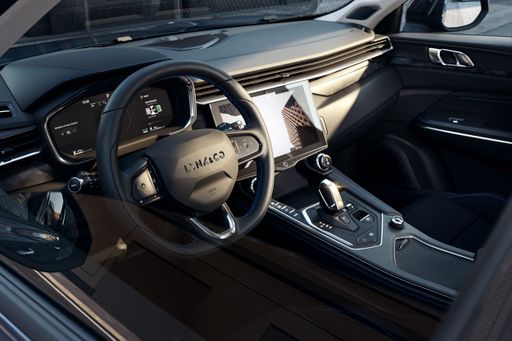
The Lynk & Co 01 marries bold, contemporary styling with a roomy, well-appointed cabin, striking a rare balance between fashionable flair and everyday practicality. With intuitive tech, flexible ownership ideas and a playful driving character, it’s the kind of crossover that turns heads at the lights and keeps owners grinning on the commute.

details
DS Automobiles DS 7
Lynk & Co 01

Costs and Consumption

Price
41,900 - 46,100 £
Price
36,900 - 40,300 £
Consumption L/100km
5.5 L/100km
Consumption L/100km
0.9 L/100km
Consumption kWh/100km
-
Consumption kWh/100km
-
Electric Range
-
Electric Range
75 km
Battery Capacity
-
Battery Capacity
-
co2
145 g/km
co2
20 g/km
Fuel tank capacity
-
Fuel tank capacity
-

Dimensions and Body

Body Type
SUV
Body Type
SUV
Seats
5
Seats
5
Doors
-
Doors
-
Curb weight
1,651 kg
Curb weight
1,935 kg
Trunk capacity
555 L
Trunk capacity
466 L
Length
-
Length
-
Width
1,891 mm
Width
1,860 mm
Height
-
Height
-
Max trunk capacity
-
Max trunk capacity
-
Payload
399 kg
Payload
415 kg

Engine and Performance

Engine Type
Diesel
Engine Type
Plugin Hybrid
Transmission
Automatic
Transmission
Automatic
Transmission Detail
Automatic Gearbox
Transmission Detail
Automatic Gearbox
Drive Type
Front-Wheel Drive
Drive Type
Front-Wheel Drive
Power HP
130 HP
Power HP
280 HP
Acceleration 0-100km/h
11.9 s
Acceleration 0-100km/h
7.7 s
Max Speed
-
Max Speed
-
Torque
300 Nm
Torque
535 Nm
Number of Cylinders
4
Number of Cylinders
4
Power kW
96 kW
Power kW
206 kW
Engine capacity
1,499 cm3
Engine capacity
1,499 cm3

General

Model Year
2,025
Model Year
2,024
CO2 Efficiency Class
E
CO2 Efficiency Class
B
Brand
DS Automobiles
Brand
Lynk & Co
DriveDuel uses data analysis and artificial intelligence to evaluate vehicle data and create content. Content is regularly reviewed and improved. The displayed prices are estimates based on German list prices, adjusted to the respective country’s VAT. Country-specific registration taxes are not included. This information is not legally binding.