VS

BYD Seal U vs Lynk & Co 01 comparison

Compare performance (324 HP vs 280 HP), boot space and price (34,300 £ vs 36,900 £ ) at a glance. Find out which car is the better choice for you – BYD Seal U or Lynk & Co 01?

BYD Seal U vs Lynk & Co 01: Key differences

BYD Seal U

4.1 (8 Reviews)
rate
  • barely cheaper
  • moderately more power
  • significantly more electric range
  • visibly quicker 0–100 km/h
  • somewhat more trunk space
details

Lynk & Co 01

4.8 (4 Reviews)
rate
  • very slightly lighter
details

All details on performance, efficiency, range and trunk space can be found in the technical comparison below – including user reviews for both models.

By Achim Sedelmaier

Seal U

Head-to-head: BYD Seal U and Lynk & Co 01

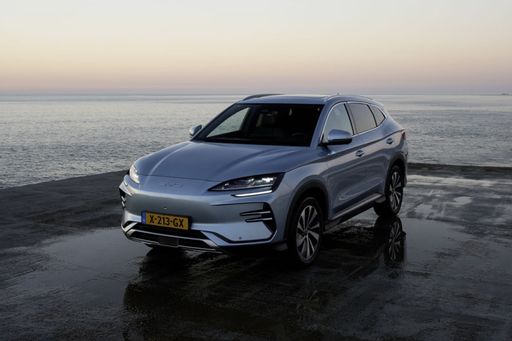
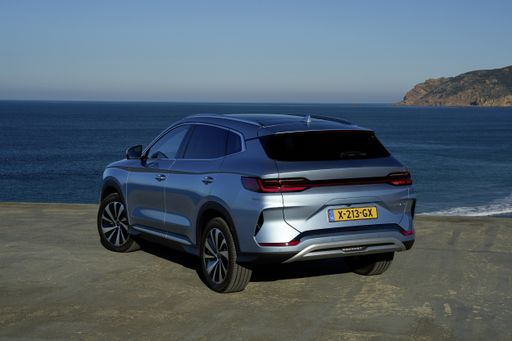
BYD Seal U VS Lynk & Co 01 brings together two very different ideas of what a modern compact SUV should be: the BYD Seal U leans into comfort, kit and an electric-first mindset, while the Lynk & Co 01 plays the practical, family‑friendly PHEV card with a Scandinavian‑leaning interior. The Seal U feels like a spec-led value proposition, packing tech and safety features that give a reassuring sense of equipment for the money. The Lynk & Co 01 instead trades some gadget volume for clearer rear‑seat space and a more predictable chassis tone. In short, one prioritises plush everyday cruising and long electric miles, the other prioritises rear‑seat usability and steady, easy-to-live-with behavior for families and repeat commuters.
01

Character and driving feel

The BYD Seal U presents a soft, composed personality on long runs — it soaks up bumps and invites relaxed motorway cruising but can feel floaty and indifferent when you try to hustle. The Lynk & Co 01 is the contrast: firmer and more controlled, with steering that communicates more and a body that resists roll, so drivers who value predictability will prefer it. That difference matters on twisty country roads and during city manoeuvres, where the Seal U forgives imperfections but the 01 rewards precise inputs. If you prioritise relaxed silence and plush isolation choose the Seal U; if you want a car that tells you what it’s doing choose the Lynk & Co 01.

Seal U

Cabin feel, materials and tech

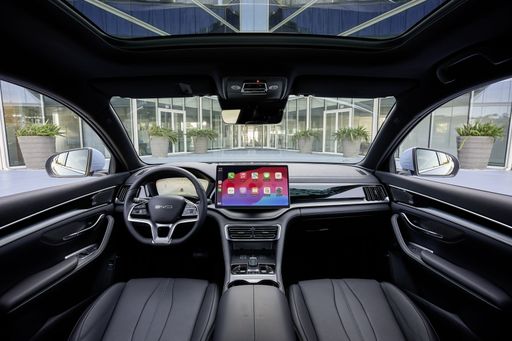
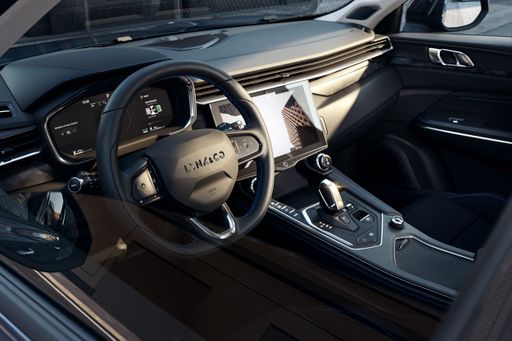
Inside, the BYD Seal U leans on spectacle: a rotating central screen, generous standard equipment and useful safety tech create an immediate impression of value and modernity. The Lynk & Co 01 offers a cleaner, more restrained cabin with materials and finishes that feel a touch closer to premium, and its infotainment supports wireless phone mirroring for a fuss‑free daily routine. Both suffer from nested menus and touch‑heavy control logic, but the Seal U’s hardware and camera clarity often feel more showy, whereas the 01’s layout feels quietly competent. Buyers who care about perceived quality and tactile surfaces will tilt toward the Lynk & Co 01; those who want headline tech and visible kit will find more to like in the BYD.

01

Practicality and family usability

For family buyers, the two take different approaches: the Lynk & Co 01 delivers very generous rear‑seat space and straightforward child seat anchoring that makes day‑to‑day parenting easier. The BYD Seal U also offers good rear legroom and family‑friendly touches, but its boot and load solutions are less intuitive for heavy luggage use, and flexible storage doesn’t always produce big gains. Loading and unloading is a clearer pain point on the Lynk & Co 01 because of a high rear lip and a fixed parcel shelf, while the Seal U’s lower sill and practical touches can feel more convenient despite less outright cubic space. If school runs and child seats dominate your life, the Lynk & Co 01 will likely be the more sensible daily companion; if you want easy handling of odd‑shaped loads and gadgetry, the BYD has the edge.

Seal U

Long-distance behavior and energy use

On long trips the BYD Seal U wants to be treated like a quiet cruiser: it rewards steady motorway miles with a calm cabin and, in electrified form, a true emphasis on electric range that cuts fuel stops for many drivers. The Lynk & Co 01 is optimized for frequent charging to realise its efficiency promise — when you keep the battery topped the 01 is economical and composed, but with a drained battery its consumption climbs and fuel stops become more frequent. Buyers who expect long stretches without reliable charging will notice the Seal U’s greater electric focus reduces operating cost and stops, while those with consistent access to a charger will appreciate the 01’s predictable mixed‑use efficiency. Also consider charging behaviour: BYD’s PHEV drain/charge characteristics and charging speeds influence real‑world trip planning more than headline specs suggest.

01

Buyer fit and the trade-offs to weigh

Choosing between the BYD Seal U and the Lynk & Co 01 comes down to how you prioritise comfort versus rear‑seat practicality and charging habits. The BYD Seal U suits buyers seeking maximum equipment, a quieter long‑distance ride and strong electric capability out of the gate, especially if you can charge regularly at home. The Lynk & Co 01 is better for families who put rear passenger space, easy child‑seat use and a predictable chassis above headline tech, provided you accept its load lip and want to sustain a regular charging routine. Both make convincing cases for different lives — if you want the nitty‑gritty performance, range and boot details, the technical comparison that follows will show how those real‑world differences map to spec and numbers.

Here’s where it gets real: The technical differences in detail

Seal U

Costs and Efficiency:

Looking at overall running costs, both models reveal some interesting differences in everyday economy.

BYD Seal U is barely cheaper – starting at 34,300 £ , while the Lynk & Co 01 costs 36,900 £ . That’s a price difference of around 2,575 £.

As for electric range, the BYD Seal U offers significantly more range – reaching up to 500 km, about 425 km more than the Lynk & Co 01.

01

Engine and Performance:

Power, torque and acceleration are the classic benchmarks for car enthusiasts – and here, some clear differences start to show.

When it comes to engine power, the BYD Seal U offers moderately more power – delivering 324 HP compared to 280 HP. That’s roughly 44 HP more horsepower.

When accelerating from 0 to 100 km/h, the BYD Seal U is visibly quicker – completing the sprint in 5.9 s, while the Lynk & Co 01 takes 7.7 s. That’s about 1.8 s quicker.

There’s also a difference in torque: the BYD Seal U delivers barely more torque with 550 Nm compared to 535 Nm. That’s about 15 Nm more.

Seal U

Space and Everyday Use:

Cabin size, boot volume and payload all play a role in everyday practicality. Here, comfort and flexibility make the difference.

Both vehicles offer seating for 5 people.

In terms of curb weight, Lynk & Co 01 is very slightly lighter – 1,935 kg compared to 1,940 kg. The difference is around 5 kg.

Looking at boot space, the BYD Seal U offers somewhat more boot space – 552 L compared to 466 L. That’s a difference of about 86 L.

When it comes to payload, the Lynk & Co 01 carries very slightly more – 415 kg compared to 410 kg. That’s a difference of about 5 kg.

Who wins the race in the data check?

The BYD Seal U is far ahead overall in the objective data comparison.
This result only shows which model scores more points on paper – not which of the two cars feels right for you.

from £34,300
Seal U

BYD Seal U

  • Engine Type Electric, Plugin Hybrid
  • Transmission Automatic
  • Drive Type Front-Wheel Drive, All-Wheel Drive
  • Power HP 218 - 324 HP
  • Consumption kWh/100km 12.1 - 20.5 kWh/100km
  • Electric Range 70 - 500 km
BYD Seal U
Lynk & Co 01

Costs and Consumption

View detailed analysis

Engine and Performance

View detailed analysis

Dimensions and Body

View detailed analysis

BYD Seal U

The BYD Seal U is a sleek electric fastback that blends sporty styling with a roomy, tech-focused interior, making it an appealing choice for buyers who want electric performance without sacrificing comfort. It delivers a smooth, composed ride and intuitive features, positioning it as a practical yet modern option in the EV market.

details

Lynk & Co 01

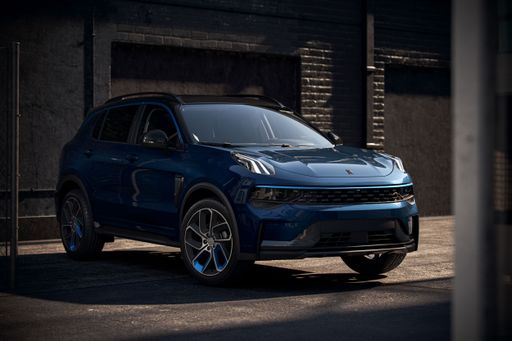
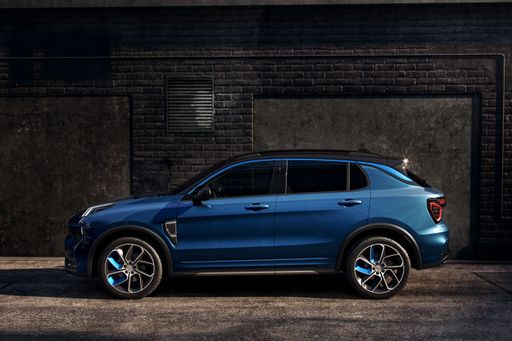
The Lynk & Co 01 marries bold, contemporary styling with a roomy, well-appointed cabin, striking a rare balance between fashionable flair and everyday practicality. With intuitive tech, flexible ownership ideas and a playful driving character, it’s the kind of crossover that turns heads at the lights and keeps owners grinning on the commute.

details
BYD Seal U
Lynk & Co 01

Costs and Consumption

Price
34,300 - 39,800 £
Price
36,900 - 40,300 £
Consumption L/100km
-
Consumption L/100km
0.9 L/100km
Consumption kWh/100km
12.1 - 20.5 kWh/100km
Consumption kWh/100km
-
Electric Range
70 - 500 km
Electric Range
75 km
Battery Capacity
-
Battery Capacity
-
co2
0 - 71 g/km
co2
20 g/km
Fuel tank capacity
-
Fuel tank capacity
-

Dimensions and Body

Body Type
SUV
Body Type
SUV
Seats
5
Seats
5
Doors
-
Doors
-
Curb weight
1,940 - 2,147 kg
Curb weight
1,935 kg
Trunk capacity
425 - 552 L
Trunk capacity
466 L
Length
-
Length
-
Width
1,890 mm
Width
1,860 mm
Height
-
Height
-
Max trunk capacity
-
Max trunk capacity
-
Payload
410 kg
Payload
415 kg

Engine and Performance

Engine Type
Electric, Plugin Hybrid
Engine Type
Plugin Hybrid
Transmission
Automatic
Transmission
Automatic
Transmission Detail
Reduction Gearbox, Automatic Gearbox
Transmission Detail
Automatic Gearbox
Drive Type
Front-Wheel Drive, All-Wheel Drive
Drive Type
Front-Wheel Drive
Power HP
218 - 324 HP
Power HP
280 HP
Acceleration 0-100km/h
5.9 - 9.6 s
Acceleration 0-100km/h
7.7 s
Max Speed
-
Max Speed
-
Torque
300 - 550 Nm
Torque
535 Nm
Number of Cylinders
4
Number of Cylinders
4
Power kW
160 - 238 kW
Power kW
206 kW
Engine capacity
1,497 - 1,498 cm3
Engine capacity
1,499 cm3

General

Model Year
2,024 - 2,026
Model Year
2024
CO2 Efficiency Class
A, B
CO2 Efficiency Class
B
Brand
BYD
Brand
Lynk & Co
DriveDuel uses data analysis and artificial intelligence to evaluate vehicle data and create content. Content is regularly reviewed and improved. The displayed prices are estimates based on German list prices, adjusted to the respective country’s VAT. Country-specific registration taxes are not included. This information is not legally binding.