VS

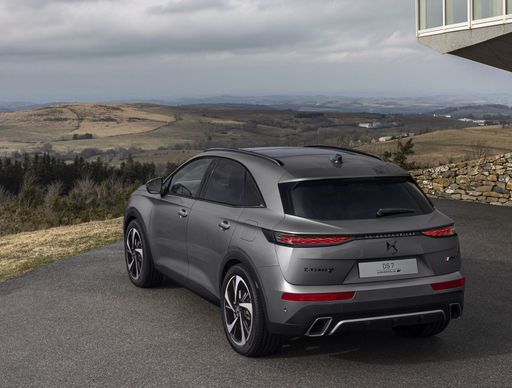
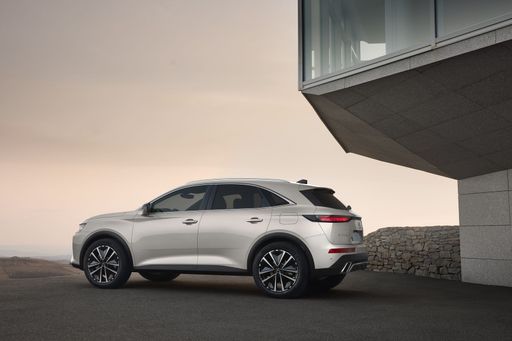
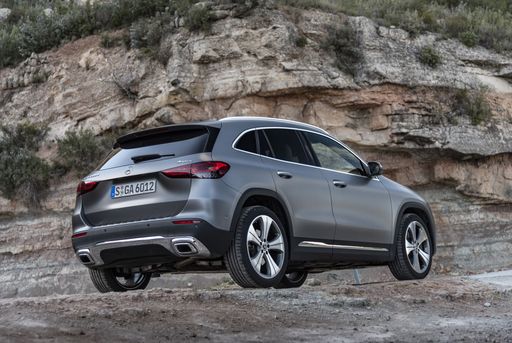
DS Automobiles DS 7 vs Mercedes GLA comparison

Compare performance (130 HP vs 421 HP), boot space and price (41,900 £ vs 38,800 £ ) at a glance. Find out which car is the better choice for you – DS Automobiles DS 7 or Mercedes GLA?

DS Automobiles DS 7 vs Mercedes GLA: Key differences

DS Automobiles DS 7

5 (1 Reviews)
rate
  • markedly more trunk space
details

Mercedes GLA

4.5 (4 Reviews)
rate
  • very slightly cheaper
  • substantially more power
  • substantially more efficient
  • significantly quicker 0–100 km/h
  • marginally lighter
details

All details on performance, efficiency, range and trunk space can be found in the technical comparison below – including user reviews for both models.

By Achim Sedelmaier

DS 7

The New Contenders in the SUV Arena

In the ever-competitive world of luxury SUVs, two names are making waves—the DS Automobiles DS 7 Crossback and the Mercedes GLA. Both vehicles promise exceptional features and cutting-edge technology that aim to attract drivers seeking both style and substance. But how do they truly stack up against each other? Let’s dive into the technical intricacies and innovations offered by these two remarkable vehicles.
GLA

Under the Hood: Power and Performance

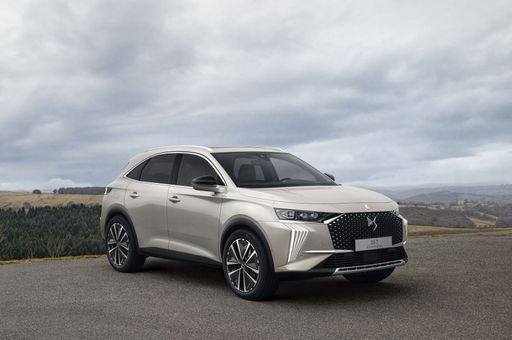
The DS 7 Crossback offers a range of power options with its engines that include diesel and plug-in hybrid choices. The horsepower varies from a modest 130 HP in its diesel version to an impressive 360 HP in the high-end plug-in hybrid variant. This diverse engine lineup covers a broad array of needs, whether it's city navigation or high-speed adventures. With front-wheel-drive and all-wheel-drive options, flexibility is at the forefront.

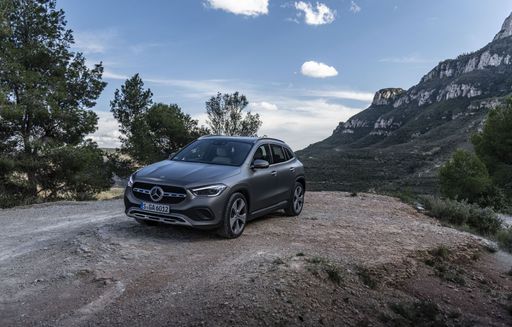
In comparison, the Mercedes GLA presents a wider array of power options, ranging from 150 HP to a fiery 421 HP in its AMG variant. It benefits from petrol MHEV, diesel, and plug-in hybrid engines, ensuring that no matter your preference, there’s a GLA to suit. The GLA also features dual-clutch automatic transmission, promising smooth shifting and a sporty drive.

DS 7

Performance Metrics

Acceleration from 0 to 100 km/h is another focal point for performance enthusiasts. The DS 7 Crossback clocks in times ranging from 11.9 seconds in the base diesel model to a thrilling 5.7 seconds in the most potent hybrid. Meanwhile, the Mercedes GLA offers a more aggressive spectrum, starting at 10 seconds and accelerating up to a breakneck 4.3 seconds in its sportiest variant.

As for maximum speed, the DS 7 Crossback peaks between 195 km/h to 235 km/h. The GLA, however, stretches its legs further, topping out at speeds between 200 km/h to 270 km/h, thanks once again to its AMG model.

GLA

Efficiency and Environmental Impact

For the eco-conscious, efficiency and CO2 emissions are vital considerations. The DS 7 Crossback boasts a consumption range from a minimal 1.3 L/100 km in its plug-in hybrids to 5.5 L/100 km in diesel, with CO2 emissions as low as 30 g/km. The GLA isn't too far behind with its plug-in hybrids consuming 1.0 L/100 km and emitting only 23 g/km of CO2, offering a slight edge in eco-efficiency.

DS 7

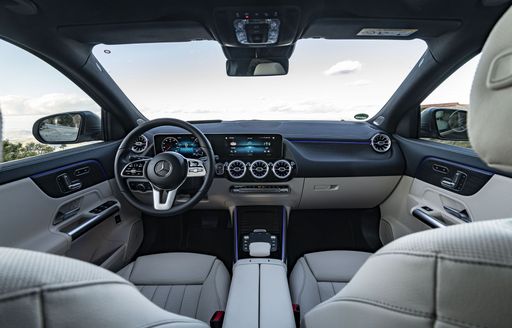
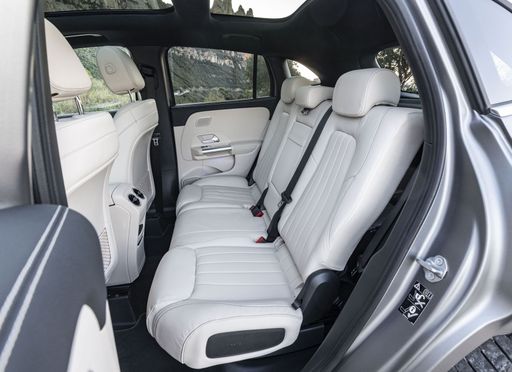
Interior Comfort and Practicality

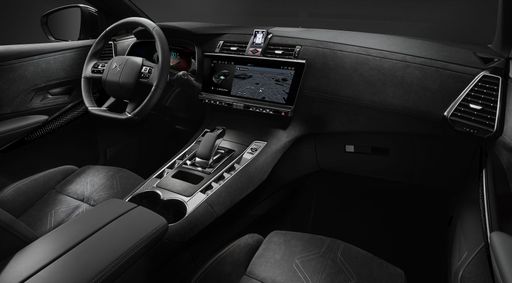
Space and interior luxury are equally matched in these contenders. Both come equipped with seating for five and feature elegant interiors replete with modern tech and premium materials. However, the DS 7 Crossback offers a slightly more generous trunk capacity at 555 liters, compared to the GLA's maximum 435 liters—making it the better choice for drivers who frequently haul large cargo.

GLA

Dimensions and Design Philosophy

In terms of size, the DS 7 Crossback stretches out to a length of 4593 mm compared to the GLA's maximum 4443 mm, offering a more dominant road presence. The DS Automobiles' model also practices a lavish design approach with its distinct French flair, while the GLA maintains a slightly more conservative but undoubtedly elegant German aesthetic.

DS 7

Conclusion: Luxury and Performance Tailored to Taste

Deciding between the DS 7 Crossback and Mercedes GLA ultimately boils down to personal preference, with each model offering unique strengths. The DS 7 Crossback is ideal for those who crave versatility, French luxury, and impressive cargo space. Meanwhile, the Mercedes GLA leans toward offering exhilarating performance, cutting-edge efficiency, and a broad spectrum of powertrains designed to captivate thrill-seekers. Whichever you choose, both SUVs are impressive demonstrations of automotive innovation in the luxury sector.

Here’s where it gets real: The technical differences in detail

DS 7

Costs and Efficiency:

Price and efficiency are often the first things buyers look at. Here it becomes clear which model has the long-term edge – whether at the pump, the plug, or in purchase price.

Mercedes GLA is very slightly cheaper – starting at 38,800 £ , while the DS Automobiles DS 7 costs 41,900 £ . That’s a price difference of around 3,086 £.

Fuel consumption also shows a difference: the Mercedes GLA uses 2.9 L/100km and is substantially more efficient than the DS Automobiles DS 7 with 5.5 L/100km. The difference is about 2.6 L/100km.

GLA

Engine and Performance:

Power, torque and acceleration say a lot about how a car feels on the road. This is where you see which model delivers more driving dynamics.

When it comes to engine power, the Mercedes GLA offers substantially more power – delivering 421 HP compared to 130 HP. That’s roughly 291 HP more horsepower.

When accelerating from 0 to 100 km/h, the Mercedes GLA is significantly quicker – completing the sprint in 4.3 s, while the DS Automobiles DS 7 takes 11.9 s. That’s about 7.6 s quicker.

There’s also a difference in torque: the Mercedes GLA delivers clearly more torque with 500 Nm compared to 300 Nm. That’s about 200 Nm more.

DS 7

Space and Everyday Use:

Beyond pure performance, interior space and usability matter most in daily life. This is where you see which car is more practical and versatile.

Both vehicles offer seating for 5 people.

In terms of curb weight, Mercedes GLA is marginally lighter – 1,570 kg compared to 1,651 kg. The difference is around 81 kg.

Looking at boot space, the DS Automobiles DS 7 offers markedly more boot space – 555 L compared to 435 L. That’s a difference of about 120 L.

When it comes to payload, the Mercedes GLA carries visibly more – 500 kg compared to 399 kg. That’s a difference of about 101 kg.

Who wins the race in the data check?

The Mercedes GLA is decisively ahead in the objective data comparison.
This result only shows which model scores more points on paper – not which of the two cars feels right for you.

from £38,800
GLA

Mercedes GLA

  • Engine Type : Petrol MHEV, Plugin Hybrid, Diesel, Petrol
  • Transmission : Automatic
  • Drive Type : Front-Wheel Drive, All-Wheel Drive
  • Power HP : 116 - 421 HP
  • Consumption L/100km : 2.9 - 9.5 L/100km
  • Electric Range : 74 km
DS Automobiles DS 7
Mercedes GLA

Costs and Consumption

View detailed analysis

Engine and Performance

View detailed analysis

Dimensions and Body

View detailed analysis

DS Automobiles DS 7

The DS 7 wraps Parisian elegance into SUV practicality, with sculpted surfaces, a jewel-like grille and an interior that feels more boutique lounge than family transporter. It appeals to buyers who want style and comfort without shouting, delivering a refined ride and clever tech that make daily driving feel a little more special — and yes, it’ll turn heads in the school run.

details

Mercedes GLA

The Mercedes GLA blends Mercedes style with compact crossover practicality, looking sharper than its size suggests while still feeling purposeful around town. Inside it serves up premium materials and tech-forward ergonomics, and the composed ride makes it an appealing pick for buyers who want luxury wrapped in a city-friendly package with a wink of adventurous spirit.

details
DS Automobiles DS 7
Mercedes GLA

Costs and Consumption

Price
41,900 - 46,100 £
Price
38,800 - 75,300 £
Consumption L/100km
5.5 L/100km
Consumption L/100km
2.9 - 9.5 L/100km
Consumption kWh/100km
-
Consumption kWh/100km
-
Electric Range
-
Electric Range
74 km
Battery Capacity
-
Battery Capacity
-
co2
145 g/km
co2
66 - 216 g/km
Fuel tank capacity
-
Fuel tank capacity
-

Dimensions and Body

Body Type
SUV
Body Type
SUV
Seats
5
Seats
5
Doors
-
Doors
-
Curb weight
1,651 kg
Curb weight
1,570 - 1,810 kg
Trunk capacity
555 L
Trunk capacity
385 - 435 L
Length
-
Length
-
Width
1,891 mm
Width
1,834 - 1,849 mm
Height
-
Height
-
Max trunk capacity
-
Max trunk capacity
-
Payload
399 kg
Payload
480 - 500 kg

Engine and Performance

Engine Type
Diesel
Engine Type
Petrol MHEV, Plugin Hybrid, Diesel, Petrol
Transmission
Automatic
Transmission
Automatic
Transmission Detail
Automatic Gearbox
Transmission Detail
Dual-Clutch Automatic
Drive Type
Front-Wheel Drive
Drive Type
Front-Wheel Drive, All-Wheel Drive
Power HP
130 HP
Power HP
116 - 421 HP
Acceleration 0-100km/h
11.9 s
Acceleration 0-100km/h
4.3 - 11 s
Max Speed
-
Max Speed
-
Torque
300 Nm
Torque
230 - 500 Nm
Number of Cylinders
4
Number of Cylinders
4
Power kW
96 kW
Power kW
85 - 310 kW
Engine capacity
1,499 cm3
Engine capacity
1,332 - 1,991 cm3

General

Model Year
2025
Model Year
2025
CO2 Efficiency Class
E
CO2 Efficiency Class
E, F, B, G
Brand
DS Automobiles
Brand
Mercedes-Benz
DriveDuel uses data analysis and artificial intelligence to evaluate vehicle data and create content. Content is regularly reviewed and improved. The displayed prices are estimates based on German list prices, adjusted to the respective country’s VAT. Country-specific registration taxes are not included. This information is not legally binding.