@ DS Automobiles / Stellantis Media
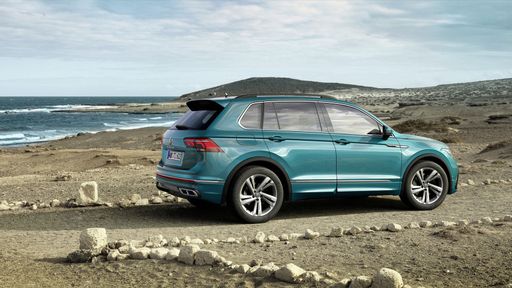
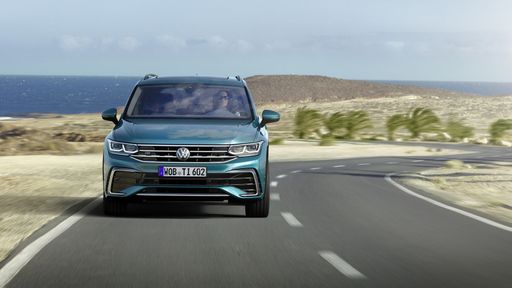
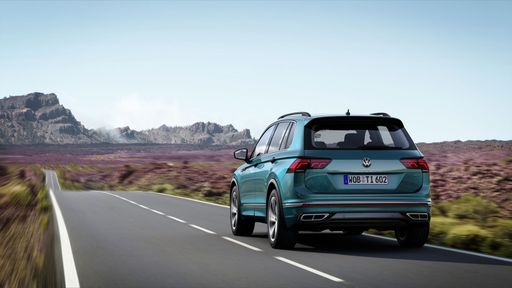
@ Volkswagen AG / VW Media
VS

DS Automobiles DS 7 vs VW Tiguan – Which car suits you better?

Everyday use, family trips or long-distance drives – here’s where the differences show.
Discover whether DS Automobiles DS 7 or VW Tiguan fits your lifestyle better.

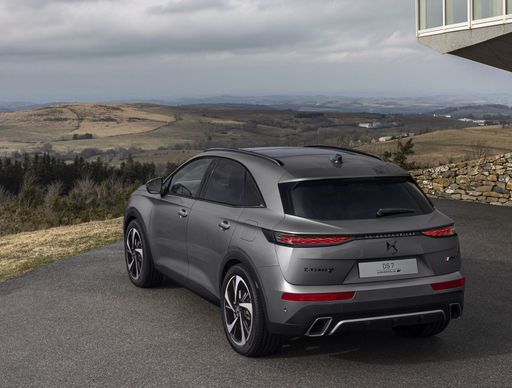
DS 7 @ DS Automobiles / Stellantis Media

Performance Showdown: DS 7 Crossback vs. VW Tiguan

When it comes to choosing a compact SUV, two names often emerge as frontrunners: the DS 7 Crossback and the VW Tiguan. As both models are synonymous with luxury, performance, and innovation, potential buyers might find it challenging to make a decision. Let's dive into a detailed comparison of the two to find out which vehicle stands out.
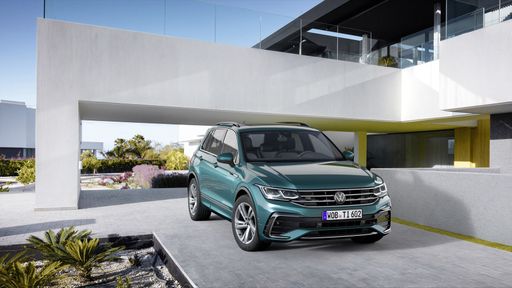
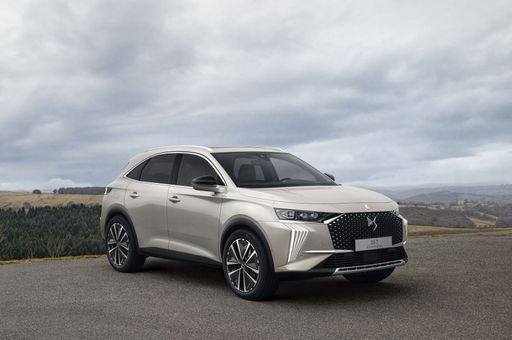
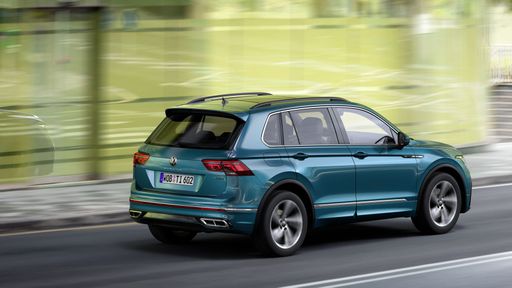
Tiguan @ Volkswagen AG / VW Media

Engine and Transmission

The DS 7 Crossback offers a range of engine options, including diesel and plug-in hybrid variants. Its power ranges from a modest 130 HP for its diesel variant to a robust 360 HP for the hybrid model, with a focus on efficiency and performance. The car boasts a smooth automatic gearbox available in both front-wheel and all-wheel drive, catering to a range of driving preferences and terrains.

On the other hand, the VW Tiguan comes with even more versatility in its engine lineup, with petrol, diesel, mild hybrid (MHEV), and plug-in hybrid options. The horsepower for the Tiguan ranges from 130 HP to an impressive 272 HP. Like the DS 7 Crossback, the Tiguan also features an automatic transmission, known for its quick shifts and efficient power delivery, available with front-wheel and all-wheel drive.

DS 7 @ DS Automobiles / Stellantis Media

Fuel Efficiency and Electric Range

In today's eco-conscious world, fuel efficiency is a significant factor. The DS 7 Crossback impresses with its plug-in hybrid variant consuming as little as 1.3 L/100km and offering an electric range between 57 and 65 km. With a battery capacity of 12.9 kWh, it provides ample power for short trips without reliance on internal combustion.

The VW Tiguan stands out with its plug-in hybrid showing an outstanding consumption rate of just 0.4 L/100km and an electric range of up to 113 km, thanks to its larger 19.7 kWh battery. This makes the Tiguan a strong contender for those prioritizing electric capability.

Tiguan @ Volkswagen AG / VW Media

Interior and Capacity

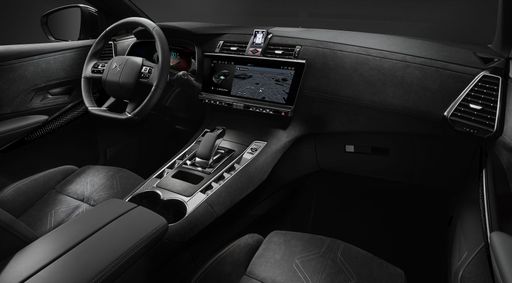
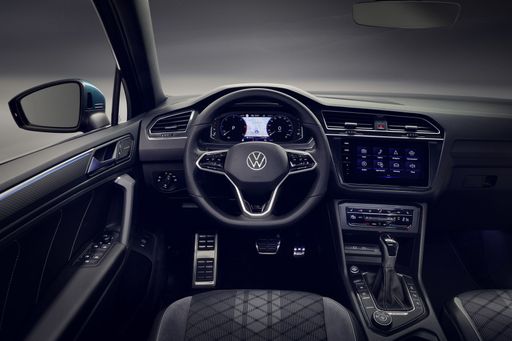
Stepping inside, the DS 7 Crossback exudes French luxury, with a spacious interior that comfortably seats five. It offers a trunk capacity of 555 liters, providing practical storage for family adventures.

The VW Tiguan is equally accommodating with a similar five-seat configuration but offers more storage space with a trunk capacity ranging up to 652 liters, making it ideal for those needing extra cargo room.

DS 7 @ DS Automobiles / Stellantis Media

Dimensions and Weight

The DS 7 Crossback measures 4593 mm in length, 1891 mm in width, and 1625 mm in height, with a curb weight reaching up to 2002 kg for certain models. This provides a balanced stance on the road, ensuring stability and control.

The Tiguan, slightly shorter at 4539 mm, offers varying widths and heights depending on the specific model but maximizes its interior space with clever design. Weighing in lighter at points, starting from 1598 kg, the Tiguan may offer better nimbleness in urban settings.

Tiguan @ Volkswagen AG / VW Media

Conclusion: Which SUV Reigns Supreme?

Both the DS 7 Crossback and the VW Tiguan deliver on multiple fronts, offering luxury, performance, and cutting-edge technology. The DS 7 Crossback appeals with its exquisite design and hybrid efficiency, making it ideal for those seeking a blend of style and eco-friendliness.

Meanwhile, the VW Tiguan offers more versatility in engine choices and superior electric range, coupled with more cargo space. It seems particularly suited for families who value practicality without sacrificing performance.

Ultimately, the choice between these two remarkable SUVs depends largely on personal needs and preferences. Whether it's the allure of French luxury or the comprehensive versatility of German engineering, both vehicles uphold their brand's reputation for excellence.

Here’s where it gets real: The technical differences in detail

DS 7 @ DS Automobiles / Stellantis Media

Costs and Efficiency:

When it comes to price and running costs, the biggest differences usually appear. This is often where you see which car fits your budget better in the long run.

VW Tiguan has a evident advantage in terms of price – it starts at 32800 £, while the DS Automobiles DS 7 costs 41900 £. That’s a price difference of around 9095 £.

Fuel consumption also shows a difference: DS Automobiles DS 7 manages with 1.30 L and is therefore slight more efficient than the VW Tiguan with 1.40 L. The difference is about 0.10 L per 100 km.

As for range, the VW Tiguan performs clearly better – achieving up to 126 km, about 61 km more than the DS Automobiles DS 7.

Tiguan @ Volkswagen AG / VW Media

Engine and Performance:

Power, torque and acceleration are the classic benchmarks for car enthusiasts – and here, some clear differences start to show.

When it comes to engine power, the DS Automobiles DS 7 has a clearly perceptible edge – offering 360 HP compared to 272 HP. That’s roughly 88 HP more horsepower.

In acceleration from 0 to 100 km/h, the DS Automobiles DS 7 is minimal quicker – completing the sprint in 5.70 s, while the VW Tiguan takes 5.90 s. That’s about 0.20 s faster.

In terms of top speed, the VW Tiguan performs barely noticeable better – reaching 242 km/h, while the DS Automobiles DS 7 tops out at 235 km/h. The difference is around 7 km/h.

There’s also a difference in torque: DS Automobiles DS 7 pulls clearly perceptible stronger with 520 Nm compared to 400 Nm. That’s about 120 Nm difference.

Space and Everyday Use:

Whether family car or daily driver – which one offers more room, flexibility and comfort?

Both vehicles offer seating for 5 people.

In curb weight, VW Tiguan is minimal lighter – 1599 kg compared to 1651 kg. The difference is around 52 kg.

In terms of boot space, the VW Tiguan offers slightly more room – 652 L compared to 555 L. That’s a difference of about 97 L.

In maximum load capacity, the DS Automobiles DS 7 performs minimal better – up to 1750 L, which is about 100 L more than the VW Tiguan.

When it comes to payload, VW Tiguan noticeable takes the win – 533 kg compared to 424 kg. That’s a difference of about 109 kg.

Who wins the race?

The VW Tiguan proves to be wins the duel decisively and therefore becomes our DriveDuel Champion!
VW Tiguan is the better all-rounder in this comparison.

from about £32,800
Tiguan @ Volkswagen AG / VW Media

VW Tiguan

  • Engine Type : Petrol, Petrol MHEV, Diesel, Plugin Hybrid
  • Transmission : Automatic
  • Drive Type : All-Wheel Drive, Front-Wheel Drive
  • Power HP : 130 - 272 HP
  • Consumption L/100km : 1.4 - 8.4 L
  • Electric Range : 118 - 126 km

DS Automobiles DS 7

5 (1)
rate

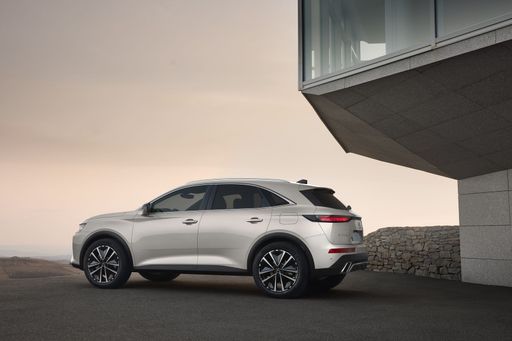
The DS 7 wraps Parisian elegance into SUV practicality, with sculpted surfaces, a jewel-like grille and an interior that feels more boutique lounge than family transporter. It appeals to buyers who want style and comfort without shouting, delivering a refined ride and clever tech that make daily driving feel a little more special — and yes, it’ll turn heads in the school run.

details

VW Tiguan

3.3 (3)
rate

The VW Tiguan blends sensible family practicality with a dash of German polish, delivering a calm, reassuring ride and a cabin that never feels like an afterthought. For buyers who want an SUV that’s easy to live with yet still nicely dressed, the Tiguan is the grown‑up choice that keeps a cheeky wink in reserve.

details
DS Automobiles DS 7
VW Tiguan
DS 7 @ DS Automobiles / Stellantis Media
Tiguan @ Volkswagen AG / VW Media

Costs and Consumption

Price
41900 - 59300 £
Price
32800 - 51900 £
Consumption L/100km
1.3 - 5.5 L
Consumption L/100km
1.4 - 8.4 L
Consumption kWh/100km
-
Consumption kWh/100km
-
Electric Range
50 - 65 km
Electric Range
118 - 126 km
Battery Capacity
12.90 kWh
Battery Capacity
19.70 kWh
co2
30 - 145 g/km
co2
32 - 190 g/km
Fuel tank capacity
43 - 55 L
Fuel tank capacity
45 - 58 L

Dimensions and Body

Body Type
SUV
Body Type
SUV
Seats
5
Seats
5
Doors
5
Doors
5
Curb weight
1651 - 2002 kg
Curb weight
1599 - 1890 kg
Trunk capacity
555 L
Trunk capacity
490 - 652 L
Length
4593 mm
Length
4539 mm
Width
1891 mm
Width
1842 - 1859 mm
Height
1625 mm
Height
1656 - 1658 mm
Max trunk capacity
1750 L
Max trunk capacity
1486 - 1650 L
Payload
398 - 424 kg
Payload
460 - 533 kg

Engine and Performance

Engine Type
Diesel, Plugin Hybrid
Engine Type
Petrol, Petrol MHEV, Diesel, Plugin Hybrid
Transmission
Automatic
Transmission
Automatic
Transmission Detail
Automatic Gearbox
Transmission Detail
Dual-Clutch Automatic
Drive Type
Front-Wheel Drive, All-Wheel Drive
Drive Type
All-Wheel Drive, Front-Wheel Drive
Power HP
130 - 360 HP
Power HP
130 - 272 HP
Acceleration 0-100km/h
5.7 - 11.9 s
Acceleration 0-100km/h
5.9 - 10.6 s
Max Speed
195 - 235 km/h
Max Speed
198 - 242 km/h
Torque
300 - 520 Nm
Torque
220 - 400 Nm
Number of Cylinders
4
Number of Cylinders
4
Power kW
96 - 265 kW
Power kW
96 - 200 kW
Engine capacity
1499 - 1598 cm3
Engine capacity
1498 - 1984 cm3

General

Model Year
2024 - 2025
Model Year
2024 - 2025
CO2 Efficiency Class
E, B
CO2 Efficiency Class
G, D, E, F, B
Brand
DS Automobiles
Brand
VW
What drive types are available for the DS Automobiles DS 7?

The DS Automobiles DS 7 is available as Front-Wheel Drive or All-Wheel Drive.

The prices and data displayed are estimates based on German list prices and may vary by country. This information is not legally binding.