VW Tiguan SUV, starting at 33,600 £

4.1 (8 Reviews)
rate

The VW Tiguan is a calm, family‑first compact SUV that impresses with cavernous rear room, a versatile boot and sofa‑like seats that make motorway miles feel effortless, while its revamped infotainment is quicker and cleaner than before. It does demand a healthy budget and some compromises — the cabin leans heavily on touch controls for climate and the limited rear child‑seat anchoring and wide mirrors can frustrate buyers who prize simplicity or maximal flexibility.

Reviews & community

All real reviews and experiences about the VW Tiguan in one place.

To community

Technical data, trims & prices

All technical data, dimensions and equipment details of this model at a glance.

To technical data

Alternative car models

Discover similar models and possible alternatives to this vehicle.

To alternatives

from £33,600
Tiguan

VW Tiguan

  • Engine Type : Petrol MHEV, Petrol, Diesel, Plugin Hybrid
  • Transmission : Automatic
  • Drive Type : Front-Wheel Drive, All-Wheel Drive
  • Power HP : 130 - 272 HP
  • Consumption L/100km : 1.4 - 8.4 L/100km
  • Electric Range : 118 - 126 km

Calm Confidence on the Driveway

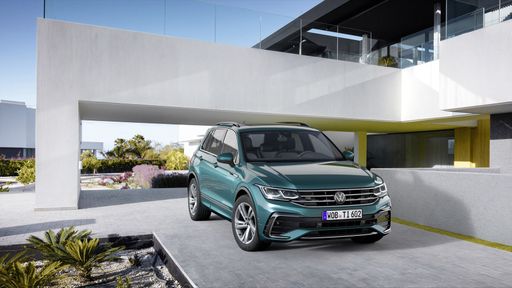
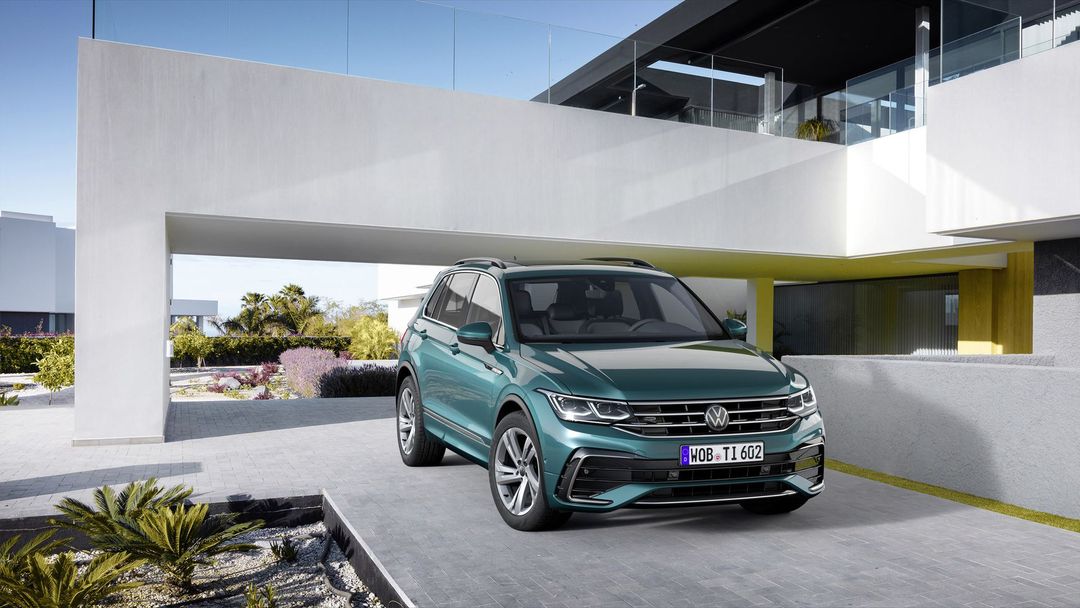
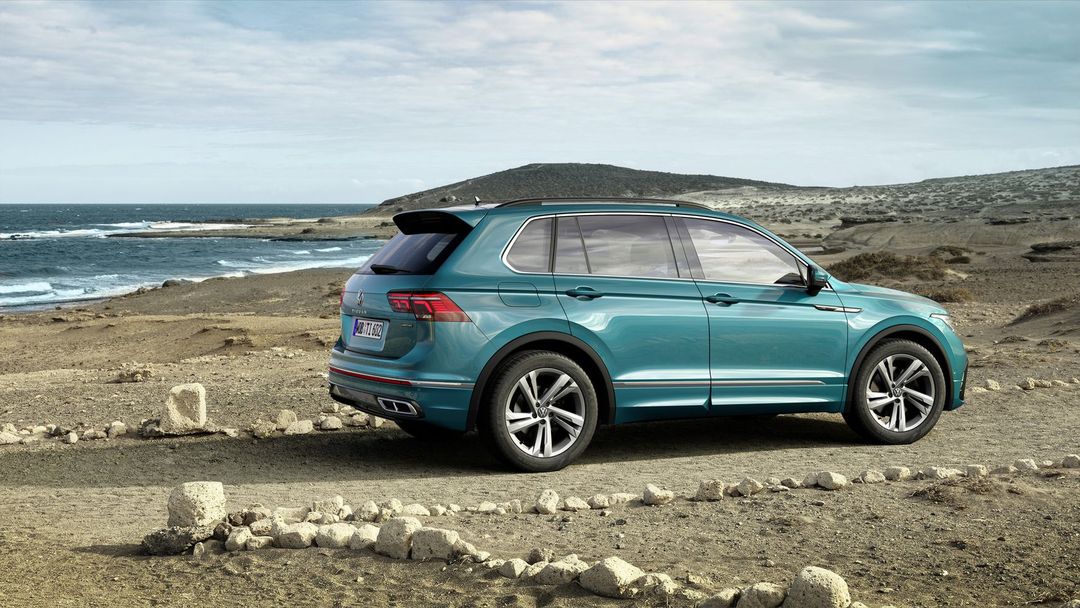
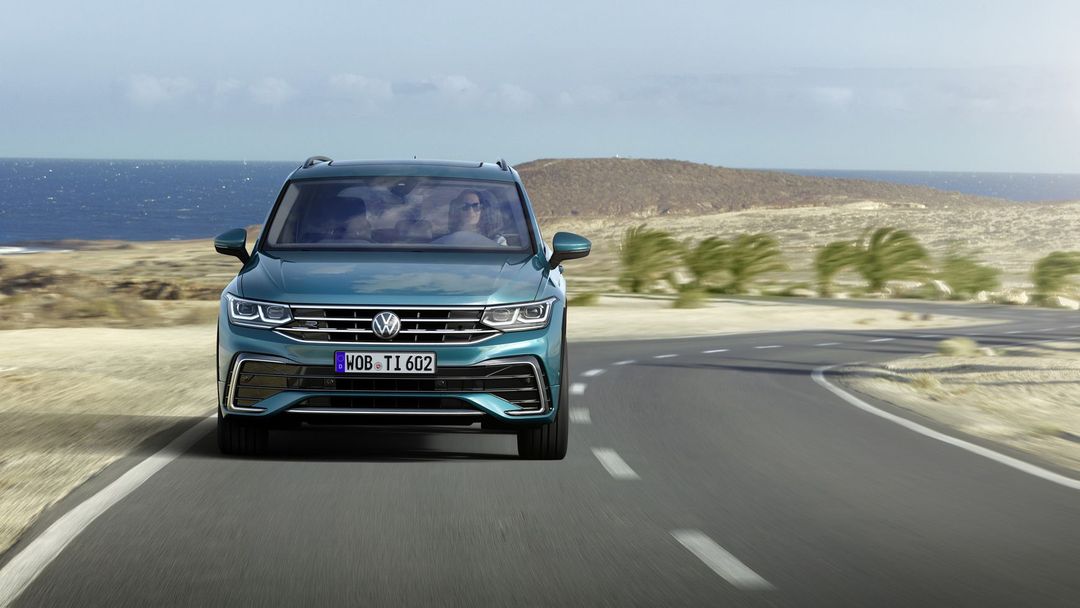
The latest VW Tiguan trades sharp creases for fuller surfaces and a broader stance, looking more premium without shouting about it. A wide grille and neat lighting signatures give it presence, while optional matrix LED headlights add crisp illumination. R-Line touches sharpen the look, but the theme remains understated confidence rather than brash sportiness. Thick rear pillars slightly hamper diagonal visibility, so the cameras earn their keep in tight car parks.

Buttons Fewer, Logic Better

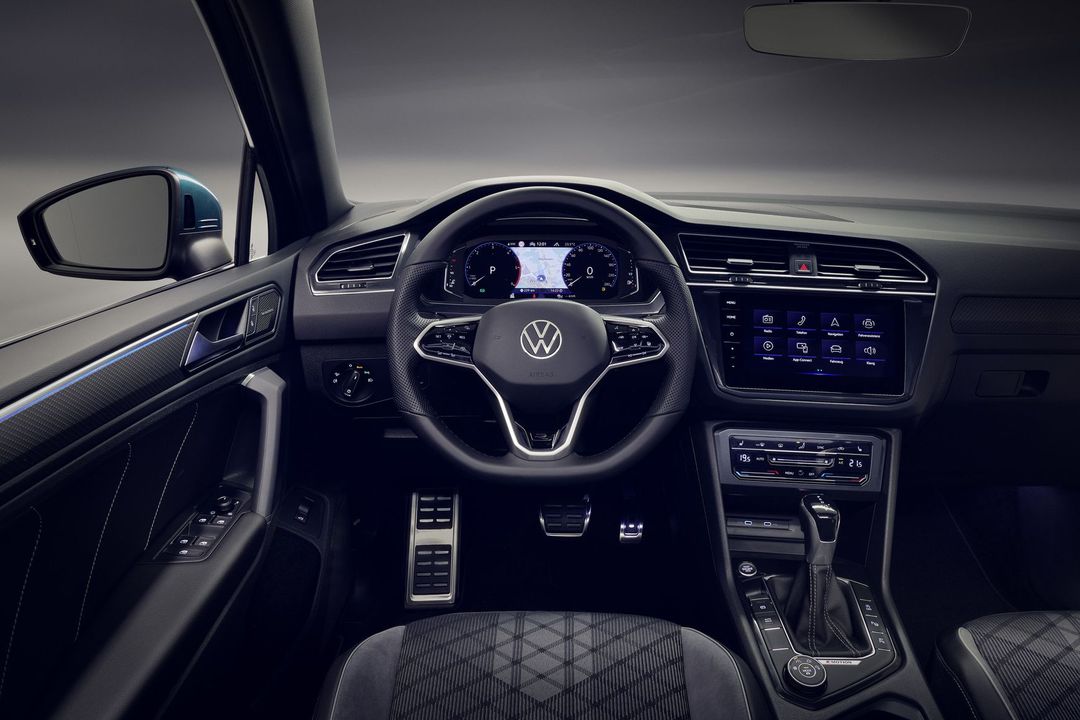
Inside, the Tiguan feels solid and thoughtfully laid out, with improved soft-touch areas up top and sturdier trim where hands land most. The new MIB4 system runs on a 12.9-inch screen as standard (15-inch optional), reacting quickly and structuring menus more clearly than before. Climate controls still live in the touchscreen and the illuminated sliders can feel fussy on the move, though they are easier to find at night. A compact gear selector on the steering column frees space, and a neat console controller lets drivers jump between drive modes and shortcuts.

Big-Car Practicality in a Manageable Footprint

Few rivals match the Tiguan’s useful space. With the TSI/TDI engines, the boot offers a generous 652 litres, expanding to 1,486 litres with the seats folded; the eHybrid’s battery trims that to 490 litres. The rear bench slides and reclines, so legroom or luggage can take priority as needed, and the load bay is wide and square. Access is straightforward, though the perceived loading height can vary with the adjustable floor.

In the back, adults sit comfortably thanks to ample knee and headroom, and big door openings make child-seat loading easier. There are ISOFIX mounts on the outer rear seats plus one on the front passenger seat, but none on the rear middle position. Cabin storage is family-friendly, with deep door bins and a useful centre cubby. Around town, the Tiguan’s width demands attention, but a tight turning circle of around 11.7 m and a helpful camera suite take the sting out of multi-storeys.

Comfort First, Control Always

On the road, the Tiguan majors on comfort and stability rather than playful dynamics. Steering is accurate and light, body control is tidy, and motorway tracking inspires confidence on long slogs. Optional DCC Pro adaptive dampers broaden the ride/handling window, keeping it supple over broken tarmac without feeling floaty. Stick to mid-size wheels for best refinement; the 20-inch setups look great but introduce more road noise and a firmer edge.

Engines That Fit Real Life

The range covers most use cases: 1.5 eTSI mild hybrids with 130 or 150 hp for smooth, frugal commuting; 2.0 TDI diesels with 150 hp (FWD) or 193 hp (AWD) for long-distance ease; 2.0 TSI petrols with 204 or 265 hp for punch; and the 1.5 eHybrid plug-ins with 204 or 272 hp. Performance spans 0–100 km/h in 5.9 to 10.6 seconds, so there’s everything from relaxed to brisk. The eTSI suits urban and mixed routes, the diesel is the serene mile-eater and towing ally, and the stronger petrols deliver sure-footed overtakes with 4Motion traction. The eHybrid glides around town quietly, then blends engine power smoothly when the battery runs low.

Efficiency, Range and the Cost Equation

Official figures reflect the spread of drivetrains: the 1.5 eTSI returns around 5.8–6.1 l/100 km, the 2.0 TDI about 5.3–6.3 l/100 km, while the 2.0 TSI sits notably higher at 7.5–8.4 l/100 km. The eHybrid claims 1.4–1.6 l/100 km plus electricity, and its 19.7 kWh battery is rated for 118–126 km WLTP electric range, enough to cover many daily commutes if charged regularly. Keep the battery topped up and running costs can be impressively low; ignore charging and the PHEV behaves like a heavier petrol. A 45-litre tank across the lineup means sensible refuelling stops, especially with the diesel’s thrift.

Safety Nets and Screens That Help

VW packs in a broad suite of driver aids, contributing to a 5‑star Euro NCAP rating. Adaptive cruise with lane centring reduces fatigue, junction and blind‑spot alerts watch the angles, and a 360-degree camera clarifies edges and kerbs. Park Assist can steer into tight spaces and even memorise regular manoeuvres, which is handy for tricky driveways. On narrow streets, these systems counter the Tiguan’s physical bulk with genuine usability.

Infotainment has taken a clear step forward in speed and clarity, with crisp graphics, natural smartphone mirroring and a more responsive voice assistant. The basics are strong, but climate functions remain buried in the screen, and the touch sliders can still divide opinion. Optional goodies like a head‑up display and premium audio lift the experience without changing the car’s calm character. Regular software updates should help keep features fresh over time.

Who Should Buy It?

The Tiguan is aimed at buyers who value space, comfort and an easygoing drive over theatrics. Families will appreciate the vast boot, flexible rear bench and long-haul seat comfort, while high‑mileage drivers and tow‑car owners gravitate to the well‑damped 2.0 TDI. Company‑car users with home or workplace charging will find the eHybrid’s electric range and tax benefits compelling. Those chasing the sharpest handling or the lowest price tag may look elsewhere, but as a calm, well-rounded all‑rounder, the Tiguan is squarely on target.

Costs and Consumption

Price
33,600 - 54,600 £
Consumption L/100km
1.4 - 8.4 L/100km
Consumption kWh/100km
-
Electric Range
118 - 126 km
Battery Capacity
19.7 kWh
co2
32 - 190 g/km
Fuel tank capacity
45 L

Dimensions and Body

Body Type
SUV
Seats
5
Doors
5
Curb weight
1,599 - 1,879 kg
Trunk capacity
490 - 652 L
Length
4,539 mm
Width
1,842 - 1,859 mm
Height
1,658 mm
Max trunk capacity
1,486 L
Payload
460 - 533 kg

Engine and Performance

Engine Type
Petrol MHEV, Petrol, Diesel, Plugin Hybrid
Transmission
Automatic
Transmission Detail
Dual-Clutch Automatic
Drive Type
Front-Wheel Drive, All-Wheel Drive
Power HP
130 - 272 HP
Acceleration 0-100km/h
5.9 - 10.6 s
Max Speed
210 - 215 km/h
Torque
220 - 400 Nm
Number of Cylinders
4
Power kW
96 - 200 kW
Engine capacity
1,498 - 1,984 cm3

General

Model Year
2,024 - 2,026
CO2 Efficiency Class
D, E, F, B, G
Brand
VW
What drive types are available for the VW Tiguan?

Available configurations include Front-Wheel Drive or All-Wheel Drive.

DriveDuel uses data analysis and artificial intelligence to evaluate vehicle data and create content. Content is regularly reviewed and improved. The displayed prices are estimates based on German list prices, adjusted to the respective country’s VAT. Country-specific registration taxes are not included. This information is not legally binding.