VS

Ferrari Purosangue vs Lamborghini Urus comparison

Compare performance (725 HP vs 800 HP), boot space and price (324,700 £ vs 199,400 £ ) at a glance. Find out which car is the better choice for you – Ferrari Purosangue or Lamborghini Urus?

Ferrari Purosangue vs Lamborghini Urus: Key differences

Ferrari Purosangue

4.4 (1 Reviews)
rate
  • only slightly lighter
details

Lamborghini Urus

  • substantially cheaper
  • barely more power
  • clearly more efficient
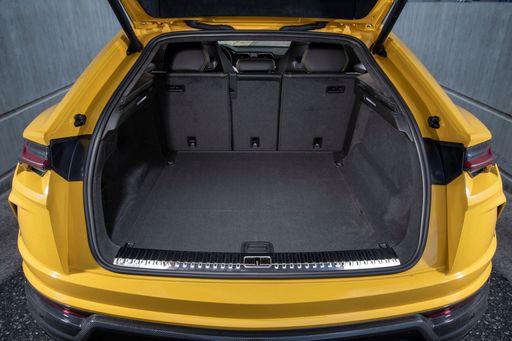
  • markedly more trunk space
details

By Achim Sedelmaier

Purosangue

Battle of Titans: Ferrari Purosangue vs Lamborghini Urus

In the realm of high-performance SUVs, the rivalry between Ferrari and Lamborghini has reached a fever pitch with the launch of the Ferrari Purosangue and the Lamborghini Urus. Each model stands as a testament to the iconic Italian brands' commitment to luxury, power, and innovative engineering. Let us delve into the technical intricacies and innovations that set these two automotive legends apart.
Urus

Design and Dimensions

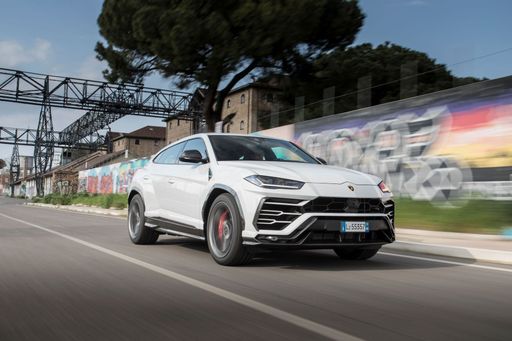
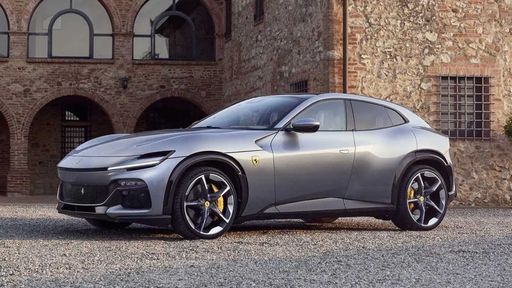
The Ferrari Purosangue and Lamborghini Urus both embrace the SUV body type, yet exhibit distinctive design philosophies. The Purosangue measures 4973 mm in length, 2028 mm in width, and 1589 mm in height, presenting a sleek silhouette synonymous with Ferrari's design ethos. In contrast, the Urus offers a larger frame with lengths ranging from 5112 mm to 5137 mm and a maximum width of 2026 mm, providing a more imposing road presence.

Engine and Performance

Under the hood, these SUVs couldn't be more different in their approach. The Ferrari Purosangue houses a formidable 6.5-liter V12 engine producing an exhilarating 830 HP and 692 Nm of torque. It pairs this power with a dual-clutch automatic transmission, achieving a swift 0-100 km/h acceleration in just 3.3 seconds, alongside a blazing top speed of 312 km/h.

On the other hand, the Lamborghini Urus presents both petrol and plugin hybrid engine options. Its petrol variant features a 4.0-liter V8 twin-turbo engine, delivering up to 800 HP and 950 Nm of torque. Furthermore, the Urus offers an appealing electric range of 60 km with its hybrid configuration, and top speeds closely rival the Purosangue at 305-312 km/h.

Driving Dynamics and Fuel Efficiency

Both models utilize all-wheel drive systems, ensuring superior handling and stability across various terrains. However, when it comes to fuel efficiency, the Urus takes the edge with up to 14.1 and 2.1 L/100 km consumption for its petrol and hybrid engines respectively, compared to the Purosangue's 17.1 L/100 km.

Interior and Capacity

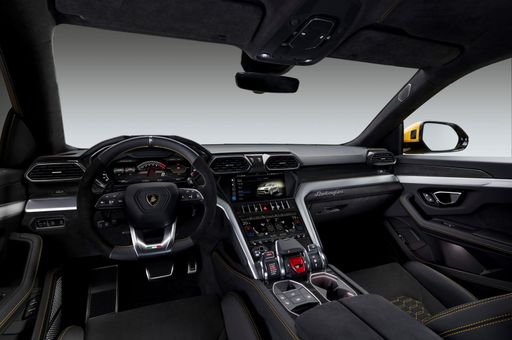
The interior comfort and capacity also show distinctive differences. The Ferrari Purosangue offers seating for four with a trunk capacity of 473 L, while the Lamborghini Urus extends this to accommodate five passengers, with trunk space ranging from 454 L to 616 L depending on the variant.

Innovation and Efficiency

Ferrari's hallmark innovation is evident in the Purosangue's balance of power and luxury, despite its CO2 rating of 389 g/km placing it in the G efficiency class. Alternatively, the Urus scores better in emissions with a plugin hybrid variant achieving a B class and only 51 g/km CO2 emissions, thanks to its progressive hybrid technology.

The Verdict

Ultimately, choosing between the Ferrari Purosangue and Lamborghini Urus hinges on personal preference. The Purosangue offers uncompromising pure performance and a visceral driving experience, fitting those who seek the aura of a grand Ferrari tourer. Meanwhile, the Urus, with its versatile engine line-up and hybrid innovation, appeals to those preferring a blend of performance and eco-consciousness. Both models reflect the zenith of automotive excellence, each a masterpiece in its own right.

Here’s where it gets real: The technical differences in detail

Purosangue

Costs and Efficiency:

Price and efficiency are often the first things buyers look at. Here it becomes clear which model has the long-term edge – whether at the pump, the plug, or in purchase price.

Lamborghini Urus is substantially cheaper – starting at 199,400 £ , while the Ferrari Purosangue costs 324,700 £ . That’s a price difference of around 125,300 £.

Fuel consumption also shows a difference: the Lamborghini Urus uses 2.1 L/100km and is clearly more efficient than the Ferrari Purosangue with 17.1 L/100km. The difference is about 15 L/100km.

Urus

Engine and Performance:

Power, torque and acceleration are the classic benchmarks for car enthusiasts – and here, some clear differences start to show.

When it comes to engine power, the Lamborghini Urus offers barely more power – delivering 800 HP compared to 725 HP. That’s roughly 75 HP more horsepower.

Both models accelerate almost equally fast – 3.3 s from 0 to 100 km/h.

There’s no difference in top speed – both reach 312 km/h.

There’s also a difference in torque: the Lamborghini Urus delivers noticeably more torque with 950 Nm compared to 692 Nm. That’s about 258 Nm more.

Space and Everyday Use:

Cabin size, boot volume and payload all play a role in everyday practicality. Here, comfort and flexibility make the difference.

Seats: Lamborghini Urus offers more seats – 5 vs 4.

In terms of curb weight, Ferrari Purosangue is only slightly lighter – 2,033 kg compared to 2,150 kg. The difference is around 117 kg.

Looking at boot space, the Lamborghini Urus offers markedly more boot space – 616 L compared to 473 L. That’s a difference of about 143 L.

Who wins the race in the data check?

The Lamborghini Urus is clearly superior overall in the objective data comparison.
This result only shows which model scores more points on paper – not which of the two cars feels right for you.

from £199,400
Urus

Lamborghini Urus

  • Engine Type : Petrol, Plugin Hybrid
  • Transmission : Automatic
  • Drive Type : All-Wheel Drive
  • Power HP : 666 - 800 HP
  • Consumption L/100km : 2.1 - 14.1 L/100km
  • Electric Range : 60 km
Ferrari Purosangue
Lamborghini Urus

Costs and Consumption

View detailed analysis

Engine and Performance

View detailed analysis

Dimensions and Body

View detailed analysis

Ferrari Purosangue

Ferrari Purosangue flips the script on what a Ferrari can be, marrying the brand's savage performance and intoxicating exhaust note with the space and practicality of a usable grand tourer. For buyers who crave supercar drama without sacrificing everyday comfort, the Purosangue offers theatrical driving thrills and enough presence to stop traffic at the valet.

details

Lamborghini Urus

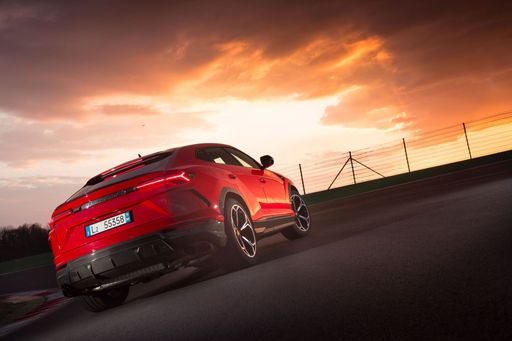
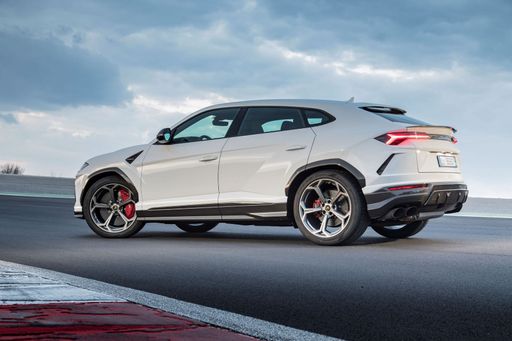
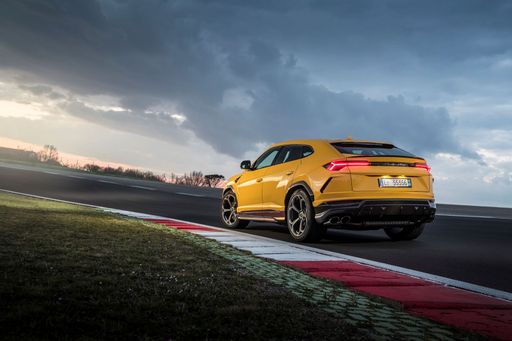
The Lamborghini Urus wears its raging bull badge with SUV practicality, serving supercar drama in a package you can live with every day. It hustles through corners like a sports car while hauling weekend gear with unapologetic style, perfect for buyers who crave attention and usable performance.

details
Ferrari Purosangue
Lamborghini Urus

Costs and Consumption

Price
324,700 £
Price
199,400 - 257,100 £
Consumption L/100km
17.1 L/100km
Consumption L/100km
2.1 - 14.1 L/100km
Consumption kWh/100km
-
Consumption kWh/100km
-
Electric Range
-
Electric Range
60 km
Battery Capacity
-
Battery Capacity
-
co2
389 g/km
co2
51 - 320 g/km
Fuel tank capacity
100 L
Fuel tank capacity
85 L

Dimensions and Body

Body Type
SUV
Body Type
SUV
Seats
4
Seats
5
Doors
5
Doors
5
Curb weight
2,033 kg
Curb weight
2,150 - 2,405 kg
Trunk capacity
473 L
Trunk capacity
454 - 616 L
Length
4,973 mm
Length
5,112 - 5,137 mm
Width
2,028 mm
Width
2,018 - 2,026 mm
Height
1,589 mm
Height
1,618 - 1,638 mm
Max trunk capacity
-
Max trunk capacity
1,596 L
Payload
-
Payload
100 - 350 kg

Engine and Performance

Engine Type
Petrol
Engine Type
Petrol, Plugin Hybrid
Transmission
Automatic
Transmission
Automatic
Transmission Detail
Dual-Clutch Automatic
Transmission Detail
Automatic Gearbox
Drive Type
All-Wheel Drive
Drive Type
All-Wheel Drive
Power HP
725 HP
Power HP
666 - 800 HP
Acceleration 0-100km/h
3.3 s
Acceleration 0-100km/h
3.3 - 3.5 s
Max Speed
312 km/h
Max Speed
305 - 312 km/h
Torque
692 Nm
Torque
850 - 950 Nm
Number of Cylinders
12
Number of Cylinders
8
Power kW
533 kW
Power kW
490 - 588 kW
Engine capacity
6,496 cm3
Engine capacity
3,996 cm3

General

Model Year
2023
Model Year
2,022 - 2,024
CO2 Efficiency Class
G
CO2 Efficiency Class
G, B
Brand
Ferrari
Brand
Lamborghini
DriveDuel uses data analysis and artificial intelligence to evaluate vehicle data and create content. Content is regularly reviewed and improved. The displayed prices are estimates based on German list prices, adjusted to the respective country’s VAT. Country-specific registration taxes are not included. This information is not legally binding.