@ Mazda Motor Corporation
VS

Mazda CX-30 vs Ferrari Purosangue – Which model is better for everyday use?

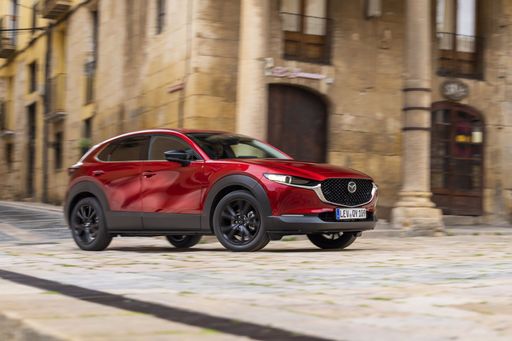
Two cars, one duel: Mazda CX-30 meets Ferrari Purosangue.
Which one wins in performance, efficiency and value for money? Find out now!

CX-30 @ Mazda Motor Corporation

Introducing the Rivals: Mazda CX-30 vs. Ferrari Purosangue

The automotive landscape is evolving rapidly, showcasing a diverse array of vehicles that cater to varied consumer needs and desires. In this comparison, we delve into two iconic models from distinct realms of the automotive spectrum: the practical and stylish Mazda CX-30 and the ultra-luxurious Ferrari Purosangue. Despite their differing intentions—one a pragmatic, versatile SUV and the other a high-performance super SUV—both models bring unique appeal and advanced technology to the table.
CX-30 @ Mazda Motor Corporation

Design and Dimensions

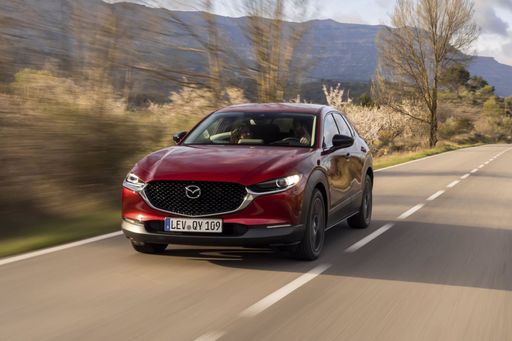
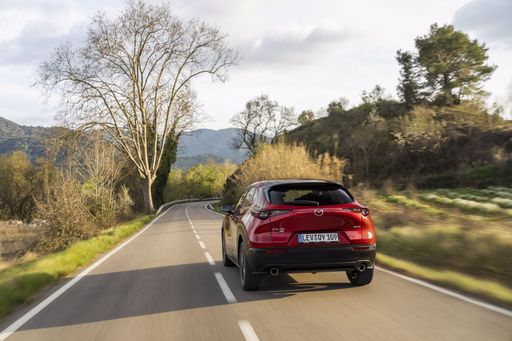
Starting with their dimensions, the Mazda CX-30 is a compact yet spacious SUV, measuring 4,395 mm in length, 1,795 mm in width, and 1,540 mm in height. It features a contemporary design language with a sporty stance, designed to attract those seeking both form and function.

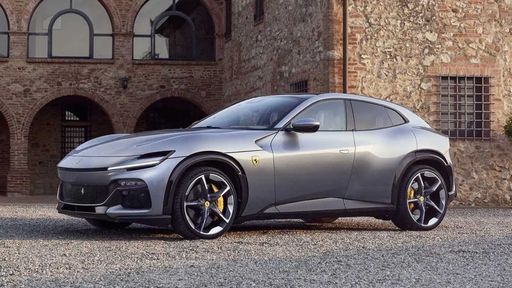
In stark contrast, the Ferrari Purosangue is a bold statement of Italian artistry and engineering, measuring a substantial 4,973 mm in length, 2,028 mm in width, and 1,589 mm in height. Its aggressive lines, dynamic profile, and unmistakable Ferrari design elements draw immediate attention, positioning it as a vehicle for those who desire performance alongside exclusivity.

CX-30 @ Mazda Motor Corporation

Powertrains and Performance

The Mazda CX-30 offers a range of engine options, including a petrol MHEV producing up to 186 HP from a 2.0L engine. With torque figures peaking at 240 Nm, it provides a respectable performance for an SUV, achieving 0-100 km/h in 8.3 seconds and a top speed of 204 km/h. Plus, its efficient fuel consumption of approximately 5.8 L/100 km highlights its practical aspect for everyday use.

On the other end of the spectrum, the Ferrari Purosangue boasts a formidable 6.5L V12 engine producing a staggering 830 HP and 692 Nm of torque. Accelerating from 0-100 km/h in an astonishing 3.3 seconds and reaching a top speed of 312 km/h, this superSUV redefines performance expectations in the luxury segment. However, this power comes at a cost, with fuel consumption peaking at around 17.1 L/100 km and CO2 emissions rated at 389 g/km.

CX-30 @ Mazda Motor Corporation

Technology and Innovation

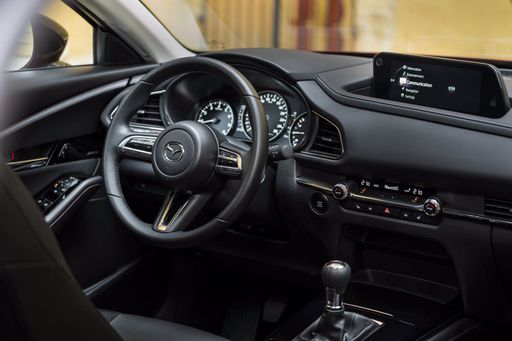
When it comes to technology, the Mazda CX-30 is equipped with an intuitive infotainment system, encompassing the Mazda Connect platform, which integrates smartphone connectivity and a premium sound system. It emphasizes safety with advanced driver assistance systems, ensuring that every journey is connected and secure.

Conversely, the Ferrari Purosangue is laden with cutting-edge automotive technology, featuring a sophisticated dual-clutch automatic transmission for rapid shifts and optimized power delivery. Its advanced aerodynamics and performance-focused innovations, such as an advanced all-wheel-drive system, guarantee exhilarating handling on all terrains. The interior is tailored with luxury materials and state-of-the-art digital displays, seamlessly merging technology and opulence.

Interior Space and Comfort

Within the Mazda CX-30, comfort and practicality are paramount. With seating for five, it provides ample passenger space and a trunk capacity of up to 430 liters, making it a fantastic option for families or adventurous outings.

In contrast, the Purosangue, designed to accommodate four occupants, prioritizes luxury over functional space, offering bespoke options and premium finishes throughout its cabin. The trunk, while slightly larger at 473 liters, reflects the model's focus on performance and prestige rather than everyday utility.

Conclusion: A Tale of Two SUVs

In conclusion, the Mazda CX-30 and Ferrari Purosangue serve distinctly different segments of the SUV market. The CX-30 shines as a reliable and stylish option for daily drivers seeking practicality, comfort, and moderate performance. Meanwhile, the Purosangue stands as a magnificent testament to automotive engineering, pushing the boundaries of performance and luxury in a way only Ferrari can.

The choice between these two vehicles ultimately reflects the buyer's priorities—whether it's the coherent blend of functionality and style represented by the CX-30, or the exhilarating, high-octane experience delivered by the Purosangue. Each car brings its own unique story to the SUV landscape, ensuring that enthusiasts and everyday drivers alike have something to admire.

Here’s where it gets real: The technical differences in detail

Costs and Efficiency:

When it comes to price and running costs, the biggest differences usually appear. This is often where you see which car fits your budget better in the long run.

Mazda CX-30 has a significantly advantage in terms of price – it starts at 25200 £, while the Ferrari Purosangue costs 324700 £. That’s a price difference of around 299514 £.

Fuel consumption also shows a difference: Mazda CX-30 manages with 5.70 L and is therefore decisively more efficient than the Ferrari Purosangue with 17.10 L. The difference is about 11.40 L per 100 km.

Engine and Performance:

Power, torque and acceleration are the classic benchmarks for car enthusiasts – and here, some clear differences start to show.

When it comes to engine power, the Ferrari Purosangue has a convincingly edge – offering 725 HP compared to 186 HP. That’s roughly 539 HP more horsepower.

In acceleration from 0 to 100 km/h, the Ferrari Purosangue is clearly quicker – completing the sprint in 3.30 s, while the Mazda CX-30 takes 8.30 s. That’s about 5 s faster.

In terms of top speed, the Ferrari Purosangue performs noticeable better – reaching 312 km/h, while the Mazda CX-30 tops out at 204 km/h. The difference is around 108 km/h.

There’s also a difference in torque: Ferrari Purosangue pulls clearly stronger with 692 Nm compared to 240 Nm. That’s about 452 Nm difference.

Space and Everyday Use:

Beyond pure performance, interior space and usability matter most in daily life. This is where you see which car is more practical and versatile.

Seats: Mazda CX-30 offers slightly more seating capacity – 5 vs 4.

In curb weight, Mazda CX-30 is distinct lighter – 1455 kg compared to 2033 kg. The difference is around 578 kg.

In terms of boot space, the Ferrari Purosangue offers slight more room – 473 L compared to 430 L. That’s a difference of about 43 L.

Who comes out on top?

Overall, the Mazda CX-30 shows itself to be wins the duel decisively and secures the title of DriveDuel Champion.
It convinces with the more balanced overall package and proves to be the more versatile choice for everyday use.

from about £25,200
CX-30 @ Mazda Motor Corporation

Mazda CX-30

  • Engine Type : Petrol MHEV
  • Transmission : Manuel, Automatic
  • Drive Type : Front-Wheel Drive, All-Wheel Drive
  • Power HP : 140 - 186 HP
  • Consumption L/100km : 5.7 - 6.6 L

Mazda CX-30

5 (1)
rate

The Mazda CX-30 blends sleek coupe-like lines with the practicality of a compact crossover, feeling more premium than its price tag suggests. It’s a joy to drive for anyone who likes a taut chassis and an interior that treats daily commutes like a small luxury escape.

details

Ferrari Purosangue

The Ferrari Purosangue marks the brand's first venture into the SUV segment, combining the luxury and performance synonymous with the Italian manufacturer. Its sleek design and powerful engine deliver a driving experience that is both exhilarating and refined. Inside, the Purosangue offers a sumptuous interior that perfectly balances sportiness with comfort, ensuring it stands out in the competitive luxury SUV market.

details
Mazda CX-30
Ferrari Purosangue
CX-30 @ Mazda Motor Corporation

Costs and Consumption

Price
25200 - 36800 £
Price
324700 £
Consumption L/100km
5.7 - 6.6 L
Consumption L/100km
17.10 L
Consumption kWh/100km
-
Consumption kWh/100km
-
Electric Range
-
Electric Range
-
Battery Capacity
-
Battery Capacity
-
co2
129 - 148 g/km
co2
389 g/km
Fuel tank capacity
48 - 51 L
Fuel tank capacity
100 L

Dimensions and Body

Body Type
SUV
Body Type
SUV
Seats
5
Seats
4
Doors
5
Doors
5
Curb weight
1455 - 1587 kg
Curb weight
2033 kg
Trunk capacity
422 - 430 L
Trunk capacity
473 L
Length
4395 mm
Length
4973 mm
Width
1795 mm
Width
2028 mm
Height
1540 mm
Height
1589 mm
Max trunk capacity
1398 - 1406 L
Max trunk capacity
-
Payload
458 - 496 kg
Payload
-

Engine and Performance

Engine Type
Petrol MHEV
Engine Type
Petrol
Transmission
Manuel, Automatic
Transmission
Automatic
Transmission Detail
Manual Gearbox, Automatic Gearbox
Transmission Detail
Dual-Clutch Automatic
Drive Type
Front-Wheel Drive, All-Wheel Drive
Drive Type
All-Wheel Drive
Power HP
140 - 186 HP
Power HP
725 HP
Acceleration 0-100km/h
8.3 - 10.3 s
Acceleration 0-100km/h
3.30 s
Max Speed
191 - 204 km/h
Max Speed
312 km/h
Torque
238 - 240 Nm
Torque
692 Nm
Number of Cylinders
4
Number of Cylinders
12
Power kW
103 - 137 kW
Power kW
533 kW
Engine capacity
1998 - 2488 cm3
Engine capacity
6496 cm3

General

Model Year
2025
Model Year
2023
CO2 Efficiency Class
D, E
CO2 Efficiency Class
G
Brand
Mazda
Brand
Ferrari
What drive types are available for the Mazda CX-30?

The Mazda CX-30 is offered with Front-Wheel Drive or All-Wheel Drive.

The prices and data displayed are estimates based on German list prices and may vary by country. This information is not legally binding.