VS

Fiat Ducato vs Citroen Jumper comparison

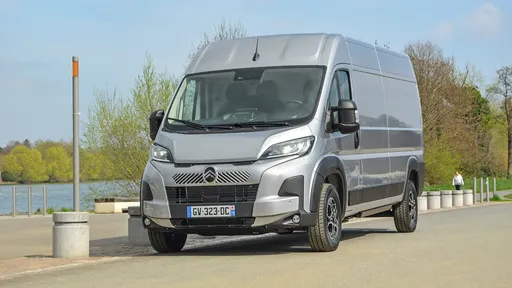
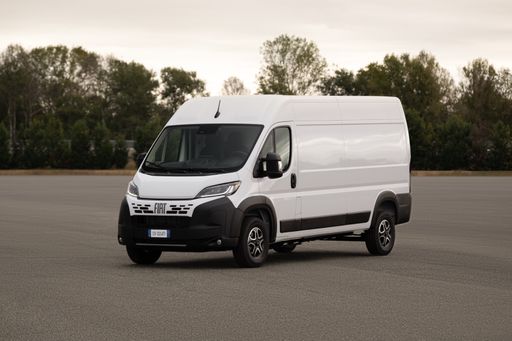
Compare performance (270 HP vs 279 HP), boot space and price (34,300 £ vs 55,100 £ ) at a glance. Find out which car is the better choice for you – Fiat Ducato or Citroen Jumper?

Fiat Ducato vs Citroen Jumper: Key differences

Fiat Ducato

  • substantially cheaper
  • barely more electric range
  • clearly lighter

Citroen Jumper

  • very slightly more power
Ducato

Introduction: Head-to-Head in the Commercial Arena

The commercial van segment has become increasingly competitive, offering a range of options for businesses that need reliable and spacious vehicles. Two prominent players in this category are the Citroën Jumper and the Fiat Ducato. This article compares these two cargo vans, focusing on their technical specifications, innovative features, and overall appeal to business owners.

Jumper

Design and Dimensions

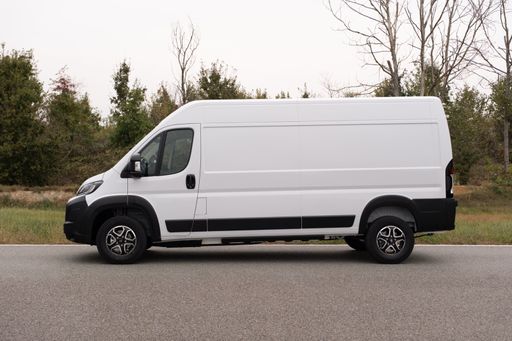
Both the Citroën Jumper and Fiat Ducato share a similar cargo van aesthetic, but variations in size and space setup target different needs. The Jumper offers dimensions of 5998 mm in length, 2050 mm in width, and heights varying between 2612 mm and 2850 mm. In contrast, the Ducato provides length options ranging from 5413 mm to 6678 mm, alongside a width between 2050 mm and 2100 mm, and height options reaching up to 2774 mm.

A key element for businesses is payload capacity. The Jumper boasts payloads ranging from 560 kg to 1385 kg, while the Ducato shows impressive payload capabilities of 560 kg to 2020 kg, which enhances its utility for heavier load applications.

Ducato

Engine Options and Performance

The Citroën Jumper stands out with its fully electric variant, equipped with a powerful 270 HP electric motor, delivering a torque of 410 Nm. It features a robust 97.8 kWh battery, enabling a commendable electric range of 424 km and a consumption rate of 26.2 kWh/100km. This model represents a significant shift toward sustainability in the commercial vehicle market, making it an attractive option for environmentally conscious companies.

On the other hand, the Fiat Ducato presents a more diverse range of engine options. With both diesel and electric variants, the Ducato offers power outputs from 120 HP to an impressive 270 HP, allowing flexibility to meet various business demands. Diesel engines achieve a consumption rate ranging between 7.2 L/100km and 9.3 L/100km depending on configuration, while its electric range clocking in at 430 km makes it a versatile choice.

Transmission and Driving Dynamics

Both models feature front-wheel-drive configurations, promoting better handling and road traction. The Citroën Jumper offers an automatic reduction gearbox, which enhances driving comfort and efficiency, particularly in urban settings. In contrast, the Fiat Ducato presents more versatility with options for manual and automatic gearboxes, accommodating various driver preferences.

Top speed also varies significantly: the Jumper achieves a maximum speed of 130 km/h, while the Ducato reaches speeds up to 165 km/h depending on the chosen engine. This added performance may appeal to businesses needing to cover longer distances or undertake time-sensitive deliveries.

Technological Innovations and Features

In terms of technology, the Citroën Jumper shines with a commitment to sustainability while also incorporating the latest features for an intuitive user experience. Features such as an advanced infotainment system, driver assistance technologies, and real-time telemetry are also highlighted, allowing for efficient fleet management.

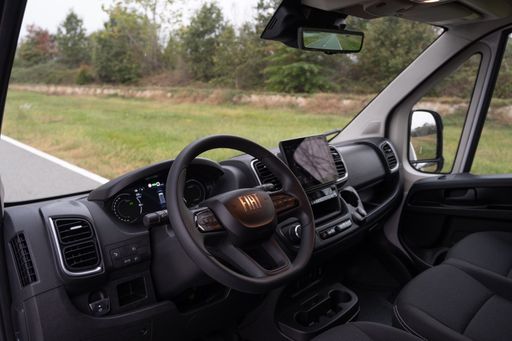
The Fiat Ducato, meanwhile, showcases robust security features and advanced driver-aid systems like adaptive cruise control and lane departure warning, emphasizing safety alongside innovation. Its connectivity options enable businesses to monitor vehicle status and performance, making it a savvy choice for fleet operators.

Environmental Considerations

When it comes to emissions, the Citroën Jumper leads the way with a CO2 efficiency class of A, generating zero emissions due to its electric propulsion. This aspect is especially appealing for companies looking to enhance their sustainability credentials. Conversely, the Fiat Ducato has a broader range of CO2 efficiency classes, ranging from A to G, depending on the engine choice, indicating a balance between performance and eco-friendliness.

Conclusion: Choosing the Right Van for Your Business

Both the Citroën Jumper and Fiat Ducato have unique advantages that cater to different business needs. The Jumper is ideal for companies prioritizing sustainability and electric driving, while the Ducato offers versatility in powertrains and superior payload capacity. Ultimately, the choice depends on specific requirements, including load factors, driving environments, and corporate sustainability goals. Conducting a thorough evaluation of each model will ensure that businesses make informed decisions that align with their operational needs.

Here’s where it gets real: The technical differences in detail

Ducato

Costs and Efficiency:

Price and efficiency are often the first things buyers look at. Here it becomes clear which model has the long-term edge – whether at the pump, the plug, or in purchase price.

Fiat Ducato is substantially cheaper – starting at 34,300 £ , while the Citroen Jumper costs 55,100 £ . That’s a price difference of around 20,757 £.

As for electric range, the Fiat Ducato offers barely more range – reaching up to 430 km, about 6 km more than the Citroen Jumper.

Jumper

Engine and Performance:

Power, torque and acceleration are the classic benchmarks for car enthusiasts – and here, some clear differences start to show.

When it comes to engine power, the Citroen Jumper offers very slightly more power – delivering 279 HP compared to 270 HP. That’s roughly 9 HP more horsepower.

Looking at top speed, the Fiat Ducato is clearly faster – reaching 165 km/h, while the Citroen Jumper tops out at 130 km/h. The difference is around 35 km/h.

There’s also a difference in torque: the Fiat Ducato delivers very slightly more torque with 450 Nm compared to 410 Nm. That’s about 40 Nm more.

Ducato

Space and Everyday Use:

Beyond pure performance, interior space and usability matter most in daily life. This is where you see which car is more practical and versatile.

Both vehicles offer seating for 3 people.

In terms of curb weight, Fiat Ducato is clearly lighter – 2,125 kg compared to 2,865 kg. The difference is around 740 kg.

Maximum load volume is the same – both hold up to 17,000 L.

When it comes to payload, the Fiat Ducato carries clearly more – 2,020 kg compared to 1,385 kg. That’s a difference of about 635 kg.

Who wins the race in the data check?

The Fiat Ducato is decisively ahead in the objective data comparison.
This result only shows which model scores more points on paper – not which of the two cars feels right for you.

from £34,300
Ducato

Fiat Ducato

  • Engine Type : Diesel, Electric
  • Transmission : Manuel, Automatic
  • Drive Type : Front-Wheel Drive
  • Power HP : 120 - 270 HP
  • Consumption L/100km : 7.5 - 9 L/100km
  • Electric Range : 430 km
Fiat Ducato
Citroen Jumper

Costs and Consumption

View detailed analysis

Engine and Performance

View detailed analysis

Dimensions and Body

View detailed analysis

Fiat Ducato

The Fiat Ducato is a no-nonsense workhorse that turns practicality into an artform, with a cavernous, flexible load area and predictable, car-like driving manners that make long days behind the wheel far less tedious. It’s equally at home with a tradesman’s kit or a camper conversion, offering sensible packaging, easy servicing and the sort of reliability that keeps surprises—and down-time—to a minimum.

details

Citroen Jumper

The Citroen Jumper is a no-nonsense workhorse that swaps flash for sheer practicality, with a spacious load area and composed, user-friendly driving manners that make busy workdays easier. It won’t win any beauty contests, but its sensible packaging, comfortable cab and wallet-friendly running make it a compelling choice for tradespeople and small businesses.

details
Fiat Ducato
Citroen Jumper

Costs and Consumption

Price
34,300 - 57,800 £
Price
55,100 - 57,800 £
Consumption L/100km
7.5 - 9 L/100km
Consumption L/100km
-
Consumption kWh/100km
-
Consumption kWh/100km
26.2 kWh/100km
Electric Range
430 km
Electric Range
424 km
Battery Capacity
-
Battery Capacity
97.8 kWh
co2
0 - 233 g/km
co2
0 g/km
Fuel tank capacity
90 L
Fuel tank capacity
-

Dimensions and Body

Body Type
Cargo Van
Body Type
Cargo Van
Seats
3
Seats
3
Doors
4
Doors
4
Curb weight
2,125 - 2,940 kg
Curb weight
2,865 - 2,940 kg
Trunk capacity
-
Trunk capacity
-
Length
5,413 - 6,678 mm
Length
5,998 - 6,363 mm
Width
2,050 - 2,100 mm
Width
2,050 mm
Height
2,254 - 2,774 mm
Height
2,612 - 2,850 mm
Max trunk capacity
10,000 - 17,000 L
Max trunk capacity
13,000 - 17,000 L
Payload
560 - 2,020 kg
Payload
560 - 1,385 kg

Engine and Performance

Engine Type
Diesel, Electric
Engine Type
Electric
Transmission
Manuel, Automatic
Transmission
Automatic
Transmission Detail
Manual Gearbox, Automatic Gearbox, Reduction Gearbox
Transmission Detail
Reduction Gearbox
Drive Type
Front-Wheel Drive
Drive Type
Front-Wheel Drive
Power HP
120 - 270 HP
Power HP
279 HP
Acceleration 0-100km/h
-
Acceleration 0-100km/h
-
Max Speed
90 - 165 km/h
Max Speed
90 - 130 km/h
Torque
320 - 450 Nm
Torque
410 Nm
Number of Cylinders
4
Number of Cylinders
-
Power kW
88 - 200 kW
Power kW
205 kW
Engine capacity
2,184 cm3
Engine capacity
-

General

Model Year
2,023 - 2,025
Model Year
2,024
CO2 Efficiency Class
G, A
CO2 Efficiency Class
A
Brand
Fiat
Brand
Citroen
DriveDuel uses data analysis and artificial intelligence to evaluate vehicle data and create content. Content is regularly reviewed and improved. The displayed prices are estimates based on German list prices, adjusted to the respective country’s VAT. Country-specific registration taxes are not included. This information is not legally binding.