VS

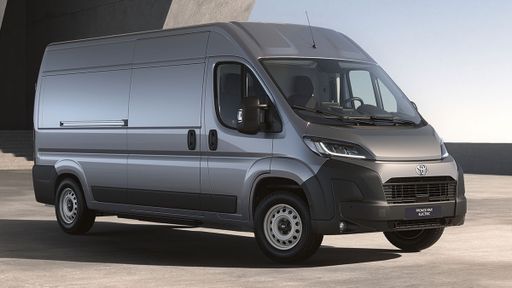
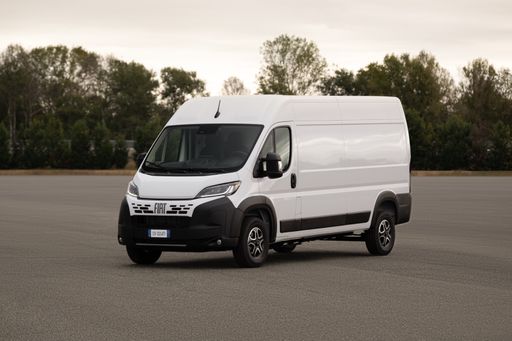
Fiat Ducato vs Toyota Proace Max comparison

Compare performance (270 HP vs 279 HP), boot space and price (34,300 £ vs 35,500 £ ) at a glance. Find out which car is the better choice for you – Fiat Ducato or Toyota Proace Max?

Fiat Ducato vs Toyota Proace Max: Key differences

Fiat Ducato

  • marginally cheaper
  • barely more electric range

Toyota Proace Max

  • marginally more power
  • barely more efficient
  • marginally lighter

By Achim Sedelmaier

Ducato

Fiat Ducato vs. Toyota Proace Max: The Ultimate Cargo Van Showdown

When it comes to choosing the perfect cargo van, the decision often boils down to a few key contenders that offer reliability, performance, and innovative features. In the ever-growing market of cargo vans, the Fiat Ducato and the Toyota Proace Max stand out as two prominent players. Both have made significant strides in terms of performance and technology. Let's delve into a detailed comparison to see how these vehicles stack up against each other.

Proace Max

Performance and Engine Specifications

The Fiat Ducato offers a diverse range of engine options, including diesel and electric variants. The diesel engines provide power outputs of 120 HP, 140 HP, 180 HP, and even up to 270 HP, while the electric version boasts an impressive range of up to 430 km. The Ducato is available with both manual and automatic transmissions, enhancing its flexibility for various driving preferences. This van excels with torque figures ranging from 320 Nm to 450 Nm, providing substantial power for heavy-duty tasks.

On the other hand, the Toyota Proace Max mirrors the Ducato with its diesel and electric engine options, but edges slightly ahead with a top power output of 279 HP. It offers torque values of up to 450 Nm, ensuring robust performance. The Proace Max also offers a smooth driving experience with both manual and automatic transmission options.

Ducato

Fuel Efficiency and Range

Fuel consumption is a crucial factor for cargo vans, and here both vehicles offer competitive figures. The Fiat Ducato maintains efficiency with consumption rates ranging from 7.2 to 9.3 L/100km, aligning well with industry standards. For electric enthusiasts, Fiat delivers an electric range of 430 km, making it an excellent choice for sustainable operations.

The Toyota Proace Max offers fuel consumption figures between 7.5 and 8.7 L/100km, which is comparable to the Ducato. However, the Proace Max falls slightly short with its electric range of 424 km, although still impressive in the electric vehicle market.

Interior Space and Configuration

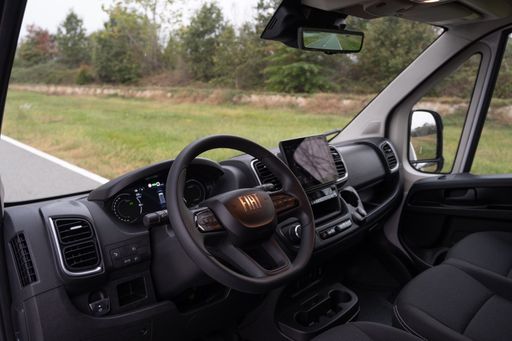
Interior configuration plays a pivotal role in cargo vans, largely depending on seating and space. The Fiat Ducato is designed with a classic three-seat configuration, focusing on maximizing cargo capacity while providing enough space for essential crew members. Its payload capability ranges from 560 kg to 2020 kg, showcasing its versatility in accommodating various types of cargo.

The Toyota Proace Max, meanwhile, offers a more flexible seating arrangement with options for 2, 3, 6, or even 7 seats, catering to different operational needs. Its payload figures are competitive, ranging from 710 kg to 1460 kg, offering versatility for different business requirements.

Technology and Innovations

In terms of technological advancements, both models strive to offer innovations that enhance the driving experience. The Fiat Ducato is equipped with multiple modern features across its range, catering to both functionality and comfort with advanced infotainment systems and driving aids.

The Toyota Proace Max emphasizes innovative safety features and convenience, boasting advanced driver-assistance systems that facilitate a safer drive, alongside modern infotainment options to ensure a comfortable journey for drivers and passengers.

Conclusion

Ultimately, the choice between the Fiat Ducato and Toyota Proace Max will depend largely on specific business needs and personal preferences. The Ducato offers a rich variety of powertrains and impressive payload capabilities, making it an ideal choice for those requiring robust performance and versatility. The Proace Max, however, provides more flexibility in seating and a powerful engine lineup, appealing to those who need multi-purpose use and a bit more power.

Both of these vans demonstrate excellence in their segment, ensuring that whichever you choose, your business transportation needs will be met with reliability and efficiency.

Here’s where it gets real: The technical differences in detail

Ducato

Costs and Efficiency:

Price and efficiency are often the first things buyers look at. Here it becomes clear which model has the long-term edge – whether at the pump, the plug, or in purchase price.

Fiat Ducato is marginally cheaper – starting at 34,300 £ , while the Toyota Proace Max costs 35,500 £ . That’s a price difference of around 1,224 £.

Fuel consumption also shows a difference: the Toyota Proace Max uses 7.3 L/100km and is barely more efficient than the Fiat Ducato with 7.5 L/100km. The difference is about 0.2 L/100km.

As for electric range, the Fiat Ducato offers barely more range – reaching up to 430 km, about 6 km more than the Toyota Proace Max.

Proace Max

Engine and Performance:

Under the bonnet, it becomes clear which model is tuned for sportiness and which one takes the lead when you hit the accelerator.

When it comes to engine power, the Toyota Proace Max offers marginally more power – delivering 279 HP compared to 270 HP. That’s roughly 9 HP more horsepower.

Looking at top speed, the Fiat Ducato is barely faster – reaching 165 km/h, while the Toyota Proace Max tops out at 161 km/h. The difference is around 4 km/h.

Both models offer the same torque – 450 Nm.

Ducato

Space and Everyday Use:

Cabin size, boot volume and payload all play a role in everyday practicality. Here, comfort and flexibility make the difference.

Both vehicles offer seating for 3 people.

In terms of curb weight, Toyota Proace Max is marginally lighter – 2,075 kg compared to 2,125 kg. The difference is around 50 kg.

Maximum load volume is the same – both hold up to 17,000 L.

When it comes to payload, the Fiat Ducato carries visibly more – 2,020 kg compared to 1,460 kg. That’s a difference of about 560 kg.

Who wins the race in the data check?

The Fiat Ducato holds a narrow overall lead in the objective data comparison.
This result only shows which model scores more points on paper – not which of the two cars feels right for you.

from £34,300
Ducato

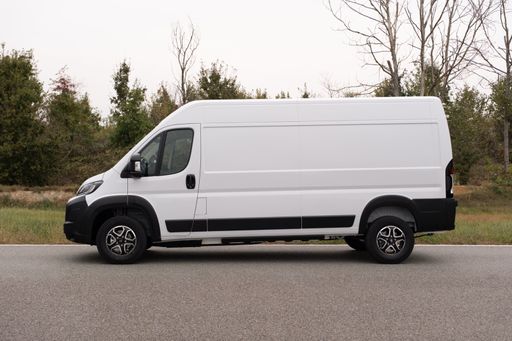
Fiat Ducato

  • Engine Type : Diesel, Electric
  • Transmission : Manuel, Automatic
  • Drive Type : Front-Wheel Drive
  • Power HP : 120 - 270 HP
  • Consumption L/100km : 7.5 - 9 L/100km
  • Electric Range : 430 km
Fiat Ducato
Toyota Proace Max

Costs and Consumption

View detailed analysis

Engine and Performance

View detailed analysis

Dimensions and Body

View detailed analysis

Fiat Ducato

The Fiat Ducato is a no-nonsense workhorse that turns practicality into an artform, with a cavernous, flexible load area and predictable, car-like driving manners that make long days behind the wheel far less tedious. It’s equally at home with a tradesman’s kit or a camper conversion, offering sensible packaging, easy servicing and the sort of reliability that keeps surprises—and down-time—to a minimum.

details

Toyota Proace Max

The Toyota Proace Max is a practical, no-nonsense people-mover that swallows luggage and daily chaos with the steady reliability you expect from the badge. Its sensible cabin and unshowy comfort make it a great pick for families and businesses who want versatility without the drama.

details
Fiat Ducato
Toyota Proace Max

Costs and Consumption

Price
34,300 - 57,800 £
Price
35,500 - 61,000 £
Consumption L/100km
7.5 - 9 L/100km
Consumption L/100km
7.3 - 8.6 L/100km
Consumption kWh/100km
-
Consumption kWh/100km
26.2 kWh/100km
Electric Range
430 km
Electric Range
424 km
Battery Capacity
-
Battery Capacity
-
co2
0 - 233 g/km
co2
0 - 227 g/km
Fuel tank capacity
90 L
Fuel tank capacity
90 L

Dimensions and Body

Body Type
Cargo Van
Body Type
Cargo Van
Seats
3
Seats
3
Doors
4
Doors
4 - 5
Curb weight
2,125 - 2,940 kg
Curb weight
2,075 - 2,790 kg
Trunk capacity
-
Trunk capacity
-
Length
5,413 - 6,678 mm
Length
5,413 - 6,363 mm
Width
2,050 - 2,100 mm
Width
2,050 mm
Height
2,254 - 2,774 mm
Height
2,254 - 2,764 mm
Max trunk capacity
10,000 - 17,000 L
Max trunk capacity
10,000 - 17,000 L
Payload
560 - 2,020 kg
Payload
710 - 1,460 kg

Engine and Performance

Engine Type
Diesel, Electric
Engine Type
Diesel, Electric
Transmission
Manuel, Automatic
Transmission
Manuel, Automatic
Transmission Detail
Manual Gearbox, Automatic Gearbox, Reduction Gearbox
Transmission Detail
Manual Gearbox, Automatic Gearbox, Reduction Gearbox
Drive Type
Front-Wheel Drive
Drive Type
Front-Wheel Drive
Power HP
120 - 270 HP
Power HP
120 - 279 HP
Acceleration 0-100km/h
-
Acceleration 0-100km/h
-
Max Speed
90 - 165 km/h
Max Speed
148 - 161 km/h
Torque
320 - 450 Nm
Torque
320 - 450 Nm
Number of Cylinders
4
Number of Cylinders
4
Power kW
88 - 200 kW
Power kW
88 - 205 kW
Engine capacity
2,184 cm3
Engine capacity
2,184 cm3

General

Model Year
2,023 - 2,025
Model Year
2,024 - 2,025
CO2 Efficiency Class
G, A
CO2 Efficiency Class
G, A
Brand
Fiat
Brand
Toyota
DriveDuel uses data analysis and artificial intelligence to evaluate vehicle data and create content. Content is regularly reviewed and improved. The displayed prices are estimates based on German list prices, adjusted to the respective country’s VAT. Country-specific registration taxes are not included. This information is not legally binding.