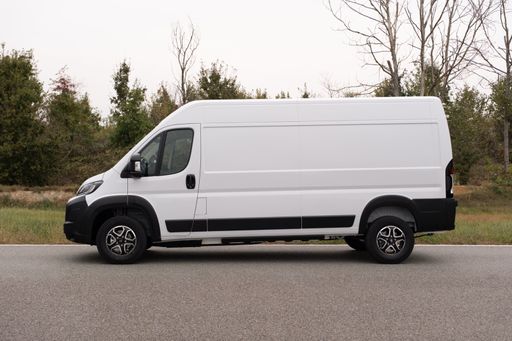
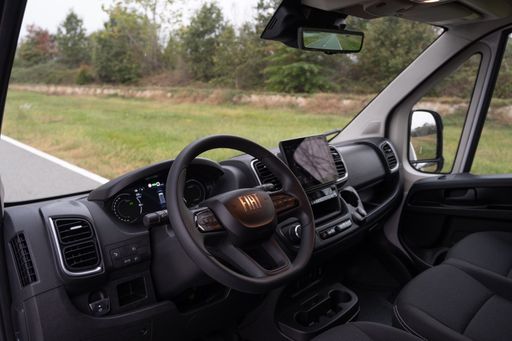
VS

Fiat Ducato vs Renault Master Transporter comparison

Compare performance (270 HP vs 170 HP), boot space and price (34,300 £ vs 36,000 £ ) at a glance. Find out which car is the better choice for you – Fiat Ducato or Renault Master Transporter?

Fiat Ducato vs Renault Master Transporter: Key differences

Fiat Ducato

  • marginally cheaper
  • noticeably more power
  • barely lighter

Renault Master Transporter

  • somewhat more efficient
  • very slightly more electric range

By Achim Sedelmaier

Ducato

Fiat Ducato vs Renault Master: A Battle of the Behemoths

When it comes to choosing a cargo van, professionals often find themselves torn between two stalwart contenders: the Fiat Ducato and the Renault Master. Both machines have carved a niche in delivery and transport sectors, but which one truly reigns supreme? Dive into our detailed comparison to discover their technical marvels.
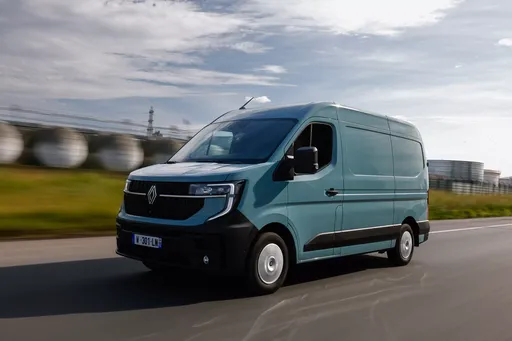
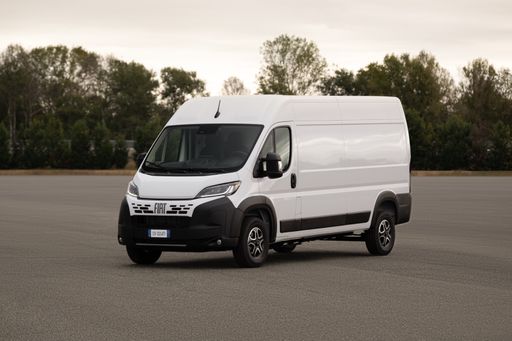
Master Transporter

Power and Performance

The Fiat Ducato offers a diverse lineup of engine options, boasting both diesel and electric choices, with power ratings ranging from 120 to a staggering 270 HP. It accommodates a variety of transmission options, including manual, automatic, and reduction gearboxes, all functioning seamlessly with its front-wheel-drive system. In terms of torque, it offers a range, reaching up to 450 Nm, which ensures brisk acceleration even when loaded to capacity.

By contrast, the Renault Master offers a slightly wider variety of engines, spanning diesel and electric, with power outputs from 76 to 180 HP. The user can select from front-wheel and rear-wheel drive options, enhancing its versatility across different terrains. Its torque range tops at 400 Nm, which is competitive but slightly lower than the Ducato's best offering.

Ducato

Efficiency and Economy

In terms of fuel efficiency, the Ducato delivers, consuming between 7.2 to 9.3 L/100km for its diesel variants. Meanwhile, its electric version boasts an impressive range of 430 km, making it an enticing proposition for urban logistics. CO2 emissions are well-contained with options leading to a commendable A class efficiency.

The Renault Master, however, features a broader consumption range. Diesel variants consume between 7.4 to 14 L/100km. Its electric version supports a range from 174 to 409 km. On emissions, it doesn't quite match the Ducato’s green credentials, as reflected in its variable CO2 efficiency classes.

Load Capacity and Dimensions

Payload is crucial for any cargo van, and the Ducato shines with a capacity spanning 610 to 2020 kg. With lengths ranging from 5413 to 6678 mm, it provides ample room for various cargo sizes. Moreover, its height and width dimensions are competitively generous, enhancing its logistical versatility.

On the flip side, the Renault Master offers formidable payload competences as well, capable of handling between 833 to 2073 kg. Its lengths vary from 5048 to 6875 mm, allowing for adaptability across different freight requirements. The van's height can reach up to 2808 mm, making it appropriate for taller loads.

Innovations and Features

Both vehicles exhibit numerous technological advancements. The Fiat Ducato's standout feature is its substantial electric range, catering to eco-conscious businesses, while also incorporating a robust front-wheel-drive system that aligns well with its payload capabilities.

The Renault Master brings its touch of innovation with an option for rear-wheel drive, which can be preferable for heavier loads or more challenging terrains. It also provides an automated manual transmission, enhancing driving comfort.

Conclusion: The Right Choice for Your Needs

Ultimately, the choice between the Fiat Ducato and the Renault Master will hinge on specific business requirements. The Ducato is your go-to for those prioritizing electric efficiency, torque, and a wide range of engine options. The Renault Master, with its dynamic drivetrain options and equally competitive payload figures, makes a compelling case for varied operational needs.

Both vans are titans in their field, offering distinct strengths that cater to a range of transportation demands. Whichever you choose, both promise reliability and robust performance.

Here’s where it gets real: The technical differences in detail

Ducato

Costs and Efficiency:

Price and efficiency are key factors when choosing a car – and this is often where the real differences emerge.

Fiat Ducato is marginally cheaper – starting at 34,300 £ , while the Renault Master Transporter costs 36,000 £ . That’s a price difference of around 1,672 £.

Fuel consumption also shows a difference: the Renault Master Transporter uses 6.8 L/100km and is somewhat more efficient than the Fiat Ducato with 7.5 L/100km. The difference is about 0.7 L/100km.

As for electric range, the Renault Master Transporter offers very slightly more range – reaching up to 448 km, about 18 km more than the Fiat Ducato.

Master Transporter

Engine and Performance:

Under the bonnet, it becomes clear which model is tuned for sportiness and which one takes the lead when you hit the accelerator.

When it comes to engine power, the Fiat Ducato offers noticeably more power – delivering 270 HP compared to 170 HP. That’s roughly 100 HP more horsepower.

Looking at top speed, the Renault Master Transporter is only slightly faster – reaching 176 km/h, while the Fiat Ducato tops out at 165 km/h. The difference is around 11 km/h.

There’s also a difference in torque: the Fiat Ducato delivers somewhat more torque with 450 Nm compared to 380 Nm. That’s about 70 Nm more.

Ducato

Space and Everyday Use:

Whether family car or daily driver – which one offers more room, flexibility and comfort?

Seats: Renault Master Transporter offers more seats – 6 vs 3.

In terms of curb weight, Fiat Ducato is barely lighter – 2,125 kg compared to 2,128 kg. The difference is around 3 kg.

For maximum load capacity, the Fiat Ducato offers visibly more capacity – up to 17,000 L, about 4,000 L more than the Renault Master Transporter.

When it comes to payload, the Fiat Ducato carries marginally more – 2,020 kg compared to 1,859 kg. That’s a difference of about 161 kg.

Who wins the race in the data check?

The Fiat Ducato stands well ahead of its rival in the objective data comparison.
This result only shows which model scores more points on paper – not which of the two cars feels right for you.

from £34,300
Ducato

Fiat Ducato

  • Engine Type : Diesel, Electric
  • Transmission : Manuel, Automatic
  • Drive Type : Front-Wheel Drive
  • Power HP : 120 - 270 HP
  • Consumption L/100km : 7.5 - 9 L/100km
  • Electric Range : 430 km
Fiat Ducato
Renault Master Transporter

Costs and Consumption

View detailed analysis

Engine and Performance

View detailed analysis

Dimensions and Body

View detailed analysis

Fiat Ducato

The Fiat Ducato is a no-nonsense workhorse that turns practicality into an artform, with a cavernous, flexible load area and predictable, car-like driving manners that make long days behind the wheel far less tedious. It’s equally at home with a tradesman’s kit or a camper conversion, offering sensible packaging, easy servicing and the sort of reliability that keeps surprises—and down-time—to a minimum.

details

Renault Master Transporter

The Renault Master is a pragmatic workhorse that swallows cargo with an unbothered grin, offering clever practicality and load-friendly packaging for tradespeople and fleet buyers. It won’t excite like a sports car, but it steers predictably, runs economically and gets the job done day after day — like a reliable colleague who never calls in sick.

details
Fiat Ducato
Renault Master Transporter

Costs and Consumption

Price
34,300 - 57,800 £
Price
36,000 - 55,400 £
Consumption L/100km
7.5 - 9 L/100km
Consumption L/100km
6.8 - 7.7 L/100km
Consumption kWh/100km
-
Consumption kWh/100km
22.7 - 22.9 kWh/100km
Electric Range
430 km
Electric Range
445 - 448 km
Battery Capacity
-
Battery Capacity
-
co2
0 - 233 g/km
co2
0 - 203 g/km
Fuel tank capacity
90 L
Fuel tank capacity
80 L

Dimensions and Body

Body Type
Cargo Van
Body Type
Cargo Van
Seats
3
Seats
3 - 6
Doors
4
Doors
4
Curb weight
2,125 - 2,940 kg
Curb weight
2,128 - 2,461 kg
Trunk capacity
-
Trunk capacity
-
Length
5,413 - 6,678 mm
Length
5,685 - 6,315 mm
Width
2,050 - 2,100 mm
Width
2,080 mm
Height
2,254 - 2,774 mm
Height
2,498 mm
Max trunk capacity
10,000 - 17,000 L
Max trunk capacity
10,800 - 13,000 L
Payload
560 - 2,020 kg
Payload
1,078 - 1,859 kg

Engine and Performance

Engine Type
Diesel, Electric
Engine Type
Diesel, Electric
Transmission
Manuel, Automatic
Transmission
Manuel, Automatic
Transmission Detail
Manual Gearbox, Automatic Gearbox, Reduction Gearbox
Transmission Detail
Manual Gearbox, Automatic Gearbox, Reduction Gearbox
Drive Type
Front-Wheel Drive
Drive Type
Front-Wheel Drive
Power HP
120 - 270 HP
Power HP
105 - 170 HP
Acceleration 0-100km/h
-
Acceleration 0-100km/h
-
Max Speed
90 - 165 km/h
Max Speed
90 - 176 km/h
Torque
320 - 450 Nm
Torque
300 - 380 Nm
Number of Cylinders
4
Number of Cylinders
4
Power kW
88 - 200 kW
Power kW
77 - 125 kW
Engine capacity
2,184 cm3
Engine capacity
1,997 cm3

General

Model Year
2,023 - 2,025
Model Year
2,024 - 2,025
CO2 Efficiency Class
G, A
CO2 Efficiency Class
G, A
Brand
Fiat
Brand
Renault
DriveDuel uses data analysis and artificial intelligence to evaluate vehicle data and create content. Content is regularly reviewed and improved. The displayed prices are estimates based on German list prices, adjusted to the respective country’s VAT. Country-specific registration taxes are not included. This information is not legally binding.