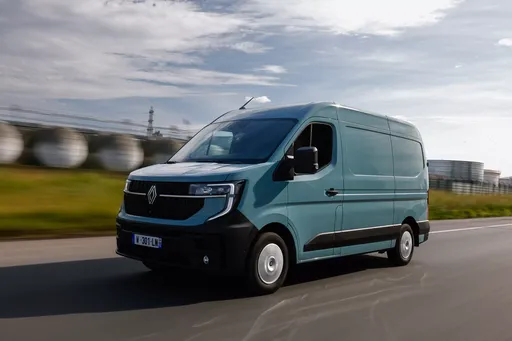
Renault Master Transporter Cargo Van, starting at 38,600 £

The Renault Master is a pragmatic workhorse that swallows cargo with an unbothered grin, offering clever practicality and load-friendly packaging for tradespeople and fleet buyers. It won’t excite like a sports car, but it steers predictably, runs economically and gets the job done day after day — like a reliable colleague who never calls in sick.

Reviews & community

All real reviews and experiences about the Renault Master Transporter in one place.

To community

Technical data, trims & prices

All technical data, dimensions and equipment details of this model at a glance.

To technical data

Alternative car models

Discover similar models and possible alternatives to this vehicle.

To alternatives

from £38,600
Master Transporter

Renault Master Transporter

  • Engine Type Electric, Diesel
  • Transmission Automatic, Manuel
  • Drive Type Front-Wheel Drive, Rear-Wheel Drive
  • Power HP 130 - 170 HP
  • Consumption L/100km 6.8 - 12.1 L/100km
  • Consumption kWh/100km 22.6 - 25.7 kWh/100km
  • Electric Range 177 - 448 km

Street Smarts and Jobsite Presence

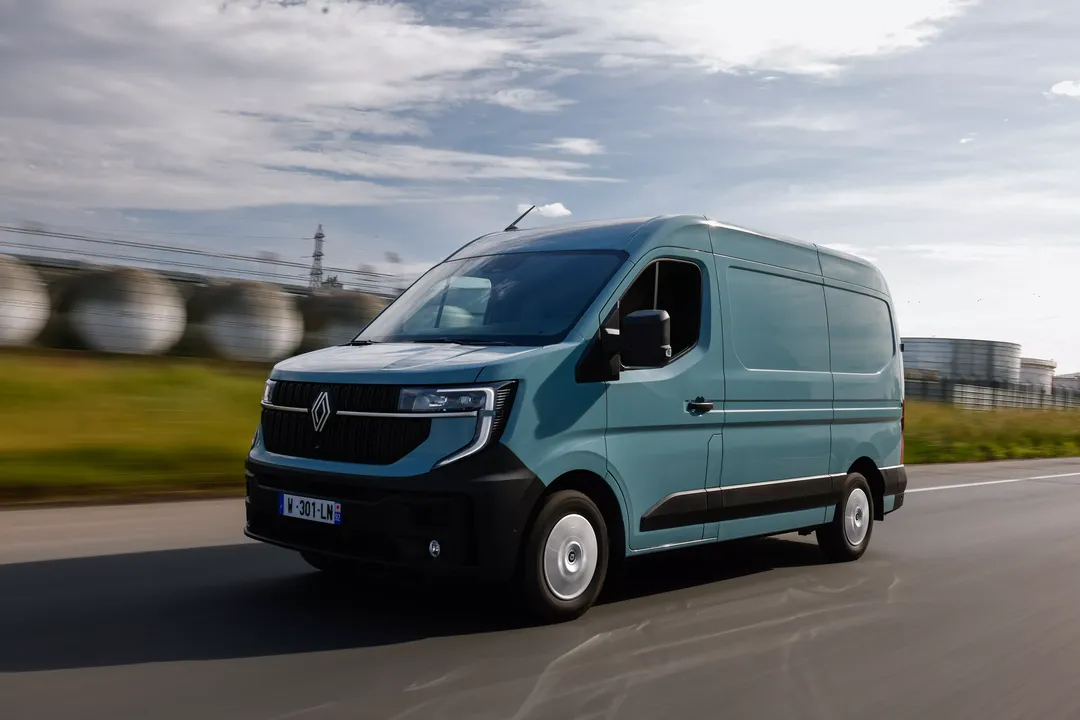
The Master arrives with the blunt, businesslike looks expected of a large van: boxy but purposeful, with a high roof and a wide stance that reads “serious load-lugger” from the kerb. Proportions stretch up to 6,315 mm in length and 2,778 mm in height in the largest layouts, so it dominates parking bays but rewards with usable volume. The front end is modern enough to avoid looking dated, and the sliding side doors and high rear barn doors are executed for easy access rather than ego. For fleet buyers the result is a pragmatic, unmistakable presence that prefers utility over vanity.
Cabin: Built to Work, Not to Impress

The driver's environment is plain, tough and ergonomically arranged with large switches and hard-wearing plastics designed to survive daily use rather than pamper. Seating is available for 3 or 6 occupants depending on spec, and the cabin hides a surprising number of clever storage nooks and under-seat cubbies that make life on the road less cluttered. Comfort levels are reasonable for long days when seats are specified with better padding, but the overall feel remains commercial rather than premium. Visibility is generous and controls are designed to be used with gloves on, which is exactly the point for many buyers.

How Much Stuff Can It Swallow?

This is where the Master makes its case: cargo volume ranges up to around 14.8 m³ (14,800 L) in the biggest box configurations, and payloads can approach 1,859 kg in heavy-duty variants, so multi-pallet loads and trade equipment fit comfortably. Multiple length (L2/L3) and height (H2/H3) combinations mean the van can be tailored to courier routes, construction tasks or specialist conversions like refrigerated bodies. Practical details such as a wide rear aperture and low load sill height help in everyday loading, and the standard 80 L fuel tank on diesels reduces downtime between stops. For operators needing capacity, the Master is a functional workhorse rather than a compromise.

On the Road: Predictable, Capable, Functional

Front-wheel drive layout keeps the floor low and loading convenient, and available engines cover a wide spread from 105 to 170 hp with torque figures around 330–380 Nm, so it’s easy to pick a powertrain matched to the job. Unladen it can feel a touch floaty and tall vehicles will expose crosswinds, but with a load the ride settles and the chassis behaves predictably for motorway runs and urban routes alike. Manual and automatic gearboxes are offered, and the higher-output engines make overtaking and hill climbs noticeably less stressful. Steering is light at low speeds for manoeuvring and steady at pace, which is exactly what fleet drivers want by midweek.

Fuel Bills, Electrons and Real-World Range

Diesel versions quoted around 6.8–7.7 L/100 km mean decent economy for a vehicle of this size, translating to roughly 1,000–1,200 km between fill-ups from the 80 L tank depending on load and driving conditions. The electric E-Tech long-range variants offer a WLTP-ish reach of about 406–448 km with consumption near 22.7–25.3 kWh/100 km, making them realistic for city distribution and zero-emission zones on a daily-charge cycle. Choosing diesel still makes sense for long, mixed routes or heavy payloads, while the electric Master suits inner-city fleets focused on emissions and running-cost savings. Total cost of ownership will depend heavily on duty cycle, incentives and charging infrastructure for EV buyers.

Tech and Safety: Useful, Not Flashy

Infotainment ranges from basic radio and smartphone mirroring to larger touchscreens and navigation on higher trims, and connected services are available for fleet telematics and route planning. Driver assistance features such as automatic emergency braking, lane-keeping aids, blind-spot warnings and optional 360-degree cameras are offered to reduce stress in urban driving and loading situations. The combination of practical screens, simple menus and sensible safety aids keeps the focus on reducing operator downtime rather than on gimmicks. For fleet managers, the technology package is about improving efficiency and lowering accident risk rather than entertainment value.

Who Should Buy the Master?

The Renault Master is aimed squarely at tradespeople, small-to-medium fleets and operators who need configurable cargo space, robust payloads and a straightforward, low-floor load bay. Choose a lower-output 105–130 hp diesel for city delivery and light loads, or the 150–170 hp variants for heavier, long-distance duties; electric E-Tech long-range models suit urban, emissions-sensitive operations. Pricing and spec flexibility make it an efficient choice for builders, couriers and conversion specialists who value practicality above frills. In short: it’s a dependable work van that does the job with minimal fuss and plenty of useful options to match the mission.

Costs and Consumption

Price
38,600 - 54,600 £
Consumption L/100km
6.8 - 12.1 L/100km
Consumption kWh/100km
22.6 - 25.7 kWh/100km
Electric Range
177 - 448 km
Battery Capacity
-
co2
0 - 318 g/km
Fuel tank capacity
-

Dimensions and Body

Body Type
Cargo Van
Seats
3
Doors
-
Curb weight
2,128 - 2,598 kg
Trunk capacity
-
Length
-
Width
2,080 mm
Height
-
Max trunk capacity
-
Payload
902 - 1,846 kg

Engine and Performance

Engine Type
Electric, Diesel
Transmission
Automatic, Manuel
Transmission Detail
Reduction Gearbox, Manual Gearbox, Automatic Gearbox
Drive Type
Front-Wheel Drive, Rear-Wheel Drive
Power HP
130 - 170 HP
Acceleration 0-100km/h
13.5 s
Max Speed
-
Torque
300 - 380 Nm
Number of Cylinders
4
Power kW
96 - 125 kW
Engine capacity
1,997 cm3

General

Model Year
2,024 - 2,026
CO2 Efficiency Class
A, G
Brand
Renault
What drive types are available for the Renault Master Transporter?

Available configurations include Front-Wheel Drive or Rear-Wheel Drive.

DriveDuel uses data analysis and artificial intelligence to evaluate vehicle data and create content. Content is regularly reviewed and improved. The displayed prices are estimates based on German list prices, adjusted to the respective country’s VAT. Country-specific registration taxes are not included. This information is not legally binding.