
VS

Nissan Interstar vs Renault Master Transporter comparison

Compare performance (170 HP vs 170 HP), boot space and price (36,200 £ vs 38,600 £ ) at a glance. Find out which car is the better choice for you – Nissan Interstar or Renault Master Transporter?

Nissan Interstar vs Renault Master Transporter: Key differences

Nissan Interstar

  • very slightly cheaper
  • marginally lighter
details

Renault Master Transporter

  • slightly more efficient
  • barely more electric range
details

By Achim Sedelmaier

Interstar

Overview: Nissan Interstar VS Renault Master Transporter

Nissan Interstar VS Renault Master Transporter pits two large European workhorses against one another: the Interstar brings a city‑savvy, safety‑focused package while the Master leans harder into load access and in‑cab tech. The Nissan feels like a modern utility vehicle built around low running costs and easy manoeuvring, whereas the Renault trades a touch more bulk for smarter cargo access and a snappier infotainment experience. Both aim at fleets and tradespeople, but they arrive with different emphases that matter on the jobsite. Read on for the real differences that change daily life rather than spec sheets.
Master Transporter

Character and driving feel

Nissan Interstar drives with a city‑first temperament: light steering, excellent forward visibility and confident low‑speed control make tight streets and loading bays less stressful. Renault Master Transporter, by contrast, feels more composed when you stretch its legs—its steering and chassis inspire a steadier, more planted impression on longer runs. The Interstar’s electric variant is whisper‑quiet and very efficient around town but tends to feel busier at higher motorway speeds; Master’s electric option keeps range and load friendliness in sharper focus. In short, pick the Interstar if your day is stop‑start and urban, choose the Master if your routes mix long stretches and heavier cargo work.

Comfort and cabin quality

The Nissan Interstar cabin is functional and roomy up front, with seats designed for long shifts but some traditional touches that betray its utilitarian roots—expect manual handbrake and conventional controls. The Renault Master Transporter trades soft‑touch ambition for a workmanlike but well laid‑out cockpit, and its Google‑based infotainment generally feels faster and more intuitive in daily use. Both cabins favour durability over luxury, yet the Interstar’s quieter electric setup and slightly more ergonomic seating can make a long day feel less tiring. If cabin tech and slick screens are a priority, the Master has the edge; if low noise and straightforward ergonomics matter, the Interstar will please.

Practicality and loadspace usability

When it comes to carrying and converting, Renault Master Transporter clearly prioritises access: a longer, more usable load floor and wider side entry make loading faster and fitting racking simpler for tradespeople and conversion specialists. Nissan Interstar keeps pace on pure volume in many layouts but scores when you need extra seating up front or a marginally lighter vehicle to help meet weight limits. The Master’s broader variant list and creator‑friendly electrical options suit upfitters and businesses that customise vehicles heavily, while the Interstar is a tidier, often cheaper base for standard fleet use. Decide whether you need the Master’s superior access and payload flexibility or the Interstar’s easier footprint and crew options.

City friendliness versus long‑distance behavior

In congested streets the Nissan Interstar feels noticeably more agile: smaller turning circles, excellent mirror visibility and useful parking aids make urban deliveries less nerve‑wracking. Renault Master Transporter narrows the gap with improved manoeuvrability for its size, but its greater width still shows up in very tight lanes and narrow historic centres. On the motorway the Master tends to feel more at ease with sustained cruising and its electric variant keeps range and load in balance, whereas the Interstar’s electric model is especially economical in mixed use but can feel taxed at sustained high speeds. So urban‑heavy operators will lean to the Interstar, while those who regularly mix long hauls with heavy loads will prefer the Master’s highway composure.

Buyer fit and next steps before the technical comparison

If your fleet lives in dense urban routes, values a reassuring safety package and wants an efficient electric option, the Nissan Interstar maps neatly onto that brief; it’s the easier city partner with lower running‑cost focus. If your priority is maximum load access, richer infotainment, and a base that’s straightforward to convert or spec for heavy payloads, the Renault Master Transporter will usually feel more practical day to day. Both are solid, pragmatic choices for trades and fleets, but the right pick depends on whether agility and onboard calm (Interstar) or cargo accessibility and in‑cab tech (Master) matter most. Below you’ll find the technical comparison to translate those practical differences into the exact figures and options that clinch a purchase decision.

Here’s where it gets real: The technical differences in detail

Interstar

Costs and Efficiency:

Looking at overall running costs, both models reveal some interesting differences in everyday economy.

Nissan Interstar is very slightly cheaper – starting at 36,200 £ , while the Renault Master Transporter costs 38,600 £ . That’s a price difference of around 2,488 £.

Fuel consumption also shows a difference: the Renault Master Transporter uses 6.8 L/100km and is slightly more efficient than the Nissan Interstar with 7.5 L/100km. The difference is about 0.7 L/100km.

As for electric range, the Renault Master Transporter offers barely more range – reaching up to 448 km, about 38 km more than the Nissan Interstar.

Master Transporter

Engine and Performance:

Power, torque and acceleration are the classic benchmarks for car enthusiasts – and here, some clear differences start to show.

Both models deliver identical power – 170 HP each.

Both models offer the same torque – 380 Nm.

Space and Everyday Use:

Whether family car or daily driver – which one offers more room, flexibility and comfort?

Both vehicles offer seating for 3 people.

In terms of curb weight, Nissan Interstar is marginally lighter – 2,053 kg compared to 2,128 kg. The difference is around 75 kg.

When it comes to payload, the Renault Master Transporter carries visibly more – 1,846 kg compared to 1,447 kg. That’s a difference of about 399 kg.

Who wins the race in the data check?

The Renault Master Transporter has the upper hand in the objective data comparison.
This result only shows which model scores more points on paper – not which of the two cars feels right for you.

from £38,600
Master Transporter

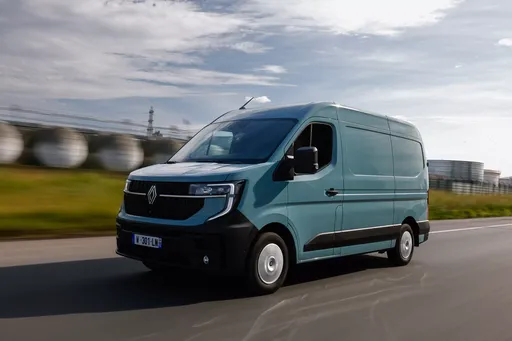
Renault Master Transporter

  • Engine Type Electric, Diesel
  • Transmission Automatic, Manuel
  • Drive Type Front-Wheel Drive, Rear-Wheel Drive
  • Power HP 130 - 170 HP
  • Consumption L/100km 6.8 - 12.1 L/100km
  • Consumption kWh/100km 22.6 - 25.7 kWh/100km
  • Electric Range 177 - 448 km
Nissan Interstar
Renault Master Transporter

Costs and Consumption

View detailed analysis

Engine and Performance

View detailed analysis

Dimensions and Body

View detailed analysis

Nissan Interstar

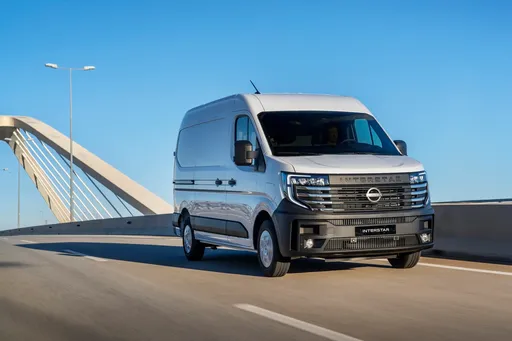
The Nissan Interstar is a sensible, no-nonsense panel van that puts practicality front and center, with a cavernous load area and a durable feel built for daily work. It drives with surprising composure for its size, keeps running costs modest, and feels like the kind of professional tool that prefers reliable service over flashy showboating.

details

Renault Master Transporter

The Renault Master is a pragmatic workhorse that swallows cargo with an unbothered grin, offering clever practicality and load-friendly packaging for tradespeople and fleet buyers. It won’t excite like a sports car, but it steers predictably, runs economically and gets the job done day after day — like a reliable colleague who never calls in sick.

details
Nissan Interstar
Renault Master Transporter

Costs and Consumption

Price
36,200 - 54,800 £
Price
38,600 - 54,600 £
Consumption L/100km
7.5 - 7.8 L/100km
Consumption L/100km
6.8 - 12.1 L/100km
Consumption kWh/100km
-
Consumption kWh/100km
22.6 - 25.7 kWh/100km
Electric Range
410 km
Electric Range
177 - 448 km
Battery Capacity
-
Battery Capacity
-
co2
0 - 205 g/km
co2
0 - 318 g/km
Fuel tank capacity
-
Fuel tank capacity
-

Dimensions and Body

Body Type
Cargo Van
Body Type
Cargo Van
Seats
3
Seats
3
Doors
-
Doors
-
Curb weight
2,053 - 2,455 kg
Curb weight
2,128 - 2,598 kg
Trunk capacity
-
Trunk capacity
-
Length
-
Length
-
Width
2,080 mm
Width
2,080 mm
Height
-
Height
-
Max trunk capacity
-
Max trunk capacity
-
Payload
1,045 - 1,447 kg
Payload
902 - 1,846 kg

Engine and Performance

Engine Type
Diesel, Electric
Engine Type
Electric, Diesel
Transmission
Manuel, Automatic
Transmission
Automatic, Manuel
Transmission Detail
Manual Gearbox, Automatic Gearbox, Reduction Gearbox
Transmission Detail
Reduction Gearbox, Manual Gearbox, Automatic Gearbox
Drive Type
Front-Wheel Drive
Drive Type
Front-Wheel Drive, Rear-Wheel Drive
Power HP
130 - 170 HP
Power HP
130 - 170 HP
Acceleration 0-100km/h
-
Acceleration 0-100km/h
13.5 s
Max Speed
-
Max Speed
-
Torque
300 - 380 Nm
Torque
300 - 380 Nm
Number of Cylinders
4
Number of Cylinders
4
Power kW
96 - 125 kW
Power kW
96 - 125 kW
Engine capacity
1,997 cm3
Engine capacity
1,997 cm3

General

Model Year
2024
Model Year
2,024 - 2,026
CO2 Efficiency Class
G, A
CO2 Efficiency Class
A, G
Brand
Nissan
Brand
Renault
DriveDuel uses data analysis and artificial intelligence to evaluate vehicle data and create content. Content is regularly reviewed and improved. The displayed prices are estimates based on German list prices, adjusted to the respective country’s VAT. Country-specific registration taxes are not included. This information is not legally binding.








