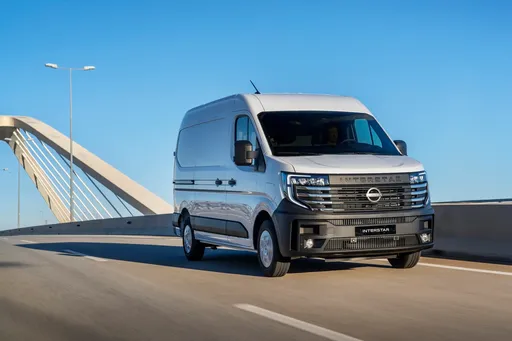
Nissan Interstar Cargo Van, starting at 36,200 £

The Nissan Interstar is a sensible, no-nonsense panel van that puts practicality front and center, with a cavernous load area and a durable feel built for daily work. It drives with surprising composure for its size, keeps running costs modest, and feels like the kind of professional tool that prefers reliable service over flashy showboating.

Reviews & community

All real reviews and experiences about the Nissan Interstar in one place.

To community

Technical data, trims & prices

All technical data, dimensions and equipment details of this model at a glance.

To technical data

Alternative car models

Discover similar models and possible alternatives to this vehicle.

To alternatives

from £36,200
Interstar

Nissan Interstar

  • Engine Type Diesel, Electric
  • Transmission Manuel, Automatic
  • Drive Type Front-Wheel Drive
  • Power HP 130 - 170 HP
  • Consumption L/100km 7.5 - 7.8 L/100km
  • Electric Range 410 km

Design & Presence

The Nissan Interstar keeps things honest with a boxy, workmanlike silhouette that prioritises cargo space over showy curves; it stretches from roughly 5.68 m to 6.32 m in length and up to about 2.76 m in height depending on the body version, so it stands out on the road for the right reasons. The face carries Nissan family cues but is dominated by a large grille and practical bumpers that will take a few knocks on the job without complaint. Practical exterior details — high roof options, wide sliding doors and tall rear apertures — underline the van’s tradesman focus rather than lifestyle pretence. On the pavement the Interstar looks purposeful and sensible, signalling capability more than luxury.
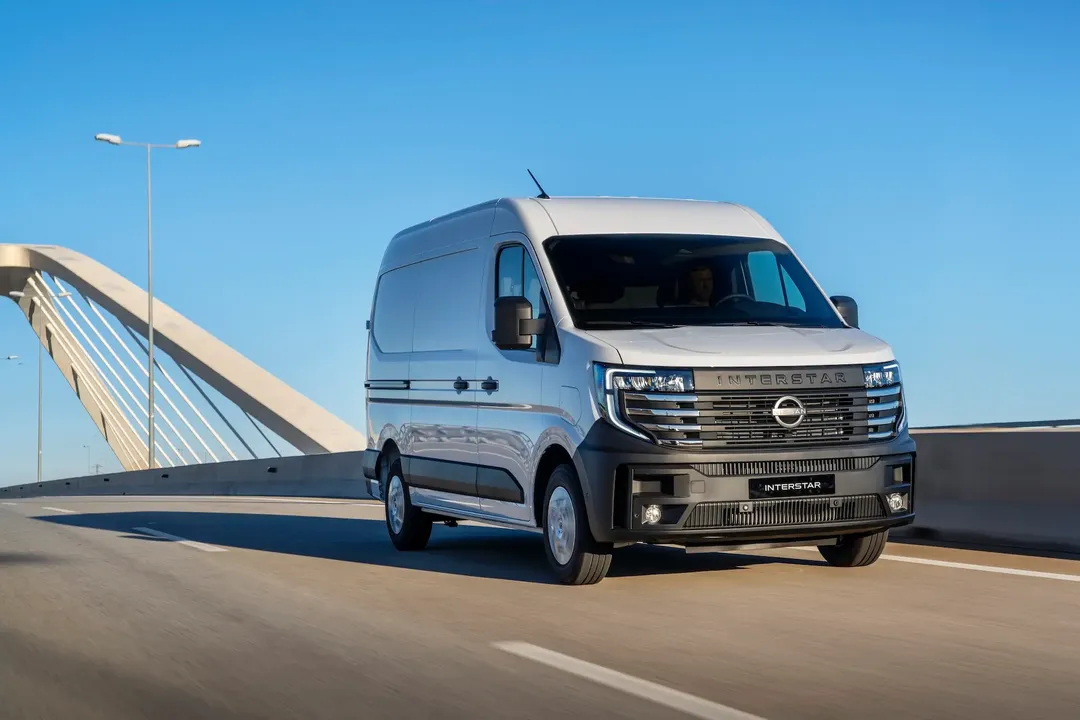
Interior & Usability

The cabin is functional and hard-wearing with materials chosen for durability rather than delight; surfaces shrug off dirt and the switches are straightforward to use even with work gloves on. Seating choices include traditional three-seat layouts or crew options up to seven, and ergonomics favour long hours in traffic with sensible visibility and a raised seating position. Storage is generous with multiple cubbies and large door pockets that swallow paperwork, tools and a thermos, and the optional infotainment sits within easy reach of the driver. Controls are logical and built for repetitive use, which is exactly what a commercial driver needs.

Space & Everyday Practicality

Space is where the Interstar makes its case: maximum cargo volumes extend into the thousands of litres with tailorable L2 and L3 lengths and H2/H3 roof choices, and a quoted maximum trunk capacity up to around 14,800 litres for the largest layout. Payload figures reach well above a tonne on many variants — up to roughly 1,447 kg in the most capable spec — so it handles pallets or heavy kit without drama. The low-ish load lip and wide rear doors make daily loading and unloading less of a wrestling match, while crew-cab and double-cab options keep passengers and gear separated when needed. For urban deliveries and trades requiring frequent gear changes, the Interstar’s modular cargo space is a clear advantage.

Driving & Handling

All-wheel concerns are avoided by a front-wheel-drive layout that keeps weight over the driven wheels for better traction when loaded, and the diesel range spans 105 to 170 hp with torque figures roughly from 330 to 380 Nm depending on the engine choice. Manual and automatic gearboxes are available, and the driving experience is typical of large vans: composed at low speeds, stable on the motorway, and predictably understeering when pushed hard. Suspension prioritises load-carrying and comfort when empty, which can feel firm but steady with cargo aboard, and manoeuvring in tight streets benefits from the Interstar’s fairly direct steering and decent visibility. Overall, it’s engineered for predictable, no-nonsense duty rather than sporting thrills.

Efficiency, Consumption & Range

Diesel consumption is quoted around 7.4–7.5 L/100 km for the common dCi options, which translates into long real-world driving ranges when paired with the 80-litre fuel tank — theoretically more than 1,000 km between fill-ups on steady roads. For zero-emission needs the Interstar-e is offered with two battery sizes: a 40 kWh pack giving about 175 km and an 87 kWh pack reaching roughly 410 km WLTP; the smaller battery suits inner-city routes while the larger one allows for longer shifts between charges. CO2 output for diesel variants sits in the higher bands, reflecting their work-vehicle focus rather than eco-car ambitions. In practice, choice of powertrain should be matched to daily duty cycle: short urban runs benefit from electric drive, long-haul or heavy payloads still favour the diesel range.

Assistance & Infotainment

Infotainment and assistance are functional rather than flashy, with touchscreen options, smartphone integration and fleet-friendly telematics typically available to make route planning and job management easier. Safety aids commonly fitted to modern vans, such as reversing cameras, parking sensors and basic driver-assist systems, help reduce the stress of tight deliveries and crowded worksites. The Interstar’s equipment focuses on practical tech that improves uptime — clear displays, usable menus and straightforward connectivity rather than headline-grabbing gimmicks. For fleet buyers, the ability to spec useful driver aids and telematics often outweighs premium cabin luxuries.

Who is it for?

The Interstar suits businesses and tradespeople who need a robust, sensible cargo van with flexible volume and a choice of drivetrains to match routes and regulations, from 105 hp city runners to 170 hp motorway workhorses. Fleets that require a mix of crew-cab, long-wheelbase or high-roof variants will appreciate the broad model range and the availability of both diesel and electric powertrains for different use cases. Owners that prioritise reliability, payload and straightforward operation over boutique interiors or sporty handling will find the Interstar a pragmatic tool. In short, it’s built for work: efficient, adaptable and designed to keep a jobsite moving without fuss.

Costs and Consumption

Price
36,200 - 54,800 £
Consumption L/100km
7.5 - 7.8 L/100km
Consumption kWh/100km
-
Electric Range
410 km
Battery Capacity
-
co2
0 - 205 g/km
Fuel tank capacity
-

Dimensions and Body

Body Type
Cargo Van
Seats
3
Doors
-
Curb weight
2,053 - 2,455 kg
Trunk capacity
-
Length
-
Width
2,080 mm
Height
-
Max trunk capacity
-
Payload
1,045 - 1,447 kg

Engine and Performance

Engine Type
Diesel, Electric
Transmission
Manuel, Automatic
Transmission Detail
Manual Gearbox, Automatic Gearbox, Reduction Gearbox
Drive Type
Front-Wheel Drive
Power HP
130 - 170 HP
Acceleration 0-100km/h
-
Max Speed
-
Torque
300 - 380 Nm
Number of Cylinders
4
Power kW
96 - 125 kW
Engine capacity
1,997 cm3

General

Model Year
2024
CO2 Efficiency Class
G, A
Brand
Nissan
Is the Nissan Interstar offered with different drivetrains?

Available configurations include Front-Wheel Drive.

DriveDuel uses data analysis and artificial intelligence to evaluate vehicle data and create content. Content is regularly reviewed and improved. The displayed prices are estimates based on German list prices, adjusted to the respective country’s VAT. Country-specific registration taxes are not included. This information is not legally binding.