VS

Fiat Ducato vs Toyota Proace Transporter comparison

Compare performance (270 HP vs 150 HP), boot space and price (34,300 £ vs 31,600 £ ) at a glance. Find out which car is the better choice for you – Fiat Ducato or Toyota Proace Transporter?

Fiat Ducato vs Toyota Proace Transporter: Key differences

Fiat Ducato

  • clearly more power
  • a bit more electric range

Toyota Proace Transporter

  • only slightly cheaper
  • a bit more efficient
  • markedly lighter

By Achim Sedelmaier

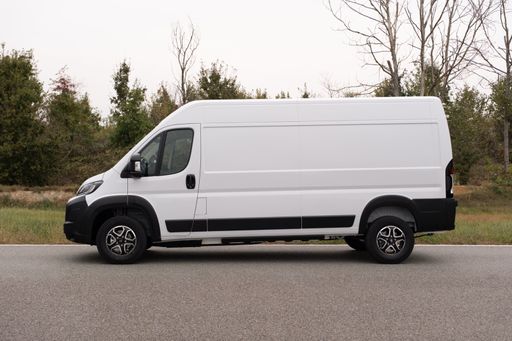
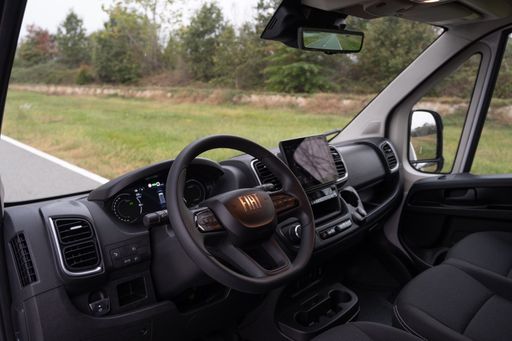
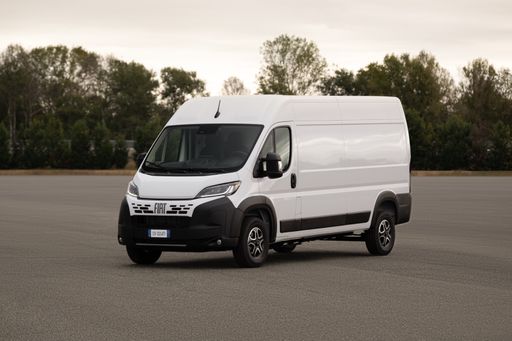
Ducato

The Ultimate Cargo Van Showdown: Fiat Ducato vs Toyota Proace Transporter

When it comes to choosing a reliable cargo van, the market presents a variety of options promising efficiency, capacity, and modern technologies. Two models at the forefront are the Fiat Ducato and the Toyota Proace Transporter. Both are giants in their respective rights, offering unique features and capabilities. This article delves into a comparison of their technical aspects and innovations to help you make an informed decision.
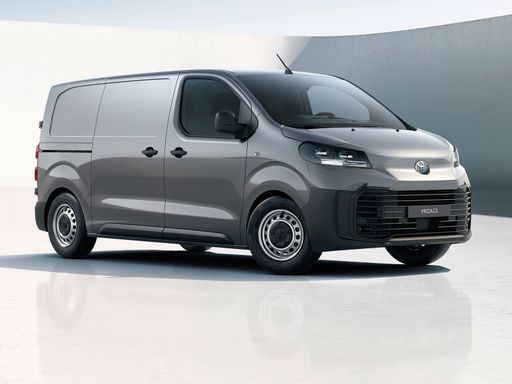
Proace Transporter

Performance and Power

The Fiat Ducato offers a range of engine options, from diesel to electric, with power ratings between 120 HP and 270 HP. This versatility allows for a broad spectrum of uses, from light city driving to heavy-duty tasks. Torque on the Ducato ranges from 320 Nm to 450 Nm, providing the muscle needed for demanding hauling jobs.

The Toyota Proace Transporter, however, comes with engine power ranging from 120 HP to 144 HP. Although slightly less potent than the Ducato, the Proace balances performance with economy. It delivers torque between 260 Nm and 370 Nm, ensuring solid and consistent performance for its class.

Ducato

Fuel Economy and Environmental Impact

Fuel efficiency remains a critical factor for cargo vans. The Fiat Ducato has a consumption range between 7.2 to 9.3 L/100km for diesel variants and offers an impressive electric range of 430 km, targeting eco-conscious drivers.

The Toyota Proace Transporter offers a competitive advantage with diesel consumption rates from 6.6 to 7.6 L/100km, presenting a more economical choice for long-haul driving. Additionally, the electric variant offers an electric range of up to 349 km, making it a commendable choice for emission-sensitive urban environments.

Dimensions and Capacity

The Fiat Ducato boasts a length spectrum from 5413 mm to 6678 mm, a width of up to 2100 mm, and varies in height up to 2774 mm. This range ensures that there’s a model to suit differing storage and maneuverability needs. Moreover, with payload capacities reaching up to 1425 kg, the Ducato proves itself as a robust workhorse.

In comparison, the Toyota Proace Transporter is slightly more compact, with lengths from 4980 mm to 5330 mm and a maximum width of 1920 mm. Its height tops out at around 1935 mm, offering a significant advantage in tight urban settings. The Proace's payload capabilities range up to 1496 kg, showcasing its suitability for diverse cargo solutions.

Technological Features and Comfort

Both models are equipped with modern transmission systems, offering manual, automatic, and reduction gearboxes to cater to different driving preferences. The Ducato comes with a four-door setup, ideal for easy access to storage, while the Proace Transporter provides flexibility with four and five-door options, catering to varying crew transport needs.

On the front of technological innovation, both vehicles strive for efficiency and eco-friendliness. The Ducato leads with CO2 emission ratings as low as 148 g/km for certain models, while the Proace also focuses on reducing its environmental impact with a zero-emission electric variant.

Conclusion: Which Van Comes Out on Top?

The choice between the Fiat Ducato and Toyota Proace Transporter largely depends on specific business needs. While the Ducato offers higher power options and a broader range of capacities, the Proace stands out with its fuel efficiency and nimbleness, especially in urban settings.

Ultimately, both vehicles present excellent options with their innovative engineering, ensuring reliability and performance for any commercial needs. The decision may come down to a balance between power and economy, depending on what drives your business on the road.

Here’s where it gets real: The technical differences in detail

Ducato

Costs and Efficiency:

When it comes to price and running costs, the biggest differences usually appear. This is often where you see which car fits your budget better in the long run.

Toyota Proace Transporter is only slightly cheaper – starting at 31,600 £ , while the Fiat Ducato costs 34,300 £ . That’s a price difference of around 2,688 £.

Fuel consumption also shows a difference: the Toyota Proace Transporter uses 6.4 L/100km and is a bit more efficient than the Fiat Ducato with 7.5 L/100km. The difference is about 1.1 L/100km.

As for electric range, the Fiat Ducato offers a bit more range – reaching up to 430 km, about 81 km more than the Toyota Proace Transporter.

Proace Transporter

Engine and Performance:

Power, torque and acceleration say a lot about how a car feels on the road. This is where you see which model delivers more driving dynamics.

When it comes to engine power, the Fiat Ducato offers clearly more power – delivering 270 HP compared to 150 HP. That’s roughly 120 HP more horsepower.

Looking at top speed, the Fiat Ducato is noticeably faster – reaching 165 km/h, while the Toyota Proace Transporter tops out at 130 km/h. The difference is around 35 km/h.

There’s also a difference in torque: the Fiat Ducato delivers somewhat more torque with 450 Nm compared to 370 Nm. That’s about 80 Nm more.

Ducato

Space and Everyday Use:

Cabin size, boot volume and payload all play a role in everyday practicality. Here, comfort and flexibility make the difference.

Seats: Toyota Proace Transporter offers more seats – 6 vs 3.

In terms of curb weight, Toyota Proace Transporter is markedly lighter – 1,656 kg compared to 2,125 kg. The difference is around 469 kg.

For maximum load capacity, the Fiat Ducato offers substantially more capacity – up to 17,000 L, about 10,400 L more than the Toyota Proace Transporter.

When it comes to payload, the Fiat Ducato carries markedly more – 2,020 kg compared to 1,323 kg. That’s a difference of about 697 kg.

Who wins the race in the data check?

The Fiat Ducato is clearly superior overall in the objective data comparison.
This result only shows which model scores more points on paper – not which of the two cars feels right for you.

from £34,300
Ducato

Fiat Ducato

  • Engine Type : Diesel, Electric
  • Transmission : Manuel, Automatic
  • Drive Type : Front-Wheel Drive
  • Power HP : 120 - 270 HP
  • Consumption L/100km : 7.5 - 9 L/100km
  • Electric Range : 430 km
Fiat Ducato
Toyota Proace Transporter

Costs and Consumption

View detailed analysis

Engine and Performance

View detailed analysis

Dimensions and Body

View detailed analysis

Fiat Ducato

The Fiat Ducato is a no-nonsense workhorse that turns practicality into an artform, with a cavernous, flexible load area and predictable, car-like driving manners that make long days behind the wheel far less tedious. It’s equally at home with a tradesman’s kit or a camper conversion, offering sensible packaging, easy servicing and the sort of reliability that keeps surprises—and down-time—to a minimum.

details

Toyota Proace Transporter

The Toyota Proace Transporter is a no-nonsense work van that pairs Toyota’s dependable reputation with smart practicality, so you can load, drive and finish the job without unnecessary drama. It won’t win design awards, but with a comfortable cab, sensible feature set and a focus on getting things done, it quietly keeps fleets and small businesses smiling.

details
Fiat Ducato
Toyota Proace Transporter

Costs and Consumption

Price
34,300 - 57,800 £
Price
31,600 - 51,000 £
Consumption L/100km
7.5 - 9 L/100km
Consumption L/100km
6.4 - 6.7 L/100km
Consumption kWh/100km
-
Consumption kWh/100km
23.8 - 23.9 kWh/100km
Electric Range
430 km
Electric Range
221 - 349 km
Battery Capacity
-
Battery Capacity
-
co2
0 - 233 g/km
co2
0 - 177 g/km
Fuel tank capacity
90 L
Fuel tank capacity
-

Dimensions and Body

Body Type
Cargo Van
Body Type
Cargo Van
Seats
3
Seats
3 - 6
Doors
4
Doors
4
Curb weight
2,125 - 2,940 kg
Curb weight
1,656 - 2,100 kg
Trunk capacity
-
Trunk capacity
-
Length
5,413 - 6,678 mm
Length
4,980 - 5,330 mm
Width
2,050 - 2,100 mm
Width
1,920 mm
Height
2,254 - 2,774 mm
Height
1,895 - 1,935 mm
Max trunk capacity
10,000 - 17,000 L
Max trunk capacity
5,300 - 6,600 L
Payload
560 - 2,020 kg
Payload
955 - 1,323 kg

Engine and Performance

Engine Type
Diesel, Electric
Engine Type
Electric, Diesel
Transmission
Manuel, Automatic
Transmission
Automatic, Manuel
Transmission Detail
Manual Gearbox, Automatic Gearbox, Reduction Gearbox
Transmission Detail
Reduction Gearbox, Manual Gearbox, Automatic Gearbox
Drive Type
Front-Wheel Drive
Drive Type
Front-Wheel Drive
Power HP
120 - 270 HP
Power HP
120 - 150 HP
Acceleration 0-100km/h
-
Acceleration 0-100km/h
12.1 - 13.3 s
Max Speed
90 - 165 km/h
Max Speed
130 km/h
Torque
320 - 450 Nm
Torque
260 - 370 Nm
Number of Cylinders
4
Number of Cylinders
4
Power kW
88 - 200 kW
Power kW
88 - 110 kW
Engine capacity
2,184 cm3
Engine capacity
1,499 - 2,184 cm3

General

Model Year
2,023 - 2,025
Model Year
2,024 - 2,025
CO2 Efficiency Class
G, A
CO2 Efficiency Class
A, F, G
Brand
Fiat
Brand
Toyota
DriveDuel uses data analysis and artificial intelligence to evaluate vehicle data and create content. Content is regularly reviewed and improved. The displayed prices are estimates based on German list prices, adjusted to the respective country’s VAT. Country-specific registration taxes are not included. This information is not legally binding.