VS

Fiat Pandina vs Fiat 500 comparison

Compare performance (65 HP vs 118 HP), boot space and price (14,100 £ vs 17,100 £ ) at a glance. Find out which car is the better choice for you – Fiat Pandina or Fiat 500?

Fiat Pandina vs Fiat 500: Key differences

Fiat Pandina

  • clearly cheaper
  • only slightly more efficient
  • only slightly lighter
  • slightly more trunk space
details

Fiat 500

3.7 (1 Reviews)
rate
  • clearly more power
  • clearly quicker 0–100 km/h
details

All details on performance, efficiency, range and trunk space can be found in the technical comparison below – including user reviews for both models.

By Achim Sedelmaier

Pandina

Fiat 500 VS Fiat Pandina — short take for shoppers

The Fiat 500 and Fiat Pandina arrive at the same small-car party with very different agendas: the 500 dresses up the city commute in style and electric pep, while the Pandina plays the pragmatic, low‑cost everyday role. The 500 immediately sells itself with personality, compact curb appeal and an urban focus that rewards short trips and tight parking. The Pandina trades flash for a straightforward, usable cabin, better seat count and a focus on economy and durability. Choosing between them is largely a question of whether you want a lifestyle city car or a no‑nonsense, budget‑minded runabout.
500

Character and driving feel

The Fiat 500 feels like a city sprinter: instant electric torque gives brisk starts and a lively presence at junctions, but its steering and ride are tuned for tight turns rather than high‑speed composure. By contrast, the Fiat Pandina behaves like a sensible commuter—light steering, predictable responses and a powertrain that conserves fuel but requires more planning when you need brisk acceleration. The 500’s light, playful handling makes urban maneuvers enjoyable, while the Pandina’s measured manners reward relaxed driving and low running costs. If you want spark and personality in town, the 500 delivers; if you prefer calm predictability and thrift, the Pandina will feel more reassuring.

Comfort and cabin feel

The Fiat 500 presents a retro‑styled cabin that feels more fashion‑forward than functional, with materials and ergonomics that emphasise charm over long‑haul plushness. The Fiat Pandina’s interior is plainer but harder‑wearing, offering a more straightforward layout and seating that tends to hold up better on longer errands. Rear passenger space is a clear divider: the 500’s back seats are cosier and best for short hops, whereas the Pandina genuinely accommodates more people for everyday use. Noise and ride comfort also split them—500 is quiet and refined around town but gets wind and road noise at speed, while the Pandina is steadier at cruising speeds though less luxurious overall.

Practicality and everyday usability

Practical differences are where choices get tangible: the Fiat Pandina offers a conventional five‑seat layout and a more useful boot opening, making grocery runs and weekend tasks noticeably easier. The Fiat 500 sacrifices some of that utility for compactness and style—its smaller boot and higher loading lip are awkward with bulky items but irrelevant for minimal city errands. Tech and convenience also diverge: the 500’s modern infotainment and connectivity are geared to a seamless urban lifestyle, whereas the Pandina keeps things simpler and more utilitarian with easy‑to‑use controls and newer safety assistants. For shoppers who value day‑to‑day flexibility, the Pandina is the more pragmatic pick; for those prioritising compact convenience and style, the 500 remains appealing.

City friendliness versus long‑distance behavior

Both cars thrive in town, but they do it for different reasons: the Fiat 500 is built around stop‑start urban life with nimble turning and energetic launches, while the Fiat Pandina focuses on excellent visibility and light controls that make parking and slow‑speed driving effortless. On longer trips the balance shifts—500’s city optimisation means highway runs can become noisy and range‑conscious, prompting more stops and a less relaxed experience. The Pandina will carry on at steady speeds with lower running cost and less drama, but its modest acceleration can feel strained during overtakes and climbs. If most of your miles are inside the city, the 500 rewards that life; if you routinely mix in motorway legs and want fewer compromises, the Pandina is the safer long‑distance companion.

Buyer fit: who should seriously consider each car

The Fiat 500 suits buyers who put design, low urban running costs and modern connectivity at the top of the list—think style‑minded city dwellers, secondary‑car buyers and anyone who prioritises short commutes and easy parking. The Fiat Pandina is aimed at budget‑aware drivers who need five seats, sensible luggage space and the lowest possible everyday operating cost without fuss—young drivers, practical families on a budget and commuters who value predictable running expenses. Each car exposes trade‑offs: 500 trades utility for persona, Pandina trades punch for thrift and usability. Read on to the technical comparison to see how those real‑world differences translate into power, packaging and running costs.

Here’s where it gets real: The technical differences in detail

Pandina

Costs and Efficiency:

Looking at overall running costs, both models reveal some interesting differences in everyday economy.

Fiat Pandina is clearly cheaper – starting at 14,100 £ , while the Fiat 500 costs 17,100 £ . That’s a price difference of around 3,000 £.

Fuel consumption also shows a difference: the Fiat Pandina uses 5 L/100km and is only slightly more efficient than the Fiat 500 with 5.2 L/100km. The difference is about 0.2 L/100km.

500

Engine and Performance:

Under the bonnet, it becomes clear which model is tuned for sportiness and which one takes the lead when you hit the accelerator.

When it comes to engine power, the Fiat 500 offers clearly more power – delivering 118 HP compared to 65 HP. That’s roughly 53 HP more horsepower.

When accelerating from 0 to 100 km/h, the Fiat 500 is clearly quicker – completing the sprint in 9 s, while the Fiat Pandina takes 14.1 s. That’s about 5.1 s quicker.

There’s also a difference in torque: the Fiat 500 delivers considerably more torque with 220 Nm compared to 92 Nm. That’s about 128 Nm more.

Space and Everyday Use:

Cabin size, boot volume and payload all play a role in everyday practicality. Here, comfort and flexibility make the difference.

Seats: Fiat Pandina offers more seats – 5 vs 4.

In terms of curb weight, Fiat Pandina is only slightly lighter – 1,055 kg compared to 1,130 kg. The difference is around 75 kg.

Looking at boot space, the Fiat Pandina offers slightly more boot space – 225 L compared to 185 L. That’s a difference of about 40 L.

When it comes to payload, the Fiat Pandina carries slightly more – 385 kg compared to 325 kg. That’s a difference of about 60 kg.

Who wins the race in the data check?

The Fiat 500 is far ahead overall in the objective data comparison.
This result only shows which model scores more points on paper – not which of the two cars feels right for you.

from £17,100
500

Fiat 500

  • Engine Type Electric, Petrol MHEV
  • Transmission Automatic, Manuel
  • Drive Type Front-Wheel Drive
  • Power HP 65 - 118 HP
  • Consumption L/100km 5.2 - 5.3 L/100km
  • Consumption kWh/100km 13 - 14.7 kWh/100km
  • Electric Range 190 - 331 km
Fiat Pandina
Fiat 500

Costs and Consumption

View detailed analysis

Engine and Performance

View detailed analysis

Dimensions and Body

View detailed analysis

Fiat Pandina

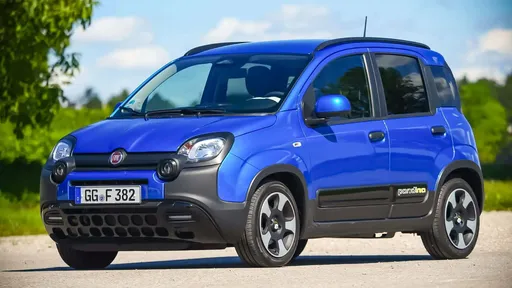
The Fiat Pandina, commonly referred to as a spirited urban companion, boasts a charm that's both nostalgic and contemporary. Its compact design embraces city streets with an agile grace, making it an excellent choice for bustling environments. With a reputation for reliability and an economical approach, the Pandina continues to win hearts as a beloved everyday vehicle.

details

Fiat 500

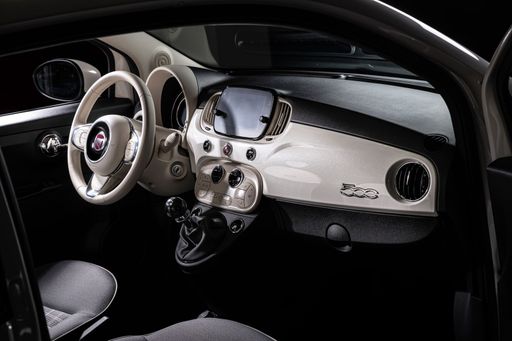
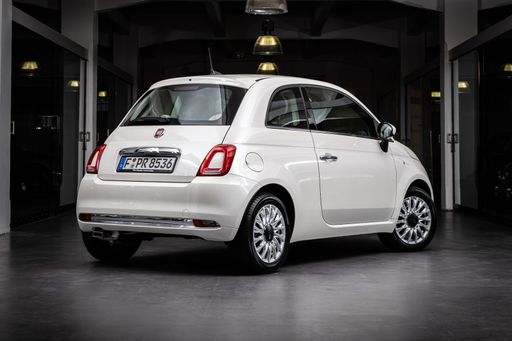
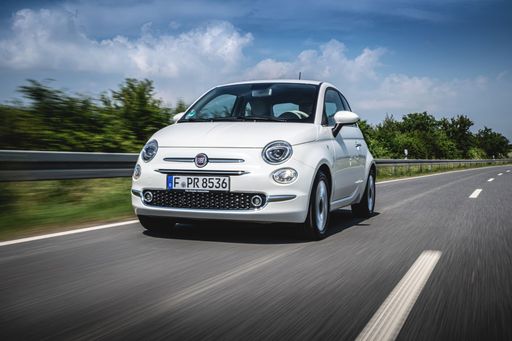
The Fiat 500 is a cheeky, retro‑styled city car that turns heads with its iconic looks and playful personality. Perfect for weaving through tight streets and easing into tiny parking spots, it’s aimed at buyers who want style and character more than grand touring prowess.

details
Fiat Pandina
Fiat 500

Costs and Consumption

Price
14,100 - 18,000 £
Price
17,100 - 27,400 £
Consumption L/100km
5 - 5.1 L/100km
Consumption L/100km
5.2 - 5.3 L/100km
Consumption kWh/100km
-
Consumption kWh/100km
13 - 14.7 kWh/100km
Electric Range
-
Electric Range
190 - 331 km
Battery Capacity
-
Battery Capacity
-
co2
113 - 116 g/km
co2
0 - 121 g/km
Fuel tank capacity
-
Fuel tank capacity
-

Dimensions and Body

Body Type
Hatchback
Body Type
Hatchback
Seats
4 - 5
Seats
4
Doors
-
Doors
-
Curb weight
1,055 kg
Curb weight
1,130 - 1,475 kg
Trunk capacity
225 L
Trunk capacity
183 - 185 L
Length
-
Length
-
Width
1,643 - 1,662 mm
Width
1,683 - 1,684 mm
Height
-
Height
-
Max trunk capacity
-
Max trunk capacity
-
Payload
365 - 385 kg
Payload
250 - 325 kg

Engine and Performance

Engine Type
Petrol MHEV
Engine Type
Electric, Petrol MHEV
Transmission
Manuel
Transmission
Automatic, Manuel
Transmission Detail
Manual Gearbox
Transmission Detail
Reduction Gearbox, Manual Gearbox
Drive Type
Front-Wheel Drive
Drive Type
Front-Wheel Drive
Power HP
65 HP
Power HP
65 - 118 HP
Acceleration 0-100km/h
14.1 - 14.9 s
Acceleration 0-100km/h
9 - 16.2 s
Max Speed
-
Max Speed
-
Torque
92 Nm
Torque
92 - 220 Nm
Number of Cylinders
3
Number of Cylinders
3
Power kW
48 kW
Power kW
48 - 87 kW
Engine capacity
999 cm3
Engine capacity
999 cm3

General

Model Year
2025
Model Year
2025
CO2 Efficiency Class
C, D
CO2 Efficiency Class
A, D
Brand
Fiat
Brand
Fiat
DriveDuel uses data analysis and artificial intelligence to evaluate vehicle data and create content. Content is regularly reviewed and improved. The displayed prices are estimates based on German list prices, adjusted to the respective country’s VAT. Country-specific registration taxes are not included. This information is not legally binding.