VS

Fiat 500 vs Fiat 600 comparison

Compare performance (118 HP vs 156 HP), boot space and price (17,100 £ vs 21,000 £ ) at a glance. Find out which car is the better choice for you – Fiat 500 or Fiat 600?

Fiat 500 vs Fiat 600: Key differences

Fiat 500

3.7 (1 Reviews)
rate
  • clearly cheaper
  • a bit more efficient
  • a bit lighter
details

Fiat 600

4.8 (3 Reviews)
rate
  • noticeably more power
  • only slightly more efficient
  • slightly more electric range
  • barely quicker 0–100 km/h
  • significantly more trunk space
details

All details on performance, efficiency, range and trunk space can be found in the technical comparison below – including user reviews for both models.

By Achim Sedelmaier

500

Head-to-head: Fiat 500 VS Fiat 600 — what this comparison is about

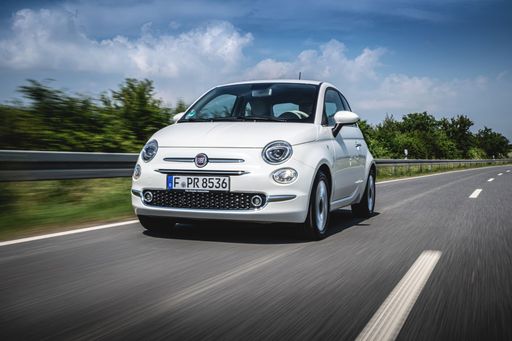
Fiat 500 VS Fiat 600 sets two very different takes on the same Italian mood against each other: the pocket‑sized, design‑led city car and the slightly larger, crossover‑styled practicalist. The Fiat 500 arrives as a charismatic urban tool with a punchy electric feel and unmistakable retro charm, while the Fiat 600 pitches itself as a more versatile small SUV that aims to be family‑friendly without losing personality. Readers should expect a clash of priorities here — style and short‑hop efficiency versus space, comfort and day‑to‑day utility. This piece teases out those trade‑offs in real‑world terms so you can see which car fits your life before we dig into the technical sheet.
600

Character and driving: nimble cheek versus calm composure

The Fiat 500 drives like a city sprinter — light steering, lively electric shove at low speeds and a playful personality that turns tight streets into a playground. By contrast the Fiat 600 feels more relaxed and grown‑up; it soaks up imperfections and trades acute responses for composed, predictable handling that suits longer errands and family runs. If you like a car that reacts and flings itself into corners, the Fiat 500 will flatter you; if you prefer a calm companion that steadies the crew and suppresses noise at normal speeds, the Fiat 600 will feel more mature. Both have their limits at sustained high speeds, but those limits show in different ways: the 500’s small‑car lightness and the 600’s heavier, more laid‑back demeanor.

500

Comfort and long‑distance behavior: where the highway hurts or helps

On short city hops the Fiat 500 is perfectly happy, but its ride can get choppy and its cabin noisier when the road opens up, which makes long motorway runs tiring. The Fiat 600 generally offers a gentler ride and a quieter feel in regular cruising — enough to make weekend trips less of a chore — though the electric version’s long‑distance stamina is clearly oriented to town use. Rear‑seat comfort tells a similar story: the Fiat 500’s back row is best for children and short stints, while the Fiat 600 gives adults a bit more legroom without turning into a full‑size family car. If you plan many long trips or carry grown‑up passengers often, the 600’s composure will matter more; if most journeys are urban blasts, the 500 remains compelling.

600

Practicality and cabin feel: small‑car charm versus useful space

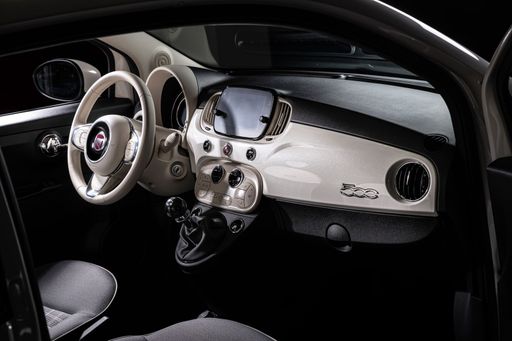
Practical differences are decisive: the Fiat 500 keeps its promises as a chic, compact two‑door with a cleverly styled interior but a modest boot and tight rear seats, so luggage and growing families quickly run into limitations. The Fiat 600 answers with genuine five‑seat flexibility, a noticeably larger boot and a variable load floor that makes everyday hauling easier — tradeoffs that reward buyers who need usable space. Inside, both cars show Fiat’s retro styling language and durable plastics, though the 500 often feels a touch more characterful while the 600 emphasizes function over flair. Your tolerance for cabin materials and how much luggage you carry will tip the scales between these two.

500

City friendliness and everyday usability: parking, tech and patterns

In the city the Fiat 500 is the natural choice for parking, narrow lanes and single‑person commutes — it’s simply easier to place and hustle through traffic, especially if you have home or office charging. The Fiat 600 remains very city‑competent — short overall length and good visibility — but adds five‑door convenience, easier rear access and, if you choose the hybrid, the peace of mind of not needing to plan charging stops. Both cars include modern smartphone mirroring, though the Fiat 600 mixes in more physical controls for climate and everyday buttons, which some buyers find less fiddly on the move. In short, pick the 500 if daily urban agility and electric efficiency at home matter most; pick the 600 if family practicality and switch‑off reliability are higher on your list.

Who should buy which and what to watch for next

If you want a fashionable, compact electric that makes short trips delightful and you can reliably plug in at home, the Fiat 500 is tailored to that urban, lifestyle role; it’s a second car that looks good and wastes little energy in town. If your life needs more seats, a bigger boot and an option that doesn’t always demand a charger — or you want a more composed everyday ride for family duties — the Fiat 600 is the more utilitarian, sensible choice without losing style. Both cars come with compromises in material feel, rear room and high‑speed refinement, so your decision will hinge on which compromises you can live with day‑to‑day. Below we’ll move into the technical comparison to show how those real‑world differences map to powertrains, range, space and running costs so you can match figures to the instincts you’ve just read about.

Here’s where it gets real: The technical differences in detail

500

Costs and Efficiency:

When it comes to price and running costs, the biggest differences usually appear. This is often where you see which car fits your budget better in the long run.

Fiat 500 is clearly cheaper – starting at 17,100 £ , while the Fiat 600 costs 21,000 £ . That’s a price difference of around 3,857 £.

Fuel consumption also shows a difference: the Fiat 600 uses 4.8 L/100km and is only slightly more efficient than the Fiat 500 with 5.2 L/100km. The difference is about 0.4 L/100km.

In terms of energy consumption, the Fiat 500 is a bit more efficient: consuming 13 kWh/100km compared to 15.1 kWh/100km for the Fiat 600. That’s a difference of about 2.1 kWh/100km.

As for electric range, the Fiat 600 offers slightly more range – reaching up to 409 km, about 78 km more than the Fiat 500.

600

Engine and Performance:

Power, torque and acceleration are the classic benchmarks for car enthusiasts – and here, some clear differences start to show.

When it comes to engine power, the Fiat 600 offers noticeably more power – delivering 156 HP compared to 118 HP. That’s roughly 38 HP more horsepower.

When accelerating from 0 to 100 km/h, the Fiat 600 is barely quicker – completing the sprint in 8.5 s, while the Fiat 500 takes 9 s. That’s about 0.5 s quicker.

There’s also a difference in torque: the Fiat 600 delivers a bit more torque with 260 Nm compared to 220 Nm. That’s about 40 Nm more.

500

Space and Everyday Use:

Whether family car or daily driver – which one offers more room, flexibility and comfort?

Seats: Fiat 600 offers more seats – 5 vs 4.

In terms of curb weight, Fiat 500 is a bit lighter – 1,130 kg compared to 1,265 kg. The difference is around 135 kg.

Looking at boot space, the Fiat 600 offers significantly more boot space – 385 L compared to 185 L. That’s a difference of about 200 L.

When it comes to payload, the Fiat 600 carries visibly more – 517 kg compared to 325 kg. That’s a difference of about 192 kg.

Who wins the race in the data check?

The Fiat 600 is far ahead overall in the objective data comparison.
This result only shows which model scores more points on paper – not which of the two cars feels right for you.

from £21,000
600

Fiat 600

  • Engine Type : Petrol MHEV, Electric, Petrol
  • Transmission : Automatic, Manuel
  • Drive Type : Front-Wheel Drive
  • Power HP : 100 - 156 HP
  • Consumption L/100km : 4.8 - 5.7 L/100km
  • Consumption kWh/100km : 15.1 kWh/100km
  • Electric Range : 409 km
Fiat 500
Fiat 600

Costs and Consumption

View detailed analysis

Engine and Performance

View detailed analysis

Dimensions and Body

View detailed analysis

Fiat 500

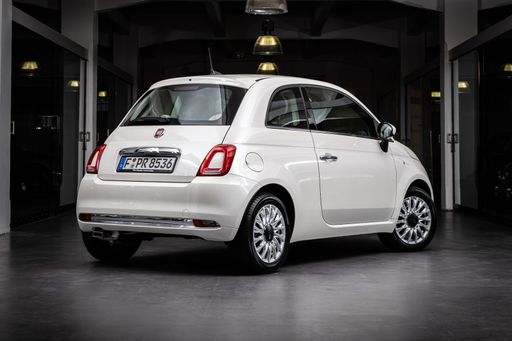
The Fiat 500 is a cheeky, retro‑styled city car that turns heads with its iconic looks and playful personality. Perfect for weaving through tight streets and easing into tiny parking spots, it’s aimed at buyers who want style and character more than grand touring prowess.

details

Fiat 600

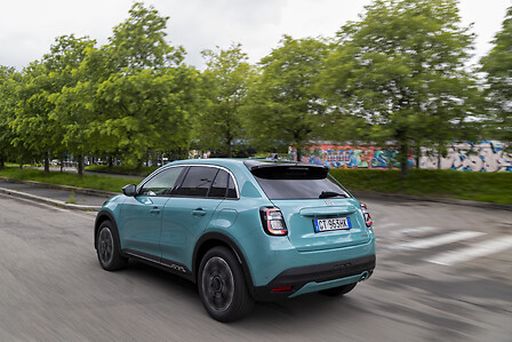
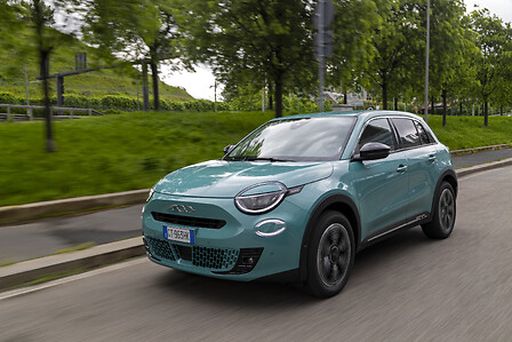
The Fiat 600 is small, cheeky and utterly charming, a pocket-sized Italian that packs more personality than its size suggests. Ideal for city buyers who want fuss-free motoring with a playful driving character, it puts smiles ahead of spreadsheets.

details
Fiat 500
Fiat 600

Costs and Consumption

Price
17,100 - 27,400 £
Price
21,000 - 31,300 £
Consumption L/100km
5.2 - 5.3 L/100km
Consumption L/100km
4.8 - 5.7 L/100km
Consumption kWh/100km
13 - 14.7 kWh/100km
Consumption kWh/100km
15.1 kWh/100km
Electric Range
190 - 331 km
Electric Range
409 km
Battery Capacity
-
Battery Capacity
-
co2
0 - 121 g/km
co2
0 - 129 g/km
Fuel tank capacity
-
Fuel tank capacity
-

Dimensions and Body

Body Type
Hatchback
Body Type
SUV
Seats
4
Seats
5
Doors
-
Doors
-
Curb weight
1,130 - 1,475 kg
Curb weight
1,265 - 1,595 kg
Trunk capacity
183 - 185 L
Trunk capacity
360 - 385 L
Length
-
Length
-
Width
1,683 - 1,684 mm
Width
1,779 mm
Height
-
Height
-
Max trunk capacity
-
Max trunk capacity
-
Payload
250 - 325 kg
Payload
427 - 517 kg

Engine and Performance

Engine Type
Electric, Petrol MHEV
Engine Type
Petrol MHEV, Electric, Petrol
Transmission
Automatic, Manuel
Transmission
Automatic, Manuel
Transmission Detail
Reduction Gearbox, Manual Gearbox
Transmission Detail
Dual-Clutch Automatic, Reduction Gearbox, Manual Gearbox
Drive Type
Front-Wheel Drive
Drive Type
Front-Wheel Drive
Power HP
65 - 118 HP
Power HP
100 - 156 HP
Acceleration 0-100km/h
9 - 16.2 s
Acceleration 0-100km/h
8.5 - 10.6 s
Max Speed
-
Max Speed
-
Torque
92 - 220 Nm
Torque
205 - 260 Nm
Number of Cylinders
3
Number of Cylinders
3
Power kW
48 - 87 kW
Power kW
74 - 115 kW
Engine capacity
999 cm3
Engine capacity
1,199 cm3

General

Model Year
2025
Model Year
2,025 - 2,026
CO2 Efficiency Class
A, D
CO2 Efficiency Class
C, A, D
Brand
Fiat
Brand
Fiat
DriveDuel uses data analysis and artificial intelligence to evaluate vehicle data and create content. Content is regularly reviewed and improved. The displayed prices are estimates based on German list prices, adjusted to the respective country’s VAT. Country-specific registration taxes are not included. This information is not legally binding.