@ Fiat / Stellantis Media
VS

Fiat 500 vs Nissan Micra - Differences and prices compared

Compare performance (118 HP vs 150 HP), boot space and price (18800 £ vs 24000 £) at a glance. Find out which car is the better choice for you – Fiat 500 or Nissan Micra?

Fiat 500

Nissan Micra

Here’s where it gets real: The technical differences in detail

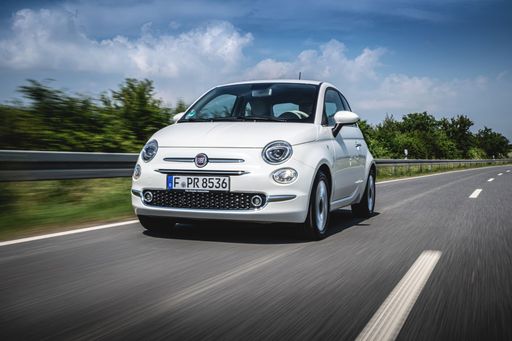
500 @ Fiat / Stellantis Media

Costs and Efficiency:

When it comes to price and running costs, the biggest differences usually appear. This is often where you see which car fits your budget better in the long run.

Fiat 500 has a evident advantage in terms of price – it starts at 18800 £, while the Nissan Micra costs 24000 £. That’s a price difference of around 5143 £.

In terms of energy consumption, the advantage goes to the Fiat 500: with 13 kWh per 100 km, it’s minimal more efficient than the Nissan Micra with 14.20 kWh. That’s a difference of about 1.20 kWh.

As for range, the Nissan Micra performs clearly perceptible better – achieving up to 416 km, about 85 km more than the Fiat 500.

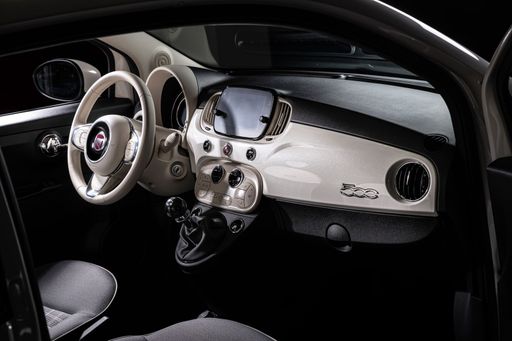
500 @ Fiat / Stellantis Media

Engine and Performance:

Under the bonnet, it becomes clear which model is tuned for sportiness and which one takes the lead when you hit the accelerator.

When it comes to engine power, the Nissan Micra has a evident edge – offering 150 HP compared to 118 HP. That’s roughly 32 HP more horsepower.

In acceleration from 0 to 100 km/h, the Nissan Micra is slightly quicker – completing the sprint in 8 s, while the Fiat 500 takes 9 s. That’s about 1 s faster.

In terms of top speed, the Fiat 500 performs hardly perceptible better – reaching 155 km/h, while the Nissan Micra tops out at 150 km/h. The difference is around 5 km/h.

There’s also a difference in torque: Nissan Micra pulls to a small extent stronger with 245 Nm compared to 220 Nm. That’s about 25 Nm difference.

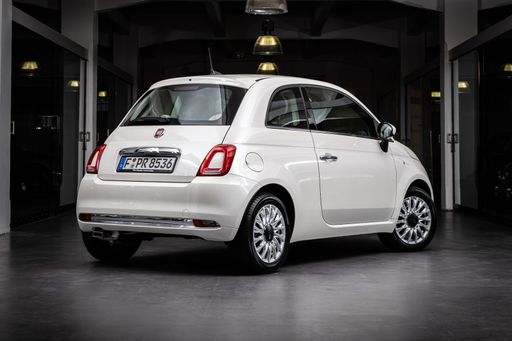
500 @ Fiat / Stellantis Media

Space and Everyday Use:

Cabin size, boot volume and payload all play a role in everyday practicality. Here, comfort and flexibility make the difference.

Seats: Nissan Micra offers slightly more seating capacity – 5 vs 4.

In curb weight, Fiat 500 is evident lighter – 1141 kg compared to 1452 kg. The difference is around 311 kg.

In terms of boot space, the Nissan Micra offers significantly more room – 326 L compared to 185 L. That’s a difference of about 141 L.

In maximum load capacity, the Nissan Micra performs convincingly better – up to 1106 L, which is about 556 L more than the Fiat 500.

When it comes to payload, Nissan Micra noticeable takes the win – 408 kg compared to 325 kg. That’s a difference of about 83 kg.

Who comes out on top?

Overall, the Nissan Micra shows itself to be is largely superior and secures the title of DriveDuel Champion.
It convinces with the more balanced overall package and proves to be the more versatile choice for everyday use.

from about £24,000
default

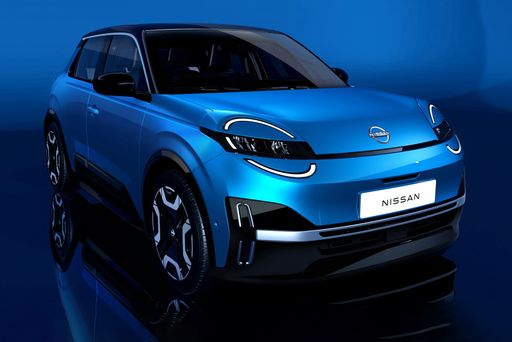
Nissan Micra

  • Engine Type : Electric
  • Transmission : Automatic
  • Drive Type : Front-Wheel Drive
  • Power HP : 122 - 150 HP
  • Consumption kWh/100km : 14.2 - 14.7 kWh
  • Electric Range : 317 - 416 km
Fiat 500
Nissan Micra

Costs and Consumption

View detailed analysis

Engine and Performance

View detailed analysis

Dimensions and Body

View detailed analysis

Fiat 500

The Fiat 500 is a cheeky, retro‑styled city car that turns heads with its iconic looks and playful personality. Perfect for weaving through tight streets and easing into tiny parking spots, it’s aimed at buyers who want style and character more than grand touring prowess.

details

Nissan Micra

The Nissan Micra is a compact hatchback renowned for its agile handling and city-friendly dimensions. With a design that blends sleek curves with a practical layout, it appeals to urban drivers who value style and efficiency. Inside, the car offers a surprising amount of room and useful tech features, making it both a convenient and comfortable ride for daily commutes.

details
Fiat 500
Nissan Micra
500 @ Fiat / Stellantis Media

Costs and Consumption

Price
18800 - 30800 £
Price
24000 - 29900 £
Consumption L/100km
5.30 L
Consumption L/100km
-
Consumption kWh/100km
13 - 14.7 kWh
Consumption kWh/100km
14.2 - 14.7 kWh
Electric Range
190 - 331 km
Electric Range
317 - 416 km
Battery Capacity
21.3 - 37.3 kWh
Battery Capacity
40 - 52 kWh
co2
0 - 120 g/km
co2
0 g/km
Fuel tank capacity
-
Fuel tank capacity
-

Dimensions and Body

Body Type
Hatchback
Body Type
Hatchback
Seats
4
Seats
5
Doors
3 - 4
Doors
5
Curb weight
1141 - 1475 kg
Curb weight
1452 - 1527 kg
Trunk capacity
183 - 185 L
Trunk capacity
326 L
Length
3631 - 3632 mm
Length
3974 mm
Width
1683 - 1684 mm
Width
1774 mm
Height
1527 - 1532 mm
Height
1490 mm
Max trunk capacity
440 - 550 L
Max trunk capacity
1106 L
Payload
250 - 325 kg
Payload
403 - 408 kg

Engine and Performance

Engine Type
Electric, Petrol MHEV
Engine Type
Electric
Transmission
Automatic, Manuel
Transmission
Automatic
Transmission Detail
Reduction Gearbox, Manual Gearbox
Transmission Detail
Reduction Gearbox
Drive Type
Front-Wheel Drive
Drive Type
Front-Wheel Drive
Power HP
65 - 118 HP
Power HP
122 - 150 HP
Acceleration 0-100km/h
9 - 16.2 s
Acceleration 0-100km/h
8 - 9 s
Max Speed
135 - 155 km/h
Max Speed
150 km/h
Torque
220 Nm
Torque
225 - 245 Nm
Number of Cylinders
3
Number of Cylinders
-
Power kW
48 - 87 kW
Power kW
90 - 110 kW
Engine capacity
999 cm3
Engine capacity
-

General

Model Year
2023 - 2025
Model Year
2026
CO2 Efficiency Class
A, D
CO2 Efficiency Class
A
Brand
Fiat
Brand
Nissan
What drivetrain options does the Fiat 500 have?

The Fiat 500 is offered with Front-Wheel Drive.

The prices and data displayed are estimates based on German list prices and may vary by country. This information is not legally binding.