
VS

Fiat Scudo vs VW Crafter comparison

Compare performance (180 HP vs 177 HP), boot space and price (30,900 £ vs 47,100 £ ) at a glance. Find out which car is the better choice for you – Fiat Scudo or VW Crafter?

Fiat Scudo vs VW Crafter: Key differences

Fiat Scudo

  • clearly cheaper
  • very slightly more power
  • clearly more efficient
  • visibly lighter
details

VW Crafter

details

By Achim Sedelmaier

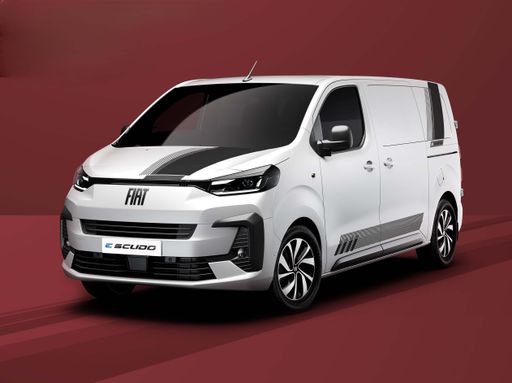
Scudo

The Fiat Scudo vs. VW Crafter: Which Cargo Van Reigns Supreme?

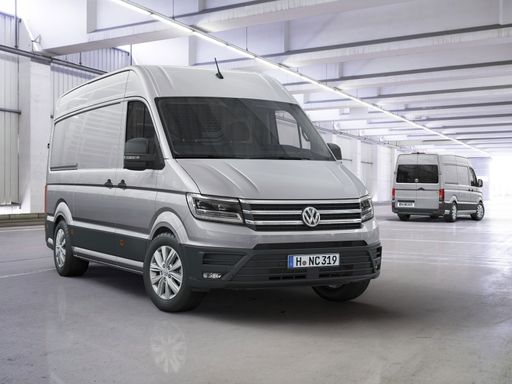
When it comes to choosing a reliable cargo van, fleet managers and independent business owners often find themselves stuck between two popular choices: the Fiat Scudo and the VW Crafter. Both manufacturers have reputations for quality and innovation, but how do these two models stack up against each other in terms of technical prowess and features? Let's delve into the heart of these utility vehicles and explore their unique offerings.
Crafter

Powertrain and Performance

The Fiat Scudo offers a diverse range of engine options, including diesel and fully electric variants. Diesel engines provide power outputs ranging from 100 to 180 HP, while the electric versions offer up to 177 HP. On the other hand, the VW Crafter sticks to its trusty diesel engines with outputs from 140 to 177 HP, offering a slightly narrower range of power.

In terms of drive configurations, both vans offer multiple choices. The Scudo is confined to front-wheel drive, a reliable choice for urban and light off-road scenarios. The Crafter, however, takes versatility a notch higher with options for rear-wheel, front-wheel, and all-wheel drive, catering to different driving conditions and load requirements. This can be particularly useful for businesses requiring extra traction in challenging environments.

Fuel and Efficiency

The Fiat Scudo shines with its embrace of electrification, boasting an electric range between 218 to 352 km on a full charge, making it ideal for urban deliveries and emission-conscious operations. Its electric versions show energy consumption figures around 23.6 to 27 kWh/100km.

The Crafter, while focusing on diesel, delivers consumption between 8.4 and 13.1 L/100km. Its larger fuel tank capacity of 75 L compared to Scudo's 69-70 L gives it an extended range between refills, beneficial for long-haul drives. However, the Crafter's higher CO2 emissions, peaking at 258 g/km, place it in the G efficiency class, trailing behind the Scudo's potential A class for some electric models.

Size and Payload Capacity

Size is often a critical factor in a cargo van. The VW Crafter, with its larger dimensions (up to 7391 mm in length and 2830 mm in height), offers a more substantial cargo space than the Fiat Scudo, which maxes out at 5330 mm in length and 1935 mm in height. This difference can be pivotal for businesses moving bulkier loads or operating as mobile workshops.

Payload capacity further tips in the Crafter's favor, extending up to an impressive 2994 kg, dwarfing the Scudo's maximum payload of 1333 kg. For businesses prioritizing the amount of cargo over vehicle size, the Crafter presents a compelling case.

Innovation and Technology

Fiat's leap into electrification with the Scudo gives it a forward-looking edge, appealing to eco-conscious enterprises and those interested in reducing their carbon footprints. The range of configurations available in both manual and automatic transmissions, along with reduction gearbox options, provides operational flexibility.

The Crafter's innovation highlights include its all-wheel-drive option, facilitating challenging terrains without compromising cargo capabilities. VW's commitment to high-strength, load-bearing designs is reflected in the Crafter's sturdy build and payload support, positioning it as a robust choice for intensive use.

Final Thoughts

The choice between the Fiat Scudo and the VW Crafter ultimately boils down to specific business needs. The Scudo is ideal for those prioritizing environmental efficiency, smaller enterprises, or urban-centric operations. Conversely, the Crafter's greater size and payload capacity make it a powerhouse for those requiring versatility and robust performance in diverse environments.

As automotive trends continue to evolve, both models represent significant advancements in cargo van technology. Whether it's the Scudo's electric leap or the Crafter's enduring diesel strength, these vehicles exemplify modern solutions to age-old logistical challenges.

Here’s where it gets real: The technical differences in detail

Scudo

Costs and Efficiency:

When it comes to price and running costs, the biggest differences usually appear. This is often where you see which car fits your budget better in the long run.

Fiat Scudo is clearly cheaper – starting at 30,900 £ , while the VW Crafter costs 47,100 £ . That’s a price difference of around 16,218 £.

Fuel consumption also shows a difference: the Fiat Scudo uses 6.2 L/100km and is clearly more efficient than the VW Crafter with 8.4 L/100km. The difference is about 2.2 L/100km.

Crafter

Engine and Performance:

Under the bonnet, it becomes clear which model is tuned for sportiness and which one takes the lead when you hit the accelerator.

When it comes to engine power, the Fiat Scudo offers very slightly more power – delivering 180 HP compared to 177 HP. That’s roughly 3 HP more horsepower.

There’s also a difference in torque: the VW Crafter delivers very slightly more torque with 410 Nm compared to 400 Nm. That’s about 10 Nm more.

Space and Everyday Use:

Whether family car or daily driver – which one offers more room, flexibility and comfort?

Seats: Fiat Scudo offers more seats – 8 vs 2.

In terms of curb weight, Fiat Scudo is visibly lighter – 1,722 kg compared to 2,072 kg. The difference is around 350 kg.

When it comes to payload, the VW Crafter carries clearly more – 2,994 kg compared to 1,805 kg. That’s a difference of about 1,189 kg.

Who wins the race in the data check?

The Fiat Scudo is clearly superior overall in the objective data comparison.
This result only shows which model scores more points on paper – not which of the two cars feels right for you.

from £30,900
Scudo

Fiat Scudo

  • Engine Type Electric, Diesel
  • Transmission Automatic, Manuel
  • Drive Type Front-Wheel Drive
  • Power HP 120 - 180 HP
  • Consumption L/100km 6.2 - 7.3 L/100km
  • Consumption kWh/100km 23.6 - 24 kWh/100km
  • Electric Range 221 - 352 km
Fiat Scudo
VW Crafter

Costs and Consumption

View detailed analysis

Engine and Performance

View detailed analysis

Dimensions and Body

View detailed analysis

Fiat Scudo

The Fiat Scudo is a practical and unpretentious van that balances hardworking utility with a surprisingly polished cabin, making it a sensible choice for tradespeople and families who need space without fuss. It doesn't pretend to be flashy, but its clever packaging, sensible driving manners and affordable running costs make the Scudo a dependable partner for the daily grind and weekend projects — and it even manages to look tidy in the car park.

details

VW Crafter

The VW Crafter is a no-nonsense workhorse that makes hauling and running a mobile business feel almost civilized, with a cabin built for long days and smart storage where you need it. It may not turn heads for glamour, but its sturdy build, straightforward tech and reliable manners mean fewer headaches for owners — a van that prefers to earn your trust rather than demand attention.

details
Fiat Scudo
VW Crafter

Costs and Consumption

Price
30,900 - 51,300 £
Price
47,100 - 68,800 £
Consumption L/100km
6.2 - 7.3 L/100km
Consumption L/100km
8.4 - 13.1 L/100km
Consumption kWh/100km
23.6 - 24 kWh/100km
Consumption kWh/100km
-
Electric Range
221 - 352 km
Electric Range
-
Battery Capacity
-
Battery Capacity
-
co2
0 - 187 g/km
co2
220 - 342 g/km
Fuel tank capacity
-
Fuel tank capacity
75 L

Dimensions and Body

Body Type
Cargo Van, Bus
Body Type
Cargo Van
Seats
2 - 8
Seats
2
Doors
-
Doors
4
Curb weight
1,722 - 2,260 kg
Curb weight
2,072 - 2,810 kg
Trunk capacity
450 - 800 L
Trunk capacity
-
Length
-
Length
5,986 - 7,391 mm
Width
1,920 - 2,010 mm
Width
2,040 - 2,069 mm
Height
-
Height
2,355 - 2,830 mm
Max trunk capacity
-
Max trunk capacity
9,300 - 18,400 L
Payload
840 - 1,805 kg
Payload
1,037 - 2,994 kg

Engine and Performance

Engine Type
Electric, Diesel
Engine Type
Diesel
Transmission
Automatic, Manuel
Transmission
Manuel, Automatic
Transmission Detail
Reduction Gearbox, Manual Gearbox, Automatic Gearbox
Transmission Detail
Manual Gearbox, Automatic Gearbox
Drive Type
Front-Wheel Drive
Drive Type
Rear-Wheel Drive, Front-Wheel Drive, All-Wheel Drive
Power HP
120 - 180 HP
Power HP
140 - 177 HP
Acceleration 0-100km/h
10.5 - 11.2 s
Acceleration 0-100km/h
-
Max Speed
-
Max Speed
90 - 165 km/h
Torque
260 - 400 Nm
Torque
360 - 410 Nm
Number of Cylinders
4
Number of Cylinders
4
Power kW
88 - 132 kW
Power kW
103 - 130 kW
Engine capacity
1,499 - 2,197 cm3
Engine capacity
1,968 cm3

General

Model Year
2,024 - 2,026
Model Year
2,017 - 2,023
CO2 Efficiency Class
A, F
CO2 Efficiency Class
G
Brand
Fiat
Brand
VW
DriveDuel uses data analysis and artificial intelligence to evaluate vehicle data and create content. Content is regularly reviewed and improved. The displayed prices are estimates based on German list prices, adjusted to the respective country’s VAT. Country-specific registration taxes are not included. This information is not legally binding.








